
lovethailand home >Northeastern Travel Attractions >Chaiyaphum Travel Attractions >Khon Sawan >Khon Sawan > Wat Non Pho
TL;DR: Wat Non Pho is located at Ban Non Pho, Village No. 6, Khon Sawan Subdistrict, Khon Sawan District, Chaiyaphum Province, open Daily, hours 08.00 – 17.00.
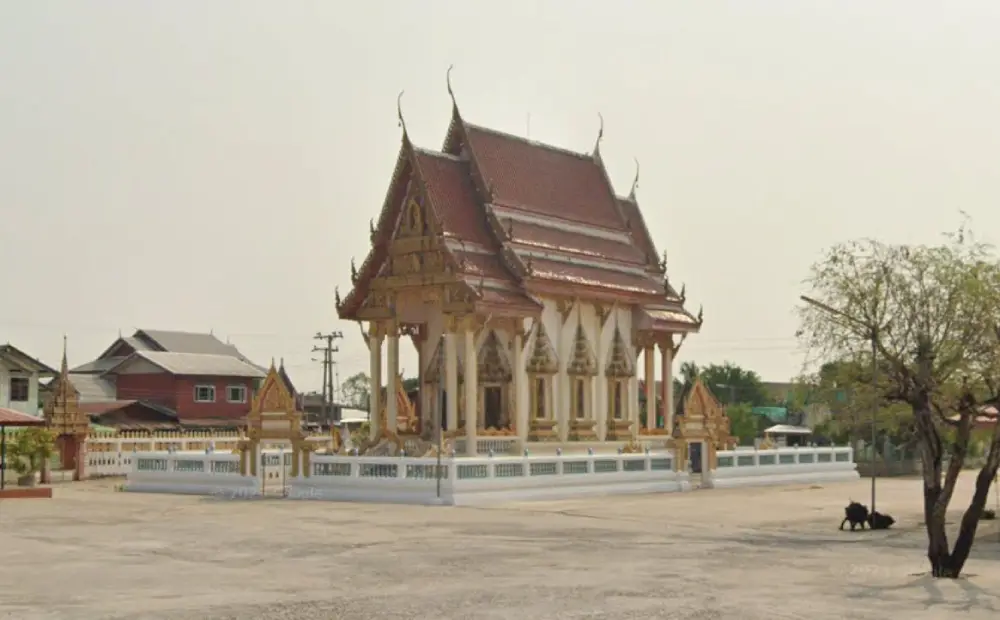
Wat Non Pho
Open Days: Daily
Opening Hours: 08.00 – 17.00
Wat Non Pho is located at No. 50, Ban Non Pho, Village No. 6, Khon Sawan Subdistrict, Khon Sawan District, Chaiyaphum Province. It is a local Buddhist temple under the Mahanikaya order and remains an important religious and community center for Ban Non Pho and nearby villages. The temple covers 4 rai, 2 ngan, and 66 square wah of land under land title deed No. 676. It was officially permitted to be established as a temple in B.E. 2413, making it one of the long-standing community temples in Khon Sawan District. For travelers who wish to understand the quieter, more local side of Chaiyaphum, Wat Non Pho offers a calm and meaningful glimpse into the relationship between Buddhism, village life, and northeastern Thai culture.
Wat Non Pho is not a large commercial tourist attraction, and that is precisely its value. This is a living community temple where monks, villagers, elders, families, and Buddhist devotees continue to use the temple grounds for merit-making, religious observances, meditation, Dhamma listening, local ceremonies, and community gatherings. In rural Thailand, especially in the Isan region, temples often serve as much more than religious buildings. They function as shared spaces where people meet, learn, support one another, preserve traditions, and pass moral values from one generation to the next. Wat Non Pho reflects this role clearly.
The history of Wat Non Pho dates back to B.E. 2413, when permission was granted to establish the temple. This historical reference places the temple within a long tradition of village-based Buddhism in Chaiyaphum. In earlier periods, building a temple required strong local faith, cooperation, and collective support from the community. A temple was not only built for monks; it was built for the entire village. It became a place for worship, learning, ceremonies, and shared identity. Wat Non Pho therefore represents both religious devotion and the social foundation of Ban Non Pho.
The name “Non Pho” also carries cultural meaning. In the Isan context, “Non” often refers to a raised area or mound, while “Pho” refers to the Bodhi tree, a sacred symbol in Buddhism associated with the enlightenment of the Buddha. The name suggests a raised or settled place connected with the Bodhi tree and Buddhist faith. For a temple, this name is especially fitting because it evokes calmness, shade, spiritual refuge, and a sense of sacred continuity. The temple’s name is therefore not just a geographic label; it reflects the Buddhist imagination and local sense of place.
The temple grounds include several key monastic buildings: one ordination hall, one sermon hall, one monk residence, and one multi-purpose pavilion. These structures reveal the core functions of a Thai community temple. The ordination hall is the most sacred building and is used for formal monastic rites. The sermon hall serves as a gathering place for Dhamma talks, merit-making ceremonies, and community religious activities. The monk residence provides living quarters for monks who maintain the daily religious life of the temple. The multi-purpose pavilion supports larger village events, annual ceremonies, and communal activities.
The ordination hall at Wat Non Pho is central to the temple’s religious identity. Even when a local temple does not have monumental architecture, the ordination hall carries deep significance because it marks the temple as a proper place for Sangha activities. It is a sacred area where monks perform important Buddhist rites. Visitors should treat this space with particular respect by dressing modestly, removing shoes where required, speaking quietly, and avoiding behavior that may disturb religious practice. For foreign travelers, understanding the role of the ordination hall helps deepen appreciation of Thai Buddhist temple culture.
The sermon hall is another important part of Wat Non Pho. In Thai village life, a sermon hall is often the main shared space where villagers gather on Buddhist holy days, during annual merit-making events, and for important community ceremonies. It is where people listen to monks teach the Dhamma, make offerings, prepare food for religious events, and meet one another. The sermon hall therefore functions as a religious and social space at the same time. At Wat Non Pho, it helps maintain the living link between the temple and the village.
The monk residence and multi-purpose pavilion also show how the temple supports everyday religious life. The monk residence allows monks to stay within the temple, observe monastic discipline, receive offerings, and guide local Buddhist practice throughout the year. The multi-purpose pavilion provides flexible space for village events, ceremonies, and public activities. This combination of buildings makes Wat Non Pho a practical and active community temple, not merely a historical site. It remains a place where religious and social life continue to overlap naturally.
At present, Wat Non Pho is led by Phra Khru Pho Thammaphakhun, who serves as the abbot of the temple and also holds the position of ecclesiastical subdistrict head of Khon Sawan Subdistrict, Khon Sawan District, Chaiyaphum Province. The role of an abbot in a community temple is significant. The abbot oversees religious practice, temple administration, resident monks, ceremonies, community relations, and the preservation of Buddhist discipline. Holding a subdistrict-level ecclesiastical position further reflects the importance of Wat Non Pho within the local monastic network of Khon Sawan.
Like many community temples in Isan, Wat Non Pho is closely associated with annual Buddhist traditions. Villagers use the temple for Buddhist holy days, the beginning and end of Buddhist Lent, Kathin ceremonies, robe-offering events, Songkran merit-making, and other local religious activities. These occasions bring people together through offerings, chanting, Dhamma listening, food preparation, temple cleaning, and shared service. For the community, going to the temple is not only an individual act of merit; it is also a way to preserve relationships, memory, and local identity.
For travelers, the appeal of Wat Non Pho lies in its authenticity. It is a peaceful temple where visitors can observe the understated rhythm of local Buddhist life. The temple is suitable for making merit, paying respect to Buddha images, spending a quiet moment in reflection, and learning about the role of temples in rural Thailand. It is not a place to rush through. A respectful visit allows travelers to see how Buddhism remains woven into everyday village life, especially outside major tourist routes.
Visitors should observe proper temple etiquette. Modest clothing is recommended, with shoulders and knees covered. Shoes should be removed before entering designated religious buildings. Voices should be kept low, and visitors should avoid interrupting monks or villagers during religious activities. Photography should be done respectfully, especially when people or ceremonies are present. If visitors wish to make an offering or donate to the temple, it is best to ask temple caretakers or local devotees politely. These simple practices help preserve the dignity of the temple and make the experience more meaningful.
Wat Non Pho can also be included in a broader cultural route around Khon Sawan District. One nearby place of interest is Wat Khon Sawan, a significant local temple known for its ancient Dvaravati-period standing Buddha image. The large sandstone Buddha image, often referred to locally as Luang Pho Yai, reflects the historical depth of the area and helps visitors understand that Khon Sawan has long been connected with Buddhist culture. Combining Wat Non Pho with Wat Khon Sawan creates a meaningful temple route within the district.
Another important nearby attraction is Bueng Waeng, also known as Nong Waeng, a natural lake in front of the Khon Sawan District Office. The lake is known as a habitat for large numbers of ducks and migratory waterbirds, especially during the cool season between November and April. The area has a road around the lake, making it suitable for a relaxed drive, birdwatching, photography, and evening visits. A route that combines Wat Non Pho, Wat Khon Sawan, and Bueng Waeng gives travelers a balanced experience of religion, local culture, and nature.
For travelers who prefer slow cultural travel, Wat Non Pho provides a valuable counterpoint to Chaiyaphum’s better-known natural attractions. Chaiyaphum is often associated with mountains, forests, waterfalls, and seasonal flowers, but its smaller community temples are equally important for understanding the province. These temples reveal how villagers organize spiritual life, preserve customs, and maintain social harmony. Wat Non Pho is one of those places where cultural meaning comes from continuity rather than spectacle.
A visit to Wat Non Pho is best planned during the daytime. The temple is open daily from 08.00 to 17.00, and daylight hours make navigation easier, especially for visitors unfamiliar with local roads. Private car or rental car is the most convenient option. Travelers can search for Wat Non Pho, Ban Non Pho, Khon Sawan Subdistrict, Khon Sawan District, Chaiyaphum Province, or use the coordinates 15.905072, 102.319003 in a navigation system. Public transport users should travel first to Chaiyaphum town or Khon Sawan District and then arrange a local ride to the temple.
The temple is also suitable for visitors who want to see a more grounded and respectful side of Thai temple travel. Rather than focusing on elaborate decoration or large-scale architecture, Wat Non Pho invites visitors to pay attention to atmosphere, function, and community meaning. The ordination hall, sermon hall, monk residence, and pavilion all point to the temple’s practical role in village life. Together, they show how a small temple can serve religious, cultural, social, and educational needs at the same time.
For foreign visitors, Wat Non Pho can help explain why temples are so central to Thai communities. In many villages, the temple is where children learn basic manners, adults return for merit-making, elders gather for Buddhist observances, and families mark important life events. The temple holds shared memories through ceremonies, sounds, spaces, and repeated acts of devotion. Visiting Wat Non Pho with this awareness makes the experience deeper than a simple sightseeing stop.
Photographers should be especially mindful of context. The beauty of a community temple lies in its simplicity, quietness, and everyday use. Photographs of buildings, paths, trees, and temple atmosphere are generally more appropriate than intrusive images of monks or villagers during private religious moments. If a ceremony is taking place, visitors should keep a respectful distance and prioritize the needs of local participants. This approach allows travelers to document the visit while honoring the temple’s sacred character.
Wat Non Pho is also meaningful for travelers interested in local history. Its establishment in B.E. 2413, its defined land area, its monastic buildings, and its current leadership under Phra Khru Pho Thammaphakhun together create a clear picture of a long-standing village temple. It is a place where formal Buddhist structure and local identity meet. The temple’s value is not measured by fame alone, but by its continued role in supporting religious life and community continuity in Khon Sawan.
When planning a route, visitors can spend a short time at Wat Non Pho for merit-making and reflection, then continue to nearby attractions such as Wat Khon Sawan, the Dvaravati Buddha image, Bueng Waeng, the Khon Sawan community area, and local restaurants or cafés. Those who need accommodation can choose small local resorts in Khon Sawan or hotels in nearby districts and Chaiyaphum town. Traveling by car allows the most flexibility and makes it easier to combine cultural and natural attractions in one day.
Overall, Wat Non Pho is a valuable local temple in Chaiyaphum Province because it combines history, religious function, community life, and northeastern Thai culture in one place. It was permitted to be established in B.E. 2413, occupies 4 rai, 2 ngan, and 66 square wah of temple land, and includes the essential buildings of a Thai Buddhist community temple. Under the guidance of Phra Khru Pho Thammaphakhun, it continues to serve the religious and cultural life of Khon Sawan. For travelers seeking a quiet, respectful, and authentic temple visit, Wat Non Pho is a meaningful stop in Chaiyaphum.
Getting There is easiest by private car or rental car. Set your destination to Wat Non Pho, Ban Non Pho, Village No. 6, Khon Sawan Subdistrict, Khon Sawan District, Chaiyaphum Province, or use the coordinates 15.905072, 102.319003. From Chaiyaphum town, follow the route toward Khon Sawan District and continue to Ban Non Pho according to local signs or your navigation system. Public transport users should first reach Chaiyaphum town or Khon Sawan District, then arrange a local vehicle to the temple, as village transport may not run frequently throughout the day.
Daytime travel is recommended for convenience, navigation, and respectful visiting. Travelers who wish to combine the temple with nearby places should allow enough time for Wat Khon Sawan, Bueng Waeng, local cafés, and restaurants in the district. During Buddhist holidays or annual merit-making events, the temple may be busier with local participants, so visitors should allow extra time and behave with particular respect. Wat Non Pho is best experienced slowly, with attention to its quiet atmosphere and community role.
| Name | Wat Non Pho |
| Location | Ban Non Pho, Village No. 6, Khon Sawan Subdistrict, Khon Sawan District, Chaiyaphum Province |
| Address | No. 50, Ban Non Pho, Village No. 6, Khon Sawan Subdistrict, Khon Sawan District, Chaiyaphum 36140, Thailand |
| Coordinates | 15.905072, 102.319003 |
| Place Type | Local Buddhist Temple, Mahanikaya Order |
| Land Area | 4 Rai, 2 Ngan, 66 Square Wah, Land Title Deed No. 676 |
| Highlights | A long-standing community temple of Ban Non Pho, serving as a center for merit-making, Buddhist traditions, local ceremonies, and community life |
| History | Officially permitted to be established as a temple in B.E. 2413 and still active as a local Buddhist temple today |
| Name Origin | The name is linked to Ban Non Pho. “Non” refers to a raised area, while “Pho” refers to the Bodhi tree, an important Buddhist symbol |
| Distinctive Features | A Mahanikaya community temple closely connected with village life, Buddhist observances, Dhamma practice, and local traditions |
| Temple Buildings | 1 Ordination Hall, 1 Sermon Hall, 1 Monk Residence, and 1 Multi-Purpose Pavilion |
| Travel Information | Best reached by private car or rental car. Set the destination to Wat Non Pho, Ban Non Pho, Village No. 6, Khon Sawan Subdistrict, or use coordinates 15.905072, 102.319003. Public transport users should connect from Khon Sawan District or Chaiyaphum town. |
| Current Status | Active as a local Buddhist temple and community religious venue |
| Open Days | Daily |
| Opening Hours | 08.00 – 17.00 |
| Main Areas / Zones | Ordination Hall, Sermon Hall, Monk Residence, Multi-Purpose Pavilion, Religious Activity Area, and Community Activity Area |
| Abbot / Caretaker | Phra Khru Pho Thammaphakhun, Abbot of Wat Non Pho and Ecclesiastical Subdistrict Head of Khon Sawan, Khon Sawan District, Chaiyaphum Province |
| Nearby Tourist Attractions | 1. Wat Khon Sawan, about 4 km 2. Dvaravati Buddha Image at Wat Khon Sawan, about 4 km 3. Bueng Waeng / Nong Waeng, about 5 km 4. Khon Sawan District Office and Local Community Area, about 5 km 5. Wat Pho, Khon Sawan Subdistrict, about 6 km 6. Wat Phra Phutthabat Phu Faet, about 27 km |
| Nearby Restaurants | 1. Jungle Cafe Khon Sawan Chaiyaphum Branch, about 5 km, Tel. 095-660-9498 2. 13 Cafe, about 5 km, Tel. 062-662-9563 3. Rim Bueng Korean BBQ, about 5 km, Tel. 084-826-3438 4. Im Aroi by Je Kai Restaurant, about 12 km, Tel. 093-327-6866 5. Khun Ngoen Restaurant, about 14 km, Tel. 091-017-2256 6. Bowwy Mookata, about 14 km, Tel. 098-935-9618 |
| Nearby Accommodations | 1. Ban Poo Nim Resort, about 5 km, Tel. 061-939-465 2. V One Apartment, about 31 km, Tel. 044-831-442 3. On The Rock Chaiyaphum, about 42 km, Tel. 081-300-3399 4. The Peak Resort Chaiyaphum, about 43 km, Tel. 082-615-5587 5. Lertnimitra Hotel, about 46 km 6. Tieangna Homestay, about 30 km |
Frequently Asked Questions (FAQ)
Q: Where is Wat Non Pho located?
A: Wat Non Pho is located at No. 50, Ban Non Pho, Village No. 6, Khon Sawan Subdistrict, Khon Sawan District, Chaiyaphum Province 36140, Thailand.
Q: What are the opening days and hours of Wat Non Pho?
A: Wat Non Pho is open daily from 08.00 to 17.00, making daytime visits most convenient for merit-making, temple visits, and cultural travel.
Q: When was Wat Non Pho established?
A: Wat Non Pho was officially permitted to be established as a temple in B.E. 2413, making it a long-standing community temple in Khon Sawan District.
Q: Who is the abbot of Wat Non Pho?
A: The abbot of Wat Non Pho is Phra Khru Pho Thammaphakhun, who also serves as the ecclesiastical subdistrict head of Khon Sawan, Khon Sawan District, Chaiyaphum Province.
Q: What important buildings are found inside Wat Non Pho?
A: The temple includes one ordination hall, one sermon hall, one monk residence, and one multi-purpose pavilion.
Q: What is the best way to get to Wat Non Pho?
A: The most convenient way is by private car or rental car. Visitors can use the coordinates 15.905072, 102.319003 or search for Wat Non Pho, Ban Non Pho, Khon Sawan District, Chaiyaphum Province.
Q: What nearby attractions can travelers visit after Wat Non Pho?
A: Nearby attractions include Wat Khon Sawan, the Dvaravati Buddha image at Wat Khon Sawan, Bueng Waeng or Nong Waeng, the Khon Sawan community area, and Wat Phra Phutthabat Phu Faet.
Q: Is Wat Non Pho suitable for foreign travelers?
A: Yes. Wat Non Pho is suitable for foreign travelers interested in local Buddhist temples, rural Thai culture, Isan community life, and quiet cultural travel in Chaiyaphum Province.
 Category: ●Places of Worship
 Group: ●Temple
Last Update : 3 MonthAgo
 Last Update : 3 MonthAgo
 Click to Access the Navigation Map GPS
 Art, Culture and Heritage
 Historical Sites and Monuments(1)
 Landmarks and Memorials(3)
 Royal Palace(1)
 Art, Craft Centres, Tradition(3)
 Educational Places
 Educational Gardens, Farm(1)
Temple(141)
Educational Gardens, Farm(1)
Temple(141)
 Other Sacred Sites(7)
 Suburban Living
 Village, Community(4)
 Nature and Wildlife
 National Parks and Marine Reserves(7)
 Mountain (Doi)(5)
 Dam, Reservoir, Lake(10)
 Waterfalls(15)
 Caves(5)
 River, Canal(4)
 Other natural attractions(1)
 Entertainment and Agricultural
 Farms, Parks and Ecotourism(2)


