
lovethailand home >Northeastern Travel Attractions >Chaiyaphum Travel Attractions >Kaset Sombun >Ban Yang > Wat Boribun
TL;DR: Wat Boribun is located at Ban Yang, Moo 1, Ban Yang Subdistrict, Kaset Sombun District, Chaiyaphum Province, open Daily, hours 08.00 – 17.00.
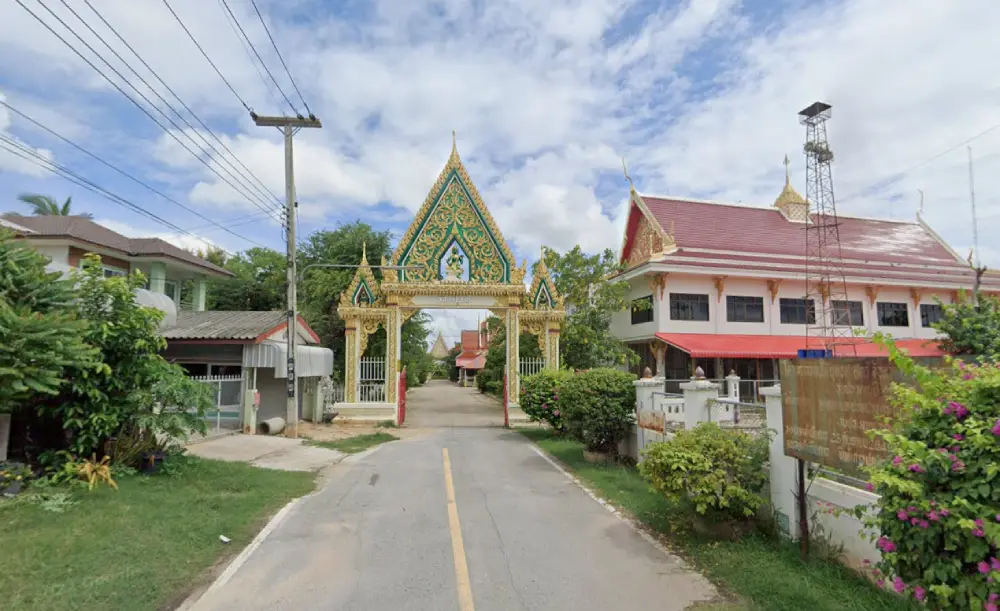
Wat Boribun
Open Days: Daily
Opening Hours: 08.00 – 17.00
Wat Boribun is a historic local Buddhist temple in Ban Yang, Moo 1, Ban Yang Subdistrict, Kaset Sombun District, Chaiyaphum Province. Established in 1889 during the period of Phra Krai Singhanat, the ruler associated with the early history of Kaset Sombun, the temple was originally known as Wat Klang before its name was changed to Wat Boribun. It received its royal consecrated boundary in 1917 and belongs to the Mahanikaya monastic order. Today, Wat Boribun remains the district temple of Kaset Sombun and an important spiritual center for local villagers, monks, and Buddhist visitors.
Wat Boribun is especially meaningful for travelers who want to understand Chaiyaphum beyond its mountains, national parks, and natural attractions. This temple is closely connected with the history of Kaset Sombun District, local leadership, village Buddhism, and community faith. It is not only a place for merit-making and Buddhist rituals, but also a cultural landmark that preserves the memory of Ban Yang and the district’s early development.
The temple is located on Boribun Road in Ban Yang Subdistrict, an area that functions as the center of Kaset Sombun District. Because of this location, Wat Boribun is easier to access than many rural village temples. It is near local roads, government offices, restaurants, accommodation, and other services. Visitors can use it as a starting point for a cultural route through the district, including the Phra Krai Singhanat Monument, Phu Kum Khao, Phra That Nong Sam Muen, and Kaeng Tat Sai rafting area.
The original name, Wat Klang, suggests the temple’s early role as a central temple of the community. The later name, Wat Boribun, carries an auspicious meaning associated with completeness, abundance, prosperity, and spiritual fullness. This meaning fits both the temple’s role and the name of Kaset Sombun District, which also suggests agricultural richness and abundance. The name therefore reflects the relationship between local faith, community identity, and the fertile rural landscape of the area.
The temple grounds cover 6 rai, 1 ngan, and 48 square wah. Wat Boribun also has four plots of monastic land totaling 6 rai and 2 square wah. The northern boundary adjoins the Nam Phrom River, while the southern, eastern, and western boundaries adjoin public roads. This location shows how closely the temple is connected with both water and community movement. The Nam Phrom River is an important local waterway in Kaset Sombun and forms part of the district’s agricultural and settlement landscape.
Important structures within Wat Boribun include the ordination hall, sermon hall, monks’ residences, and multipurpose hall. The ordination hall measures 7 meters wide and 15 meters long. It was built in 1957 as a concrete building and is one of the most sacred functional spaces of the temple. In Thai Buddhism, the ordination hall is used for formal monastic ceremonies and activities that must be conducted within a proper consecrated boundary.
The sermon hall measures 14 meters wide and 36 meters long. It was built in 1971 as a concrete building and serves as one of the main public spaces of the temple. Villagers and visitors gather there for sermons, merit-making, Buddhist holy day observances, robe-offering ceremonies, meetings, and community activities. In a district temple such as Wat Boribun, the sermon hall carries both religious and social functions.
The temple has 11 wooden monks’ residences. These buildings support the daily monastic life of the temple and allow monks to reside, practice, chant, receive offerings, teach Dhamma, and guide religious activities for the community. The multipurpose hall measures 8 meters wide and 16 meters long and supports additional ceremonies and community events. Together, these structures show that Wat Boribun is designed not only for worship, but also for real and continuing community use.
Wat Boribun received its royal grant of Wisungkhamasima in 1917. The consecrated boundary measures 5 meters wide and 12 meters long. This is a significant milestone in Thai Buddhism because a Wisungkhamasima defines the sacred area where important Sangha ceremonies can be performed properly according to Buddhist discipline. Receiving this boundary confirms the temple’s formal status and its importance as a long-established Buddhist institution in Ban Yang.
The temple history states that during the period of Phra Krai Singhanat, the ruler associated with Mueang Yang and the early history of Kaset Sombun, a hall for Phra Krai Singhanat and the temple were established as important community sites. This makes Wat Boribun more than a local religious compound. It is also a place connected with historical memory, local leadership, and the identity of Kaset Sombun District.
Phra Krai Singhanat remains an important figure in the memory of local people. He is associated with courage, sacrifice, and the early governance of Kaset Sombun. Because Wat Boribun is linked with this historical context, visitors can understand the temple as both a Buddhist site and a local history site. A visit to Wat Boribun can therefore be combined naturally with a visit to the Phra Krai Singhanat Monument nearby.
The recorded line of abbots in the temple history includes Phra Khru Tham Uang, Phra Palat In, Phra Somnuek, Phra Khru Rattanameri, Phra Khru Kaset Suttakhun, Phra Si, and Phra Khru Chayanatkhun. More recent public information from a Kathin event in 2024 identifies Phra Khru Winayathon Worrawat as abbot of Wat Boribun. This continuity of monastic leadership shows that the temple has been cared for through successive generations of monks.
Today, Wat Boribun continues to function as a venue for religious activities of monks, local Buddhists, and the wider public. These activities include Buddhist holy day observances, alms-giving, chanting, Dhamma listening, meditation, Kathin robe offering, forest robe offering, ordination-related ceremonies, funerals, and merit-making for ancestors. The temple is therefore connected with many stages of community life, from family ceremonies to annual district-level religious events.
On Buddhist holy days, villagers come to the temple to make merit, listen to sermons, and cultivate mindfulness. The morning atmosphere is suitable for worship, chanting, and quiet reflection. Elderly residents often maintain a close relationship with the temple through regular merit-making, while younger family members who return home during festivals may join temple activities as a way of reconnecting with family, community, and local identity.
During Buddhist Lent, Wat Boribun becomes especially meaningful for the community. Villagers may offer candles, robes, food, and daily necessities to monks, listen to Dhamma, observe precepts, and support the daily religious life of the temple. The end of Lent and the Kathin season also bring the community together through donation, preparation, and shared merit. These events show how temple life strengthens generosity and cooperation in rural Isan communities.
Local Isan traditions are closely connected with temples. Annual customs such as Bun Khao Chi, Bun Phawet, Songkran merit-making, Buddhist Lent, the end of Lent, Kathin, and forest robe offerings are often centered around village and district temples. Wat Boribun therefore plays an important role in preserving local culture because it provides the space where rituals, food, sermons, family gatherings, and community cooperation can take place together.
Bun Khao Chi is one example of how Isan culture connects food, faith, and merit-making. Sticky rice is shaped, grilled, sometimes coated with egg, and offered to monks as an act of merit. Such traditions show why community temples remain deeply important. They are places where everyday food, religious devotion, and social cooperation become part of a shared cultural practice. Wat Boribun belongs to this living cultural landscape.
Bun Phawet, or the Mahachat sermon tradition, also shows the temple’s role in transmitting Buddhist teachings. Through the story of Vessantara, villagers learn about generosity, sacrifice, and moral conduct. In a temple setting, Dhamma is not only studied from books. It is heard through sermons, practiced through giving, and experienced through community participation.
During Songkran, the temple becomes a place of gratitude and renewal. Villagers may make merit, bathe Buddha images, pay respect to elders, and take part in activities that bring blessings for the Thai New Year. Such practices connect Buddhism with family relationships and community respect. For foreign travelers, visiting a local temple during this season can reveal the deeper cultural meaning of Songkran beyond water festivities.
As a meditation and religious practice space, Wat Boribun provides a calm environment for people to return to mindfulness. A district temple has both public importance and spiritual familiarity. Visitors can pray, chant, listen to Dhamma, or simply spend a quiet moment in the temple grounds. The value of such a temple lies in its accessibility and its closeness to ordinary life.
Socially, Wat Boribun connects different generations. Elderly villagers come to make merit and preserve traditions. Working adults return during festivals and family ceremonies. Children and young people learn how to behave in sacred spaces, how to show respect, and how to participate in community life. The temple therefore functions as a cultural classroom for Ban Yang and the wider Kaset Sombun community.
The temple also helps maintain community unity. Temple events often require collective effort, including preparing the grounds, cooking food, receiving guests, supporting monks, and organizing ceremonies. These acts of cooperation strengthen relationships among neighbors and relatives. Wat Boribun is therefore not only a religious site, but also a place where community bonds are renewed again and again.
For visitors from outside the area, Wat Boribun offers a different experience from famous sightseeing temples. Its interest does not come only from architectural grandeur, but from history, continuity, and local meaning. Travelers can see how a district temple continues to function in real life, supporting faith, family ceremonies, cultural practice, and social connection in a rural Thai community.
A visit to Wat Boribun is best approached slowly and respectfully. Visitors can pay respect in appropriate areas, make merit, observe the ordination hall, sermon hall, multipurpose hall, monks’ residences, and surrounding district atmosphere. The experience is not only about collecting photographs; it is about understanding how Buddhism remains part of ordinary life in rural northeastern Thailand.
Modest dress is recommended. Visitors should avoid revealing clothing, speak quietly, and move respectfully within the temple grounds. If monks, elderly villagers, or lay practitioners are present, visitors should avoid disturbing them. Proper etiquette helps protect the temple’s atmosphere and shows respect for the community that uses the temple as a sacred place.
Photography should be done with sensitivity. General photographs of the temple atmosphere and buildings are usually appropriate, but visitors should avoid taking close photographs of monks, elderly villagers, or people performing religious acts without permission. In a community temple, rituals are sincere expressions of faith rather than performances for tourism.
Wat Boribun can be included in a broader cultural route around Kaset Sombun District. Travelers may begin with merit-making at the temple, then continue to the Phra Krai Singhanat Monument, Phu Kum Khao, Phra That Nong Sam Muen, or Kaeng Tat Sai rafting area. This route combines Buddhism, local history, natural scenery, and community culture in one meaningful journey.
The Phra Krai Singhanat Monument is especially relevant because of the temple’s historical connection with Phra Krai Singhanat. Visiting both places together helps travelers understand the relationship between Buddhist temples, local leadership, and district identity. This makes Wat Boribun a useful starting point for learning about the history of Kaset Sombun.
Phu Kum Khao is another nearby attraction that can be combined with a visit to Wat Boribun. It is connected with local nature, forest landscape, and cultural traditions in Kaset Sombun District. Travelers may visit Wat Boribun in the morning, then continue to Phu Kum Khao or other natural attractions in the afternoon to experience both faith and landscape.
Phra That Nong Sam Muen in Phu Khiao District is a major historical and religious site in Chaiyaphum Province. Although farther from Wat Boribun than attractions within Kaset Sombun, it is suitable for a full-day faith-based travel route. Travelers with a private car can combine Wat Boribun and Phra That Nong Sam Muen to understand Buddhist heritage at both district and provincial levels.
Kaeng Tat Sai in Non Thong Subdistrict offers a natural travel extension from the temple route. The rafting area and river landscape show another side of Kaset Sombun. Visitors can plan a day that begins with worship and local history at Wat Boribun, followed by lunch at a local cafe or restaurant, and then continue to nature in the afternoon.
Getting There is easiest by private car. From Chaiyaphum city, travelers can drive toward Kaset Sombun District, then continue to Ban Yang Subdistrict and Boribun Road. Because the temple is located in the district center, access is generally easier than to more remote village temples. Travelers coming from Phu Khiao, Ban Thaen, or Nong Bua Daeng can also enter Kaset Sombun and use a digital map to navigate directly to the temple.
Public transport may bring visitors to Kaset Sombun District or nearby local centers first, but onward travel may require a local vehicle, hired transport, or assistance from residents familiar with the area. Travelers relying on public transport should plan carefully, especially if the itinerary includes nearby attractions, restaurants, and accommodation on the same day.
The best time to visit Wat Boribun is during the morning or late afternoon, especially within the usual visiting period of 08.00 to 17.00. On Buddhist holy days and major festivals, the temple may be livelier with merit-making, sermons, and community participation. Visitors who prefer a quieter experience may choose an ordinary weekday, while those interested in local religious life may find festival periods more culturally meaningful.
In the wider context of Chaiyaphum Province, Wat Boribun adds cultural depth to a destination often known for mountains, national parks, flower fields, and natural scenery. Visiting a district temple like this helps travelers understand the province through its people, beliefs, local leaders, and village institutions. It is especially suitable for those who prefer community-based cultural travel rather than mainstream sightseeing alone.
For travelers interested in Isan culture, Wat Boribun is a useful starting point for understanding the relationship between temples, traditions, local history, families, and agricultural communities. Temple visits are not only individual acts of worship; they are also social practices that bring people together, preserve local customs, and give community life a shared moral foundation.
Wat Boribun is suitable for local residents, merit-makers, cultural travelers, and visitors who want to experience the quieter and more historical side of Chaiyaphum. Its importance comes from continuity, simplicity, district-level identity, and its connection with Phra Krai Singhanat. It is a temple where faith, community, and local history remain closely connected.
In summary, Wat Boribun is a historic district temple in Ban Yang Subdistrict, Kaset Sombun District, Chaiyaphum Province. Established in 1889 during the period of Phra Krai Singhanat, formerly known as Wat Klang, granted its royal consecrated boundary in 1917, and affiliated with the Mahanikaya monastic order, the temple continues to serve as a place for religious activities, meditation, traditions, cultural events, and community gatherings. For foreign travelers, it offers a quiet and authentic opportunity to experience local Buddhist life and district history in northeastern Thailand.
| Name | Wat Boribun |
| Location | Ban Yang, Moo 1, Ban Yang Subdistrict, Kaset Sombun District, Chaiyaphum Province |
| Address | 541 Boribun Road, Ban Yang Subdistrict, Kaset Sombun District, Chaiyaphum Province 36120, Thailand |
| Highlights | A historic district temple of Kaset Sombun, established in 1889, formerly known as Wat Klang, and connected with the period of Phra Krai Singhanat |
| History | Established in 1889 during the period of Phra Krai Singhanat, later renamed from Wat Klang to Wat Boribun, and affiliated with the Mahanikaya monastic order |
| Name Origin | The temple was originally called Wat Klang, reflecting its central role in the community. The later name Wat Boribun suggests completeness, prosperity, and auspicious abundance |
| Temple Area | 6 rai, 1 ngan, and 48 square wah, with four additional plots of monastic land totaling 6 rai and 2 square wah |
| Monastic Buildings | An ordination hall measuring 7 meters wide and 15 meters long, built in 1957; a sermon hall measuring 14 meters wide and 36 meters long, built in 1971; eleven wooden monks’ residences; and a multipurpose hall measuring 8 meters wide and 16 meters long |
| Consecrated Boundary | Granted Wisungkhamasima in 1917; the boundary measures 5 meters wide and 12 meters long |
| Important Historical Figure | Phra Krai Singhanat, an important figure associated with the early history of Kaset Sombun and the temple’s founding context |
| Abbot | Phra Khru Winayathon Worrawat |
| Temple Phone | 044-869-082 |
| Travel Information | Private car is the most convenient option. From Chaiyaphum city, travel toward Kaset Sombun District, then continue to Ban Yang Subdistrict and Boribun Road. A digital map is recommended |
| Current Status | An active local Buddhist temple under the Mahanikaya order, serving as the district temple of Kaset Sombun and a place for religious activities, meditation, traditions, cultural events, and community gatherings |
| Open Days | Daily |
| Opening Hours | 08.00 – 17.00 |
| Main Areas / Zones | Ordination Hall, Sermon Hall, Monks’ Residences, Multipurpose Hall, Religious Activity Area, Meditation Area, Community Courtyard, Merit-Making Area, And District Festival Activity Space |
| Nearby Tourist Attractions | 1. Phra Krai Singhanat Monument, Kaset Sombun District, About 1 km 2. Wat Rat Burana, Ban Yang Subdistrict, About 3 km 3. Phu Kum Khao, Kut Lo Subdistrict, About 18 km 4. Phra That Nong Sam Muen, Phu Khiao District, About 24 km 5. Kaeng Tat Sai Rafting Area, Non Thong Subdistrict, About 28 km |
| Nearby Restaurants | 1. P-Cottage Riverside, Ban Yang Subdistrict, About 2 km, Tel. 081-426-6663 2. No Nu Cafe Kaset Sombun, About 3 km, Tel. 086-543-2422, 095-665-1723 3. Jungle Cafe Kaset Sombun Branch, About 5 km, Tel. 094-294-7913 4. Tiwpha Cafe, About 10 km, Tel. 099-292-9898 5. Na Hao Cafe, Ban Yang Subdistrict, About 12 km, Tel. 096-418-7365 |
| Nearby Accommodations | 1. KS Resort, About 4 km, Tel. 080-828-5361 2. Ban Pao Garden Home Resort, About 10 km, Tel. 082-882-6535 3. Ban Khao Rao Suk Resort, About 12 km, Tel. 089-779-1867 4. Zaya & C Resort, About 15 km, Tel. 061-462-4904 5. Namfon Resort, Kut Lo Subdistrict, About 18 km |
Frequently Asked Questions (FAQ)
Q: Where is Wat Boribun located?
A: Wat Boribun is located at Ban Yang, Moo 1, Boribun Road, Ban Yang Subdistrict, Kaset Sombun District, Chaiyaphum Province, Thailand.
Q: When was Wat Boribun established?
A: Wat Boribun was established in 1889 during the period of Phra Krai Singhanat, an important figure in the early history of Kaset Sombun.
Q: What was the original name of Wat Boribun?
A: The temple was originally known as Wat Klang before its name was changed to Wat Boribun.
Q: When did Wat Boribun receive its royal consecrated boundary?
A: Wat Boribun received its royal consecrated boundary in 1917. The boundary measures 5 meters wide and 12 meters long.
Q: How is Wat Boribun connected with Phra Krai Singhanat?
A: The temple history links Wat Boribun with the period of Phra Krai Singhanat, who is associated with the early history and local identity of Kaset Sombun.
Q: What are the main structures at Wat Boribun?
A: The main structures include an ordination hall, a sermon hall, eleven monks’ residences, and a multipurpose hall.
Q: What type of travel is Wat Boribun suitable for?
A: It is suitable for merit-making, temple visits, meditation, local history, and cultural travel in Kaset Sombun District.
Q: Are there attractions near Wat Boribun?
A: Nearby attractions include the Phra Krai Singhanat Monument, Wat Rat Burana, Phu Kum Khao, Phra That Nong Sam Muen, and Kaeng Tat Sai Rafting Area.
 Category: ●Places of Worship
 Group: ●Temple
Last Update : 1 MonthAgo
 Last Update : 1 MonthAgo
 Click to Access the Navigation Map GPS
 Art, Culture and Heritage
 Historical Sites and Monuments(1)
 Landmarks and Memorials(3)
 Royal Palace(1)
 Art, Craft Centres, Tradition(3)
 Educational Places
 Educational Gardens, Farm(1)
Temple(141)
Educational Gardens, Farm(1)
Temple(141)
 Other Sacred Sites(7)
 Suburban Living
 Village, Community(4)
 Nature and Wildlife
 National Parks and Marine Reserves(7)
 Mountain (Doi)(5)
 Dam, Reservoir, Lake(10)
 Waterfalls(15)
 Caves(5)
 River, Canal(4)
 Other natural attractions(1)
 Entertainment and Agricultural
 Farms, Parks and Ecotourism(2)


