
lovethailand home >Northeastern Travel Attractions >Chaiyaphum Travel Attractions >Sap Yai >Tha Kup > Wat Tha Kup
TL;DR: Wat Tha Kup is located at Ban Tha Kup, Moo 1, Tha Kup Subdistrict, Sap Yai District, Chaiyaphum Province, open Daily, hours 08.00 – 17.00.
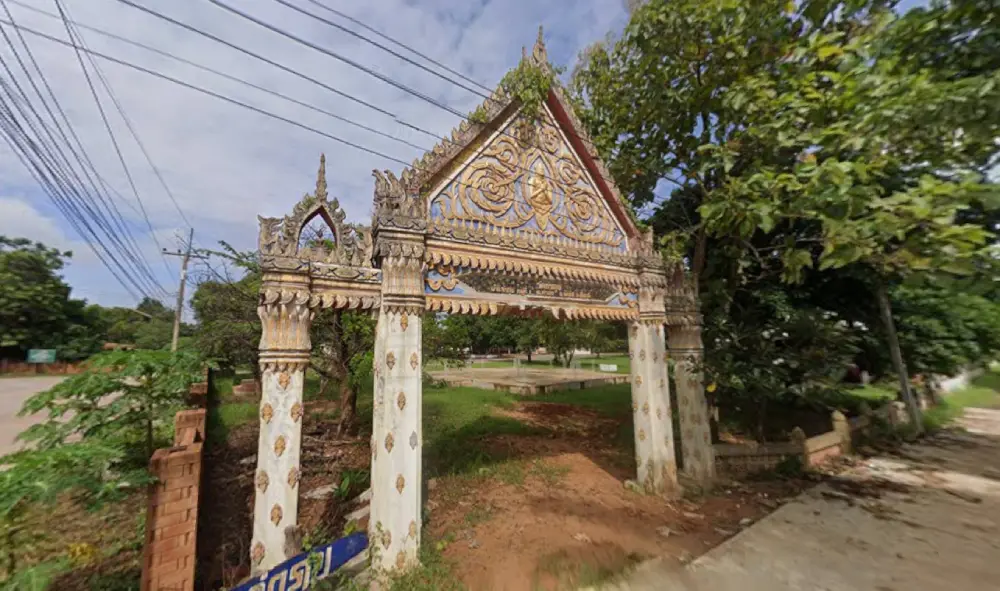
Wat Tha Kup
Open Days: Daily
Opening Hours: 08.00 – 17.00
Wat Tha Kup in Tha Kup Subdistrict, Sap Yai District, Chaiyaphum Province, is an important community Buddhist temple of Ban Tha Kup. The temple serves as a religious, cultural, and spiritual center for monks, local Buddhist devotees, villagers, and visitors. Local information records that the temple was built in 1935 and received its royal boundary for monastic rites in 1992. Today, it remains a living temple where people come for merit-making, Buddhist ceremonies, meditation, local traditions, and community activities.
For foreign travelers looking for a meaningful cultural stop in Chaiyaphum, Wat Tha Kup offers a quiet and authentic view of a rural northeastern Thai temple. This is not a large commercial tourist attraction, but a real community temple closely connected with the everyday life of Ban Tha Kup. Its importance lies in its role as a spiritual home, its connection with the village name, its monastic structures, its annual merit-making activities, and its continuing function as a place where Buddhism and local life meet naturally.
Tha Kup Subdistrict is part of Sap Yai District in Chaiyaphum Province. Some older Thai records may refer to Sap Yai as a minor district because of its former administrative status, but in present usage it is Sap Yai District. Wat Tha Kup is located in Ban Tha Kup, Moo 1, Tha Kup Subdistrict, Sap Yai District, Chaiyaphum 36130. The surrounding area is rural, with village roads, public routes, waterways, and local communities. The temple is therefore not isolated from the village; it is part of the social and spiritual structure of the community.
The history of Wat Tha Kup is closely tied to the identity of Ban Tha Kup. Historical temple records mention that local villagers helped establish the temple, with Nai Kaew Kaen Ran Ya encouraging the community and donating land for the temple site. Because the temple was named after the village, Wat Tha Kup carries the identity of the community directly in its name. This connection gives the temple strong emotional meaning for local people, as it represents both their faith and their shared memory as residents of Ban Tha Kup.
The temple received its royal boundary for monastic rites on 21 December 1992. In Thai Buddhism, this boundary is significant because it allows the ordination hall to be used for important monastic acts according to Buddhist discipline. The royal boundary of Wat Tha Kup measures 24 meters wide and 30 meters long. This recognition marks the temple’s development from a community-supported religious place into a fully functioning Buddhist temple with formal monastic status.
Wat Tha Kup belongs to the Mahanikaya order and is classified as a community-supported temple. In rural northeastern Thailand, such temples often serve many roles at once. They are places for religious ceremonies, moral education, merit-making, annual festivals, community cooperation, and emotional support. Wat Tha Kup is therefore meaningful not only to monks, but also to the villagers who use the temple throughout the year for both religious and community purposes.
The boundaries of the temple show how closely it is connected to the local landscape. To the north, east, and west, the temple borders public roads, while to the south it borders Lam Huai Som Poi, a local waterway. This location places the temple within the daily movement of the village and near a natural water feature. For visitors, this helps explain why rural Thai temples are often closely linked with roads, water sources, agriculture, and community settlement.
Several important buildings inside Wat Tha Kup reflect the temple’s development over time. The ordination hall measures 24 meters wide and 30 meters long and was built in 1986 as a concrete structure. The sermon hall measures 12 meters wide and 21 meters long and was built in 1982 as a wooden structure. The temple also has one wooden monks’ residence, a vihara measuring 15 meters wide and 18 meters long built in 1983, a reinforced-concrete merit hall, and one crematorium. These structures allow the temple to support religious ceremonies, merit-making, funerary rites, and community gatherings.
The ordination hall is one of the most important sacred spaces in the temple. It is used for formal monastic ceremonies and is the spiritual center of the compound. Visitors should begin a temple visit by paying respect to the Buddha image or the sacred area opened for worship. This simple act helps create a respectful and mindful atmosphere. The ordination hall also represents the temple’s recognized religious status after receiving its royal boundary.
The sermon hall plays an important role in daily religious and community life. In a rural Thai temple, a sermon hall is more than a building. It is used for listening to Dhamma talks, making merit, holding meetings, preparing festivals, offering food to monks, and welcoming people during Buddhist events. At Wat Tha Kup, the sermon hall helps connect monks and villagers through shared religious activities and community participation.
The vihara is another important area for worship and reflection. Built in 1983, it provides a sacred space for devotees to pray, chant, and contemplate Buddhist teachings. Like many structures in community temples, the vihara represents collective faith. It is not merely an architectural feature, but a visible sign of how local people have supported Buddhism in their village over time.
The monks’ residence supports the living monastic side of the temple. Resident monks are essential for keeping a temple active throughout the year. They perform daily chanting, observe monastic discipline, support villagers during ceremonies, receive offerings, and guide local devotees. Recent temple information records 5 resident monks at Wat Tha Kup, showing that the temple remains active as a functioning religious institution within the community.
The merit hall and crematorium show how the temple supports important life events of the villagers. In Thai communities, a temple is not only used for joyful merit-making or Buddhist festivals. It also supports funerary rites, memorial ceremonies, and acts of dedication for the deceased. These functions make Wat Tha Kup a place where villagers gather during both happiness and sorrow, receiving spiritual comfort through Buddhist practice.
Wat Tha Kup has also played a role in Buddhist education. Historical records mention a Dhamma-study school at the temple, opened in 1991. This shows that the temple has not only been a place of ceremony, but also a place of learning. Buddhist education helps monks, novices, and laypeople understand Buddhist teachings more systematically. It also strengthens the temple’s role as a moral and educational center for the community.
The administrative history of the temple includes Phra Athikan Somphon Chakkawaro as a former abbot. Current information from a recent Kathin project lists Phra Mekhadet Atichitto as the abbot of Wat Tha Kup. The abbot’s role is important because he helps care for the temple, coordinate religious activities, support resident monks, and maintain the temple as a spiritual center for the community.
In a rural community temple, the abbot’s role extends beyond managing buildings. He is a spiritual leader, ceremonial guide, Dhamma adviser, and coordinator between monks, villagers, schools, and local organizations. In Ban Tha Kup, Phra Mekhadet Atichitto also appears as a religious representative in school-related community documents, reflecting the connection between the temple, education, and local society.
Wat Tha Kup hosts Buddhist activities for monks, villagers, and general devotees. These include merit-making on Buddhist holy days, food offerings, Dhamma listening, robe-offering ceremonies, Kathin, memorial rites, and activities on major Buddhist days. These events keep the temple active throughout the year and allow villagers to participate in Buddhism not only as belief, but as lived practice.
Local traditions and culture are central to the temple’s importance. Wat Tha Kup is a place where villagers preserve local merit-making customs, annual festivals, Songkran activities, Buddhist Lent observances, end-of-Lent activities, and ceremonies connected with community life. Through these activities, traditions are not merely remembered; they are practiced, renewed, and passed on to younger generations.
Kathin is one of the important annual activities at Wat Tha Kup. After the Buddhist Lent, local devotees and supporters gather to offer Kathin robes and contributions to support the temple. Recent Kathin project information recorded a Kathin ceremony for Wat Tha Kup on 15 October 2025 at 09.00. Such events show that the temple remains an active center of faith and community cooperation.
Wat Tha Kup also serves as a place for spiritual practice. Meditation in a community temple does not always take the form of a formal retreat. It may include chanting, observing precepts, listening to sermons, making merit, helping with temple work, practicing generosity, and cultivating patience. Visitors who come quietly and respectfully can experience the calming atmosphere of the temple and understand how Buddhism is practiced in everyday village life.
For cultural travelers, the appeal of Wat Tha Kup lies in its authenticity. It is not known for grand spectacle, but for its role as a real village temple. Visitors can see how a local temple functions as a worship place, learning space, ceremonial venue, community memory, and spiritual home. This type of temple offers a deeper view of Thai culture than a quick visit to a famous landmark alone.
The area around Wat Tha Kup can also be connected with local learning and travel sites in Tha Kup Subdistrict, such as Huai Som Poi Reservoir, also known as Tha Kup Reservoir, the 15-million-year fossil shell site at Ban Tha Chuan, and Wang Kung Reservoir. These places make it possible to plan a community-based route that combines Buddhism, water resources, local nature, and geological learning.
Huai Som Poi Reservoir is an important water source in Tha Kup Subdistrict. During some seasons, the area around the reservoir has been promoted as a cosmos flower field with wind turbine scenery and a rural lakeside atmosphere. This adds a natural and recreational dimension to a visit to Wat Tha Kup, especially for travelers who want to combine a temple visit with countryside scenery.
The fossil shell site at Ban Tha Chuan is another interesting place in the subdistrict. It features ancient freshwater shell remains that help visitors learn about the area’s natural past. Combining Wat Tha Kup with this fossil site is suitable for travelers who enjoy learning-based travel, including religion, community history, nature, and local geology within the same route.
The atmosphere inside Wat Tha Kup is modest and peaceful. Visitors should walk quietly, avoid disturbing monks or worshippers, and respect areas used for religious purposes. Photography should be done politely, especially during ceremonies. If a ritual is taking place, visitors should keep a respectful distance and follow the guidance of temple members or local villagers.
Visitors should dress modestly when entering the temple. Shirts should cover the shoulders, and trousers or skirts should be appropriate for a religious place. Shoes should be removed before entering the ordination hall, vihara, or any building where shoes are not allowed. During temple festivals or Kathin ceremonies, travelers should allow extra time and follow the arrangements made by the temple committee or community.
Getting There is most convenient by private car. Travelers can drive to Tha Kup Subdistrict, Sap Yai District, Chaiyaphum Province, and navigate by searching for “Wat Tha Kup, Tha Kup Subdistrict, Sap Yai District, Chaiyaphum.” Roads in the area pass through local communities and rural routes. Those traveling from Mueang Chaiyaphum or nearby districts should plan ahead, especially if continuing to Huai Som Poi Reservoir, the fossil shell site, or other attractions in Sap Yai.
The recommended visiting hours are 08.00 to 17.00, suitable for merit-making, paying respect to sacred areas, and walking quietly around the temple. Travelers who want to join specific events such as Kathin, robe-offering ceremonies, major Buddhist days, or annual merit-making events should check local schedules before traveling because temple activities may follow the lunar calendar and community arrangements.
Wat Tha Kup can be included in a community travel route around Sap Yai District. A half-day trip may include a visit to Wat Tha Kup, Huai Som Poi Reservoir, and a local meal in Sap Yai. Travelers with more time can continue to the 15-million-year fossil shell site at Ban Tha Chuan, Wang Kung Reservoir, or extend the route toward Thep Sathit and Chatturat districts, where more natural attractions, cafés, restaurants, and accommodations are available.
Restaurants in Sap Yai and nearby areas include local Isan food, Thai food, cafés, and restaurant-accommodation venues. These places are suitable for lunch or a break after visiting the temple or nearby attractions. Because small local restaurants may adjust their hours by day or customer flow, travelers should check before visiting. Eating locally also helps support the community economy.
Accommodation near Wat Tha Kup includes local resorts and small lodgings in Sap Yai and nearby districts. These are suitable for travelers who want to stay close to rural attractions, reservoirs, and community sites. Visitors who need more hotel options may stay in Chatturat or Mueang Chaiyaphum and visit Wat Tha Kup as a day trip. The best choice depends on the travel route, transport, and the number of attractions planned.
As a faith-based destination, Wat Tha Kup is ideal for travelers who appreciate local temples with real community roots. It is not a temple of luxury or grand architecture, but a temple of continuity, memory, faith, and village life. Visiting this temple helps travelers understand how Buddhism remains part of everyday life in rural northeastern Thailand.
Overall, Wat Tha Kup brings together community history, royal monastic recognition, important temple structures, Buddhist education, Kathin activities, and resident monastic life. It deserves recognition as a cultural and religious destination in Sap Yai District, especially for travelers who want to understand Chaiyaphum through its villages, temples, water sources, and local traditions rather than through famous attractions alone.
| Name | Wat Tha Kup |
| Location | Ban Tha Kup, Moo 1, Tha Kup Subdistrict, Sap Yai District, Chaiyaphum Province |
| Address | Tha Kup Subdistrict, Sap Yai District, Chaiyaphum 36130, Thailand |
| Highlights | A community Buddhist temple of Ban Tha Kup, serving as a spiritual center, merit-making place, meditation site, and venue for local Buddhist activities |
| History | Local information records the temple as built in 1935 and granted its royal boundary for monastic rites on 21 December 1992 |
| Name Origin | Named after Ban Tha Kup, the village where the temple is located, reflecting its direct connection with the local community |
| Distinctive Features | A rural northeastern Thai temple combining Buddhism, local traditions, meditation, moral learning, and community life |
| Royal Boundary | 24 meters wide and 30 meters long |
| Boundaries | North: public road; South: Lam Huai Som Poi; East: public road; West: public road |
| Sacred Objects / Important Features | Ordination hall, sermon hall, vihara, monks’ residence, merit hall, crematorium, and community religious activity spaces |
| Main Areas / Zones | Ordination hall, vihara, sermon hall, monks’ residence, merit hall, crematorium, temple courtyard, merit-making area, and community activity area |
| Facilities | Sermon hall, merit hall, crematorium, temple courtyard, and spaces for religious activities |
| Traditions / Main Activities | Buddhist holy day merit-making, food offerings, Dhamma listening, robe-offering ceremonies, Kathin, memorial rites, and major Buddhist observances |
| Abbot / Caretaker | Phra Mekhadet Atichitto, Abbot of Wat Tha Kup |
| Resident Monks | 5 monks |
| Open Days | Daily |
| Opening Hours | 08.00 – 17.00 |
| Travel Information | Best reached by private car. Navigate to Tha Kup Subdistrict, Sap Yai District, Chaiyaphum Province, and search for Wat Tha Kup on the map |
| Current Status | A community Buddhist temple in Tha Kup Subdistrict, Sap Yai District, Chaiyaphum Province, still used for religious ceremonies, merit-making, and community activities |
| Local Administrative Contact | Tha Kup Subdistrict Administrative Organization, Tel. 044-056-127 |
| Nearby Tourist Attractions | 1. Huai Som Poi Reservoir / Tha Kup Reservoir, about 3 km 2. Cosmos Flower Field at Huai Som Poi Reservoir, about 3 km 3. 15-Million-Year Fossil Shell Site at Ban Tha Chuan, about 8 km 4. Wang Kung Reservoir, about 12 km 5. Wat Sap Sai Or, about 12 km 6. Wat Sutthi Wanaram, Noen Sa-nga District, about 24 km 7. Red Lotus Field at Bueng Lahan, Chatturat District, about 38 km, Tel. 044-812350 |
| Nearby Restaurants | 1. Touch The Wind Restaurant & Apartments, about 15 km, Tel. 092-889-1004 2. Cafe Khun Yai & Resort, about 16 km, Tel. 063-228-1159 3. Thai Seri Sap Yai, about 17 km, Tel. 097-305-3591 4. 62Cafe, about 17 km 5. Iced Bread Station, about 17 km 6. Ban Coffee Mueang Phet Na Chaiyaphum, about 23 km, Tel. 096-420-6342 7. Jungle Cafe Nai Yang Klak Branch, about 24 km, Tel. 095-601-3499 |
| Nearby Accommodations | 1. Ban Thong Charoen, about 5 km, Tel. 061-965-1994 2. Touch The Wind, about 15 km, Tel. 092-889-1004 3. Cafe Khun Yai & Resort, about 16 km, Tel. 063-228-1159 4. Sap Yai Resort, about 17 km, Tel. 081-966-5717, 088-474-7911 5. Fresh & Frame Resort, about 18 km, Tel. 080-591-8695, 089-721-3243 6. Mae Fah Water Park Resort, about 28 km, Tel. 091-019-8292 |
Frequently Asked Questions (FAQ)
Q: Where is Wat Tha Kup located?
A: Wat Tha Kup is located in Ban Tha Kup, Moo 1, Tha Kup Subdistrict, Sap Yai District, Chaiyaphum Province, northeastern Thailand.
Q: When was Wat Tha Kup built?
A: Local information records that Wat Tha Kup was built in 1935 and received its royal boundary for monastic rites on 21 December 1992.
Q: Who is the abbot of Wat Tha Kup?
A: The abbot of Wat Tha Kup is Phra Mekhadet Atichitto, who oversees the temple’s religious and community roles.
Q: What can visitors see inside Wat Tha Kup?
A: Visitors can see the ordination hall, sermon hall, vihara, monks’ residence, merit hall, crematorium, temple courtyard, and spaces used for Buddhist ceremonies.
Q: What are the opening hours of Wat Tha Kup?
A: Wat Tha Kup is open daily from 08.00 to 17.00, suitable for merit-making, paying respect, and quiet temple visits.
Q: How can travelers get to Wat Tha Kup?
A: The temple is best reached by private car. Travelers can navigate to Tha Kup Subdistrict, Sap Yai District, Chaiyaphum Province, and search for Wat Tha Kup on the map.
Q: What nearby attractions can be combined with a visit?
A: Nearby places include Huai Som Poi Reservoir, the cosmos flower field at the reservoir, the 15-million-year fossil shell site at Ban Tha Chuan, Wang Kung Reservoir, Wat Sap Sai Or, and the Red Lotus Field at Bueng Lahan.
Q: What type of travelers is Wat Tha Kup suitable for?
A: It is suitable for travelers interested in rural Thai temples, peaceful merit-making, local Buddhist culture, community history, and routes combining temples with reservoirs and local learning sites.
 Category: ●Places of Worship
 Group: ●Temple
Last Update : 2 MonthAgo
 Last Update : 2 MonthAgo
 Click to Access the Navigation Map GPS
 Art, Culture and Heritage
 Historical Sites and Monuments(1)
 Landmarks and Memorials(3)
 Royal Palace(1)
 Art, Craft Centres, Tradition(3)
 Educational Places
 Educational Gardens, Farm(1)
Temple(141)
Educational Gardens, Farm(1)
Temple(141)
 Other Sacred Sites(7)
 Suburban Living
 Village, Community(4)
 Nature and Wildlife
 National Parks and Marine Reserves(7)
 Mountain (Doi)(5)
 Dam, Reservoir, Lake(10)
 Waterfalls(15)
 Caves(5)
 River, Canal(4)
 Other natural attractions(1)
 Entertainment and Agricultural
 Farms, Parks and Ecotourism(2)


