
lovethailand home >Northeastern Travel Attractions >Chaiyaphum Travel Attractions >Muang Chaiyaphum >Nai Muang > Wat Song Sila
TL;DR: Wat Song Sila is located at Ban Hin Tang, Nai Mueang Subdistrict, Mueang Chaiyaphum District, Chaiyaphum Province, open Daily, hours 08.00 – 17.00.
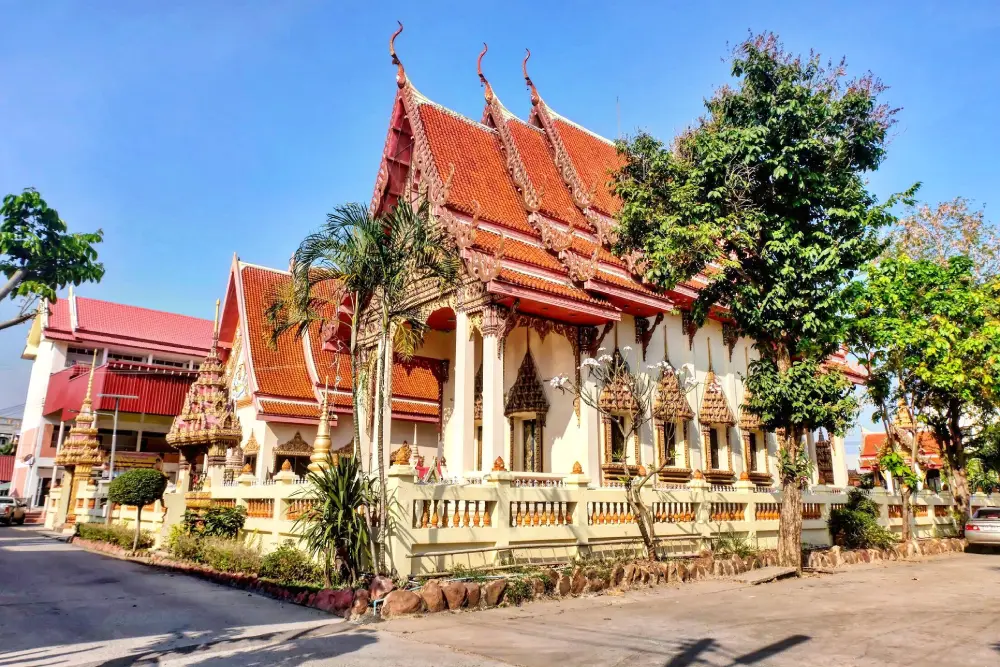
Wat Song Sila
Open Days: Daily
Opening Hours: 08.00 – 17.00
Wat Song Sila Royal Temple in Chaiyaphum Province is one of the most meaningful Buddhist temples in the city center. Located at 179 Ratchathan Road, Ban Hin Tang, Nai Mueang Subdistrict, Mueang Chaiyaphum District, the temple is closely connected with the historical community of Ban Hin Tang, the relocation and development of Chaiyaphum town, and the long-standing role of Buddhism in local society. Today, Wat Song Sila is a third-class royal temple of the ordinary type under the Mahanikaya order, making it an important religious, historical, educational, and cultural site in Chaiyaphum.
For foreign travelers, Wat Song Sila is a good place to understand Chaiyaphum beyond scenic landscapes and natural attractions. It offers a strong sense of local history, a revered principal Buddha image known as Luang Pho To, and a living monastic education environment. The temple is suitable for visitors who want to pay respect, explore a central Chaiyaphum temple, learn about the historical area of Ban Hin Tang, and see how a Thai temple continues to function as a center of faith, education, and community life.
The history of Wat Song Sila is especially interesting because its earliest foundation is not recorded with complete documentary certainty. However, its origin can be understood from the historical context of Chaiyaphum city. The Bangkok Chronicle, dated Chula Sakarat 1225 or 1863 CE, records that King Mongkut granted Luang Wiset Phakdi (Thi), the son of Phraya Phakdi Chumphon (Lae), the position of Phra Phakdi Chumphon, governor of Chaiyaphum. During this period, Ban Hin Tang became an important location in the development of the city, and Wat Song Sila is believed to have emerged within this same historical setting.
The temple was originally known as Wat Hin Tang, named after Ban Hin Tang, the old local settlement where it stands. The name “Hin Tang” refers directly to the community identity and landscape memory of the area. In 1897, Phra Haruethai (Bua), then governor of Chaiyaphum, changed the temple’s name from Wat Hin Tang to Wat Song Sila. Although the wording became more formal and elegant, the meaning remained connected to the original idea of standing stones or Hin Tang. This makes the temple’s name a bridge between the older community identity and its later status as a royal temple.
Official temple records list the foundation year of Wat Song Sila as 1874, and the temple received its Wisungkhamsima on February 13, 1979. These dates help frame the temple’s historical development more clearly. What began as a local temple associated with Ban Hin Tang gradually developed into a royal temple with broader religious and social responsibilities. The temple grounds cover 8 rai, 2 ngan, and 70 square wah, and are bordered by important urban roads including Yutitham Road, Ratchathan Road, Ratchaphatsadu Road, and Song Sila Road.
The historical importance of Wat Song Sila is inseparable from Ban Hin Tang. During the time of Phra Phakdi Chumphon (Thi) as governor of Chaiyaphum, Ban Hin Tang was considered a suitable area for establishing the town because of its spacious and favorable location. The town was moved from the old area around Non Po Pit, near Prang Ku and Nong Bua Mueang Kao, to the new settlement at Ban Hin Tang. Because Wat Song Sila stands in this area, the temple is not merely a neighborhood temple; it is part of the historical landscape of modern Chaiyaphum.
Phra Phakdi Chumphon (Thi) served the kingdom for 12 years and passed away in 1875. The period between 1863 and 1875 is therefore important when discussing the assumed early development of Wat Song Sila. Even though the exact year of construction is not fully documented, this historical window explains why the temple is strongly linked to the city’s formative period. The temple can be seen as a living witness to the settlement, growth, and religious life of Chaiyaphum during a major transition in local history.
The most important sacred image inside Wat Song Sila is Luang Pho To, the principal Buddha image in the ordination hall. Luang Pho To is a large Buddha image in the Subduing Mara posture, made of cement, lacquered, and gilded. It is deeply respected by local people. According to temple history, the image was associated with the construction and later rebuilding of the ordination hall. Its face was refined through several stages until it reached the appearance that local people admired, and sacred relics from Bangkok were enshrined in the head of the image. This has made Luang Pho To one of the most revered Buddha images in Chaiyaphum.
Paying respect to Luang Pho To is the central experience of visiting Wat Song Sila. The image is not only the principal Buddha image of the ordination hall; it also carries the memory of community faith, craftsmanship, and local participation. Its history reflects the involvement of governors, artisans, and local residents in shaping the religious heart of the temple. For visitors, Luang Pho To provides a meaningful point of connection with the spiritual life of Chaiyaphum.
The ordination hall is another key area of the temple. The current hall was built in 1979 as a reinforced concrete structure measuring 7 meters wide and 10 meters long. It is used for important monastic ceremonies and houses the principal Buddha image. The atmosphere inside is calm and suitable for prayer, meditation, and respectful worship. Visitors should dress modestly, remove shoes where required, and remain quiet because the ordination hall is a sacred space used for formal Buddhist functions.
Besides the ordination hall, Wat Song Sila includes a sermon hall, a royal commemorative viharn, a royal commemorative Buddha hall, monks’ residences, a monastic school area, and temple grounds used for Buddhist activities. The sermon hall supports religious and community gatherings, while the viharn and Buddha hall enrich the temple layout. Together, these areas show that Wat Song Sila is not just a place for a short visit, but a functioning temple with multiple roles in worship, education, and community life.
Wat Song Sila has a strong educational role. The temple has established a Phra Pariyattidhamma school with a general education division for monks and novices at the secondary school level, from Mathayom 1 to Mathayom 6. The original information records 255 students and 14 teachers and educational personnel. This role makes the temple a place where Buddhist education and general education are combined, continuing the traditional Thai role of temples as centers of learning.
Phutthatham Wittaya School at Wat Song Sila Royal Temple forms an important part of the temple’s modern identity. In Thailand, temples have long served as educational centers in local communities. Wat Song Sila continues this role by providing education for monks and novices. Recent visits by the Chaiyaphum Provincial Office of Buddhism to monitor scholarship students at the school show that the educational function of the temple remains active and relevant today.
The current abbot of Wat Song Sila is Phra Watcharachai Sophon (Thongchat Sirichanto). He serves as the abbot of this royal temple and as a senior monk with responsibilities in the local ecclesiastical structure. His role supports the temple’s ongoing religious, educational, and social functions. Under continuing monastic leadership, Wat Song Sila remains an important Buddhist center for the Chaiyaphum community.
Its status as a third-class royal temple of the ordinary type gives Wat Song Sila a higher level of importance than many ordinary local temples. A royal temple is associated with formal recognition, Buddhist administration, historical value, and social importance. This status helps explain why Wat Song Sila should be included among the key temples of Chaiyaphum city. It combines local history, a revered Buddha image, monastic education, and active religious life.
For travelers, Wat Song Sila is a practical starting point for a cultural route in Chaiyaphum city. Since it is located in Nai Mueang Subdistrict, it is close to restaurants, hotels, and several important attractions. Visitors can begin the day by paying respect at Wat Song Sila, then continue to Phraya Phakdi Chumphon Monument, Prang Ku Chaiyaphum, Nong Pla Thao Public Park, or Wat Sila At and Phu Phra. This route offers a balanced picture of Chaiyaphum through Buddhism, local heroes, ancient Khmer-style remains, public spaces, and city life.
When visiting the temple, it is best to begin at the ordination hall and pay respect to Luang Pho To. After that, visitors can walk around the sermon hall, viharn, Buddha hall, and school area from an appropriate distance. Learning the story of the name change from Wat Hin Tang to Wat Song Sila will make the visit more meaningful. The name “Song Sila” is not simply a beautiful temple name; it preserves the memory of Ban Hin Tang, the old local settlement, and the city’s historical development.
Wat Song Sila is especially suitable for those interested in the history of Chaiyaphum during the time of Phra Phakdi Chumphon (Thi). Because the temple is located within the historical context of Ban Hin Tang, it helps visitors connect religious history with local administration and urban settlement. When combined with Phraya Phakdi Chumphon Monument and Prang Ku, the temple becomes part of a wider story, from ancient archaeological remains to the establishment of the modern provincial city.
Architecturally and spatially, Wat Song Sila is a good example of an urban Thai temple with a compact but complete layout. Its land area supports an ordination hall, sermon hall, viharn, Buddha hall, monks’ quarters, a monastic school, and community activity areas. This layering of functions is typical of many important Thai temples. Travelers should understand that the temple is not a museum-like attraction, but a living religious institution used by monks, novices, teachers, local residents, and worshippers.
Wat Song Sila also offers a peaceful experience within the city. Although it stands in an urban area, the temple maintains a calm and orderly atmosphere. A normal visit may take about 45 minutes to 1 hour, allowing time to pay respect, observe the temple grounds, learn about the history, and take photographs respectfully. For families, elderly travelers, and visitors staying in Chaiyaphum city, the temple is easy to access and can be combined with meals or accommodation nearby.
Getting There is convenient from anywhere in Chaiyaphum city. Visitors can travel by private car, rental car, local taxi, or local transport. The temple is located on Ratchathan Road in Ban Hin Tang, Nai Mueang Subdistrict, close to key city roads and government areas. From Phraya Phakdi Chumphon Monument, the drive is short. Searching for “Wat Song Sila Royal Temple” on a map application is the easiest way to navigate there.
Travelers arriving from other provinces can start from Chaiyaphum Bus Terminal or a hotel in the city center, then take a local taxi or hired vehicle to the temple. Because the temple is located in town, it is much easier to reach than attractions in mountainous or remote areas. Visitors without a private vehicle can stay in Chaiyaphum city and visit Wat Song Sila as the first stop before continuing to Prang Ku, Phraya Phakdi Chumphon Monument, Nong Pla Thao Public Park, or nearby restaurants.
The best time to visit is in the morning or late afternoon before closing time, when the weather is more comfortable and the atmosphere is suitable for quiet worship. On Buddhist holy days or major Buddhist festivals, the temple may be busier with local people coming to make merit. Visitors should remain especially respectful during these times. Photography should be done discreetly and should not disturb monks, novices, or worshippers.
Proper temple etiquette is important. Visitors should dress modestly, avoid sleeveless tops and overly short clothing, speak softly, remove shoes where required, and avoid touching Buddha images or sacred objects unnecessarily. Visitors should also avoid entering monks’ residences or school areas unless invited or permitted. Respectful behavior helps preserve the atmosphere of the royal temple and supports meaningful cultural travel.
Wat Song Sila is valuable because it is more than a visually attractive temple. Its importance lies in its history, its connection to Ban Hin Tang, its revered Buddha image, its monastic education role, and its royal temple status. These features make it suitable for pilgrims, students, local history researchers, cultural travelers, and anyone who wants to understand Chaiyaphum in greater depth.
Overall, Wat Song Sila connects past and present in a clear and meaningful way. From its older identity as Wat Hin Tang to its formal name Wat Song Sila, from the veneration of Luang Pho To to its role as a royal temple, and from community faith to monastic education, the temple represents the living relationship between Buddhism, history, and society in Chaiyaphum. A visit here offers more than a short temple stop; it helps travelers understand the roots of the city and the continuing role of Thai temples in spiritual, educational, and community life.
| Name | Wat Song Sila Royal Temple |
| Location | Ban Hin Tang, Nai Mueang Subdistrict, Mueang Chaiyaphum District, Chaiyaphum Province |
| Address | 179 Ratchathan Road, Moo 1, Ban Hin Tang, Nai Mueang Subdistrict, Mueang Chaiyaphum District, Chaiyaphum Province 36000, Thailand |
| Temple Type | Third-Class Royal Temple, Ordinary Type, Mahanikaya Order |
| Highlights | Luang Pho To, the principal Buddha image in the ordination hall; Ban Hin Tang history; royal temple status; and monastic education |
| History / Period | Believed to have been founded during the time of Phra Phakdi Chumphon (Thi), governor of Chaiyaphum, between 1863 and 1875; official temple records list 1874 as the foundation year |
| Wisungkhamsima Date | February 13, 1979 |
| Name Origin | Originally named Wat Hin Tang after Ban Hin Tang; renamed Wat Song Sila in 1897 while preserving the original meaning of Hin Tang |
| Important Sacred Image | Luang Pho To, the principal Buddha image in the ordination hall, a gilded cement Buddha image in the Subduing Mara posture revered by local people |
| Main Areas / Zones | Ordination Hall and Luang Pho To Sermon Hall Royal Commemorative Viharn Royal Commemorative Buddha Hall Monks’ Quarters Phutthatham Wittaya School / Phra Pariyattidhamma School Temple Grounds for Buddhist Activities |
| Abbot / Caretaker | Phra Watcharachai Sophon (Thongchat Sirichanto) |
| Educational Role | The temple has a Phra Pariyattidhamma school with a general education division for monks and novices from Mathayom 1 to Mathayom 6 |
| Travel Information | Located in Chaiyaphum city on Ratchathan Road, Ban Hin Tang; accessible by private car, local taxi, or local transport from the city center |
| Current Status | Open for worship, merit-making, temple visits, and Buddhist activities |
| Open Days | Daily |
| Opening Hours | 08.00 – 17.00 |
| Main Contact Number | 044-821-844, 044-812-999, 081-660-4792 |
| Nearby Tourist Attractions | 1. Phraya Phakdi Chumphon Monument, about 1 km 2. Prang Ku Chaiyaphum, about 3 km 3. Nong Pla Thao Public Park, about 4 km 4. Chao Pho Phraya Lae Shrine at Nong Pla Thao, about 4 km 5. Wat Sila At (Phu Phra), about 17 km 6. Tat Ton National Park, about 25 km |
| Nearby Restaurants | 1. Panadda Namnueng, about 1 km, Tel. 044-817-774 2. Mata Cuisine, about 4 km, Tel. 093-448-2999 3. Lakeside Coffee & Cuisine, about 4 km, Tel. 084-589-1616 4. Suan Ahan Baan Bai Toey Na Chaiyaphum, about 5 km, Tel. 081-483-1616, 089-722-3040 5. Suan Ahan Tak Mok Chaiyaphum, about 7 km, Tel. 093-343-1592 |
| Nearby Accommodations | 1. Ratanasiri Hotel, about 1 km, Tel. 044-821-258-60 2. HOP INN Chaiyaphum, about 2 km, Tel. 065-950-4681 3. Siam River Resort, about 2 km, Tel. 044-811-999 4. Lertnimitra Hotel Chaiyaphum, about 2 km, Tel. 044-811-522, 080-165-9494 5. Dee Prom Hotel Chaiyaphum, about 2 km, Tel. 088-591-0210 6. Na Care Hotel Chaiyaphum, about 3 km, Tel. 099-014-7921, 080-723-2200 |
Frequently Asked Questions (FAQ)
Q: Where is Wat Song Sila located?
A: Wat Song Sila is located at 179 Ratchathan Road, Ban Hin Tang, Nai Mueang Subdistrict, Mueang Chaiyaphum District, Chaiyaphum Province 36000, Thailand.
Q: Why is Wat Song Sila important?
A: It is a third-class royal temple connected with Ban Hin Tang and the historical development of Chaiyaphum during the time of Phra Phakdi Chumphon (Thi).
Q: What is the main sacred image at Wat Song Sila?
A: The main sacred image is Luang Pho To, the principal Buddha image in the ordination hall and one of the revered Buddha images of Chaiyaphum.
Q: What was the original name of Wat Song Sila?
A: The temple was originally called Wat Hin Tang, named after Ban Hin Tang, before being renamed Wat Song Sila in 1897.
Q: Who is the abbot of Wat Song Sila?
A: The abbot of Wat Song Sila is Phra Watcharachai Sophon (Thongchat Sirichanto).
Q: What are the opening days and hours of Wat Song Sila?
A: Wat Song Sila is open daily from 08.00 to 17.00.
Q: How can travelers get to Wat Song Sila?
A: The temple is located in Chaiyaphum city on Ratchathan Road and can be reached by private car, local taxi, or local transport from the city center.
Q: What nearby attractions can be visited with Wat Song Sila?
A: Nearby attractions include Phraya Phakdi Chumphon Monument, Prang Ku Chaiyaphum, Nong Pla Thao Public Park, Chao Pho Phraya Lae Shrine, Wat Sila At, Phu Phra, and Tat Ton National Park.
Tel : 044629318
 Tel : 044629318
 Category: ●Places of Worship
 Group: ●Temple
Last Update : 3 MonthAgo
 Last Update : 3 MonthAgo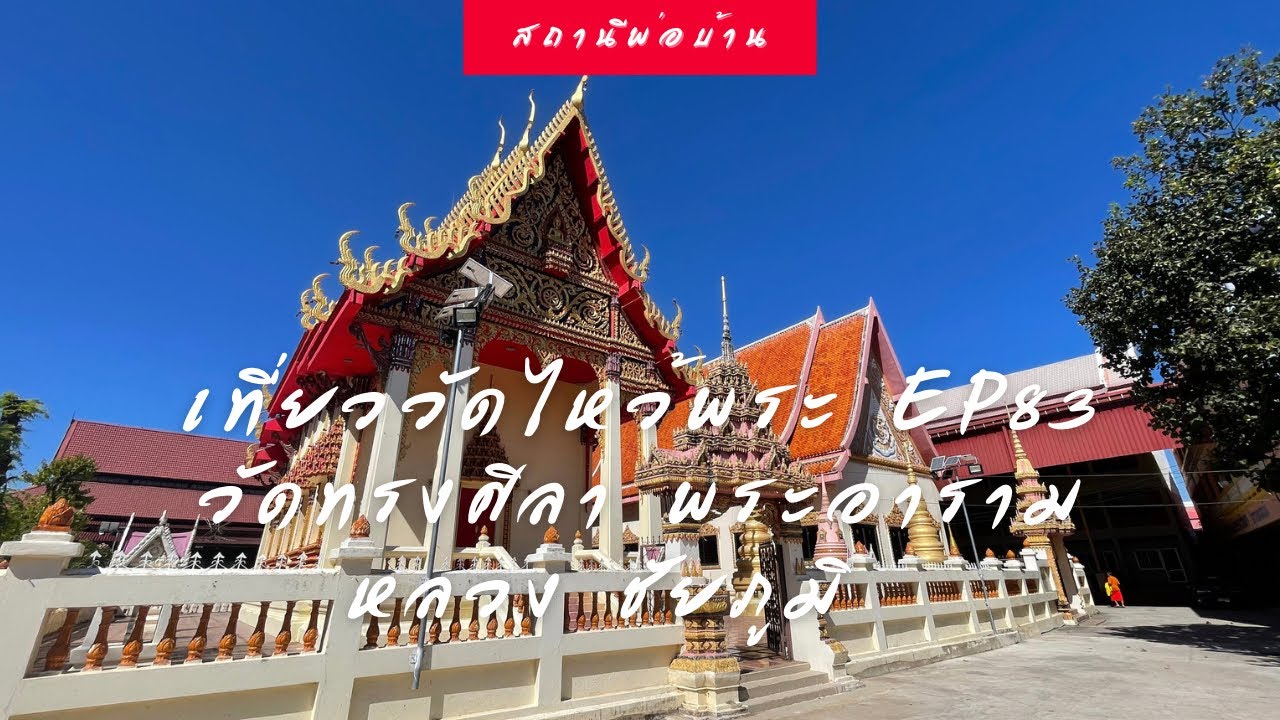
 Click to Access the Navigation Map GPS
Wat Song Sila Map
Recommend

 Art, Culture and Heritage
 Historical Sites and Monuments(1)
 Landmarks and Memorials(3)
 Royal Palace(1)
 Art, Craft Centres, Tradition(3)
 Educational Places
 Educational Gardens, Farm(1)
Temple(141)
Educational Gardens, Farm(1)
Temple(141)
 Other Sacred Sites(7)
 Suburban Living
 Village, Community(4)
 Nature and Wildlife
 National Parks and Marine Reserves(7)
 Mountain (Doi)(5)
 Dam, Reservoir, Lake(10)
 Waterfalls(15)
 Caves(5)
 River, Canal(4)
 Other natural attractions(1)
 Entertainment and Agricultural
 Farms, Parks and Ecotourism(2)


