
lovethailand home >North Travel Attractions >Uthai Thani Travel Attractions >Ban Rai >Huai Haeng > Ban Pha Thung Ancient Pattern Weaving Centre
TL;DR: Ban Pha Thung Ancient Pattern Weaving Centre is located at Mu 2, Ban Pha Thung, Huai Haeng Subdistrict, Ban Rai District, Uthai Thani Province, open Daily, hours 09.00 – 17.00.
Ban Pha Thung Ancient Pattern Weaving Centre
Open Days: Daily
Opening Hours: 09.00 – 17.00
Ban Pha Thung Ancient Pattern Weaving Centre is located at Mu 2, Ban Pha Thung, Huai Haeng Subdistrict, Ban Rai District, Uthai Thani Province. It is one of the most important cultural learning sites in Ban Rai for understanding the textile heritage of the Lao Khrang and Lao Wiang communities. The centre preserves and presents local weaving wisdom through traditional patterns, vivid colors, handwoven cloth, ceremonial textiles, and community products. For foreign travelers interested in Thai textiles, ethnic culture, and living craftsmanship, Ban Pha Thung offers a meaningful opportunity to see how fabric can carry memory, identity, belief, family values, and community pride.
The importance of Ban Pha Thung Ancient Pattern Weaving Centre lies in its role as a living cultural space. It is not only a shop or a product display area. It is a place where visitors can learn how weaving belongs to daily life, ritual life, women’s skills, family traditions, and local identity. The textiles of Ban Pha Thung are created by knowledge passed down through generations. Every thread, color, and pattern reflects the patience and skill of the weavers, as well as the cultural background of the community.
Ban Pha Thung is strongly associated with the textile culture of Lao Khrang and Lao Wiang people. These communities are known for distinctive weaving traditions, especially textiles with rich colors, detailed motifs, and symbolic meanings. Some patterns are inspired by nature, while others are linked to auspicious beliefs, protection, fertility, family life, or ceremonial use. A woven cloth from Ban Pha Thung is therefore more than a beautiful fabric. It is a cultural document that can be read through its motifs, colors, weaving techniques, and social function.
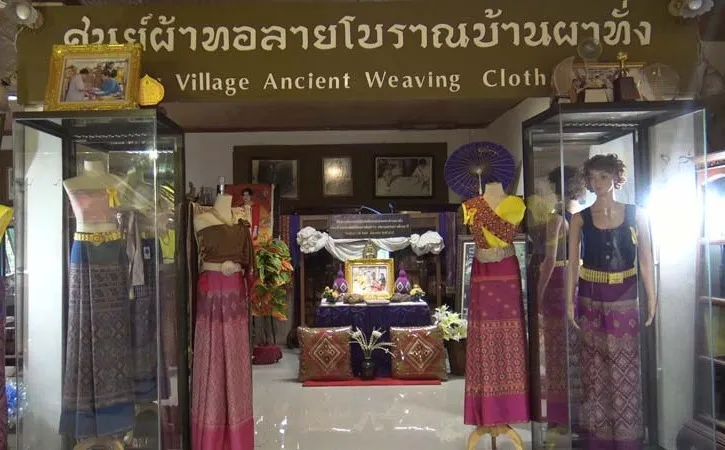
The centre displays different types of woven textiles, including traditional tube skirts, loincloths, shoulder bags, head cloths for novice ordination ceremonies, and the famous pre-wedding bedding set. Each type of textile reflects a different aspect of community life. Tube skirts express identity and local aesthetics. Loincloths are practical everyday textiles. Shoulder bags show simplicity and usefulness. Head cloths for novice ordination ceremonies carry religious meaning. Together, these textiles show how weaving is connected with everyday life, family events, Buddhist ceremonies, and community memory.
The pre-wedding bedding set is one of Ban Pha Thung’s most celebrated cultural products. It is known internationally and has been associated with recognition from UNESCO. In local tradition, a bride was expected to take part in producing bedding before marriage, from spinning cotton and weaving cloth to preparing the complete bedding set. This practice reflected love, patience, skill, and readiness for married life. The bedding set was not merely a household object. It was a symbol of care, responsibility, and the bride’s contribution to her future family.
The importance of the pre-wedding bedding set can be understood on several levels. As craftsmanship, it demonstrates the weaver’s technical ability. As ritual culture, it belongs to the preparation for marriage. As social history, it reflects the role of women and textile production in family life. As heritage, it represents the ability of a local community to preserve meaningful traditions in a modern world. Seeing this textile set at the centre gives visitors a deeper understanding of how handmade objects can hold emotional and cultural value.
Traditional weaving at Ban Pha Thung begins long before the cloth appears on the loom. Cotton must be prepared, threads must be arranged, colors must be selected, and the pattern must be planned carefully. When the weaving begins, the weaver must control the warp and weft threads with precision. Complex patterns require strong memory, concentration, and experience. A single piece of cloth may take many days or longer depending on its size and detail. This slow process is part of the value of handwoven textiles.
The loom is the heart of the weaving demonstration. Visitors can observe the movement of the shuttle, the rhythm of the weaver’s hands, the sound of the reed, and the gradual appearance of the pattern. This experience helps travelers understand that handwoven cloth is not mass-produced. It is made through direct human skill, attention, and cultural memory. Watching the process often changes how visitors think about textiles, because they can see the effort behind every finished piece.
Ancient patterns are one of the strongest identities of Ban Pha Thung. These motifs are not simply decorative. They may relate to beliefs about prosperity, protection, nature, ritual use, or family life. Some are used for special occasions, while others are part of everyday textile culture. To understand these patterns, visitors should listen to explanations from local weavers or caretakers. The meaning of a textile becomes clearer when the story of the pattern is heard from the community that preserves it.
The centre also allows visitors to experience weaving directly. Trying to weave even a small section helps visitors understand the difficulty of controlling thread tension, rhythm, and pattern accuracy. This hands-on experience is especially useful for students, designers, and cultural travelers. It turns weaving from something seen from a distance into something physically understood through the hands.
The centre plays an educational role for younger generations. Weaving traditions survive only when knowledge is transmitted. By creating a place where visitors can learn, ask questions, observe demonstrations, and sometimes try weaving, Ban Pha Thung helps keep local wisdom alive. The centre functions like a community cultural classroom where knowledge is shared through direct experience rather than textbooks alone.
Textile production is also important for the local economy. Buying handwoven products directly from the community supports the weavers and helps sustain the craft. It also reduces the distance between maker and buyer. Travelers who purchase textiles here are supporting not only a product, but also the cultural system behind it: the weavers, their families, their patterns, their time, and their community identity.
Ban Pha Thung Ancient Pattern Weaving Centre is suitable for textile lovers, cultural travelers, designers, students, families, and anyone interested in Thai local wisdom. It is also useful for visitors who want to understand Ban Rai District beyond its natural attractions. Ban Rai is often known for Wat Tham Khao Wong, waterfalls, mountains, and local markets, but Ban Pha Thung reveals another important side of the district: its craft heritage and ethnic cultural memory.
Getting There is convenient by private car or local transport from Ban Rai District. Travel to Ban Pha Thung in Huai Haeng Subdistrict. The centre is located at 32 Mu 2, Ban Pha Thung. Visitors can use online maps and ask local residents for additional guidance. The route can be combined with nearby attractions such as Saw Hai Market, Wat Tham Khao Wong, Pha Rom Yen Waterfall, Ban Karung Ancient Town, and other cultural sites in Ban Rai.
The best visiting time is during the day, between 09.00 and 17.00. Visitors who want to see demonstrations, bring a group, or arrange educational activities should contact the centre in advance. Advance coordination is important for school groups, researchers, tour groups, and anyone who wants a fuller explanation of the weaving process, patterns, and cultural background.
Visitors should approach the centre with respect for the community. Before taking close photographs of weavers or work processes, permission should be requested. Old textiles and tools should not be touched without approval. Asking questions politely and listening to local explanations will make the visit more meaningful. Cultural tourism works best when visitors respect the people who own the knowledge.
When buying textiles, visitors should consider pattern, technique, color, use, and cultural meaning. Some textiles are suitable for tailoring, some for collecting, some for home use, and some for ceremonial or symbolic purposes. Asking about the story of a textile helps buyers understand its value. A handwoven cloth from Ban Pha Thung is not an ordinary souvenir. It is a piece of living heritage.
Ban Pha Thung can be combined with a broader cultural route in Ban Rai. Travelers may visit Saw Hai Market for local food and products, Wat Tham Khao Wong for architecture and nature, Pha Rom Yen Waterfall for forest scenery, and Ban Karung Ancient Town for historical context. This route allows visitors to experience craft, Buddhism, nature, food, and archaeology in one district.
From a heritage perspective, Ban Pha Thung shows that textile preservation is not only about storing old cloth. It is also about continuing to weave old patterns, teaching younger people, supporting local weavers, and helping visitors understand the meaning of handmade textiles. The centre is therefore a living heritage site, where cultural knowledge continues to move through hands, looms, stories, and community life.
In summary, Ban Pha Thung Ancient Pattern Weaving Centre is one of the most valuable cultural destinations in Ban Rai District, Uthai Thani Province. It preserves the textile traditions of Lao Khrang and Lao Wiang communities, presents ancient patterns, displays ceremonial textiles, demonstrates weaving, and highlights the internationally recognized pre-wedding bedding set. A visit here is not only a chance to admire beautiful Thai textiles, but also an opportunity to understand love, family, ritual, craftsmanship, and community pride woven into every piece of cloth.
| Name | Ban Pha Thung Ancient Pattern Weaving Centre |
| Location | Mu 2, Ban Pha Thung, Huai Haeng Subdistrict, Ban Rai District, Uthai Thani Province |
| Address | 32 Mu 2, Ban Pha Thung, Huai Haeng Subdistrict, Ban Rai District, Uthai Thani 61140, Thailand |
| Highlights | Ancient-pattern weaving centre of Lao Khrang and Lao Wiang communities, known for ceremonial textiles, pre-wedding bedding sets recognized by UNESCO, and local weaving demonstrations |
| Distinctive Features | Displays traditional tube skirts, loincloths, shoulder bags, novice ordination head cloths, pre-wedding bedding sets, ancient patterns, and community weaving processes |
| Ethnic / Cultural Background | Lao Khrang and Lao Wiang communities in Ban Pha Thung, Huai Haeng Subdistrict, Ban Rai District |
| Activities | View ancient-pattern textiles, watch weaving demonstrations, try weaving, learn textile meanings, buy community products, and study pre-wedding bedding traditions |
| Key Products | Traditional tube skirts, loincloths, shoulder bags, novice ordination head cloths, ancient-pattern textiles, and pre-wedding bedding sets |
| Travel Information | From Ban Rai District, travel to Ban Pha Thung in Huai Haeng Subdistrict. Private car, rental car, or local transport is recommended, with online map guidance or local assistance. |
| Current Status | Active community learning centre and sales point for ancient-pattern woven textiles of Ban Pha Thung |
| Open Days | Daily |
| Opening Hours | 09.00 – 17.00 |
| Fees | No official admission fee information listed |
| Facilities | Textile display area, weaving demonstration area, community product sales area, textile-pattern learning area, and group visit support by prior coordination |
| Main Areas / Zones | Traditional tube skirt and ancient textile display, pre-wedding bedding set zone, loom demonstration area, hands-on weaving area, community product zone, and Lao Khrang-Lao Wiang cultural learning area |
| Caretaker / Main Contact | Ban Pha Thung Local Weaving Group, Tel. 084-195-4474 / Ban Pha Thung Ancient Pattern Weaving Centre, Tel. 083-316-5128 / Tel. 089-270-9683 |
| Local Agency | Huai Haeng Subdistrict Administrative Organization, Tel. 056-983-598 |
| Nearby Tourist Attractions | 1. Saw Hai Market Ban Rai, about 12 km 2. Wat Tham Khao Wong, about 20 km 3. Paichit Weaving Group, about 14 km 4. Pha Rom Yen Waterfall, about 30 km 5. Ban Karung Ancient Town, about 36 km 6. Kaen Makrut, about 45 km |
| Nearby Restaurants | 1. Baan Suan Restaurant Ban Rai, about 12 km, Tel. 056-539-061 2. Lemone Cafe & Resort Ban Rai, about 12 km 3. Café de Sua Mueang Karung, about 36 km, Tel. 093-416-3567 4. Kuai Tiao Rim Sa Karung, about 36 km, Tel. 097-038-6008 5. Kuai Tiao 9 Baht Mueang Karung, about 36 km, Tel. 099-142-6668 |
| Nearby Accommodations | 1. Baan Suan Resort Ban Rai, about 12 km, Tel. 056-539-060, 098-864-1258 2. Lemone Cafe & Resort Ban Rai, about 12 km 3. Tree Stone House Ban Rai, about 13 km 4. Ban Rai Nai Suan Resort, about 14 km, Tel. 089-267-6174 5. Baan Nub Dao Homestay Mueang Karung, about 36 km |
Frequently Asked Questions (FAQ)
Q: Where is Ban Pha Thung Ancient Pattern Weaving Centre located?
A: It is located at 32 Mu 2, Ban Pha Thung, Huai Haeng Subdistrict, Ban Rai District, Uthai Thani Province.
Q: What is interesting about Ban Pha Thung Ancient Pattern Weaving Centre?
A: The centre is known for Lao Khrang and Lao Wiang ancient-pattern textiles, pre-wedding bedding sets recognized internationally, weaving demonstrations, and community-made textile products.
Q: Why is the pre-wedding bedding set important?
A: It reflects love, patience, and the bride’s weaving skill, from spinning cotton and weaving cloth to preparing a full bedding set. It is also associated with UNESCO recognition.
Q: Can visitors try weaving at the centre?
A: Yes. Visitors can learn and try weaving by prior arrangement with the centre or weaving group, especially for students, researchers, and cultural travelers.
Q: What are the opening hours?
A: The centre is open daily from 09.00 to 17.00. Group visitors should contact the centre in advance.
Q: Who should visit this weaving centre?
A: It is suitable for textile lovers, cultural travelers, designers, students, families, and visitors who want to support community-made products directly.
Q: Are there nearby attractions?
A: Yes. Nearby attractions include Saw Hai Market, Wat Tham Khao Wong, Paichit Weaving Group, Pha Rom Yen Waterfall, Ban Karung Ancient Town, and Kaen Makrut.
Q: What should visitors prepare before going?
A: Visitors should allow enough time, contact the centre in advance for group visits, and ask permission before taking close photographs of people or weaving activities.
 Category: ●Art, Culture and Heritage
 Group: ●Art, Craft Centres, Tradition
Last Update : 4 MonthAgo
 Last Update : 4 MonthAgo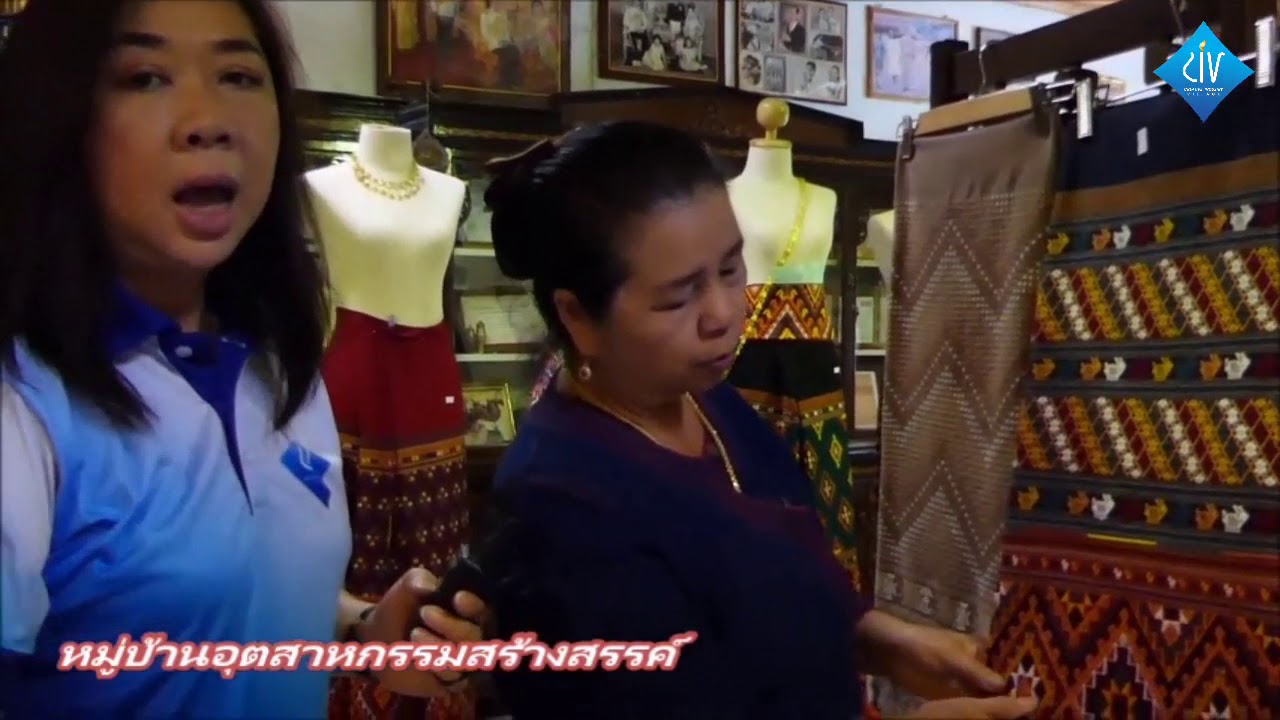
 Click to Access the Navigation Map GPS
Ban Pha Thung Ancient Pattern Weaving Centre Map
Recommend

 Historical Sites and Monuments(3)
 Landmarks and Memorials(1)
Art, Craft Centres, Tradition(5)
Landmarks and Memorials(1)
Art, Craft Centres, Tradition(5)
 Museums(1)
 Places of Worship
 Temple(31)
 Other Sacred Sites(3)
 Suburban Living
 Village, Community(4)
 Local Market(1)
 Nature and Wildlife
 National Parks and Marine Reserves(2)
 Mountain (Doi)(7)
 Dam, Reservoir, Lake(5)
 Waterfalls(5)
 Hot Springs(1)
 Caves(9)
 Flower Field(2)
 River, Canal(2)
 Islands(1)
 Other natural attractions(1)
 Entertainment and Agricultural
 Farms, Parks and Ecotourism(2)
 Shopping
 Shopping and Night Market(1)


