
lovethailand home >North Travel Attractions >Uthai Thani Travel Attractions >Nong Khayang >Thung Phueng > Wat Thap Sai
TL;DR: Wat Thap Sai is located at Ban Thap Sai, Moo 7, Thung Phueng Subdistrict, Nong Khayang District, Uthai Thani Province, open Daily, hours Best Visited During Daylight Hours.
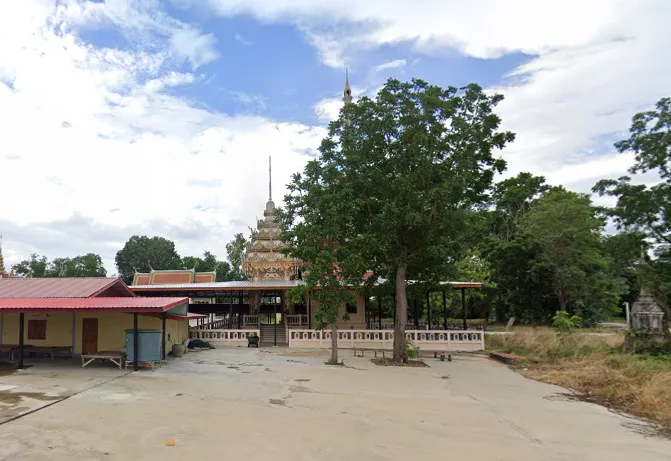
Wat Thap Sai
Open Days: Daily
Opening Hours: Best Visited During Daylight Hours
Wat Thap Sai in Uthai Thani Province, sometimes searched for as Wat Thap Sai or Wat Thap Sai Temple, is officially found in local temple records as Wat Thap Sai in Thung Phueng Subdistrict, Nong Khayang District, Uthai Thani Province. Located at Ban Thap Sai, Moo 7, the temple is a local Buddhist temple that serves as a spiritual center for the surrounding community. It is valued for its ordination hall, principal Buddha image, Buddhist murals, annual temple activities, and its role in preserving local religious life.
Wat Thap Sai is suitable for travelers who want to experience a quiet community temple rather than a crowded tourist attraction. The temple offers a simple and peaceful atmosphere where visitors can pay respect to the Buddha image, observe Buddhist murals, learn about local beliefs, and understand how a rural Thai temple continues to support community life. Its value lies in the connection between religion, art, tradition, and everyday village culture.
Temple records identify Wat Thap Sai as a local Maha Nikaya Buddhist temple established in B.E. 2423. This gives the temple a long history as part of the religious landscape of Nong Khayang District. Like many rural temples in Thailand, Wat Thap Sai developed as a place where villagers could make merit, listen to sermons, join ceremonies, and gather for community activities. Over time, it became more than a place of worship; it became a shared cultural space.
The temple name is closely connected with Ban Thap Sai, the local village where the temple is located. Some travelers may encounter different spellings or search terms when looking for the temple online, but the official temple name appears as Wat Thap Sai in local records. For foreign visitors using navigation tools, it is useful to search by the temple name together with Thung Phueng Subdistrict and Nong Khayang District to avoid confusion.
The ordination hall is the most important religious structure at Wat Thap Sai. It is the sacred space used for formal monastic activities and is also the main place where villagers and visitors pay respect to the principal Buddha image. The atmosphere inside the hall is calm and respectful, allowing visitors to experience the spiritual character of a local Thai Buddhist temple.
The principal Buddha image inside the ordination hall is the main object of devotion. Local people come to pay respect, make merit, and pray for blessings. For travelers, this is a good opportunity to observe how Buddhist worship is practiced in a community setting. The act of paying respect to the Buddha image is not only a religious gesture, but also a moment of reflection and quietness.
The walls inside the ordination hall contain paintings of the Buddha’s life and the Vessantara Jataka. These murals are among the temple’s most meaningful artistic features. The life of the Buddha teaches visitors about important events in Buddhist history, while the Vessantara Jataka communicates ideals of generosity, compassion, sacrifice, and moral strength. Through these paintings, Buddhist teachings are transformed into visual stories that people of all ages can understand.
The Vessantara Jataka is especially important in Thai Buddhist culture. It is connected with the virtue of giving and is often associated with traditional sermons and community merit-making. At Wat Thap Sai, the presence of Vessantara Jataka paintings links the temple to a long tradition of using art to teach moral values. The murals are not only decorative; they function as visual Dhamma lessons.
The murals also reflect local craftsmanship and the role of temple art in community education. In the past, murals helped explain Buddhist stories to people who may not have learned through books. The artist’s use of composition, color, figures, and narrative scenes made Buddhist teachings accessible. Today, these paintings remain valuable as both religious art and local cultural heritage.
Wat Thap Sai continues to serve as a center for Buddhist activities. Local people come to make merit, offer food to monks, chant, listen to sermons, and join ceremonies on important Buddhist holy days such as Makha Bucha Day, Visakha Bucha Day, Asalha Bucha Day, Buddhist Lent, and the end of Buddhist Lent. These activities keep the temple active and closely connected with community life.
The annual temple fair is another important occasion for the community. It brings villagers, relatives, and visitors together to make merit, support temple activities, and maintain local traditions. A temple fair in rural Thailand is not only a festive event; it is also a social occasion where people reconnect, support the temple, and strengthen community bonds.
Activities connected with important national and religious occasions also reflect the close relationship between Buddhism, community identity, and Thai cultural values. During such events, people may join merit-making, listen to sermons, and take part in activities that express unity and respect. Wat Thap Sai therefore functions as a meeting point where faith, local culture, and social connection come together.
For cultural travelers, Wat Thap Sai is a useful place to learn about rural temple life in Uthai Thani. Visitors can see how the ordination hall, Buddha image, murals, and open temple grounds all support religious and community activities. The temple demonstrates that local Buddhist temples are living spaces, not only historic or decorative sites.
The temple atmosphere is quiet and suitable for reflection. Visitors can walk around the temple grounds, spend time in the ordination hall, and observe the mural paintings carefully. The value of the visit comes from moving slowly and respectfully, allowing the details of the place to become clear. Wat Thap Sai is best appreciated as a community temple with cultural depth rather than a fast sightseeing stop.
Those interested in art should spend time observing the mural paintings inside the ordination hall. The scenes from the Buddha’s life introduce key moments of Buddhist history, while the Vessantara Jataka emphasizes generosity and sacrifice. These images show how Thai temples use art to preserve religious teachings, cultural values, and local visual traditions.
Photography inside the temple should be done respectfully. Visitors should avoid using strong flash, touching the murals, disturbing worshippers, or taking inappropriate poses in sacred areas. Murals and religious objects are part of the temple’s cultural heritage, so careful behavior helps preserve them for future visitors.
Getting There is easiest by private car or rental car. From Uthai Thani town, travel toward Nong Khayang District, then continue to Thung Phueng Subdistrict and Ban Thap Sai, Moo 7. Because the temple is located in a local village area, travelers may use navigation together with local directions. Those without private transport can first reach Nong Khayang District and then hire a local vehicle to the temple.
Visitors without private transport should arrange return travel in advance, as public transportation in rural temple areas may be limited. For families or small groups, a private vehicle is the most convenient option, especially if the temple is combined with other cultural sites in Nong Khayang District and nearby Uthai Thani town.
Wat Thap Sai can be included in a cultural route with Wat Kao Nio, Wat Nong Phluang, Wat Tha Pho, Wat Uposatharam, Trok Rong Ya Walking Street, Wat Sangkat Rattana Khiri, and Wat Chantharam or Wat Tha Sung. This route allows travelers to experience old temples, community murals, sacred Buddha images, local streets, riverside culture, and the wider Buddhist landscape of Uthai Thani.
The best time to visit is in the morning or late afternoon when the weather is more comfortable. If visiting during the annual temple fair or important Buddhist holy days, travelers should allow more time because local people may gather for ceremonies. Visitors should dress modestly, remove shoes where required, speak quietly, and follow local temple manners.
In summary, Wat Thap Sai is a meaningful local temple in Uthai Thani where Buddhist faith, mural art, community life, and local tradition remain closely connected. Its ordination hall, principal Buddha image, paintings of the Buddha’s life, Vessantara Jataka murals, and annual temple activities make it a valuable destination for travelers who want to understand rural Thai Buddhist culture in a quiet and authentic setting.
| Name | Wat Thap Sai, Uthai Thani |
| Common Search Name | Wat Thap Sai / Wat Thap Sai Temple |
| Location | Ban Thap Sai, Moo 7, Thung Phueng Subdistrict, Nong Khayang District, Uthai Thani Province |
| Address | No. 43, Moo 7, Thung Phueng Subdistrict, Nong Khayang District, Uthai Thani Province, Thailand |
| Highlights | Ordination hall, principal Buddha image, murals of the Buddha’s life, Vessantara Jataka paintings, and annual temple fair as a community gathering |
| History | Local Maha Nikaya Buddhist temple. Temple records indicate that it was established in B.E. 2423 |
| Distinctive Features | Community temple in Thung Phueng Subdistrict with an ordination hall, principal Buddha image, and Buddhist murals that communicate moral teachings and local religious art |
| Important Features | Principal Buddha image, murals of the Buddha’s life, Vessantara Jataka paintings, merit-making area, and spaces for Buddhist activities |
| Rituals And Local Beliefs | Merit-making, almsgiving, chanting, listening to sermons, annual temple fair, Makha Bucha Day, Visakha Bucha Day, Buddhist Lent, and the end of Buddhist Lent activities |
| Main Areas / Zones | Ordination hall, principal Buddha image, mural area inside the hall, worship area, merit-making area, religious activity space, and surrounding temple grounds |
| Abbot / Caretaker | Phra Khru Uthai Thamma Wisut |
| Travel Information | From Uthai Thani town, travel toward Nong Khayang District, then continue to Thung Phueng Subdistrict and Ban Thap Sai, Moo 7. Best reached by private car, rental car, or local hired vehicle |
| Current Status | Active local Buddhist temple open for worship, merit-making, and cultural visits |
| Open Days | Daily |
| Opening Hours | Best visited during daylight hours |
| Facilities | Worship area, merit-making area, ordination hall, religious activity space, and peaceful temple grounds |
| Visitor Guidelines | Dress modestly, keep quiet inside the ordination hall, avoid touching murals or religious objects unnecessarily, and photograph respectfully |
| Nearby Tourist Attractions | 1. Wat Kao Nio, about 8 km 2. Wat Nong Phluang, about 9 km 3. Wat Tha Pho, about 11 km 4. Wat Uposatharam, about 17 km 5. Trok Rong Ya Walking Street, about 17 km 6. Wat Chantharam or Wat Tha Sung, about 23 km |
| Nearby Restaurants | 1. Baan Nok Rim Na, about 8 km, Tel. 087-200-4998 2. MRA Cafe & Bistro Uthaithani, about 9 km, Tel. 062-259-1424 3. P.Garden Cafe, about 10 km 4. Krua Yang Na, about 10 km 5. Euamphon Restaurant, about 11 km |
| Nearby Accommodations | 1. Uthai Thani Resort, about 9 km, Tel. 061-592-7033 2. Baan Phu Yai Coffee & Resort, about 9 km, Tel. 090-318-7471 3. Ruean Khao Hom Residence, about 10 km, Tel. 056-510-851, 087-729-9015 4. Dee Prom Resort Uthai Thani, about 12 km, Tel. 084-379-3496 5. C2U Hotel Uthai-thani, about 13 km |
Frequently Asked Questions (FAQ)
Q: Where is Wat Thap Sai located?
A: Wat Thap Sai is located at No. 43, Ban Thap Sai, Moo 7, Thung Phueng Subdistrict, Nong Khayang District, Uthai Thani Province, Thailand.
Q: Is Wat Thap Sai the same as Wat Thap Sai or Wat Thap Sai Temple searched online?
A: The official Thai temple name appears as Wat Thap Sai in local records. Some people may search with slightly different spellings, so using the temple name together with Thung Phueng and Nong Khayang helps locate it more accurately.
Q: Why is Wat Thap Sai important?
A: Wat Thap Sai is a local Maha Nikaya Buddhist temple with an ordination hall, principal Buddha image, murals of the Buddha’s life, and Vessantara Jataka paintings that reflect Buddhist teaching and local temple art.
Q: What can visitors see inside the ordination hall?
A: Visitors can see the principal Buddha image and mural paintings of the Buddha’s life and the Vessantara Jataka, which teach generosity, sacrifice, compassion, and moral values.
Q: Does Wat Thap Sai have an annual temple fair?
A: Yes. Wat Thap Sai has an annual temple fair that brings local people and visitors together for merit-making, temple support, and community activities.
Q: How can travelers get to Wat Thap Sai?
A: From Uthai Thani town, travel toward Nong Khayang District, then continue to Thung Phueng Subdistrict and Ban Thap Sai, Moo 7. A private car, rental car, or local hired vehicle is recommended.
Q: Is there an admission fee for Wat Thap Sai?
A: Wat Thap Sai is a local Buddhist temple where visitors can make merit, pay respect, and visit the temple grounds as usual.
Q: What nearby places can be visited with Wat Thap Sai?
A: Nearby places include Wat Kao Nio, Wat Nong Phluang, Wat Tha Pho, Wat Uposatharam, Trok Rong Ya Walking Street, and Wat Chantharam or Wat Tha Sung.
 Category: ●Places of Worship
 Group: ●Temple
Last Update : 4 MonthAgo
 Last Update : 4 MonthAgo
 Click to Access the Navigation Map GPS
 Art, Culture and Heritage
 Historical Sites and Monuments(3)
 Landmarks and Memorials(1)
 Art, Craft Centres, Tradition(5)
 Museums(1)
Temple(31)
Museums(1)
Temple(31)
 Other Sacred Sites(3)
 Suburban Living
 Village, Community(4)
 Local Market(1)
 Nature and Wildlife
 National Parks and Marine Reserves(2)
 Mountain (Doi)(7)
 Dam, Reservoir, Lake(5)
 Waterfalls(5)
 Hot Springs(1)
 Caves(9)
 Flower Field(2)
 River, Canal(2)
 Islands(1)
 Other natural attractions(1)
 Entertainment and Agricultural
 Farms, Parks and Ecotourism(2)
 Shopping
 Shopping and Night Market(1)


