
lovethailand home >North Travel Attractions >Uthai Thani Travel Attractions >Nong Chang >Uthai Kao > Wat Chaeng
TL;DR: Wat Chaeng is located at Ban Uthai Kao, Moo 1, Uthai Kao Subdistrict, Nong Chang District, Uthai Thani Province, open Daily, hours Best Visited During Daylight Hours.
Wat Chaeng
Open Days: Daily
Opening Hours: Best Visited During Daylight Hours
Wat Chaeng in Uthai Thani Province is one of the oldest and most historically meaningful temples in the old Uthai Kao community of Nong Chang District. Located in Ban Uthai Kao, Moo 1, Uthai Kao Subdistrict, Nong Chang District, Uthai Thani Province, this ancient temple has stood for more than 630 years. It is deeply respected by local people as a sacred Buddhist site, a cultural landmark, and an important place connected with the history of King Taksin the Great.
For foreign travelers who want to understand Uthai Thani beyond its natural scenery and quiet riverside town atmosphere, Wat Chaeng offers a valuable cultural experience. The temple brings together Buddhist faith, local history, ancient architecture, mural painting, folk beliefs, and community memory in one place. Visitors can pay respect to an old principal Buddha image, walk around historical structures, see laterite boundary stones, visit the shrine of King Taksin the Great, and learn how this temple has remained an important spiritual center for the people of Uthai Kao.
Wat Chaeng is believed to have been built around B.E. 1920 during the late Sukhothai period and the early Ayutthaya period. The temple received its consecrated boundary around B.E. 1930, confirming its role as an important Buddhist site for the local community. Evidence such as laterite remains and Sukhothai-style boundary stones in front of the ordination hall reflects the temple’s antiquity and its connection with early Thai artistic traditions.
The temple is closely linked with the old settlement of Uthai Kao, a historic area associated with the former town of Uthai or Uthai Thani. This area has long been connected with local legends, migration, settlement, and the development of communities in the region. Wat Chaeng therefore functions not only as a temple for worship, but also as a living archive of local history, preserving traces of architecture, belief, and memory that have been passed down through generations.
The name “Wat Chaeng” is associated with a historical account involving King Taksin the Great. During the late Ayutthaya period, when Burmese forces invaded Siam, Phraya Tak, later known as King Taksin the Great, was assigned to fight against the Burmese army. After a battle around the present-day Thap Than area, his army continued toward the old town of Uthai. When the troops reached the area of this temple, daybreak had arrived. The Thai word “chaeng” means bright or dawn, and the temple’s name is connected with this moment. Another battle took place in this area, and Phraya Tak won before continuing his march toward Ayutthaya.
This historical association gives Wat Chaeng a strong emotional and cultural meaning. Local people built a shrine to King Taksin the Great within the temple grounds to honor his bravery and his connection with the site. Today, visitors come to the shrine to pay respect, make offerings, and pray for strength, protection, and success. The shrine has become one of the most meaningful places within the temple, especially for Thai visitors who admire King Taksin’s role in national history.
The ordination hall is the spiritual heart of Wat Chaeng. Inside, an ancient principal Buddha image, more than 630 years old, is enshrined. This Buddha image is deeply revered by local residents and Buddhist visitors. Many people come to pay respect, make merit, and pray for blessings. The atmosphere inside the hall is calm and traditional, offering a quiet moment for reflection and devotion.
One of the well-known local beliefs at Wat Chaeng is the practice of passing under the base of the principal Buddha image. Thai visitors believe that this act helps remove misfortune, bring good luck, and create auspiciousness in life. Travelers who observe or participate in this practice should do so respectfully, with proper manners and an understanding that it is a living local belief rather than a staged tourist activity.
In front of the ordination hall are laterite boundary stones, an important architectural and religious feature. In Thai Buddhist temple architecture, boundary stones mark the sacred area of the ordination hall. The laterite stones at Wat Chaeng are significant because they reflect ancient craftsmanship and help confirm the long history of the temple. Their presence makes the temple valuable not only as a sacred place, but also as a site of local art history and archaeology.
The ordination hall was restored in 2015 while preserving the character of the original structure. This restoration allows the temple to continue serving the community while protecting its historic features for future generations. For visitors interested in conservation, Wat Chaeng is a good example of how an old Buddhist site can remain active, sacred, and culturally useful while still preserving traces of the past.
Inside the ordination hall, mural paintings depict the royal biography of King Taksin the Great. These murals add another layer of meaning to the temple. They help visitors understand the historical connection between the temple and the king through visual storytelling. For foreign travelers, the murals are especially useful because they show how Thai temples often preserve historical memory through religious art, architecture, and sacred narrative.
Behind the ordination hall stand a pair of old stupas. These twin stupas are traditionally associated with the burial of remains of high-ranking figures and their spouses in the past. Their presence reflects Thai beliefs about remembrance, merit-making, death, and the afterlife. The stupas also add to the temple’s historic atmosphere, giving visitors a sense that Wat Chaeng has been connected with many generations of local people.
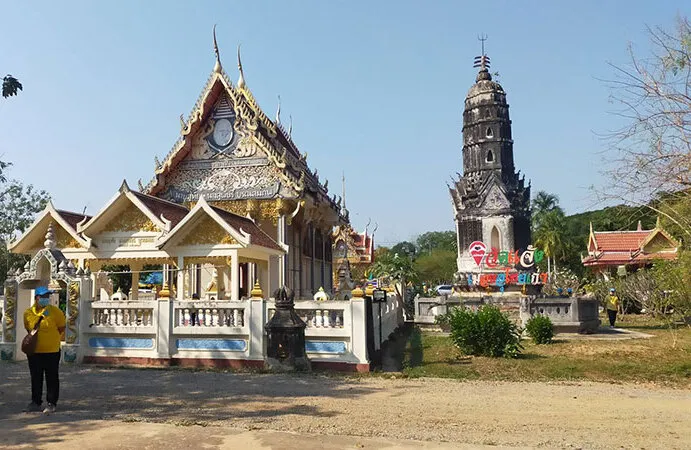
Another remarkable structure at Wat Chaeng is the old prang located near the ordination hall. This prang is around 430 years old and shows a mixture of Burmese, Chinese, and Mon artistic influences. Its form is often compared with the prang of Wat Arun in Bangkok. The mixed artistic style reflects cultural exchange in the past, when communities, traders, craftsmen, and ethnic groups influenced religious architecture across central and western Thailand.
Wat Chaeng also has a vihara dedicated to Luang Pu Maen and Luang Pu Nak. Luang Pu Maen is remembered in local tradition as a teacher of King Taksin the Great, while Luang Pu Nak is remembered as a traditional healer who helped villagers. This part of the temple is important because it shows the wider role of Buddhist monks in Thai society. Monks were not only spiritual leaders, but also teachers, healers, advisors, and community figures who helped sustain local knowledge.
The temple’s connection with traditional healing and local wisdom makes Wat Chaeng more than a historical monument. It reflects how temples once served as centers of education, medicine, ritual, and social support. For travelers interested in Thai culture, this is one of the most important aspects of the site. Wat Chaeng shows how Buddhism, local medicine, community leadership, and historical memory were connected in everyday life.
The temple grounds are peaceful and simple, with the atmosphere of a traditional rural Thai temple. Visitors can walk slowly around the ordination hall, the old prang, the twin stupas, the shrine of King Taksin the Great, and the vihara of Luang Pu Maen and Luang Pu Nak. The site is suitable for cultural travelers, history lovers, photographers interested in heritage sites, and families who want to make merit while learning about Uthai Thani’s past.
Visitors should dress modestly, speak quietly, and avoid climbing on or touching ancient structures. When entering the ordination hall or paying respect at the shrine, it is appropriate to remove shoes where required and behave respectfully. The temple is still an active religious site, so travelers should treat it as a sacred community space rather than only as a tourist attraction.
Getting There is most convenient by private car or rental car. From Uthai Thani town, drive toward Nong Chang District and continue to Uthai Kao Subdistrict. The temple is located in Ban Uthai Kao and can be combined with other nearby cultural attractions in Nong Chang District. Travelers without a private vehicle can travel to Nong Chang and then use local transport or hire a local vehicle to reach the temple.
A half-day visit can include Wat Chaeng, the old Uthai Thani town area, Wat Hua Mueang, and Wat Nong Khun Chat. Travelers with a full day can continue to Wat Chantharam, also known as Wat Tha Sung, Khao Pla Ra Archaeological Site, or Hup Pa Tat. This makes Wat Chaeng a useful stop for anyone planning a cultural route through Uthai Thani Province.
In summary, Wat Chaeng is a meaningful destination for travelers who want to experience Thai history, Buddhist faith, and local heritage in one place. Its ancient ordination hall, old Buddha image, laterite boundary stones, twin stupas, historic prang, murals of King Taksin the Great, shrine, and local legends make it one of the most culturally valuable temples in Uthai Thani.
| Name | Wat Chaeng, Uthai Thani |
| Location | Ban Uthai Kao, Moo 1, Uthai Kao Subdistrict, Nong Chang District, Uthai Thani Province |
| Address | No. 50, Ban Uthai Kao, Moo 1, Uthai Kao Subdistrict, Nong Chang District, Uthai Thani 61110, Thailand |
| Highlights | Ancient temple over 630 years old, old principal Buddha image, ordination hall, laterite boundary stones, old prang, twin stupas, and King Taksin the Great Shrine |
| History | Believed to have been built around B.E. 1920 during the late Sukhothai and early Ayutthaya periods, with its consecrated boundary granted around B.E. 1930 |
| Name Origin | The name is linked with the story of King Taksin the Great reaching this area at daybreak before fighting Burmese forces |
| Distinctive Features | Ancient Buddhist architecture with Sukhothai, Ayutthaya, Burmese, Chinese, and Mon artistic influences |
| Sacred Objects | Ancient principal Buddha image, King Taksin the Great Shrine, Luang Pu Maen Vihara, and Luang Pu Nak Vihara |
| Rituals And Local Beliefs | Merit-making, praying for blessings, passing under the Buddha image base for auspiciousness, and paying respect to King Taksin the Great |
| Main Areas / Zones | Ordination hall, ancient Buddha image, laterite boundary stones, murals, twin stupas, old prang, King Taksin the Great Shrine, Luang Pu Maen Vihara, and Luang Pu Nak Vihara |
| Abbot / Caretaker | Phra Khru Arun Piyakit (Phumisith Piyasilo) |
| Travel Information | From Uthai Thani town, travel toward Nong Chang District and continue to Uthai Kao Subdistrict. The temple is most convenient by private car, rental car, or local hired vehicle from Nong Chang |
| Current Status | Active Buddhist temple open for worship, merit-making, and cultural visits |
| Open Days | Daily |
| Opening Hours | Best visited during daylight hours |
| Facilities | Parking area, worship areas, walking areas around historic structures, and sacred points within the temple grounds |
| Nearby Tourist Attractions | 1. Old Uthai Thani Town, about 1 km 2. Wat Hua Mueang, about 3 km 3. Wat Nong Khun Chat, about 8 km 4. Khao Pla Ra Archaeological Site, about 28 km 5. Wat Chantharam or Wat Tha Sung, about 32 km 6. Hup Pa Tat, about 45 km |
| Nearby Restaurants | 1. Baan Ja Cafe, about 7 km 2. Kin Kan Ploen Coffee&Food, about 7 km 3. Krua Chomphu, about 7 km, Tel. 089-856-1684 4. Baan Suan Khun Yai Nong Chang 91, about 10 km, Tel. 094-647-9597 5. Sukhothai Noodle Nong Chang, about 8 km |
| Nearby Accommodations | 1. Nam Hom Resort, about 9 km 2. The Khun, about 18 km, Tel. 094-669-9935 3. Dee Prom Resort Uthai Thani, about 20 km, Tel. 084-379-3496, 063-234-0818 4. C2U Hotel Uthai-thani, about 23 km, Tel. 056-511-979, 082-401-4441 5. S Ville Resort, about 27 km, Tel. 091-292-9789, 081-888-6791 |
Frequently Asked Questions (FAQ)
Q: Where is Wat Chaeng located?
A: Wat Chaeng is located in Ban Uthai Kao, Uthai Kao Subdistrict, Nong Chang District, Uthai Thani Province, Thailand.
Q: Why is Wat Chaeng historically important?
A: The temple is connected with the story of King Taksin the Great, who fought Burmese forces in this historic area before continuing toward Ayutthaya.
Q: What are the main highlights inside Wat Chaeng?
A: The main highlights include the old ordination hall, the ancient principal Buddha image, laterite boundary stones, mural paintings, twin stupas, an old prang, the King Taksin the Great Shrine, and the viharas of Luang Pu Maen and Luang Pu Nak.
Q: What type of travelers should visit Wat Chaeng?
A: Wat Chaeng is suitable for cultural travelers, history lovers, Buddhist visitors, photographers, and anyone interested in old temples and local heritage in Uthai Thani.
Q: Is there any special local belief at Wat Chaeng?
A: A well-known local belief is passing under the base of the principal Buddha image for auspiciousness, along with paying respect to King Taksin the Great for blessings.
Q: How can travelers get to Wat Chaeng?
A: The easiest way is by private car or rental car from Uthai Thani town toward Nong Chang District and Uthai Kao Subdistrict. Local hired transport from Nong Chang can also be used.
Q: Is Wat Chaeng still an active temple?
A: Yes. Wat Chaeng is still an active Buddhist temple where visitors can make merit, pray, and explore its historical structures.
Q: What nearby places can be visited with Wat Chaeng?
A: Nearby places include Old Uthai Thani Town, Wat Hua Mueang, Wat Nong Khun Chat, Wat Tha Sung, Khao Pla Ra Archaeological Site, and Hup Pa Tat.
 Category: ●Places of Worship
 Group: ●Temple
Last Update : 4 MonthAgo
 Last Update : 4 MonthAgo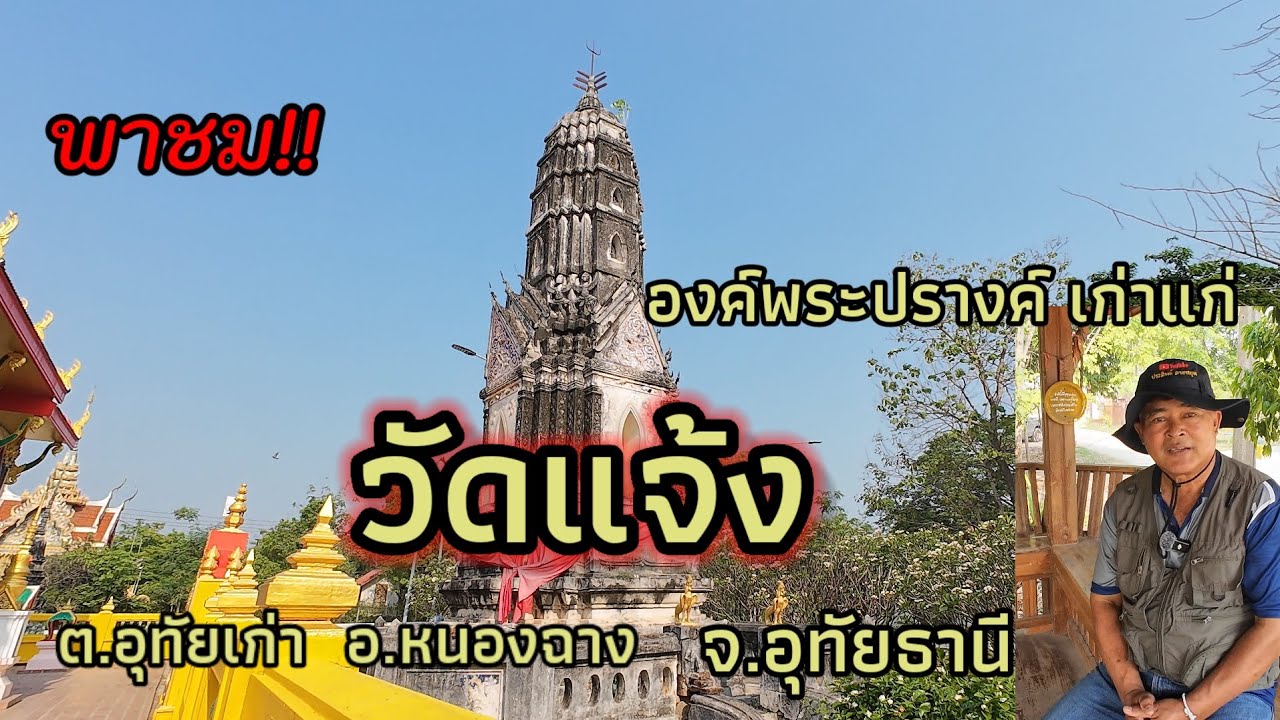
 Click to Access the Navigation Map GPS
Wat Chaeng Map
Recommend

 Art, Culture and Heritage
 Historical Sites and Monuments(3)
 Landmarks and Memorials(1)
 Art, Craft Centres, Tradition(5)
 Museums(1)
Temple(31)
Museums(1)
Temple(31)
 Other Sacred Sites(3)
 Suburban Living
 Village, Community(4)
 Local Market(1)
 Nature and Wildlife
 National Parks and Marine Reserves(2)
 Mountain (Doi)(7)
 Dam, Reservoir, Lake(5)
 Waterfalls(5)
 Hot Springs(1)
 Caves(9)
 Flower Field(2)
 River, Canal(2)
 Islands(1)
 Other natural attractions(1)
 Entertainment and Agricultural
 Farms, Parks and Ecotourism(2)
 Shopping
 Shopping and Night Market(1)


