
lovethailand home >North Travel Attractions >Uthai Thani Travel Attractions >Nong Chang >Uthai Kao > Old Uthai Thani Town
TL;DR: Old Uthai Thani Town is located at Ban Uthai Thani Kao, Uthai Kao Subdistrict, Nong Chang District, Uthai Thani Province, open Old Town Area And Community Temples, hours Daytime Visit Recommended.
Old Uthai Thani Town
Open Days: Old Town Area And Community Temples
Opening Hours: Daytime Visit Recommended
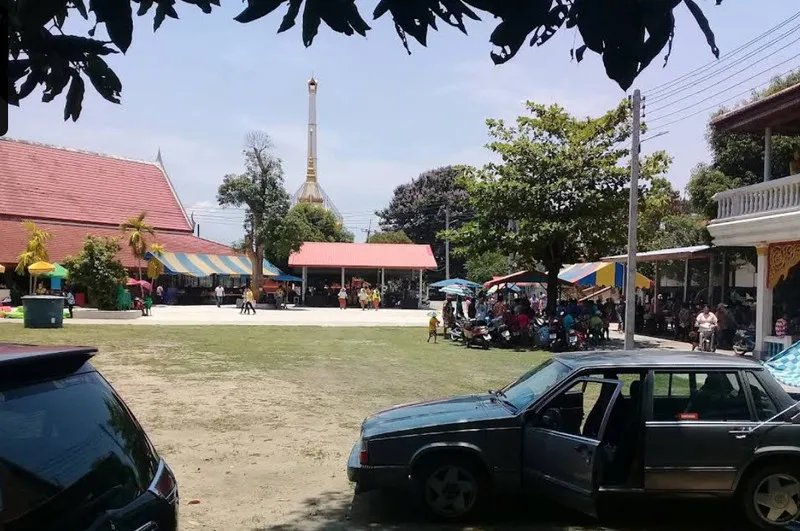
Old Uthai Thani Town is located at Ban Uthai Thani Kao in Uthai Kao Subdistrict, Nong Chang District, Uthai Thani Province. This historic area preserves the memory of the former Uthai Thani settlement, especially its development during the Ayutthaya period. Today, the surrounding landscape has become a peaceful rural area of rice fields, local roads, community temples, and quiet village life. Yet within this calm setting remain important traces of the past, including old temples, an ancient prang, an Ayutthaya-style ordination hall, mural paintings, small ancient stupas, and local historical memories that continue to shape the identity of the community.
For foreign travelers, Old Uthai Thani Town offers a different kind of historical experience from large palace ruins or fully restored archaeological parks. This is not a place of grand walls and dramatic monuments. Instead, it is a living cultural landscape where history is embedded in village temples and farmland. Visitors come here to understand how a former town can survive not only through buildings, but also through names, rituals, local faith, and the continuous use of sacred spaces by the community. The charm of this area lies in its quietness, authenticity, and the close relationship between history and everyday rural life.
The old town area is especially meaningful because it shows that Uthai Thani has historical roots deeper than the present provincial town by the Sakae Krang River. Before the modern image of Uthai Thani became associated with river life, floating houses, and the city center, this older settlement in Nong Chang District played an important role in the historical development of the province. The presence of several old temples, such as Wat Chaeng, Wat Hua Mueang, Wat Hua Mak, Wat Yang, and Wat Kuti, indicates that this was once an important community with religious, cultural, and social functions.
Wat Chaeng is the most significant landmark in Old Uthai Thani Town and is the main destination for travelers who want to understand the historic character of the area. The temple is located at Ban Uthai Kao, Mu 1, Uthai Kao Subdistrict, Nong Chang District. It is a local Buddhist temple under the Mahanikaya order and is regarded as one of the oldest temples associated with Uthai Thani. The temple preserves artistic and architectural elements linked to the late Sukhothai and Ayutthaya periods, including laterite evidence, boundary stones, an ancient prang, and an old ordination hall.
The ancient prang of Wat Chaeng is the visual symbol of the old town. Originally built in 1538 CE, or B.E. 2081, the prang was later damaged during warfare, with its upper section broken. It has since been repaired and preserved as an important religious and historical structure. Standing within the temple grounds, the prang allows visitors to imagine the former importance of Wat Chaeng and the old town community. Its presence gives the landscape a strong sense of time, continuity, and sacred memory.
The stucco decorations on the prang and the gable of the old ordination hall are important details that visitors should observe carefully. These decorative elements reflect the skill of local craftsmen and the artistic taste of the period. They are not merely ornamental. They express faith, craftsmanship, and the cultural value placed on temple architecture. Seeing these features in their original religious setting helps travelers understand that Thai art is not only preserved in museums, but also survives within community temples that continue to be used by local people.
The old ordination hall of Wat Chaeng is small and has a single entrance, reflecting the style of the late Ayutthaya period. Its modest size gives it a quiet and intimate atmosphere. Rather than overwhelming visitors with scale, the building communicates the spiritual character of a local temple. The single-door design, traditional proportions, and surviving decorative elements make it an important example of temple architecture in a historic community setting.
Inside the old ordination hall are mural paintings showing the royal deeds of King Taksin the Great. These paintings were created during a later restoration phase and connect the temple with the historical memory of King Taksin. The temple also contains a shrine and statue dedicated to him, making Wat Chaeng not only an architectural landmark but also a place of remembrance. For Thai visitors, this connection carries strong emotional and historical meaning. For foreign travelers, it offers an opportunity to understand how national history is remembered through local religious spaces.
The connection between Wat Chaeng and King Taksin the Great adds another layer of significance to the old town. After the fall of Ayutthaya, King Taksin played a decisive role in restoring Siamese independence and reunifying the kingdom. Local devotion to him at Wat Chaeng shows how national history can become part of community identity. Through the murals, shrine, and statue, visitors can see how a rural temple preserves both religious devotion and historical memory.
Wat Chaeng remains a living temple. Religious activities, merit-making, and local traditions continue to take place here. During Songkran, the temple has been associated with community activities connected to the old prang and Buddhist merit-making. This continuity is important because it shows that the site is not simply an abandoned ruin. It is a living cultural heritage site where old architecture, local faith, and present-day community life remain connected.
Wat Hua Mueang is another important temple in the Old Uthai Thani area. It is located at Ban Uthai Kao, Mu 2, Uthai Kao Subdistrict, Nong Chang District. The temple belongs to the Mahanikaya order and occupies a sizeable area. Its name, meaning “head of the town,” is linked to its location on the northern side of the former town. This name preserves a memory of the old town layout and reflects how local geography shaped religious and cultural identity.
Wat Hua Mueang contains important remains such as an old Ayutthaya-style ordination hall, small ancient stupas, and a principal Buddha image in the subduing Mara posture. Records describe the ordination hall as having been built around B.E. 2130, using large traditional brick-and-mortar construction. The temple has also been associated with Buddhist education and community activities. These details show that Wat Hua Mueang was not merely a religious site, but also a social and educational center for the local community.
The old ordination hall and ancient stupas at Wat Hua Mueang are valuable for understanding the layout of temples in the former town. Even where structures are incomplete, their remains help visitors see how temple compounds were organized and how religious architecture developed in local communities. The traces of age, repair, and weathering give the site a strong historical atmosphere. For travelers interested in archaeology and architecture, Wat Hua Mueang provides a quieter but highly meaningful complement to Wat Chaeng.
Wat Chaeng and Wat Hua Mueang should be understood together. Wat Chaeng is outstanding for its prang, old ordination hall, stucco work, murals, and connection with King Taksin the Great. Wat Hua Mueang is important for its position in the former town layout, old ordination hall, ancient stupas, and community role. Visiting both temples allows travelers to see a fuller picture of Old Uthai Thani Town as a former settlement with multiple religious centers rather than a single isolated monument.
Other old temple sites in the area, including Wat Hua Mak, Wat Yang, and Wat Kuti, are also part of the memory of the former town. Some of these places survive only as traces or are less visually complete than Wat Chaeng, but their names and locations help confirm that this area once had a dense religious and community landscape. The presence of several temples within the old town area suggests that the settlement was once more active and significant than the quiet agricultural surroundings might suggest today.
The landscape around Old Uthai Thani Town is part of the experience. Rice fields now surround much of the old settlement area, creating a peaceful rural setting that contrasts beautifully with the historic temples. This combination of farmland and ancient religious structures makes the visit visually and emotionally distinctive. Visitors can see how historical places change over time, how urban centers may fade, and how sacred sites remain as anchors of memory within a living community.
Getting There is most convenient by private car. From Nong Chang Market, drive toward the three-way junction near Thong Prasatwet School, turn right, and continue along the local road to Wat Chaeng. Wat Hua Mueang is located about 1 km beyond Wat Chaeng. Travelers coming from Mueang Uthai Thani District can drive toward Nong Chang District and continue into Uthai Kao Subdistrict. Because the route passes through local community roads and rice-field landscapes, daytime travel is recommended.
The best time to visit is in the morning or late afternoon, when the weather is more comfortable and the light is suitable for photography. During the rainy season, the surrounding rice fields become green and beautiful, adding a natural atmosphere to the historic setting. During the cool season, walking around the temples is especially pleasant. Visitors who enjoy photography will find strong visual contrasts between the ancient prang, old temple architecture, rural roads, and open fields.
Visitors should dress respectfully because the main attractions are Buddhist temples still connected with local religious life. Comfortable walking shoes, drinking water, and sun protection are recommended. Travelers should avoid climbing on ancient structures, touching fragile decorations, or removing any objects from the temple areas. Responsible behavior helps preserve these historic places for future generations.
Old Uthai Thani Town can be combined with other attractions in Nong Chang and Mueang Uthai Thani. A good route may begin with Wat Chaeng and Wat Hua Mueang in the morning, then continue to Wat Nong Khun Chat, Khao Pathawi, Wat Sangkat Rattana Khiri on Sakae Krang Hill, or the riverside community along the Sakae Krang River. This route helps travelers understand the development of Uthai Thani from its older inland settlement to the later river-based town that is more widely known today.
The value of Old Uthai Thani Town lies in its ability to connect local history with national memory. Wat Chaeng preserves devotion to King Taksin the Great, while Wat Hua Mueang reflects the structure of the former town and the role of temples in community life. The surrounding rice fields and village atmosphere show how history continues to exist within everyday landscapes. For travelers seeking a quieter and deeper understanding of Uthai Thani, this old town area is a rewarding cultural destination.
Old Uthai Thani Town is also an excellent outdoor classroom. Students and history enthusiasts can study late Ayutthaya-style architecture, old ordination halls, mural paintings, prang structures, ancient stupas, and the relationship between temples and settlement patterns. The site demonstrates that history is not found only in books or museums, but also in architecture, place names, landscapes, local rituals, and community memory.
Although the area does not have the full facilities of a major tourist attraction, its simplicity is part of its charm. Visitors can experience a calm local community, quiet temples, rural scenery, and authentic cultural heritage without crowds. The visit is best approached slowly and respectfully, with time to observe details, read the landscape, and appreciate how the old town continues to live through its temples and people.
In summary, Old Uthai Thani Town is a historic and cultural area worth visiting for anyone who wants to understand Uthai Thani beyond its natural attractions and riverside scenery. Wat Chaeng offers the ancient prang, late Ayutthaya-style ordination hall, mural paintings, and King Taksin memorial. Wat Hua Mueang preserves an old ordination hall, ancient stupas, and the memory of the town’s northern section. Together with the rice fields and community landscape, these places create a meaningful travel experience that combines history, art, faith, nature, and local life.
| Name | Old Uthai Thani Town |
| Location | Ban Uthai Thani Kao, Uthai Kao Subdistrict, Nong Chang District, Uthai Thani Province |
| Address | Uthai Kao Community Area, Uthai Kao Subdistrict, Nong Chang District, Uthai Thani 61110, Thailand |
| Highlights | Historic old town area from the Ayutthaya period, featuring Wat Chaeng, Wat Hua Mueang, an ancient prang, old ordination halls, mural paintings, and rice-field scenery |
| History | Associated with the former Uthai Thani settlement during the Ayutthaya period; Wat Chaeng preserves artistic traces from the late Sukhothai to Ayutthaya periods, with its prang built in B.E. 2081 |
| Name Origin | The name refers to the old Uthai Thani settlement area before the historical center shifted through later development |
| Distinctive Features | Community temples, rice fields, Wat Chaeng’s ancient prang, a late Ayutthaya-style ordination hall, Wat Hua Mueang’s old ordination hall, and ancient stupas |
| Key Evidence | Wat Chaeng prang, single-door old ordination hall, murals about King Taksin the Great, boundary stones, laterite evidence, Wat Hua Mueang’s old ordination hall, and ancient stupas |
| Travel Information | From Nong Chang Market, drive to the three-way junction near Thong Prasatwet School, turn right, and continue to Wat Chaeng. Wat Hua Mueang is about 1 km beyond Wat Chaeng. |
| Current Status | A living community and temple-based historic area with important remains suitable for cultural and historical visits |
| Open Days | Old Town Area And Community Temples |
| Opening Hours | Daytime Visit Recommended |
| Fees | No official admission fee information listed |
| Facilities | The area consists of local temples and community roads. Visitors should bring drinking water, sun protection, and dress respectfully for temple visits. |
| Main Areas / Zones | Wat Chaeng, Wat Chaeng Prang, Old Ordination Hall Of Wat Chaeng, King Taksin The Great Shrine, Wat Hua Mueang, Old Ordination Hall Of Wat Hua Mueang, Ancient Stupas, Rice Fields, And Ban Uthai Kao Community Area |
| Abbot / Caretaker | Wat Chaeng: Phra Khru Arun Piyakit Local Information: Uthai Kao Subdistrict Administrative Organization, Tel. 0-5653-1763 |
| Nearby Tourist Attractions | 1. Wat Hua Mueang, about 1 km 2. Wat Nong Khun Chat, about 12 km 3. Khao Pathawi, about 15 km 4. Wat Sangkat Rattana Khiri And Sakae Krang Hill, about 35 km 5. Sakae Krang Riverside Community, Mueang Uthai Thani, about 36 km |
| Nearby Restaurants | 1. Krua Je Juk To Chin Nong Chang, about 8 km, Tel. 088-421-0932 2. Ajarn Adul Local Food, Thap Than, about 23 km, Tel. 056-591080, 069-354929 3. Gu Jin Pla Luak Nong Chang, about 8 km 4. 88Cafe & Bistro Nong Chang, about 8 km 5. Baan Ja Café Nong Chang, about 9 km |
| Nearby Accommodations | 1. Baan Sabai Jai Resort Sawang Arom, about 34 km, Tel. 081-929-7729, 081-971-5976 2. Uthai River Lake Resort, about 37 km 3. Payamai Resort Uthai Thani, about 36 km 4. Uthai Heritage Hotel, about 36 km 5. BN Resort Uthai Thani, about 38 km |
Frequently Asked Questions (FAQ)
Q: Where is Old Uthai Thani Town located?
A: Old Uthai Thani Town is located at Ban Uthai Thani Kao in Uthai Kao Subdistrict, Nong Chang District, Uthai Thani Province.
Q: What are the main highlights of Old Uthai Thani Town?
A: The main highlights are Wat Chaeng, its ancient prang, the late Ayutthaya-style ordination hall, murals related to King Taksin the Great, Wat Hua Mueang, ancient stupas, and the surrounding rice-field landscape.
Q: Why is Wat Chaeng important?
A: Wat Chaeng is an old temple associated with the former Uthai Thani settlement. It preserves an ancient prang built in B.E. 2081, an old ordination hall, stucco decoration, and a shrine dedicated to King Taksin the Great.
Q: How far is Wat Hua Mueang from Wat Chaeng?
A: Wat Hua Mueang is about 1 km beyond Wat Chaeng, making both temples easy to visit on the same route.
Q: Is there an admission fee for Old Uthai Thani Town?
A: No official admission fee information is listed. The area consists of local temples and community sites, so visitors should dress respectfully and follow temple etiquette.
Q: How can travelers get to Old Uthai Thani Town?
A: From Nong Chang Market, drive to the three-way junction near Thong Prasatwet School, turn right, and continue to Wat Chaeng. Wat Hua Mueang is about 1 km farther along the route.
Q: When is the best time to visit Old Uthai Thani Town?
A: Morning or late afternoon is recommended because the weather is more comfortable for walking around temples, old structures, and rice-field surroundings.
Q: Who should visit Old Uthai Thani Town?
A: The site is ideal for history lovers, cultural travelers, students, photographers, and visitors who enjoy quiet temple-based heritage routes.
 Category: ●Art, Culture and Heritage
 Group: ●Historical Sites and Monuments
Last Update : 4 MonthAgo
 Last Update : 4 MonthAgo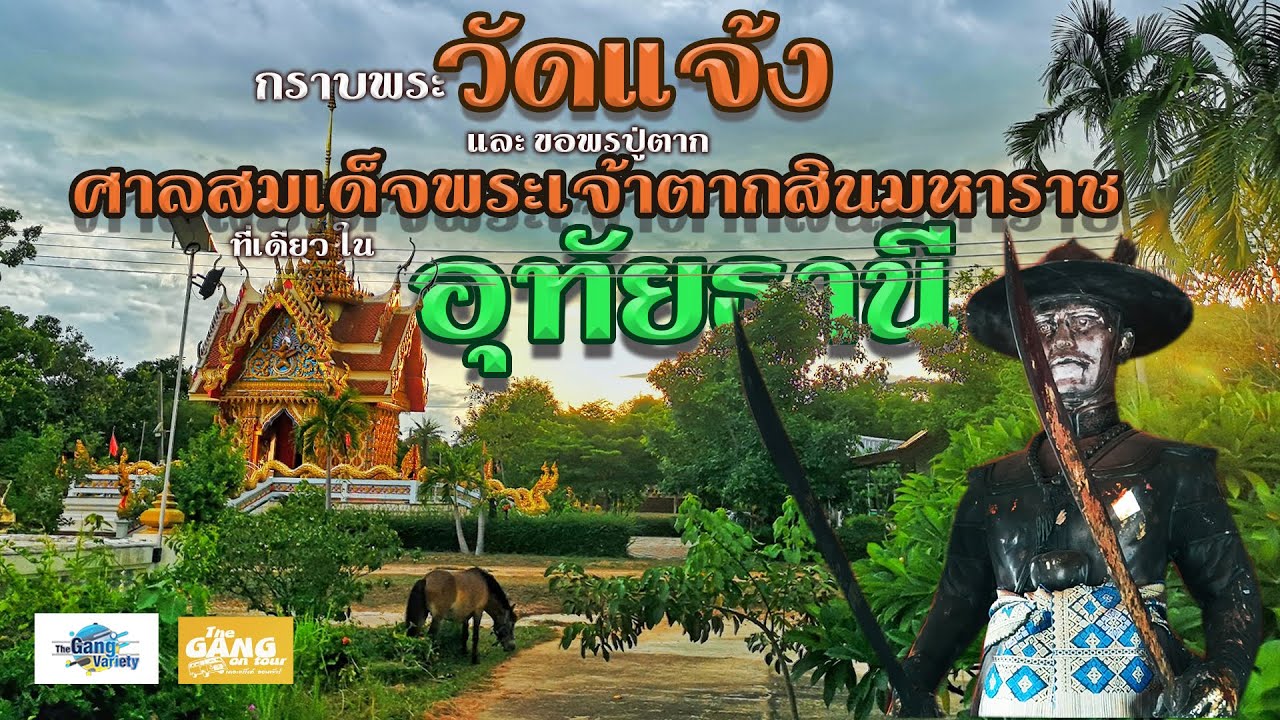
 Click to Access the Navigation Map GPS
Old Uthai Thani Town Map
Recommend
 Historical Sites and Monuments(3)
 Landmarks and Memorials(1)
 Art, Craft Centres, Tradition(5)
 Museums(1)
 Places of Worship
 Temple(31)
 Other Sacred Sites(3)
 Suburban Living
 Village, Community(4)
 Local Market(1)
 Nature and Wildlife
 National Parks and Marine Reserves(2)
 Mountain (Doi)(7)
 Dam, Reservoir, Lake(5)
 Waterfalls(5)
 Hot Springs(1)
 Caves(9)
 Flower Field(2)
 River, Canal(2)
 Islands(1)
 Other natural attractions(1)
 Entertainment and Agricultural
 Farms, Parks and Ecotourism(2)
 Shopping
 Shopping and Night Market(1)


