
lovethailand home >North Travel Attractions >Uthai Thani Travel Attractions >Lan Sak >Lan Sak > Khao Pha Raet
TL;DR: Khao Pha Raet is located at Lan Sak Subdistrict, Lan Sak District, Uthai Thani Province, Thailand, open Daily, hours Daytime Visits Are Recommended.

Khao Pha Raet
Open Days: Daily
Opening Hours: Daytime Visits Are Recommended
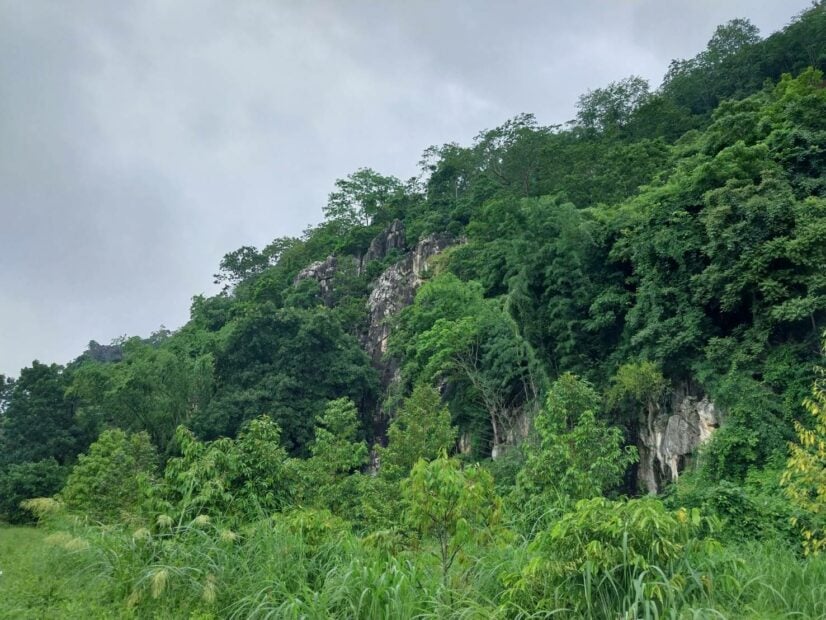
Khao Pha Raet in Lan Sak District, Uthai Thani Province is a quiet natural attraction for travelers who enjoy limestone hills, caves, bat habitats, and peaceful religious surroundings. Located in Lan Sak Subdistrict, about 7.5 kilometers behind the Lan Sak District Office and about 8 kilometers from Khao Phraya Phai Ruea, this small limestone mountain is about 376 meters high. Although it is not a high mountain, Khao Pha Raet has a distinctive character because it combines natural cave scenery, stalactites and stalagmites, a large bat population, a monastic retreat near the foot of the hill, and archaeological importance connected with Tham Liang Pha in the Khao Pha Raet area.
Khao Pha Raet is suitable for visitors who prefer a quiet, less crowded destination. Unlike major tourist attractions with heavy visitor traffic, the atmosphere here remains simple and close to nature. The surrounding area is marked by limestone formations, trees, rural roads, and local community life. The hill can be visited together with other natural attractions in Lan Sak District, making it a useful stop for travelers who want to explore the quieter side of Uthai Thani beyond the more famous places such as Hup Pa Tat and Khao Pla Ra.
The landscape of Khao Pha Raet is shaped by limestone geology. Limestone hills often contain caves, rock shelters, cracks, and underground cavities formed by water slowly dissolving the rock over long periods of time. Inside the caves of Khao Pha Raet, visitors can see natural stalactites and stalagmites created by mineral-rich water dripping through the cave. These formations grow slowly and give the cave its unusual beauty. Because they are fragile, visitors should never touch, break, climb on, or write near them.
The cave atmosphere is one of the main reasons to visit Khao Pha Raet. Entering a limestone cave immediately changes the feeling of the place. The air becomes cooler, sounds become softer, and the natural shapes of the rock create a sense of mystery. Some sections may be dark, damp, or uneven, so visitors should carry a flashlight and wear shoes with good grip. Anyone who is not familiar with the cave should avoid entering deep areas without guidance from local people or caretakers.
Khao Pha Raet is also known as a bat habitat. Countless bats live inside the cave, and in the evening, visitors may see them flying out in large groups to feed. This can be an impressive natural scene, especially for travelers who have never seen a bat emergence before. However, the experience should be enjoyed responsibly. Visitors should keep a proper distance, avoid loud noise, and never shine strong lights directly into the cave. The cave is the bats’ home, and disturbing them can damage the natural balance of the site.
At the foot of Khao Pha Raet, there is a monastic retreat area that adds a calm religious dimension to the site. The presence of monks or a meditation space near the hill makes the area feel peaceful and reflective. Visitors can rest, pay respect, or take a quiet moment before exploring the natural surroundings. This combination of limestone hill, cave, forest, and religious calm makes Khao Pha Raet different from a purely adventure-oriented attraction.
The archaeological importance of the Khao Pha Raet area adds another layer of meaning. Tham Liang Pha, Khao Pha Raet, located in Ban Suan Mai Khao Pha Raet, Moo 13, Nam Rop Subdistrict, Lan Sak District, has been reported as a prehistoric archaeological site where rock paintings and burial evidence were found. This shows that the caves and limestone shelters of the area were meaningful to ancient people. For modern visitors, this information changes the way the hill is seen. A cave is not only a natural hollow in rock; it may also be a space of memory, ritual, shelter, and ancient human activity.
Prehistoric rock paintings and burial traces suggest that people in the past may have used caves for symbolic and social purposes. They may have entered caves to rest, perform rituals, communicate beliefs, or honor the dead. Even if the exact meaning of every trace cannot be fully explained, the archaeological record shows that the Khao Pha Raet landscape was connected with human life long before modern villages, roads, and tourism appeared. This makes the area important not only for nature lovers, but also for people interested in archaeology and local history.
Tham Liang Pha is a good example of how a small cave can have large cultural meaning. Its size may not be impressive in the way of grand tourist caves, but its value lies in what it reveals about ancient human use of limestone landscapes. The direction of the cave mouth, the amount of light, the shape of the chamber, the surrounding terrain, and the presence of natural resources are all factors that may have influenced why ancient people used the place. For travelers, this encourages a slower and more respectful way of looking at the hill.
Lan Sak District as a whole is rich in limestone scenery and cave-related attractions. Hup Pa Tat offers a hidden forest inside a limestone valley. Khao Pla Ra is known for its prehistoric rock paintings and challenging hiking route. Khao Khong Chai and Khao Phraya Phai Ruea provide other examples of the district’s limestone terrain. Khao Pha Raet fits naturally into this landscape, especially for travelers who want to understand the area as a network of hills, caves, monastic spaces, wildlife habitats, and archaeological traces.
Visiting Khao Pha Raet requires a respectful attitude. The site is not a large commercial attraction with extensive facilities. Its value lies in quiet nature, cave ecology, local spirituality, and cultural traces. Visitors should prepare drinking water, a flashlight, mosquito repellent, practical shoes, and a small bag for carrying rubbish back out. It is best to visit during daylight hours and avoid entering caves late in the day unless accompanied by someone familiar with the area.
The best time to visit is in the morning or late afternoon. Morning visits are cooler and suitable for walking around the foot of the hill or exploring safe cave areas. Late afternoon is suitable for observing bats as they begin to leave the cave, but visitors should plan the return journey before it becomes dark. Limestone paths, rural roads, and cave areas are not ideal for walking after dark, especially for people who are unfamiliar with the terrain.
For photography, Khao Pha Raet offers several interesting subjects: limestone cliffs, cave openings, shaded forest edges, stalactites and stalagmites, the monastic retreat atmosphere, and the movement of bats in the evening. Photography inside caves should be done carefully. Avoid using flash directly at bats, avoid touching rock formations, and never climb on fragile cave surfaces. A good photograph should not come at the cost of damaging the place.
Getting There is easiest by private car or motorcycle from Lan Sak District. From the area behind the Lan Sak District Office, travel about 7.5 kilometers toward Khao Pha Raet. The site is also about 8 kilometers from Khao Phraya Phai Ruea, making both places possible to include in the same trip. From Uthai Thani town, visitors can drive toward Lan Sak District and then continue to the Khao Pha Raet area. Private transport is recommended because it allows more flexible timing and easier connection with nearby attractions.
A practical 1-day route in Lan Sak can include Hup Pa Tat in the morning, lunch or coffee near the Nong Chang-Lan Sak route, and Khao Pha Raet in the afternoon or late afternoon. Travelers with more time can continue to Khao Phraya Phai Ruea, Khao Pla Ra, Khao Khong Chai, or Ban Chai Khao depending on interest and physical readiness. Khao Pha Raet is especially suitable for travelers who prefer quieter nature rather than crowded viewpoints.
Visitors should not expect full tourist infrastructure. The area is more local and natural, so preparation matters. Bring only necessary belongings, keep valuables secure, wear suitable shoes, and avoid entering unclear routes or deep cave sections alone. If local caretakers or monks are present, visitors should ask politely before entering sensitive areas. Respect for local people and religious spaces is part of visiting Khao Pha Raet properly.
Important rules include not littering, not writing on cave walls, not touching or breaking stalactites and stalagmites, not disturbing bats, not making loud noise around the monastic area, and not removing stones or any objects from the site. If visitors see unusual archaeological traces or old objects, they should not touch or move them. Such objects may be important evidence and should be reported to local caretakers or responsible authorities.
The overall mood of Khao Pha Raet is calm rather than dramatic. There are no bright commercial features, but there is a strong sense of place: limestone rock, cave air, forest shade, bats, silence, and a monastic presence. This makes the site appealing to travelers who enjoy hidden local places. The reward is not luxury or spectacle, but a quiet encounter with nature and cultural depth.
For visitors from outside Uthai Thani, Khao Pha Raet reveals another side of the province. Uthai Thani is often known for Wat Tha Sung, the Sakae Krang River, Khao Sakae Krang, and Hup Pa Tat. Khao Pha Raet adds a quieter story: a small limestone mountain with caves, bats, religious calm, and archaeological significance. It helps travelers understand that Uthai Thani is rich not only in famous landmarks, but also in hidden natural and cultural landscapes.
The connection with Tham Liang Pha makes Khao Pha Raet especially meaningful. Rock paintings and burial evidence show that ancient people used caves and limestone shelters in ways that mattered deeply to them. The hill that appears peaceful today may once have been a place of ritual, memory, shelter, or community identity. This gives the landscape a depth that thoughtful travelers can feel even without seeing every archaeological detail directly.
Conservation at Khao Pha Raet must include both nature and culture. Bat habitats should be protected. Stalactites and stalagmites should remain untouched. Religious spaces should be treated with respect. Archaeological traces should be preserved. Visitors are part of this protection. Every careful step, quiet voice, and responsible decision helps keep the place intact for future generations.
Compared with nearby attractions, Khao Pha Raet has its own personality. Hup Pa Tat is famous for a hidden palm forest inside a limestone valley. Khao Pla Ra is known for hiking and prehistoric rock paintings. Khao Pha Raet offers caves, bats, a monastic atmosphere, and a quieter limestone setting. Travelers who spend several days in Lan Sak District can combine these sites into a meaningful nature and archaeology route.
Khao Pha Raet is therefore worth visiting for travelers who appreciate simple, quiet, and meaningful places. It offers limestone scenery, cave beauty, bat ecology, religious calm, and archaeological depth in one location. With proper preparation and respectful behavior, a visit here can become a memorable experience that shows the hidden natural and cultural richness of Lan Sak District in Uthai Thani Province.
| Name | Khao Pha Raet |
| Location | Lan Sak Subdistrict, Lan Sak District, Uthai Thani Province, Thailand |
| Related Archaeological Area | Tham Liang Pha, Khao Pha Raet, Ban Suan Mai Khao Pha Raet, Moo 13, Nam Rop Subdistrict, Lan Sak District, Uthai Thani Province |
| Highlights | A 376-meter limestone hill, natural cave, stalactites and stalagmites, large bat population, monastic retreat near the hill, and archaeological significance connected with Tham Liang Pha |
| History | Khao Pha Raet is a natural limestone hill. The wider Khao Pha Raet area includes Tham Liang Pha, where prehistoric rock paintings and burial evidence have been reported. |
| Name Origin | Khao Pha Raet is the local name of the limestone hill area in Lan Sak District and is associated with nearby caves and local communities. |
| Distinctive Features | A small limestone mountain about 376 meters high, with caves, stalactites and stalagmites, and many bats, suitable for quiet nature visits |
| Important Natural Features | Khao Pha Raet cave, stalactites and stalagmites, surrounding forest, limestone cliff, and bat habitat inside the cave |
| Religious Features | A monastic retreat near the foot of the hill, used as a quiet place for meditation and spiritual calm in a natural setting |
| Travel Information | About 7.5 km behind Lan Sak District Office and about 8 km from Khao Phraya Phai Ruea. Private car or motorcycle is recommended. |
| Current Status | Open as a quiet natural and monastic area. Visitors should respect religious space and be careful when entering cave areas. |
| Open Days | Daily |
| Opening Hours | Daytime Visits Are Recommended |
| Main Areas / Zones | 1. Foot Of Khao Pha Raet 2. Monastic Retreat Area 3. Nature Walking Area 4. Khao Pha Raet Cave Entrance 5. Stalactite And Stalagmite Area Inside The Cave 6. Evening Bat Viewing Area 7. Tham Liang Pha Archaeological Area 8. Route Toward Khao Phraya Phai Ruea |
| Facilities | Parking area around the community and monastic retreat, shaded resting area, and worship area near the monastic site |
| Caretaker | Local monastic retreat, local community, and local authorities in Lan Sak District |
| Nearby Tourist Attractions | 1. Khao Phraya Phai Ruea, about 8 km 2. Hup Pa Tat, about 15 km 3. Tham Pra Thun Non-Hunting Area, about 15 km 4. Khao Pla Ra, about 16 km 5. Ban Chai Khao, about 18 km |
| Nearby Restaurants | 1. Krua Lung Yan, Lan Sak District, about 8 km, Tel. 084-942-7233 2. Taen Restaurant, Lan Sak, about 10 km, Tel. 087-201-5878, 056-537-074 3. At The Mountain Hup Pa Tat, about 15 km, Tel. 087-784-2525, 099-951-6653 4. Hup Pa Tad Bike Camp, about 16 km, Tel. 081-902-7175 5. Ban Chai Khao, about 18 km, Tel. 096-008-9949 |
| Nearby Accommodations | 1. At The Mountain Hup Pa Tat, about 15 km, Tel. 087-784-2525, 099-951-6653 2. Hup Pa Tad Bike Camp, about 16 km, Tel. 081-902-7175 3. Baan Chai Khao Homestay, about 18 km, Tel. 096-008-9949 4. Baan Phupha, about 17 km, Tel. 081-303-8801 5. Khao Namna Resort, Lan Sak District, about 20 km, Tel. 092-257-6030, 097-109-6498 |
Frequently Asked Questions (FAQ)
Q: Where is Khao Pha Raet located?
A: Khao Pha Raet is located in Lan Sak Subdistrict, Lan Sak District, Uthai Thani Province, about 7.5 km behind Lan Sak District Office and about 8 km from Khao Phraya Phai Ruea.
Q: What is interesting about Khao Pha Raet?
A: The highlights include a 376-meter limestone hill, natural cave, stalactites and stalagmites, a large bat population, a monastic retreat near the hill, and the Tham Liang Pha archaeological area.
Q: What type of trip is Khao Pha Raet suitable for?
A: It is suitable for quiet nature trips, cave visits, evening bat watching, peaceful visits to the monastic area, and learning about limestone landscapes and local archaeology.
Q: What should visitors prepare before going to Khao Pha Raet?
A: Visitors should bring drinking water, shoes with good grip, a flashlight, mosquito repellent, a hat, and a bag for carrying rubbish back out. Ask local caretakers before entering unfamiliar cave areas.
Q: When is the best time to see bats at Khao Pha Raet?
A: Late afternoon to early evening is the best time to observe bats leaving the cave, but visitors should keep a proper distance and avoid shining lights into the cave entrance.
Q: How is Khao Pha Raet related to archaeology?
A: The Khao Pha Raet area includes Tham Liang Pha, where prehistoric rock paintings and burial evidence have been reported, showing ancient human use of caves and limestone shelters.
Q: Is Khao Pha Raet suitable for children and elderly visitors?
A: Children and elderly visitors can enjoy the foot of the hill and monastic area, but entering caves or walking on steep natural ground should depend on physical readiness and close supervision.
Q: What nearby attractions can be visited with Khao Pha Raet?
A: Nearby attractions include Khao Phraya Phai Ruea, Hup Pa Tat, Tham Pra Thun Non-Hunting Area, Khao Pla Ra, and Ban Chai Khao.
 Category: ●Nature and Wildlife
 Group: ●Mountain (Doi)
Last Update : 3 WeekAgo
 Last Update : 3 WeekAgo
 Click to Access the Navigation Map GPS
Khao Pha Raet Map
Recommend

 Art, Culture and Heritage
 Historical Sites and Monuments(3)
 Landmarks and Memorials(1)
 Art, Craft Centres, Tradition(5)
 Museums(1)
 Places of Worship
 Temple(31)
 Other Sacred Sites(3)
 Suburban Living
 Village, Community(4)
 Local Market(1)
 National Parks and Marine Reserves(2)
Mountain (Doi)(7)
National Parks and Marine Reserves(2)
Mountain (Doi)(7)
 Dam, Reservoir, Lake(5)
 Waterfalls(5)
 Hot Springs(1)
 Caves(9)
 Flower Field(2)
 River, Canal(2)
 Islands(1)
 Other natural attractions(1)
 Entertainment and Agricultural
 Farms, Parks and Ecotourism(2)
 Shopping
 Shopping and Night Market(1)


