
lovethailand home >North Travel Attractions >Uthai Thani Travel Attractions >Nong Chang >Khao Bang Kraek > Khao Plara
TL;DR: Khao Plara is located at Between Ban Huai Sok, Lan Sak District, and Khao Bang Kraek Subdistrict, Nong Chang District, Uthai Thani Province, Thailand, open Daily, hours 08.30 – 13.30.

Khao Plara
Open Days: Daily
Opening Hours: 08.30 – 13.30
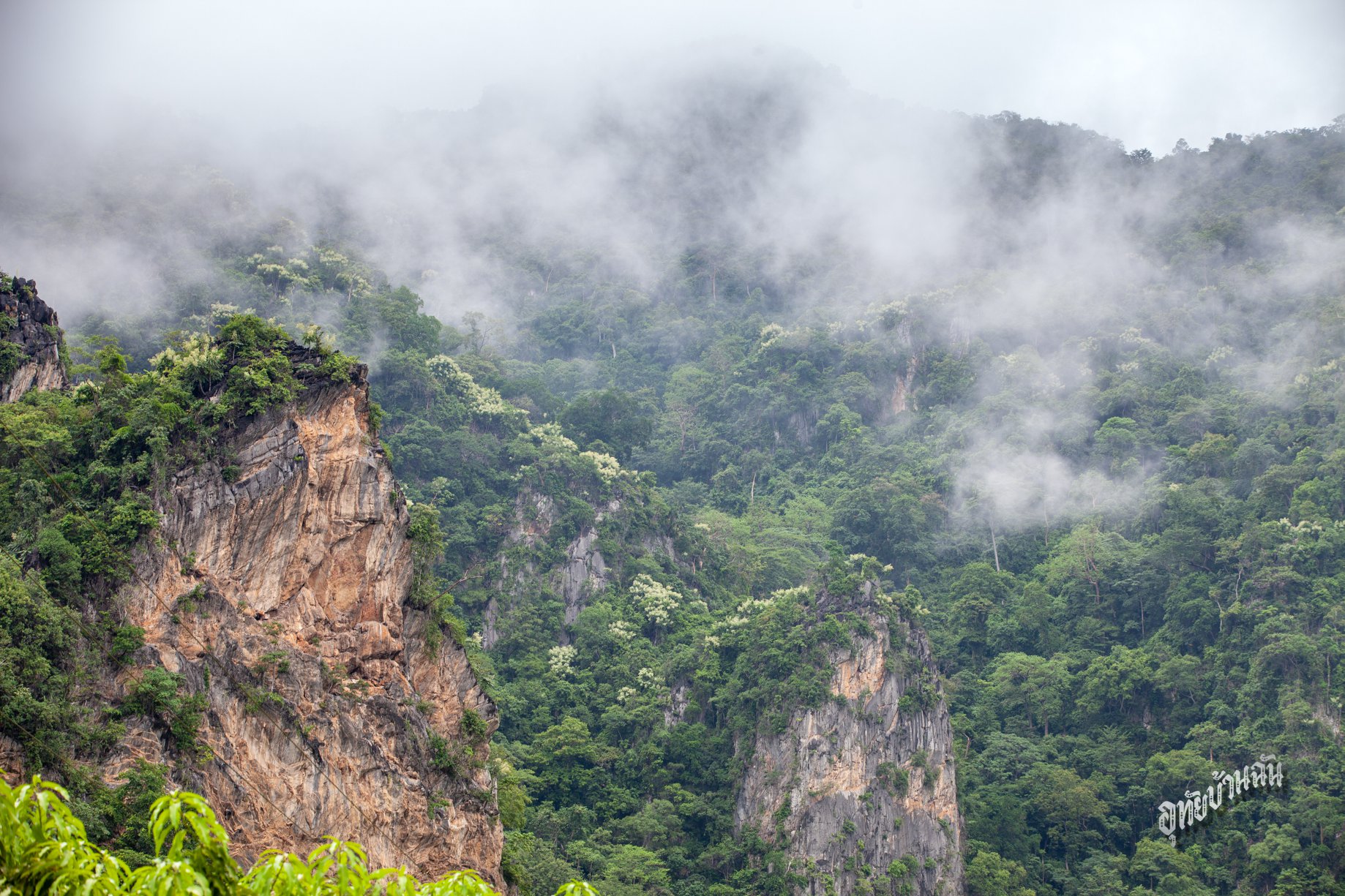
Khao Pla Ra in Uthai Thani Province is one of the most remarkable natural and archaeological sites in western-central Thailand. Located between Ban Huai Sok in Lan Sak District and Khao Bang Kraek Subdistrict in Nong Chang District, the mountain is known for its steep limestone landscape, forested slopes, challenging walking route, panoramic natural views, and prehistoric rock paintings that are about 3,000 years old. For foreign travelers interested in hiking, archaeology, ancient art, and conservation-based tourism, Khao Pla Ra offers an experience that is both physically demanding and intellectually rewarding.
Khao Pla Ra rises to about 598 meters above sea level and is a large, steep mountain surrounded by relatively rich forest. Although the walking route to the upper area is only about 900 meters long, it usually takes around 2 hours to reach the top because of the steep terrain, small stones, uneven ground, exposed roots, and natural forest conditions. This is not a casual viewpoint that can be reached easily. Visitors should prepare properly, wear suitable shoes, bring enough water, and travel with a realistic understanding of the physical effort required.
The first impression of Khao Pla Ra is its rugged limestone geography. The mountain stands clearly within the landscape of Lan Sak and Nong Chang districts, forming a dramatic natural boundary between communities. Its limestone structure creates cliffs, rocky slopes, forest pockets, and elevated viewpoints. As visitors climb higher, the surrounding land gradually opens up, revealing forests, farming areas, villages, and distant mountain lines. The atmosphere is quiet, raw, and less developed than many mainstream attractions, which is exactly what gives the site its distinctive character.
On the upper part of Khao Pla Ra, there is a broad flat area covered with Makha trees and local forest vegetation. After the challenging climb, this higher area gives visitors a sense of relief and reward. It is a place to rest, observe the forest, and appreciate the mountain ecosystem. However, this natural area must be treated with care. Visitors should not leave rubbish, make fires, damage plants, or disturb wildlife. Khao Pla Ra is not only a scenic place; it is also part of a protected landscape managed for conservation.
The most important feature of Khao Pla Ra is the prehistoric rock painting site on the western cliff. The paintings are located at an elevation of about 320 meters and consist of black and red line drawings. The black lines have faded over time, while the red figures are still visible along a rock surface about 9 meters long. These paintings are estimated to be about 3,000 years old and are among the important archaeological traces of Uthai Thani Province. They offer rare visual evidence of ancient human life, belief, ritual, and relationships with animals.
There are about 40 figures in the rock painting group, mostly showing humans and animals. Archaeologists generally classify the paintings into 4 groups. The first group shows people among domestic animals, possibly dogs. The second group shows relationships between people and cattle, including scenes that may represent capturing wild cattle for domestication. The third group appears to show ritual activities, with human figures that may wear special ornaments or have a different status from ordinary people. The fourth group consists of miscellaneous figures, mostly animals. Together, these images help modern viewers imagine the social and symbolic world of people who lived thousands of years ago.
The group of people and animals suggests that ancient communities may have already developed close relationships with certain animals. Dogs may have been used for hunting, protection, or daily companionship. Images involving cattle may show the importance of large animals as food, labor, wealth, or social resources. The possibility of capturing wild cattle for later use points to a changing relationship between humans and the natural world. These paintings are therefore valuable not only as art, but also as evidence of social and economic development.
The ritual-related paintings are particularly meaningful. They show that prehistoric people were not concerned only with survival, hunting, or food. They also had systems of belief, ceremony, symbolism, and social identity. Some human figures appear different from others, while some animal figures resemble monkeys. The combination of humans, animals, and ritual gestures suggests a complex relationship between people, nature, and belief. For visitors standing in front of the cliff, the paintings create a direct emotional link with people from a very distant past.
The rock paintings at Khao Pla Ra are often noted for their careful style and relatively realistic character. The figures have posture, movement, and composition. Their beauty does not come from modern artistic perfection, but from their ability to communicate across thousands of years. Visitors should look at them with respect. These are fragile cultural traces that cannot be replaced once damaged.
Because the paintings are located on a cliff and are highly sensitive, visitors must follow conservation rules strictly. Do not touch the rock surface, do not write on the cliff, do not rub the paintings, do not use any object on the surface, and do not climb outside the permitted route. Even a small careless action can permanently damage archaeological evidence that has survived for millennia. Responsible tourism at Khao Pla Ra means protecting the paintings as much as appreciating them.
Khao Pla Ra is managed within the broader area of Tham Pra Thun Non-Hunting Area, under the Department of National Parks, Wildlife and Plant Conservation. This protected landscape also includes important natural attractions such as Hup Pa Tat, Khao Khong Chai, Tham Pra Thun, and Khao Pla Ra. As a result, the site is not an unrestricted recreational mountain. It is a protected natural and archaeological area where access, timing, and visitor behavior must follow official regulations. Travelers should contact the responsible office before visiting, especially to confirm the current opening hours, route conditions, and safety requirements.
The walking route is a major part of the Khao Pla Ra experience. Along the climb, visitors pass through forest conditions that reveal the mountain’s natural character. The trail may not be long in distance, but the steep slope and rocky ground make it demanding. Proper footwear is essential. Sneakers with good grip or hiking shoes are strongly recommended. Visitors should avoid sandals or slippery shoes. Carry only necessary items, bring drinking water, prepare light snacks, and keep both hands free as much as possible for balance.
Weather is important. During rain or shortly after rainfall, the trail can become slippery and dangerous. Small stones may shift underfoot, and descending can be more difficult than climbing. On hot days, dehydration becomes a risk. The best time to start is in the morning, when the weather is cooler and there is enough time to return safely. Starting too late can force visitors to descend in the late afternoon, which is not suitable for a forest and cliff trail.
The natural views from Khao Pla Ra are another reward of the journey. From higher points, visitors can see the surrounding landscape of Lan Sak and nearby areas. The forests, limestone mountains, agricultural fields, and rural communities form a wide scenic view that helps travelers understand the geography of Uthai Thani beyond the town center. Khao Pla Ra is closely connected with the limestone landscape around Hup Pa Tat, making it an excellent destination for those who want to see the natural structure of the province more clearly.
For history lovers, Khao Pla Ra is especially powerful because it connects human life with landscape. The rock paintings show that ancient people used mountains and cliffs not only as shelter or hunting grounds, but also as meaningful places for communication, ritual, and identity. Painting on rock may have recorded events, expressed belief, marked territory, or transmitted stories within the group. Even though modern scholars cannot fully explain every detail, the paintings clearly show that prehistoric communities had complex thought and culture.
Khao Pla Ra also demonstrates the importance of conservation-based tourism. Archaeological and natural sites of this kind should not be overdeveloped. Their value lies in their natural setting, silence, difficulty, and fragility. Local communities, guides, and officers play an important role in protecting the area, explaining its meaning, and controlling visitor behavior. When tourism is managed carefully, the site can create local benefits without damaging the cultural and natural evidence that makes it important.
Nearby attractions can be combined with Khao Pla Ra, especially Hup Pa Tat, one of the most famous limestone and prehistoric-forest-style attractions in Lan Sak District. Many travelers plan Hup Pa Tat and Khao Pla Ra together because both sites reveal the remarkable limestone landscape of Uthai Thani. However, the experience is different. Hup Pa Tat is easier to access and suitable for a wider range of visitors, while Khao Pla Ra is more demanding and more focused on prehistoric rock paintings and hiking.
Other nearby places include Tham Pra Thun Non-Hunting Area, Khao Khong Chai, Ban Chai Khao, and natural routes around Lan Sak District. Travelers with only 1 day should not rush too many places. A better plan is to visit Hup Pa Tat and nearby cafés or restaurants on 1 day, then reserve another morning for Khao Pla Ra. The climb, rock paintings, and return route require enough time and energy to enjoy safely.
Getting There can begin from Uthai Thani town. Take Highway 333 through Nong Chang District, then continue on Highway 3438, the Nong Chang-Lan Sak route, for about 21.5 kilometers. Khao Pla Ra will appear on the left. Then turn left and continue along the paved road for about 7.5 kilometers toward the service area of Tham Pra Thun Non-Hunting Area. Travelers using public transport can take the Uthai Thani-Lan Sak bus route, continue to Huai Sok junction, and then use local motorcycle transport. A private car is the most convenient option because visitors need to manage timing and equipment carefully.
Anyone planning to climb Khao Pla Ra should prepare in advance. Check the current access time for the prehistoric painting area, rest well the night before, and travel with companions rather than alone. Before starting the climb, ask the officers about route conditions. If the trail is wet, visibility is poor, or access is restricted, it is better to postpone the visit. Safety should always come before completing the hike.
Important rules include not leaving rubbish, not collecting plants, not disturbing animals, not making fires, not marking trees or rocks, not touching the paintings, and not removing anything from the site. Visitors should follow the principle of entering lightly and leaving without a trace. This helps preserve Khao Pla Ra as a learning site for future generations.
Khao Pla Ra is best suited to nature lovers, hikers, archaeology enthusiasts, students, researchers, and travelers looking for a deeper experience than ordinary sightseeing. It is less suitable for very young children, elderly visitors with mobility limitations, or anyone who is not ready for a steep natural trail. Families with children or elderly members may prefer easier nearby sites such as Hup Pa Tat.
The strongest impression of Khao Pla Ra is the feeling of layered time. The first layer is geological time, which formed the limestone mountain and cliffs. The second layer is human time, represented by the prehistoric paintings left on the rock surface thousands of years ago. The third layer is the present moment, when visitors climb the mountain and try to understand those traces with modern eyes. This meeting of nature, history, and personal experience gives Khao Pla Ra a power that goes beyond ordinary landscape tourism.
Khao Pla Ra is therefore one of Uthai Thani’s most valuable destinations for travelers who appreciate both adventure and knowledge. It offers forest, cliffs, views, ancient paintings, and the responsibility of conservation in one journey. A visit here provides not only physical challenge, but also a deeper understanding of how nature and human culture can exist together within the same landscape.
| Name | Khao Pla Ra |
| Location | Between Ban Huai Sok, Lan Sak District, and Khao Bang Kraek Subdistrict, Nong Chang District, Uthai Thani Province, Thailand |
| Highlights | Steep mountain about 598 meters high, 900-meter hiking trail, prehistoric rock paintings about 3,000 years old, and natural viewpoints in Lan Sak District |
| History | Prehistoric rock paintings were found on the western cliff. They are about 3,000 years old and show ancient life, beliefs, animals, and ritual scenes. |
| Name Origin | Khao Pla Ra is the local name of the large mountain between Lan Sak and Nong Chang districts, known today as an important prehistoric rock painting site in Uthai Thani. |
| Distinctive Features | A steep limestone mountain with rich forest, a hiking and climbing route, cliff areas, ancient rock paintings, and a flat upper area covered with Makha trees |
| Important Rock Paintings | Red and black paintings on the western cliff, about 9 meters long, with around 40 figures showing people, animals, cattle-related scenes, ritual scenes, and miscellaneous animal figures |
| Travel Information | From Uthai Thani town, take Highway 333 through Nong Chang District, continue on Highway 3438 for about 21.5 km, then turn left onto a paved road for about 7.5 km toward the site. |
| Current Status | Open for nature study and prehistoric rock painting visits during the official access period. Visitors should contact officers before traveling. |
| Open Days | Daily |
| Opening Hours | 08.30 – 13.30 |
| Main Areas / Zones | 1. Starting Point Of The Hiking Trail 2. 900-Meter Forest Trail 3. Western Cliff Rock Painting Area 4. Natural Viewpoint 5. Flat Upper Area With Makha Trees 6. Tham Pra Thun Non-Hunting Area Service Zone |
| Facilities | Service area of Tham Pra Thun Non-Hunting Area, officer contact point, and parking area near the service zone before entering the hiking route |
| Caretaker | Tham Pra Thun Non-Hunting Area, Department of National Parks, Wildlife and Plant Conservation |
| Main Contact Number | Tham Pra Thun Non-Hunting Area, Tel. 056-989127 |
| Nearby Tourist Attractions | 1. Hup Pa Tat, about 6 km 2. Tham Pra Thun Non-Hunting Area, about 6 km 3. Khao Khong Chai, about 8 km 4. Ban Chai Khao, about 8 km 5. Khao Pathawi, about 42 km |
| Nearby Restaurants | 1. At The Mountain Hup Pa Tat, about 6 km, Tel. 087-7842525, 099-9516653 2. Hup Pa Tad Bike Camp, about 7 km, Tel. 081-902-7175 3. Krua Lung Yan, Lan Sak District, about 11 km, Tel. 084-942-7233 4. Taen Restaurant, Lan Sak, about 20 km, Tel. 087-201-5878, 056-537-074 5. Ban Chai Khao, about 8 km, Tel. 096-008-9949 |
| Nearby Accommodations | 1. At The Mountain Hup Pa Tat, about 6 km, Tel. 087-7842525, 099-9516653 2. Hup Pa Tad Bike Camp, about 7 km, Tel. 081-902-7175 3. Baan Chai Khao Homestay, about 8 km, Tel. 096-008-9949 4. Baan Phupha, about 7 km, Tel. 081-303-8801 5. Khao Namna Resort, Lan Sak District, about 25 km, Tel. 092-257-6030, 097-109-6498 |
Frequently Asked Questions (FAQ)
Q: Where is Khao Pla Ra located?
A: Khao Pla Ra is located between Ban Huai Sok in Lan Sak District and Khao Bang Kraek Subdistrict in Nong Chang District, Uthai Thani Province. It is managed within Tham Pra Thun Non-Hunting Area.
Q: What is special about Khao Pla Ra?
A: The site is known for its steep 598-meter mountain, challenging hiking route, prehistoric rock paintings about 3,000 years old, and natural viewpoints over Lan Sak District.
Q: Is the hiking route difficult?
A: Yes. The route is about 900 meters long and takes about 2 hours. It includes steep slopes, small rocks, and natural forest terrain, so visitors should be physically prepared.
Q: How old are the rock paintings at Khao Pla Ra?
A: The prehistoric rock paintings on the western cliff are about 3,000 years old. They include red and black figures showing people, animals, cattle-related scenes, and ritual scenes.
Q: What are the opening hours of Khao Pla Ra?
A: The prehistoric rock painting area is open from 08.30 to 13.30. Visitors should contact the officers before traveling to confirm trail and access conditions.
Q: What should visitors prepare before climbing Khao Pla Ra?
A: Visitors should bring drinking water, light snacks, hiking shoes or sneakers with good grip, a hat, personal medicine, and only necessary belongings. Avoid climbing during rain or late in the day.
Q: Is Khao Pla Ra suitable for children or elderly visitors?
A: The trail is steep and physically demanding, so it is better suited to visitors with good physical condition. Families with young children or elderly members may prefer easier nearby sites such as Hup Pa Tat.
Q: What nearby attractions can be combined with Khao Pla Ra?
A: Nearby attractions include Hup Pa Tat, Tham Pra Thun Non-Hunting Area, Khao Khong Chai, Ban Chai Khao, and Khao Pathawi.
 Category: ●Nature and Wildlife
 Group: ●Mountain (Doi)
Last Update : 5 MonthAgo
 Last Update : 5 MonthAgo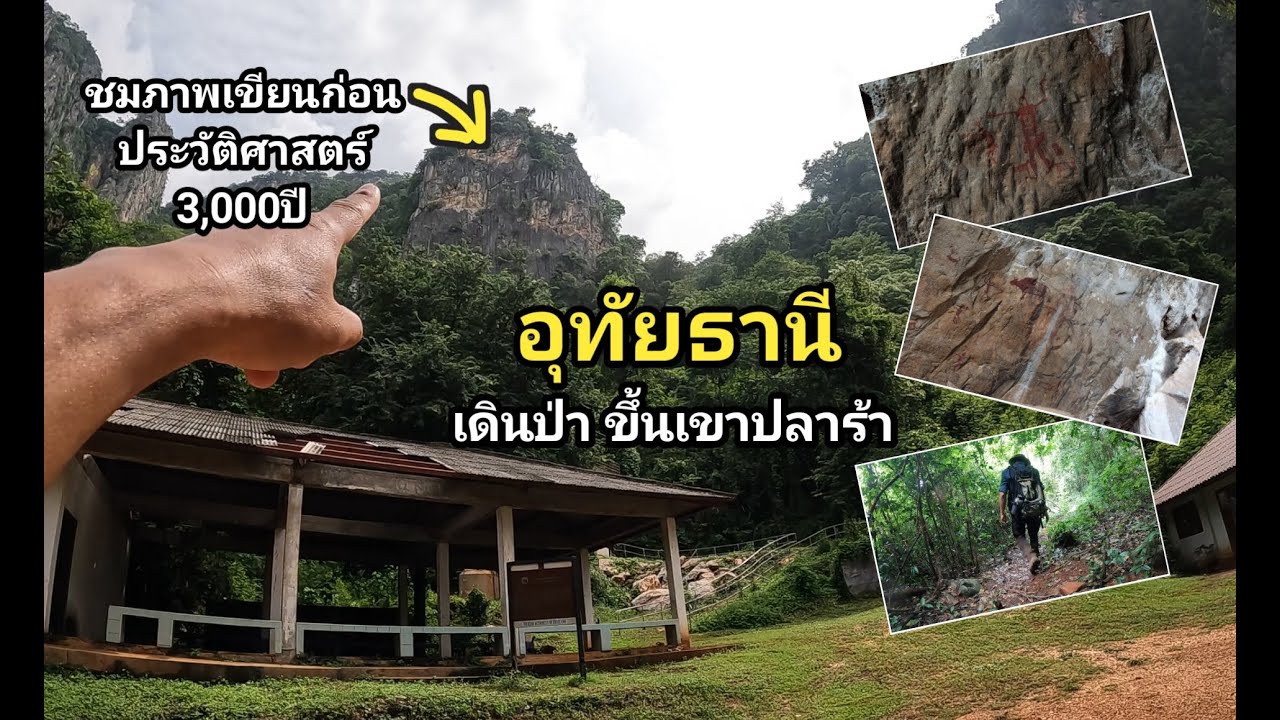
 Click to Access the Navigation Map GPS
Khao Plara Map
Recommend

 Art, Culture and Heritage
 Historical Sites and Monuments(3)
 Landmarks and Memorials(1)
 Art, Craft Centres, Tradition(5)
 Museums(1)
 Places of Worship
 Temple(31)
 Other Sacred Sites(3)
 Suburban Living
 Village, Community(4)
 Local Market(1)
 National Parks and Marine Reserves(2)
Mountain (Doi)(7)
National Parks and Marine Reserves(2)
Mountain (Doi)(7)
 Dam, Reservoir, Lake(5)
 Waterfalls(5)
 Hot Springs(1)
 Caves(9)
 Flower Field(2)
 River, Canal(2)
 Islands(1)
 Other natural attractions(1)
 Entertainment and Agricultural
 Farms, Parks and Ecotourism(2)
 Shopping
 Shopping and Night Market(1)
 Travel Articles, Recipes
 Travel Review, Food Review(1)


