
lovethailand home >North Travel Attractions >Uthai Thani Travel Attractions >Thap Than >Taluk Du > Khao Pathawi
TL;DR: Khao Pathawi is located at Taluk Du Subdistrict, Thap Than District, Uthai Thani Province, Thailand, open Daily, hours 08.00 – 17.00.

Khao Pathawi
Open Days: Daily
Opening Hours: 08.00 – 17.00
Khao Pathawi in Taluk Du Subdistrict, Uthai Thani Province is a distinctive natural, religious, and archaeological attraction in Thap Than District. The site is known for its unusual layered rock formation, its many caves, Wat Khao Pathawi at the foot of the hill, groups of macaques living around the temple area, and archaeological evidence that shows human activity in the area since prehistoric times. For foreign travelers who want to see a quieter and less commercial side of Uthai Thani, Khao Pathawi offers a meaningful combination of limestone scenery, cave exploration, Buddhist faith, local legends, and rural community life.
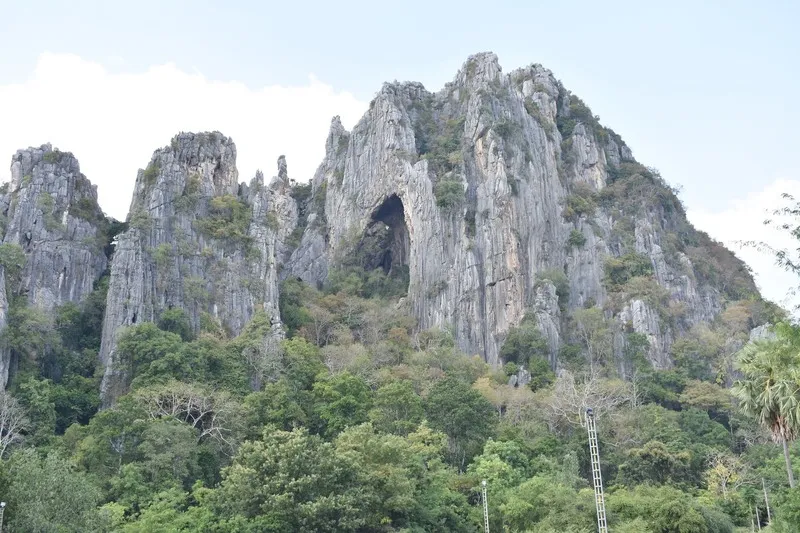
Khao Pathawi is located in Taluk Du Subdistrict, Thap Than District, Uthai Thani Province. The hill is a small limestone mountain range about 750 meters long and around 253 meters high. Its appearance is striking because large rocks are naturally stacked and layered, creating a steep and rugged shape that looks different from ordinary lowland hills. Although Khao Pathawi is not a high mountain, its charm lies in the texture of the rock, the shadowed entrances of its caves, the quiet atmosphere around the temple, and the feeling that the landscape has preserved many stories from the past.
The area is best known as a hill of caves. Around Khao Pathawi, there are about 30 caves of different sizes and forms. Some are small and relatively easy to enter, while others are larger, darker, or more difficult to explore. Well-known caves include Tham Prathun, Tham Bandai, Tham Ang, Tham Chong Lom, Tham Phuttha Prawat, Tham Pla, and Tham Khangkhao. Several caves contain interesting rock formations created by natural processes over a long period of time. Some are associated with Buddhist worship, while others serve as habitats for animals such as bats.
When visitors arrive at Khao Pathawi, the first impression is usually the open area in front of the hill. Large trees provide shade, and the atmosphere is relaxed and rural. One of the most memorable features of the site is the group of macaques that live freely around the hill and temple area. The monkeys climb trees, move across rocks, and approach open spaces near visitors. Many families enjoy watching them, but travelers should remember that these animals are wild, intelligent, and fast. Visitors should not tease them, get too close, hold food openly, or approach baby monkeys.
Khao Pathawi is also an important religious site because Wat Khao Pathawi stands at the foot of the hill. The temple is located at No. 97, Ban Khao Pathawi, Moo 5, Taluk Du Subdistrict, Thap Than District, Uthai Thani Province, and belongs to the Mahanikaya Buddhist order. The hill itself stands on the western side of the temple area, creating a close relationship between the temple, the caves, and the natural landscape. Before the temple was formally established, monks stayed temporarily in the caves. Later, local villagers and monks developed the area, built monastic structures, improved the caves, and gradually turned the site into a Buddhist place of worship.
Wat Khao Pathawi was established as a temple around 1928 and was named after the mountain beside it. Within the temple area are an ordination hall, a sermon hall, monks’ residences, a principal Buddha image, and several Buddha images enshrined inside the caves. These include images in different postures such as the Gandhara style, the Palilayaka posture, and the Mara-subduing posture. This makes Khao Pathawi not only a nature attraction, but also a cave-temple landscape where Buddhism and geology meet in a local setting.
The archaeological value of Khao Pathawi makes the site especially significant. Cultural environment records note that old Buddha images, pottery, bronze objects, stone tools, and prehistoric human skeletons have been found in the area around Wat Khao Pathawi. These discoveries suggest that the hill and its surrounding landscape were used by people in ancient times. Caves, rock shelters, nearby flat land, and access to natural resources would have made the area suitable for shelter, activities, ritual use, and settlement in the distant past.
The discovery of stone tools and human remains gives Khao Pathawi an academic importance beyond tourism. Stone tools indicate early technological activities such as cutting, scraping, or preparing food. Pottery and metal objects suggest cultural development and changing ways of life. Although detailed archaeological interpretation belongs to specialists, visitors can still appreciate the area more deeply by understanding that this hill was part of a human landscape long before modern villages and roads appeared. The caves are not empty spaces; they are places where nature and human history overlap.
Tham Prathun is one of the caves often mentioned in connection with Khao Pathawi. Its name and form create the feeling of a shelter or covered space. Local stories describe caves of this kind as places where people may once have taken refuge from weather or danger. Such stories match the general role of caves throughout human history as protected places. Walking near Tham Prathun is therefore not only about seeing rocks, but also about imagining how earlier people may have related to the hill as a safe and useful landscape.
Tham Bandai is interesting because its natural rock formation resembles steps. This staircase-like appearance gives the cave a mysterious and inviting atmosphere. In local belief, caves with descending or layered passages are often viewed as places that connect the outside world with an inner world of silence, meditation, or sacred presence. Visitors should walk slowly and carefully, avoid climbing unsafe rocks, and treat the cave as both a natural and cultural space.
Tham Ang and Tham Chong Lom show the variety of limestone cave forms around Khao Pathawi. Tham Ang suggests a basin-like or hollowed inner space created by erosion, while Tham Chong Lom suggests air movement through natural openings. These caves help visitors understand that a single limestone hill can contain many different environments. Water, cracks in the rock, time, and geological pressure gradually shaped these spaces into caves with their own character.
Tham Phuttha Prawat is a cave with religious importance. Buddha images are enshrined inside, and the atmosphere is suitable for quiet reflection. Caves have long been used in Thailand as meditation places because they are cool, quiet, and separated from everyday noise. Visitors entering this cave should dress respectfully, speak softly, and avoid touching sacred objects unnecessarily. For travelers interested in Thai Buddhism, this cave shows how natural spaces are transformed into places of devotion.
Tham Pla and Tham Khangkhao add another dimension to the site. Tham Khangkhao is associated with bats, and in the evening, visitors may see large numbers of bats flying out of the cave. This natural movement can be impressive, but it should be observed responsibly. Visitors should keep a suitable distance, avoid shining lights directly into the cave, and refrain from making loud noises. A cave is a sensitive habitat, and even small disturbances can affect the animals living inside.
The macaques of Khao Pathawi are one of the site’s most recognizable features. They make the area lively and memorable, especially for families. However, coexistence with monkeys requires awareness. Monkeys can grab food, bags, sunglasses, or small objects very quickly. Visitors should keep belongings secure, avoid carrying visible food, never tease the animals, and stay away from young monkeys. The safest way to enjoy the macaques is to observe them from a respectful distance and avoid changing their natural behavior.
Local legends add atmosphere to Khao Pathawi. Some stories describe the caves as sacred places once used for rituals or as spaces protected by ancestral spirits. Whether read as belief, folklore, or cultural memory, these stories show that local people did not see the hill as ordinary stone. They treated it as a place that required respect. Traditional warnings such as not making loud noise in caves, not damaging stalactites or stalagmites, not writing on cave walls, and not taking objects from the caves are fully consistent with modern conservation principles.
A visit to Khao Pathawi should therefore be seen as a learning journey rather than a quick photo stop. Travelers can begin at Wat Khao Pathawi, observe the open area in front of the hill, watch the monkeys carefully, pay respect to Buddha images, and then explore accessible caves. Families with children or elderly visitors should choose easier areas and avoid dark, slippery, or steep caves. Anyone who wants to enter deeper or unfamiliar cave sections should first ask local people or caretakers for guidance.
In terms of landscape, Khao Pathawi offers a different experience from the better-known attractions in Uthai Thani town. Many visitors associate the province with the Sakae Krang River, riverside markets, Wat Tha Sung, or Khao Sakae Krang. Khao Pathawi, however, introduces another side of the province: rural scenery, limestone formations, caves, monkeys, and prehistoric traces. This makes it a valuable addition to a travel route for visitors who have already explored the city center and want to see a quieter natural and cultural site in Thap Than District.
Getting There is most convenient by private car or motorcycle. From Uthai Thani town, travel toward Thap Than District and Taluk Du Subdistrict. The distance is about 30 kilometers from the city area. From Thap Than District, the route continues toward Khao Pathawi for about 18 kilometers. The road is suitable for cars and motorcycles, but visitors should drive carefully when entering community areas, the temple zone, and areas where monkeys may come near the road.
From Bangkok, travelers can use the Asian Highway route through Ayutthaya, Sing Buri, and Chai Nat before entering Uthai Thani. From there, continue toward Thap Than and Taluk Du. Khao Pathawi can be visited as a half-day or one-day trip from Uthai Thani town. A practical plan is to visit the hill in the morning, return to the town later in the day, and continue to the riverside market, Trok Rong Ya Walking Street, or other cultural attractions in the city.
The best time to visit is in the morning or late afternoon. The weather is more comfortable, the light is better for photography, and walking around the caves is easier. Travelers who want to observe bats leaving the cave should plan for the evening, but they must consider safety and the availability of light for the return trip. Visitors who plan to explore caves should wear shoes with good grip, bring a flashlight, drinking water, a hat, and comfortable clothing. Slippery sandals are not suitable for cave walking.
Important visitor rules include not damaging stalactites or stalagmites, not writing on cave walls, not removing stones, pottery fragments, or objects from the area, not disturbing animals, not feeding monkeys unsuitable food, and not leaving rubbish behind. Visitors should also avoid entering risky caves or routes without guidance. These practices help preserve the natural, religious, and archaeological value of Khao Pathawi for future generations.
Khao Pathawi is also suitable for educational trips. The same location can be used to explain limestone geology, cave formation, stalactites and stalagmites, monkey and bat ecology, cave beliefs in Thai culture, cave temples, and prehistoric archaeology. Learning in the actual landscape helps visitors understand that history is not limited to museums. It can also be found in hills, caves, villages, and local memory.
The site can be connected with nearby attractions in several ways. Travelers interested in caves and limestone landscapes can continue to Hup Pa Tat or Khao Pla Ra. Visitors who want a city route can return to Uthai Thani town for Khao Sakae Krang, Wat Sangkat Rattana Khiri, the Sakae Krang riverside area, Wat Uposatharam, and Trok Rong Ya Walking Street. Those who prefer a slower rural experience can stop at local cafés and restaurants in Taluk Du, Thap Than, or Uthai Thani town.
For photographers, Khao Pathawi offers many visual details: stacked limestone rocks, cave openings, light entering the cave mouth, monkeys moving naturally, the temple with the hill in the background, and the rural atmosphere of Taluk Du. Morning light is soft and comfortable, while evening may be suitable for observing bats and capturing the silhouette of the hill. Photography inside caves should be done responsibly, without disturbing animals or damaging rock formations.
From a community perspective, Khao Pathawi is an important identity marker of Taluk Du Subdistrict. The hill is recognized as one of the area’s important attractions, and local activities connected with Wat Khao Pathawi, such as the traditional flag procession, help maintain the relationship between temple, community, and local culture. During community events, visitors can see another side of the hill as a social and cultural center, not only a natural site.
The appeal of Khao Pathawi comes from the way it brings together many different experiences. Visitors can see monkeys in the open area, pay respect at the temple, walk near caves, experience the coolness of limestone spaces, observe natural rock forms, learn about prehistoric evidence, and rest under the shade of trees. The experience is not flashy, but it is grounded, local, and memorable.
Khao Pathawi is best suited for travelers who enjoy quiet places, natural landscapes, cave stories, rural temples, and local history. Visitors should not expect the facilities of a large commercial attraction. Instead, they should prepare properly and visit with respect. The real value of Khao Pathawi lies in its natural atmosphere, its sacred spaces, its archaeological traces, and the living community around it.
Ultimately, Khao Pathawi helps travelers understand Uthai Thani more deeply. The province is not only about rivers, famous temples, and old markets. It also has hills, caves, prehistoric traces, local beliefs, wildlife, and rural communities. A visit to Khao Pathawi offers calm, curiosity, faith, and learning in one journey, making it a worthwhile destination for anyone who wants to experience the natural and cultural layers of Uthai Thani.
| Name | Khao Pathawi |
| Related Site | Wat Khao Pathawi |
| Location | Taluk Du Subdistrict, Thap Than District, Uthai Thani Province, Thailand |
| Address | Wat Khao Pathawi, No. 97, Ban Khao Pathawi, Moo 5, Taluk Du Subdistrict, Thap Than District, Uthai Thani 61120, Thailand |
| Coordinates | 15.4701053264, 99.7606737235 |
| Highlights | Layered limestone hill, around 30 caves, macaques, Wat Khao Pathawi, Buddha images in caves, and prehistoric archaeological evidence |
| History | Wat Khao Pathawi was established around 1928. The area has yielded stone tools, pottery, bronze objects, and prehistoric human remains. |
| Name Origin | Wat Khao Pathawi was named after Khao Pathawi, the mountain located beside the temple and long known by the Taluk Du community. |
| Distinctive Features | A limestone hill about 750 meters long and 253 meters high, with layered rock formations and many caves around the hill |
| Important Sacred Objects | Buddha images inside caves, the principal Buddha image in the ordination hall, and cave spaces used for worship and meditation |
| Important Tradition | Traditional flag procession of Wat Khao Pathawi, organized by the local community and local authorities in Taluk Du Subdistrict |
| Travel Information | From Uthai Thani town, travel toward Thap Than District and Taluk Du Subdistrict. The distance is about 30 km from town and about 18 km from Thap Than District. |
| Current Status | Open for visitors to explore the temple, caves, and natural area with care and respect for the religious site |
| Open Days | Daily |
| Opening Hours | 08.00 – 17.00 |
| Main Areas / Zones | 1. Khao Pathawi Open Forecourt 2. Wat Khao Pathawi 3. Macaque Viewing Area 4. Tham Prathun 5. Tham Bandai 6. Tham Ang 7. Tham Chong Lom 8. Tham Phuttha Prawat 9. Tham Pla 10. Tham Khangkhao |
| Facilities | Open forecourt, parking area near the temple, shaded areas, Buddha worship points, and monkey viewing area near the hill |
| Caretaker | Wat Khao Pathawi and Taluk Du Municipality |
| Local Authority Contact | Taluk Du Municipality, Tel. 056-510-633, 056-510-632 |
| Nearby Tourist Attractions | 1. Hup Pa Tat, about 40 km 2. Khao Pla Ra, about 42 km 3. Khao Sakae Krang, about 30 km 4. Wat Sangkat Rattana Khiri, about 30 km 5. Trok Rong Ya Walking Street, about 32 km |
| Nearby Restaurants | 1. Pathawi Cafe, about 1 km, Tel. 065-464-7835 2. 4/7 Cafe and Bistro, about 18 km, Tel. 080-115-8845 3. Superhero Bakery By N&M Thap Than, about 18 km, Tel. 099-226-6696 4. Local Restaurants In Thap Than District, about 18 km 5. Restaurants In Uthai Thani Town, about 32 km |
| Nearby Accommodations | 1. Numhom Resort Thap Than, about 18 km, Tel. 089-035-3637, 086-603-1122 2. C2U Hotel Uthai Thani, about 30 km, Tel. 056-511-979, 082-401-4441 3. S Ville Resort, about 32 km, Tel. 091-292-9789, 081-888-6791 4. Uthai Heritage Hotel, about 33 km, Tel. 082-623-9426 5. My Uthai Hotel, about 33 km, Tel. 061-262-6936 |
Frequently Asked Questions (FAQ)
Q: Where is Khao Pathawi located?
A: Khao Pathawi is located in Taluk Du Subdistrict, Thap Than District, Uthai Thani Province, near Wat Khao Pathawi and about 30 km from Uthai Thani town.
Q: What is special about Khao Pathawi?
A: The site is known for its layered limestone hill, around 30 caves, macaques, Wat Khao Pathawi, Buddha images in caves, and prehistoric archaeological evidence.
Q: Is Khao Pathawi suitable for families with children?
A: Yes, families can visit, especially to see the monkeys and the open area near the hill. Children should be supervised closely, and families should choose only safe and easy cave areas.
Q: Is there an admission fee for Khao Pathawi?
A: No official admission fee announcement was found for Khao Pathawi or Wat Khao Pathawi. Visitors may prepare a voluntary donation for the temple.
Q: What caves can visitors see at Khao Pathawi?
A: Well-known caves include Tham Prathun, Tham Bandai, Tham Ang, Tham Chong Lom, Tham Phuttha Prawat, Tham Pla, and Tham Khangkhao. Visitors should explore carefully.
Q: What should visitors be careful about when seeing the monkeys?
A: Visitors should keep belongings secure, avoid holding visible food, not tease the monkeys, stay away from baby monkeys, and avoid feeding them unsuitable food.
Q: What should visitors prepare before exploring the caves?
A: Wear shoes with good grip, bring a flashlight, drinking water, a hat, and comfortable clothing. Avoid entering dark, slippery, or steep caves without local guidance.
Q: What nearby attractions can be combined with Khao Pathawi?
A: Nearby attractions include Hup Pa Tat, Khao Pla Ra, Khao Sakae Krang, Wat Sangkat Rattana Khiri, Trok Rong Ya Walking Street, and Uthai Thani town.
 Category: ●Nature and Wildlife
 Group: ●Mountain (Doi)
Last Update : 2 MonthAgo
 Last Update : 2 MonthAgo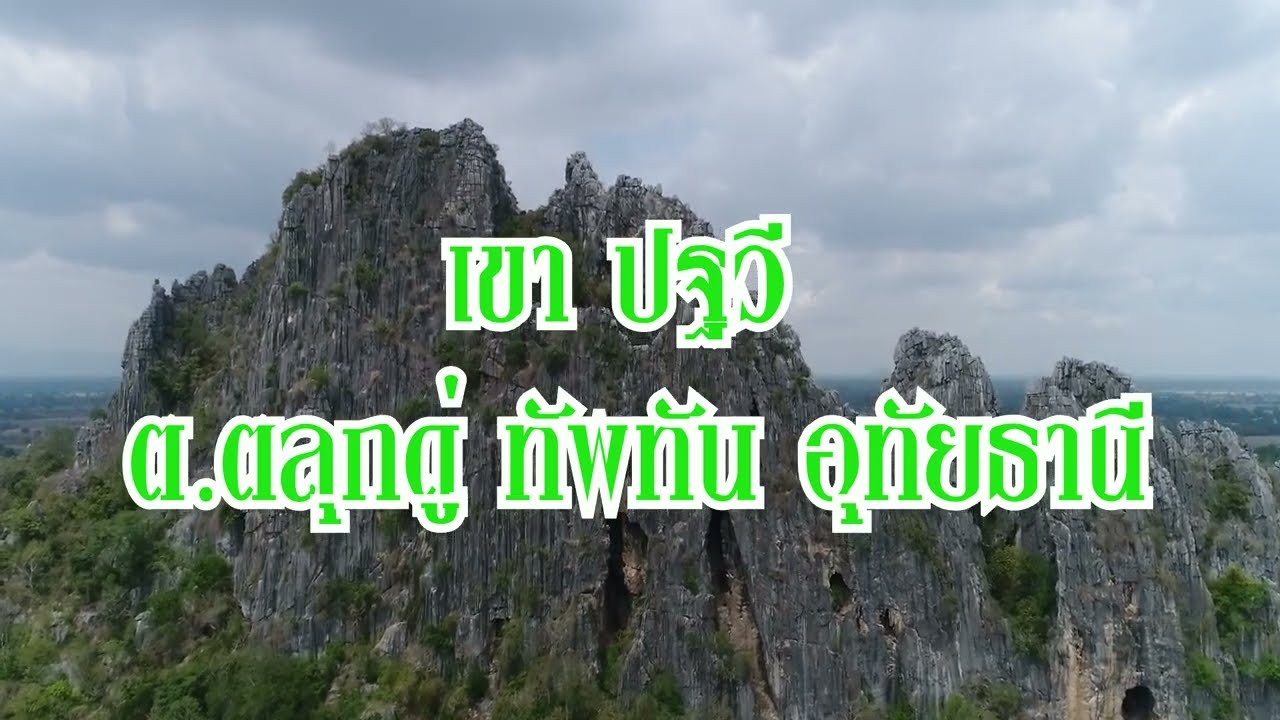
 Click to Access the Navigation Map GPS
Khao Pathawi Map
Recommend

 Art, Culture and Heritage
 Historical Sites and Monuments(3)
 Landmarks and Memorials(1)
 Art, Craft Centres, Tradition(5)
 Museums(1)
 Places of Worship
 Temple(31)
 Other Sacred Sites(3)
 Suburban Living
 Village, Community(4)
 Local Market(1)
 National Parks and Marine Reserves(2)
Mountain (Doi)(7)
National Parks and Marine Reserves(2)
Mountain (Doi)(7)
 Dam, Reservoir, Lake(5)
 Waterfalls(5)
 Hot Springs(1)
 Caves(9)
 Flower Field(2)
 River, Canal(2)
 Islands(1)
 Other natural attractions(1)
 Entertainment and Agricultural
 Farms, Parks and Ecotourism(2)
 Shopping
 Shopping and Night Market(1)


