
lovethailand home >North Travel Attractions >Uthai Thani Travel Attractions >Lan Sak >Rabam > Thungyai-Huai Kha Khaeng Wildlife Sanctuaries
TL;DR: Thungyai-Huai Kha Khaeng Wildlife Sanctuaries is located at Uthai Thani, Tak, and Kanchanaburi provinces in western Thailand, near the Myanmar border, open Daily, hours Entry is allowed from 08.00 – 15.30, and visitors must leave the service area.
Thungyai-Huai Kha Khaeng Wildlife Sanctuaries
Open Days: Daily
Opening Hours: Entry is allowed from 08.00 – 15.30, and visitors must leave the service area before 17.00.
Thungyai-Huai Kha Khaeng Wildlife Sanctuaries form Thailand’s first natural UNESCO World Heritage Site and one of the most important protected forest landscapes in mainland Southeast Asia. Located in western Thailand, the property covers parts of Uthai Thani, Tak, and Kanchanaburi provinces near the Myanmar border. This vast forest complex is a critical refuge for rare wildlife, an important watershed, and a living classroom for anyone who wants to understand Thailand’s natural heritage. For visitors, the most accessible learning area is the Huai Kha Khaeng Wildlife Sanctuary service zone in Uthai Thani Province, where nature study is allowed only in designated areas under strict conservation rules.
Unlike ordinary tourist attractions, Thungyai-Huai Kha Khaeng is primarily a wildlife sanctuary. Its central purpose is conservation, not recreation. The forests protect large mammals, birds, reptiles, amphibians, freshwater fish, rare plants, and complex ecological processes that continue to function across a broad natural landscape. Visitors are allowed to enter only selected service areas and relaxation zones, while the inner forest remains restricted to protect wildlife, support patrol work, and reduce disturbance to sensitive habitats.
The World Heritage property consists mainly of Thungyai Naresuan Wildlife Sanctuary and Huai Kha Khaeng Wildlife Sanctuary. Together, they include mountain ranges, deep valleys, rivers, dry evergreen forest, hill evergreen forest, mixed deciduous forest, dry dipterocarp forest, grasslands, and riverine habitats. These different ecosystems create a rich mosaic of living environments for wildlife. Large herbivores depend on open grasslands, mineral licks, water sources, and quiet forest edges, while predators depend on healthy prey populations and large territories. This ecological completeness is one of the reasons the site is internationally recognized.
The sanctuaries were inscribed on the UNESCO World Heritage List in 1991, or B.E. 2534, during the 15th session of the World Heritage Committee in Carthage, Tunisia. The inscription was a milestone for Thailand because it confirmed that the country’s western forests hold outstanding universal value. The site was recognized under natural criteria that highlight exceptional natural beauty, ongoing ecological and biological processes, and the importance of the area for biodiversity conservation. In practical terms, this means the forest is valuable not only to Thailand, but also to the global community.
Thungyai Naresuan occupies a vast area across Tak and Kanchanaburi provinces. Its landscape includes high mountains, valleys, headwater streams, savanna-like dry forest, and mixed forest formations. It plays a major role in the upper Kwai Yai and related river systems, supporting both wildlife and downstream ecosystems. The large size of Thungyai allows wide-ranging species such as elephants, wild cattle, and big cats to maintain natural movement patterns across the landscape.
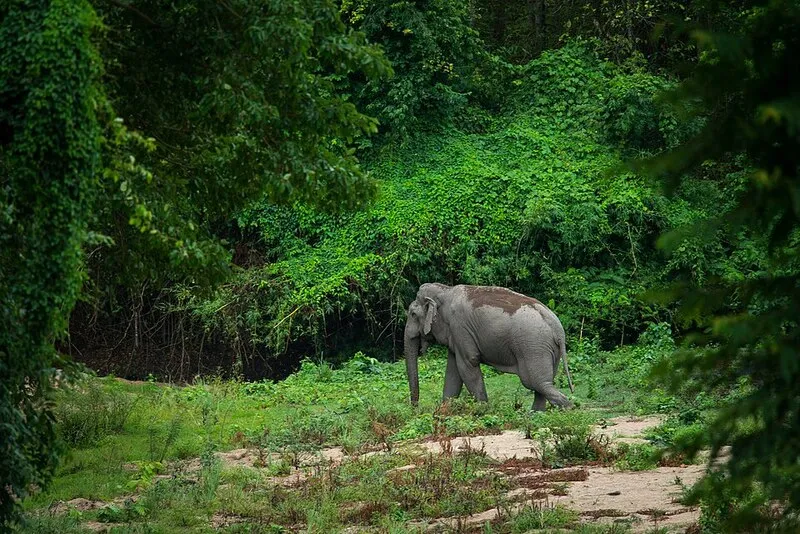
Huai Kha Khaeng, located mainly in Uthai Thani Province, is especially important for research, conservation education, and public awareness. The sanctuary is known for its populations of rare wildlife, including wild water buffalo, banteng, gaur, elephants, tigers, leopards, serows, dholes, junglefowl, green peafowl, and many forest birds. Its mixture of dry evergreen forest, hill evergreen forest, mixed deciduous forest, dry dipterocarp forest, grassland, and stream habitats creates a highly diverse ecological setting. Each habitat supports different species and different life cycles, from feeding and breeding to shelter and seasonal movement.
Huai Kha Khaeng is also closely associated with Seub Nakhasathien, one of Thailand’s most respected conservation figures. Seub served as chief of Huai Kha Khaeng Wildlife Sanctuary and devoted his life to protecting Thailand’s forests and wildlife. Inside the sanctuary’s main service area, visitors can pay respect at the Seub Nakhasathien Memorial, which has become a powerful symbol of sacrifice, integrity, and commitment to conservation. For many Thai visitors, this memorial is one of the most meaningful stops in the sanctuary.
The statue of Seub Nakhasathien faces southwest, symbolizing his concern for the western forest complex. The 8 steps at the memorial represent the 8 months during which he served as chief of Huai Kha Khaeng Wildlife Sanctuary. The memorial does more than commemorate one person; it tells the wider story of conservation challenges in Thailand, including poaching, habitat loss, pressure from development, limited field resources, and the difficult work carried out by forest rangers in remote protected areas.
A visit to Huai Kha Khaeng is therefore not simply a nature trip. It is an opportunity to learn how forests, wildlife, water systems, conservation law, scientific research, local communities, and public responsibility are connected. The visitor experience is strongest when travelers approach the sanctuary with respect and patience. Instead of expecting close wildlife encounters, visitors should focus on learning from the landscape, the interpretation center, animal signs, bird calls, forest trails, and the history of people who have worked to protect this forest.
Because the sanctuary is ecologically sensitive, access to the inner forest is strictly controlled. General visitors cannot freely enter deep forest zones. This rule protects wildlife from disturbance, reduces the risk of illegal activity, and allows rangers to carry out their conservation duties effectively. Public nature study is concentrated in designated service areas, where visitors can safely learn about the forest without damaging the ecosystems that make the World Heritage Site so valuable.
The first main visitor area is the Huai Kha Khaeng Wildlife Sanctuary headquarters in Lan Sak District, Uthai Thani Province. This is the recommended starting point for first-time visitors. The area includes nature interpretation facilities, exhibitions, information about wildlife and ecosystems, access to approved nature study routes, and the Seub Nakhasathien Memorial. It gives visitors a clear overview of the sanctuary’s history, biodiversity, conservation value, and the role of Huai Kha Khaeng within the larger World Heritage forest complex.
The second important area is the Cyber Forest Protection Unit in Huai Khot District. This zone is associated with the Cyber Waterfall area and is suitable for travelers who want a quieter nature experience under official regulations. Camping and access conditions depend on current announcements, weather, water levels, safety conditions, and the decision of sanctuary officers. Travelers planning to use this zone should contact the relevant authority before departure and should not rely on spontaneous access.
The third area is Huai Mae Dee Forest Protection Unit in Ban Rai District. This zone is linked to nature study activities and provides another perspective on the Huai Kha Khaeng landscape. As with all protected forest areas, visitors must follow official instructions, stay within permitted areas, and prepare for rural road conditions. Checking weather and access rules before traveling is especially important during the rainy season.
The most valuable lesson of Huai Kha Khaeng is that every rule in the sanctuary has a conservation purpose. Keeping quiet reduces wildlife disturbance. Not feeding animals prevents unnatural behavior. Staying on designated routes protects plants, insects, soils, and small habitats. Taking trash back out of the forest protects animals from injury and pollution. Responsible travel here means understanding that visitors are guests in a living forest, not consumers of a theme park.
Biologically, Thungyai-Huai Kha Khaeng is remarkable because it lies at the meeting point of several biogeographical influences. Species related to Sino-Himalayan, Sundaic, Indo-Burmese, and Indo-Chinese regions occur within the same broad landscape. This creates unusual combinations of plants and animals. Some parts of the forest are moist and dense, while others are dry and open. Some areas change dramatically in color during the dry season, while streams and riverine forest remain important wildlife corridors throughout the year.
Birdlife is one of the most visible signs of ecological richness. The sanctuaries support many forest birds and large bird species, including the green peafowl. Birdwatchers should use binoculars, keep a respectful distance, avoid sound lures, and never enter restricted zones. Ethical birdwatching is especially important in protected areas because the goal is to observe wildlife without changing its natural behavior.
Among mammals, the tiger is one of the clearest indicators of forest health. Tigers need large territories, sufficient prey, quiet habitat, and functioning ecological systems. Protecting tigers therefore means protecting the whole chain of life beneath them, including vegetation, water sources, herbivores, and other predators. In this sense, tiger conservation is not about one species alone; it is about maintaining the integrity of the entire western forest ecosystem.
The wild water buffalo is another species that gives Huai Kha Khaeng exceptional conservation importance. Wild buffalo require suitable feeding grounds, reliable water sources, and low-disturbance habitats. Their survival depends on habitat protection, disease prevention, effective patrols, and cooperation between officials and communities around the protected area. Seeing the sanctuary as a refuge for such rare species helps visitors understand why access control is necessary.
The forest also functions as an important watershed. Streams and rivers inside the protected area help sustain ecosystems downstream. Healthy forest cover slows water flow, reduces soil erosion, maintains moisture, and supports freshwater life. When headwater forests are protected, people far beyond the sanctuary boundary benefit from cleaner water, more stable landscapes, and better ecological resilience. This makes the World Heritage property important not only for wildlife, but also for human communities.
Getting There is easiest by private car. Most visitors head to the Huai Kha Khaeng Wildlife Sanctuary headquarters in Rabam Subdistrict, Lan Sak District, Uthai Thani Province. From Bangkok, travelers can drive north via the Asian Highway through Ayutthaya, Sing Buri, and Chai Nat before entering Uthai Thani, then continue toward Lan Sak District and Rabam Subdistrict. Public transport can take travelers to Uthai Thani or nearby districts, but onward travel to the sanctuary usually requires local transport or a chartered vehicle arranged in advance.
The best season depends on the type of experience visitors want. The cool season and early dry season are comfortable for nature study and road travel. The rainy season brings lush green forest scenery, but visitors should check official announcements because heavy rain can affect roads, streams, waterfalls, and service areas. Suitable shoes, drinking water, insect repellent, sun protection, and a bag for carrying trash back out are recommended in every season.
Suitable activities include visiting the nature study center, viewing exhibitions, learning about wildlife, walking approved nature trails, paying respect at the Seub Nakhasathien Memorial, and studying the role of forest rangers. The area is suitable for families, students, birdwatchers, photographers, and travelers interested in conservation. Activities involving camping or entering relaxation zones must follow official regulations and should be arranged only through the relevant sanctuary authorities.
Visitors should remember that wildlife sightings are never guaranteed. Wild animals avoid people and move according to their own behavior, weather, food availability, and seasonal conditions. In a protected sanctuary, seeing signs of wildlife, hearing birds, studying tracks, and learning from interpretation displays can be just as meaningful as seeing an animal directly. Responsible travelers value the forest’s natural rhythm rather than forcing an encounter.
Good manners are essential. Visitors should dress appropriately, avoid loud noise, refrain from playing music, drive slowly, never feed animals, never leave food waste, never collect plants or natural objects, and never enter closed routes. Photography should be done from a respectful distance. Even small actions can affect wildlife behavior, especially in sensitive habitats where animals depend on quiet conditions for survival.
Historically, Huai Kha Khaeng helped shape modern conservation awareness in Thailand. The story of Seub Nakhasathien made the public understand that protecting forests is not only a technical issue for scientists or officials, but a shared responsibility. Today, supporting conservation can be as simple as following sanctuary rules, sharing accurate information, respecting protected areas, reducing waste, and encouraging future generations to value wildlife and natural ecosystems.
Thungyai-Huai Kha Khaeng should be visited with respect. Its importance lies in its living forests, free-ranging wildlife, rivers, ecological processes, research value, and the dedication of people who protect it. A short visit to the service area can still be deeply meaningful if travelers take time to learn, observe, and understand why this forest must remain protected for generations to come.
For a practical itinerary, travelers should set aside at least half a day to one full day for the Huai Kha Khaeng service area. Start at the nature study center, visit the Seub Nakhasathien Memorial, walk an approved nature trail, and study the exhibitions before continuing to nearby attractions in Lan Sak or Ban Rai District. This approach allows visitors to combine learning, nature, and responsible travel while keeping the conservation purpose of the sanctuary at the center of the journey.
Thungyai-Huai Kha Khaeng is a living World Heritage Site. It is not only a name on the UNESCO list, but a real forest where wildlife survives, rivers flow, trees regenerate, and rangers continue their work every day. Visiting this place is an invitation to understand Thailand’s natural heritage more deeply and to recognize that a truly valuable forest is one that remains intact for the future.
| Name | Thungyai-Huai Kha Khaeng Wildlife Sanctuaries |
| Thai Name | เขตรักษาพันธุ์สัตว์ป่าทุ่งใหญ่นเรศวร-ห้วยขาแข้ง |
| Location | Uthai Thani, Tak, and Kanchanaburi provinces in western Thailand, near the Myanmar border |
| Address Of Huai Kha Khaeng Section | Huai Kha Khaeng Wildlife Sanctuary, Rabam Subdistrict, Lan Sak District, Uthai Thani 61160, Thailand |
| Coordinates | N 15 19 59.988, E 98 55 0.012 |
| Area | 4,017,087 rai or 6,427.34 square kilometers |
| Highlights | Thailand’s first natural World Heritage Site, a major Southeast Asian forest complex, a refuge for rare wildlife, and a key site for conservation education |
| History | The sanctuaries were legally protected in the 1970s and inscribed as a UNESCO natural World Heritage Site in 1991. |
| Name Origin | The World Heritage name combines two major protected areas: Thungyai Naresuan Wildlife Sanctuary and Huai Kha Khaeng Wildlife Sanctuary. |
| Distinctive Features | Diverse forests, mountains, grasslands, streams, watersheds, wildlife habitats, and conservation education areas |
| Important Wildlife | Elephants, tigers, leopards, gaur, banteng, wild water buffalo, serow, dhole, junglefowl, green peafowl, and many forest birds |
| Global Importance | Recognized under UNESCO natural criteria (vii), (ix), and (x) for natural beauty, ecological processes, and biodiversity conservation |
| Travel Information | Best reached by private car from Uthai Thani toward Lan Sak District and Rabam Subdistrict. Public transport travelers usually need local transfer or a chartered vehicle. |
| Current Status | Open for nature study in designated service areas only. Independent entry into deep forest zones is not allowed. |
| Open Days | Daily |
| Opening Hours | Entry is allowed from 08.00 – 15.30, and visitors must leave the service area before 17.00. |
| Main Areas / Zones | 1. Huai Kha Khaeng Wildlife Sanctuary Headquarters, Lan Sak District 2. Huai Kha Khaeng Nature And Wildlife Education Area 3. Seub Nakhasathien Memorial 4. Cyber Forest Protection Unit, Huai Khot District 5. Huai Mae Dee Forest Protection Unit, Ban Rai District |
| Facilities | Nature study center, exhibitions, visitor service area, approved nature trails, memorial area, and regulated camping areas in designated zones |
| Caretaker | Department of National Parks, Wildlife and Plant Conservation |
| Main Contact Number | Department of National Parks, Wildlife and Plant Conservation, Tel. 0 2561 0777, 0 2579 6666 |
| Official Website / Official Page | Huai Kha Khaeng Wildlife Sanctuary Official Facebook Page and Department of National Parks, Wildlife and Plant Conservation website |
| Nearby Tourist Attractions | 1. Hup Pa Tat, about 40 km 2. Wat Tham Khao Wong, about 55 km 3. Pang Sawan Weir, about 60 km 4. Wat Sangkat Rattanakhiri, about 80 km 5. Sakae Krang Old Market, about 85 km |
| Nearby Restaurants | 1. Local Restaurants In Lan Sak District, about 35 km 2. Community Restaurants In Ban Rai District, about 50 km 3. Local Restaurants In Huai Khot Area, about 55 km 4. Local Restaurants Near Hup Pa Tat, about 40 km 5. Restaurants In Uthai Thani Town, about 80 km |
| Nearby Accommodations | 1. Accommodations In Lan Sak District, about 35 km 2. Accommodations In Ban Rai District, about 50 km 3. Accommodations In Huai Khot District, about 55 km 4. Accommodations Near Hup Pa Tat, about 40 km 5. Accommodations In Uthai Thani Town, about 80 km |
Frequently Asked Questions (FAQ)
Q: Where are the Thungyai-Huai Kha Khaeng Wildlife Sanctuaries located?
A: They are located in western Thailand across Uthai Thani, Tak, and Kanchanaburi provinces near the Myanmar border. The most accessible visitor service area is in Huai Kha Khaeng Wildlife Sanctuary, Lan Sak District, Uthai Thani Province.
Q: When did Thungyai-Huai Kha Khaeng become a World Heritage Site?
A: The sanctuaries were inscribed as a UNESCO natural World Heritage Site in 1991, making them Thailand’s first natural World Heritage Site.
Q: Can visitors enter the deep forest areas?
A: No. General visitors are allowed only in designated service areas and relaxation zones. Independent entry into deep forest areas is not allowed because the sanctuary is a highly sensitive protected area.
Q: What are the opening hours of Huai Kha Khaeng Wildlife Sanctuary?
A: The service area is open daily. Entry is allowed from 08.00 to 15.30, and visitors must leave the service area before 17.00.
Q: What can visitors see at Huai Kha Khaeng?
A: Visitors can explore the nature study area, exhibitions, approved nature trails, wildlife information displays, and the Seub Nakhasathien Memorial. Access is limited to areas officially opened for nature study.
Q: Is Huai Kha Khaeng suitable for families?
A: Yes. It is suitable for families who want to teach children about forests, wildlife, and conservation. Children should be supervised closely, and all visitors must follow sanctuary rules.
Q: What should visitors prepare before going to Huai Kha Khaeng?
A: Visitors should check the latest official announcements, wear comfortable walking shoes, bring drinking water, sun protection, insect repellent, and a bag for carrying trash back out. Travelers heading to remote protection units should plan transport in advance.
Q: Why are the Thungyai-Huai Kha Khaeng Wildlife Sanctuaries globally important?
A: They protect one of the largest and most intact forest landscapes in mainland Southeast Asia, support rare and endangered wildlife, preserve major watersheds, and maintain ecological processes of international conservation value.
 Category: ●Nature and Wildlife
 Group: ●National Parks and Marine Reserves
Last Update : 5 MonthAgo
 Last Update : 5 MonthAgo
 Click to Access the Navigation Map GPS
Thungyai-Huai Kha Khaeng Wildlife Sanctuaries Map
Recommend

 Art, Culture and Heritage
 Historical Sites and Monuments(3)
 Landmarks and Memorials(1)
 Art, Craft Centres, Tradition(5)
 Museums(1)
 Places of Worship
 Temple(31)
 Other Sacred Sites(3)
 Suburban Living
 Village, Community(4)
 Local Market(1)
National Parks and Marine Reserves(2)
Local Market(1)
National Parks and Marine Reserves(2)
 Mountain (Doi)(7)
 Dam, Reservoir, Lake(5)
 Waterfalls(5)
 Hot Springs(1)
 Caves(9)
 Flower Field(2)
 River, Canal(2)
 Islands(1)
 Other natural attractions(1)
 Entertainment and Agricultural
 Farms, Parks and Ecotourism(2)
 Shopping
 Shopping and Night Market(1)
 Travel Articles, Recipes
 Travel Review, Food Review(1)


