
lovethailand home >North Travel Attractions >Uthai Thani Travel Attractions >Muang Uthai Thani >Uthai Mai > Hok Sae Tung
TL;DR: Hok Sae Tung is located at Si Uthai Road, Uthai Mai Subdistrict, Mueang Uthai Thani District, Uthai Thani Province, open Daily, hours 08.00 – 17.00.
Hok Sae Tung
Open Days: Daily
Opening Hours: 08.00 – 17.00
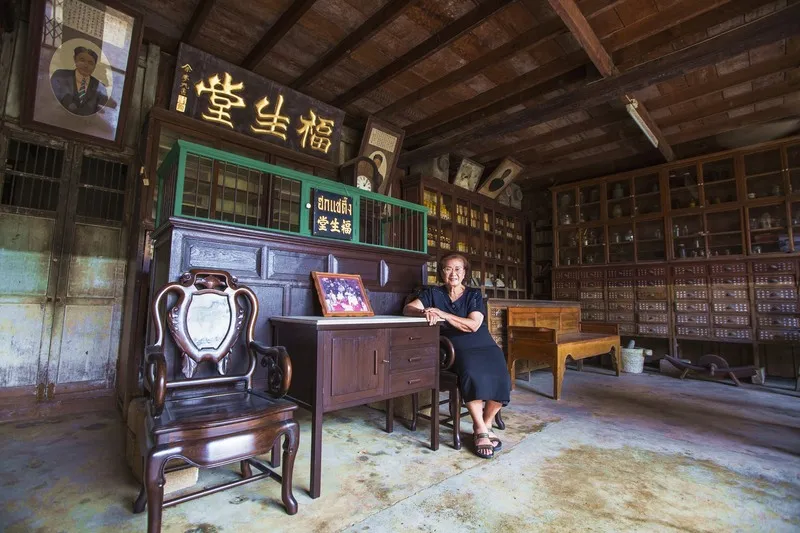
Hok Sae Tung is located at 427 Si Uthai Road, Uthai Mai Subdistrict, Mueang Uthai Thani District, Uthai Thani Province. It is a century-old Chinese-style teakwood house and one of the most meaningful cultural heritage sites in Uthai Thani’s old town. For visitors, the house offers a rare glimpse into the history of Chinese merchants, traditional medicine, vegetarian festival culture, and the multicultural life of the Sakae Krang riverside community.
Hok Sae Tung is not simply an old wooden house. It is a living memory of Uthai Thani’s Chinese community. The building tells stories of trade, migration, Chinese medicine, local gatherings, and religious-cultural activities that once shaped daily life in the town. Walking through the house feels like entering a preserved layer of the city’s past, where wooden walls, old medicine shelves, musical instruments, and ritual objects still carry the atmosphere of an earlier era.
The Sakae Krang River basin has long been connected with trade and settlement. Chinese migrants arrived in this area from the late Ayutthaya period, many traveling with merchant boats and gradually establishing themselves in riverside communities. Because Uthai Thani was surrounded by agricultural areas, especially rice-growing communities, Chinese merchants played an important role in buying, transporting, and selling goods. This helped the Sakae Krang area become one of the province’s important commercial zones.
Hok Sae Tung developed within this trading environment. In the past, the building was associated with a well-known traditional Chinese pharmacy and community activities. A pharmacy in a Chinese trading community was more than a place to buy medicine. It was also a meeting point where people sought health advice, exchanged news, discussed community matters, and maintained social relationships. This made Hok Sae Tung important not only economically, but also socially and culturally.
The architectural character of Hok Sae Tung is one of its strongest attractions. The building is a Chinese-style teakwood house that reflects the way Chinese families in old Thai towns often combined living space and business space in one structure. The wooden floors, walls, openings, and interior layout show how the house was used for trade, storage, family life, and community interaction. Its charm comes not from luxury, but from age, proportion, material, and authenticity.
As a former Chinese pharmacy, Hok Sae Tung preserves objects that are valuable for understanding the past. Old medicine shelves, storage cabinets, ritual items, Chinese musical instruments, and objects related to the Vegetarian Festival help visitors imagine how the house once functioned. These are not merely antiques. They are cultural evidence of how health knowledge, religious practice, commerce, and community identity were connected in one place.
The upper floor is especially important because it preserves items related to Chinese cultural activities and ritual practice. Chinese musical instruments suggest the role of performance and ceremony in community events. Medicine shelves tell the story of herbal knowledge and traditional healing. Objects used in the Vegetarian Festival reveal the spiritual life of the local Chinese community. Together, these objects make Hok Sae Tung feel like a small community museum shaped by real life rather than a staged exhibition.
The Vegetarian Festival was one of the most important traditions associated with this place. During the festival, people gathered to observe precepts, eat vegetarian food, make merit, and participate in activities based on Chinese religious belief. For many Chinese-Thai communities, the Vegetarian Festival is not only about avoiding meat. It is also about purifying body, speech, and mind, reducing harm, and creating auspiciousness. Hok Sae Tung therefore functioned as both a social center and a spiritual gathering place.
The house also reflects the relationship between Thai and Chinese cultures in Uthai Thani. Chinese settlers did not live separately from the Thai community. Over time, trade, marriage, food, language, belief, and shared daily life created a local identity that blended both cultures. Hok Sae Tung is one of the clearest examples of this cultural blending. It allows visitors to see how overseas Chinese heritage became part of the character of Uthai Thani town.
The name Hok Sae Tung itself carries a Chinese cultural identity. Even for visitors who do not understand Chinese, the name, architecture, objects, and atmosphere immediately communicate the roots of the community. It reminds travelers that old towns in Thailand often contain many layers of history, including migration, trade networks, religious practice, and family businesses that shaped the urban landscape over generations.
Hok Sae Tung is also valuable as an example of wooden-house conservation. A teakwood house that has stood for more than 100 years requires careful maintenance. Wood, humidity, insects, daily use, and weather all affect the building. Preserving such a place means preserving not only the structure, but also the memory of a family, a community, and a town. The beauty of Hok Sae Tung lies in its traces of time, not in looking new or overly restored.
Today, the house is cared for by Khun Sagngeam Palawatwichai, who has helped preserve the building and its cultural memory. Conservation of this kind requires understanding, patience, and respect for the original character of the place. The goal is not to erase age, but to protect the details that allow future generations to understand how people once lived, worked, worshipped, and gathered in this old Chinese-Thai community.
For travelers visiting Uthai Thani, Hok Sae Tung fits well into a cultural walking route through the old town. Visitors can begin on Si Uthai Road, stop at Hok Sae Tung, continue to Trok Rong Ya Walking Street, walk toward the Sakae Krang River, and visit Wat Uposatharam or other nearby landmarks. This route is ideal for those who enjoy slow travel, old houses, local food, riverside life, and cultural details that are often missed in quick sightseeing.
Getting There is easy because Hok Sae Tung is located on Si Uthai Road in central Uthai Thani town. Travelers can arrive by private car, local transport, or on foot from nearby old-town attractions. Those driving should check nearby parking options before visiting, as some old-town streets are narrow and better suited for walking than long-term roadside parking.
The best time to visit is in the morning or late afternoon, when the weather is more comfortable for walking around the old town. Morning light gives the wooden house a soft and nostalgic atmosphere, while the afternoon is suitable for combining the visit with local restaurants, cafes, and markets. Visitors should take time to observe details such as old signs, medicine shelves, wooden textures, and preserved objects rather than rushing through the site.
Visitors should behave respectfully inside Hok Sae Tung. Old objects should not be touched, moved, or opened without permission. Some areas of the wooden house may be fragile or not intended for public access. Quiet and careful behavior helps preserve the building and allows other visitors to appreciate its atmosphere. Photography should be done with sensitivity, especially around objects of cultural or ritual value.
Hok Sae Tung is especially suitable for travelers interested in local history, Chinese-Thai heritage, old wooden houses, traditional medicine, the Vegetarian Festival, and community-based cultural conservation. Its value comes from being a real place that once served real community functions. It was not originally built as a museum, but gradually became a cultural learning site because of the history and memory preserved within it.
Overall, Hok Sae Tung is one of the most meaningful cultural stops in Uthai Thani’s old town. It helps visitors understand that the province is not only about riverside temples and floating houses, but also about Chinese merchants, old pharmacies, vegetarian traditions, wooden architecture, and shared Thai-Chinese community life. A visit here is a way to understand Uthai Thani through a single house that holds far more stories than its quiet exterior may suggest.
| Name | Hok Sae Tung / Hok Sae Tung Museum |
| Location | Si Uthai Road, Uthai Mai Subdistrict, Mueang Uthai Thani District, Uthai Thani Province |
| Address | 427 Si Uthai Road, Uthai Mai Subdistrict, Mueang Uthai Thani District, Uthai Thani Province 61000 |
| Highlights | A Chinese-style teakwood house over 100 years old, former traditional Chinese pharmacy, and cultural learning site of the Sakae Krang Chinese community |
| History | Connected with Chinese settlers in the Sakae Krang River basin from the late Ayutthaya period and later became part of Uthai Thani’s trade, pharmacy, and Chinese community activities |
| Name Origin | The name Hok Sae Tung reflects Chinese cultural roots and the identity of an old pharmacy in Uthai Thani’s historic town area |
| Distinctive Features | Chinese-style teakwood architecture, old medicine shelves, Chinese musical instruments, antiques, and objects related to the Vegetarian Festival |
| Travel Information | Accessible by private car, local transport, or on foot from nearby old-town attractions; navigate to Si Uthai Road in Uthai Mai Subdistrict |
| Current Status | An old wooden house and cultural learning site preserving Chinese community heritage in central Uthai Thani |
| Open Days | Daily |
| Opening Hours | 08.00 – 17.00 |
| Facilities | Old-house viewing area, antique display area, and surrounding old-town walking route |
| Main Areas / Zones | 1. Chinese-style teakwood house 2. Former traditional Chinese pharmacy area 3. Old medicine shelves and antique objects 4. Chinese musical instruments and Vegetarian Festival-related items 5. Connection area to Si Uthai Road old-town route |
| Caretaker | Khun Sagngeam Palawatwichai |
| Nearby Tourist Attractions | 1. Trok Rong Ya Walking Street, about 0.5 km 2. Sakae Krang River, about 0.8 km 3. Uthai Thani City Pillar Shrine, about 1 km 4. Wat Uposatharam, about 2 km 5. Wat Sangkat Rattana Khiri / Khao Sakae Krang, about 3 km |
| Nearby Restaurants | 1. Ruean Mai Rim Nam Restaurant, about 2 km, Tel. 081-962-0911 2. Mum Sakae Restaurant, about 1 km, Tel. 064-650-5765 3. Pa Thong Traditional Coffee, about 1 km, Tel. 056-571-298 4. The World’s Most Delicious Chicken Rice Restaurant, about 1 km, Tel. 080-688-0883 5. Ko Tee Chicken Rice Uthai Thani, about 1 km |
| Nearby Accommodations | 1. Baan Nah Norhn, about 1 km, Tel. 085-874-2846 2. MY UTHAI HOTEL, about 2 km, Tel. 061-262-6936 3. Uthai Heritage, about 2 km, Tel. 082-623-9426 4. Klang Mueang Villa Resort, about 2 km, Tel. 098-781-4564, 096-675-5466 5. Baan Sakae Krang Resort, about 2 km, Tel. 096-979-8897 |
Frequently Asked Questions (FAQ)
Q: Where is Hok Sae Tung located?
A: Hok Sae Tung is located at 427 Si Uthai Road, Uthai Mai Subdistrict, Mueang Uthai Thani District, Uthai Thani Province, in the old town area near Trok Rong Ya and the Sakae Krang River.
Q: Why is Hok Sae Tung important?
A: It is a Chinese-style teakwood house over 100 years old, a former traditional Chinese pharmacy, and a cultural learning site that reflects the history of Uthai Thani’s Chinese community.
Q: What was Hok Sae Tung in the past?
A: Hok Sae Tung was formerly a traditional Chinese pharmacy and an important community space connected with Chinese cultural activities, especially the Vegetarian Festival.
Q: What can visitors see inside Hok Sae Tung?
A: Visitors can see the old teakwood house, medicine shelves, Chinese musical instruments, antiques, and objects related to ritual activities and the Vegetarian Festival.
Q: What kind of travelers should visit Hok Sae Tung?
A: It is suitable for travelers interested in local history, old wooden houses, Chinese-Thai heritage, traditional medicine, vegetarian festival culture, and old-town walking routes.
Q: How should visitors behave when visiting Hok Sae Tung?
A: Visitors should walk carefully, avoid touching or moving old objects without permission, and respect the house because it is a fragile cultural heritage site.
Q: What nearby places can travelers visit after Hok Sae Tung?
A: Nearby attractions include Trok Rong Ya Walking Street, the Sakae Krang River, Uthai Thani City Pillar Shrine, Wat Uposatharam, and Wat Sangkat Rattana Khiri.
 Category: ●Suburban Living
 Group: ●Village, Community
Last Update : 4 MonthAgo
 Last Update : 4 MonthAgo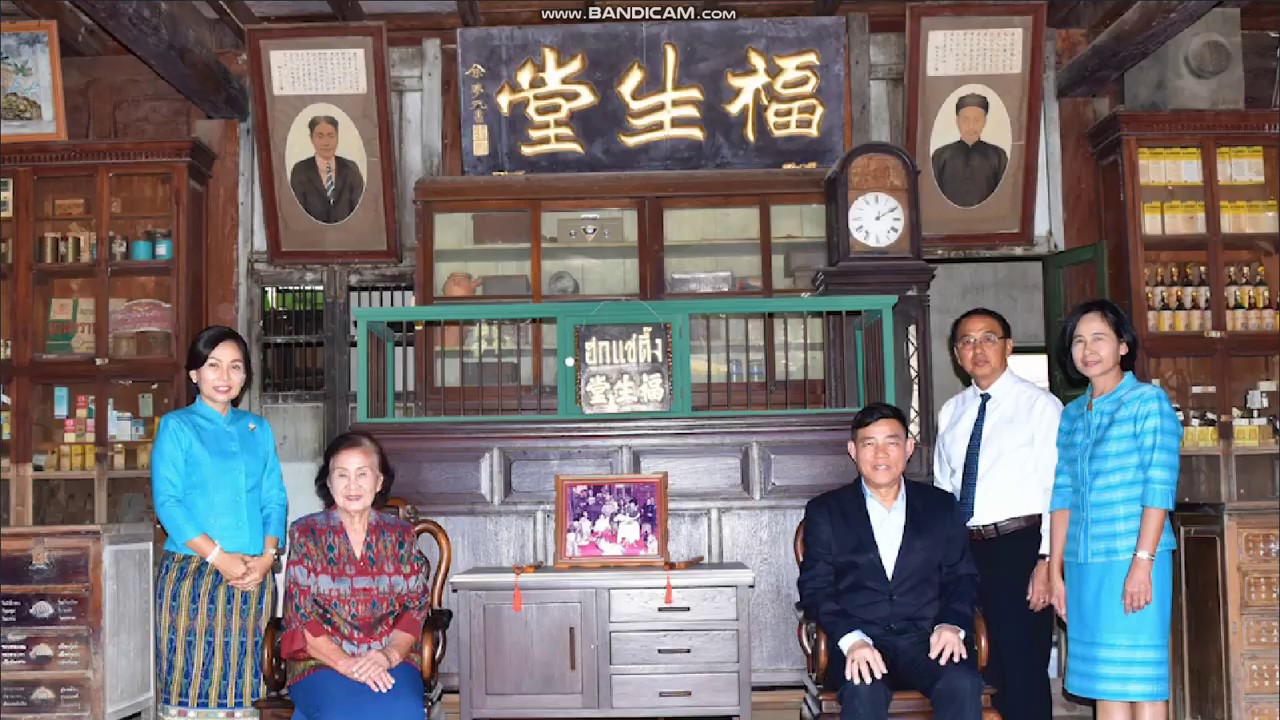
 Click to Access the Navigation Map GPS
Hok Sae Tung Map
Recommend

 Art, Culture and Heritage
 Historical Sites and Monuments(3)
 Landmarks and Memorials(1)
 Art, Craft Centres, Tradition(5)
 Museums(1)
 Places of Worship
 Temple(31)
 Other Sacred Sites(3)
Village, Community(4)
Other Sacred Sites(3)
Village, Community(4)
 Local Market(1)
 Nature and Wildlife
 National Parks and Marine Reserves(2)
 Mountain (Doi)(7)
 Dam, Reservoir, Lake(5)
 Waterfalls(5)
 Hot Springs(1)
 Caves(9)
 Flower Field(2)
 River, Canal(2)
 Islands(1)
 Other natural attractions(1)
 Entertainment and Agricultural
 Farms, Parks and Ecotourism(2)
 Shopping
 Shopping and Night Market(1)


