
lovethailand home >North Travel Attractions >Uthai Thani Travel Attractions >Muang Uthai Thani >Sakae Krang > Wat Ubosatharam (Wat Bot Manorom)
TL;DR: Wat Ubosatharam (Wat Bot Manorom) is located at Along The Sakae Krang River, Sakae Krang Subdistrict / Ko Thepho Area, Mueang Uthai Thani District, Uthai Thani Province, open Daily, hours Generally Open Throughout The Day.
Wat Ubosatharam (Wat Bot Manorom)
Open Days: Daily
Opening Hours: Generally Open Throughout The Day
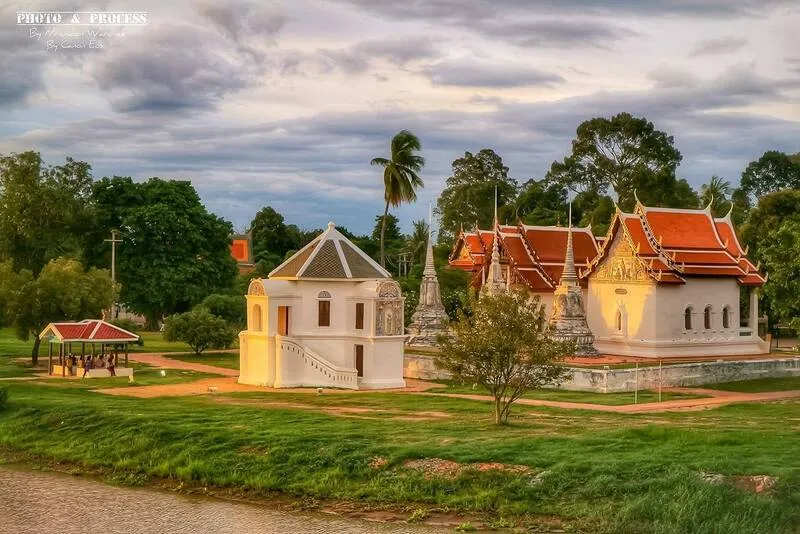
Wat Ubosatharam, also spelled Wat Uposatharam, is one of the most important old riverside temples in Uthai Thani Province. Formerly known as Wat Bot Manorom and commonly called Wat Bot by local people, the temple stands along the Sakae Krang River near the municipal fresh market and the old-town area. It can be reached easily by crossing the bridge from the market side, making a visit here both convenient and atmospheric. Travelers can enjoy not only Buddhist art and temple architecture, but also the quiet riverside scenery that gives Uthai Thani its distinctive identity.
For international visitors, Wat Ubosatharam is an excellent place to understand the cultural character of Uthai Thani. The temple is not famous because of dramatic scale or modern grandeur. Instead, its importance lies in the completeness of its cultural elements: the ordination hall, viharn, mural paintings, sacred objects, scripture cabinets, mother-of-pearl alms bowl, red sandstone boundary markers, octagonal mondop, old chedis, Uthai Phuttha Sabha hall, and the floating ordination hall in front of the temple. Together, these elements show how a riverside temple can serve as a religious center, an art museum, a community landmark, and a record of local memory.
The temple dates back to the early Rattanakosin period and has long been associated with the Sakae Krang riverside community. In the past, rivers were central to travel, trade, religious activity, and communication between settlements. Because Wat Ubosatharam is located beside the river, it naturally became connected with the daily life of local people. It was a place for making merit, gathering for ceremonies, crossing between communities, and maintaining Buddhist traditions in a town shaped by water.
One of the main reasons travelers and art lovers visit Wat Ubosatharam is the mural painting inside the ordination hall and viharn. Inside the ordination hall, the murals depict the life of the Buddha from birth to enlightenment, teaching, and passing into final nirvana. The painting style reflects early Rattanakosin craftsmanship, with fine detail, careful composition, expressive figures, architectural settings, and narrative scenes arranged across the walls. These murals are not merely decoration; they function as visual Buddhist teaching, allowing viewers to learn sacred stories through images.
The murals in the ordination hall are especially valuable because of their narrative rhythm. Visitors can follow the life of the Buddha through scenes that show his birth as Prince Siddhartha, his renunciation, the search for truth, enlightenment under the Bodhi tree, the teaching of the Dharma, and the passing into parinirvana. For those interested in Buddhist art, the murals provide insight into how religious stories were communicated to communities before modern printed media became widely available.
The viharn contains another important group of murals. These include scenes of the Buddha teaching celestial beings in heaven, scenes of contemplation on impermanence, and other images that encourage reflection on the nature of life. The upper walls are decorated with images of monk disciples alternating with ceremonial fans of rank, creating a respectful visual environment around the principal Buddha image. Compared with the ordination hall, the viharn murals place stronger emphasis on Buddhist reflection and moral teaching.
The exterior of the viharn also contains paintings of the cremation of the Buddha and scenes of local life. These images are especially valuable because they connect Buddhist belief with everyday society. Local-life scenes in temple murals often reveal clothing, houses, tools, occupations, ceremonies, and social relationships. At Wat Ubosatharam, such images make the temple an important source for studying not only Thai religious art but also the cultural history of Uthai Thani’s riverside community.
In addition to the murals, the temple preserves several important sacred objects and antiques. These include red sandstone boundary markers in front of the ordination hall, scripture cabinets and storage cabinets painted with Thai floral and vine motifs, an alms bowl with a mother-of-pearl lid granted by King Rama 5, and decorative swan finials once used on posts. Each object reflects a different aspect of temple life: monastic boundary, religious learning, royal patronage, ritual practice, and traditional craftsmanship.
The red sandstone boundary markers are important because they define the sacred area of the ordination hall used for formal monastic ceremonies. In Thai Buddhism, boundary markers are not merely decorative objects. They mark the space where important acts of the Sangha take place. The scripture cabinets and painted storage cabinets show that the temple was also a place of religious learning and preservation of sacred texts. Their painted designs demonstrate how beauty and function were combined in traditional Thai temple furniture.
The octagonal mondop is one of the most distinctive structures within the temple compound. Its design blends Thai religious architecture with Western influence. The octagonal form differs from more common Thai temple structures, while the window frames are decorated with stucco patterns resembling climbing vines. On the exterior are high-relief stucco Buddha images. This building reveals a period when Thai architecture was open to new forms while still maintaining Buddhist meaning and sacred function.
The temple also contains several chedis, including a hexagonal chedi and a twelve-indented-corner chedi in the Rattanakosin style. These structures are important not only as architectural features, but also as symbols of Buddhist devotion and merit-making. Their different forms allow visitors to see the variety of Thai sacred architecture within a single temple compound. For travelers interested in architectural history, Wat Ubosatharam is a rewarding site because it preserves several forms across different artistic influences.
The Uthai Phuttha Sabha hall is a Thai-style pavilion used as a chanting hall. Its pediment is decorated with fine stucco work, and the building continues to support religious activity within the temple. This hall reminds visitors that Wat Ubosatharam is not only an old monument. It remains a living temple where worship, chanting, merit-making, and community participation continue. The temple therefore offers both historical value and contemporary religious life.
One of the most memorable features of Wat Ubosatharam is the floating ordination hall in front of the temple. It was originally built to receive King Chulalongkorn, Rama 5, during his royal journey to the northern administrative region in 1906. The original structure consisted of twin floating halls with traditional roof ornaments. Its circular Pali inscription reads “Su Agata Te Maharaja,” meaning “The Great King Has Arrived Well.” This inscription reflects the devotion and welcome of the people of Uthai Thani toward the king.
In 1976, the floating ordination hall was repaired and restored into a single structure with a raised two-level platform and a hip roof. The circular inscription was moved to the central front gable. Today, the floating hall remains an important symbol of the temple and continues to be used for religious ceremonies and community events such as weddings, ordination ceremonies, funerals, and merit-making occasions. Its continued use shows that riverside religious traditions in Uthai Thani remain part of living culture.
The floating ordination hall also makes Wat Ubosatharam different from many other temples. It physically connects the temple with the Sakae Krang River. The river is not simply a background view; it is part of the temple’s identity. Standing near the riverfront, visitors can see boats, houses, the waterway, and the market side of town. This view helps explain why temples, markets, and rivers were historically inseparable in many Thai towns.
The atmosphere of Wat Ubosatharam is best experienced slowly. Art lovers should allow at least 1 hour to view the murals in the ordination hall and viharn. Photographers may prefer the morning or late afternoon, when the light over the river and temple buildings is softer. A morning visit can be combined with the riverside market before crossing the bridge to the temple, creating a complete experience of local food, community life, religious art, and riverside scenery.
Visitors should dress modestly and behave respectfully. Shoulders and knees should be covered when entering sacred buildings. The murals, antiques, stucco decorations, and carved details should not be touched. Flash photography should be avoided around old paintings. If any signs or temple instructions restrict access or photography, visitors should follow them carefully. Respectful travel helps preserve both the sacred atmosphere and the fragile artworks of this historic temple.
Getting There is easy from Uthai Thani town. From the municipal fresh market or old-town area, visitors can cross the bridge over the Sakae Krang River directly to the temple. This short walk is part of the experience because it offers views of the river, boats, houses, and the riverside setting. Travelers with private cars can navigate to Wat Ubosatharam or Wat Bot in Uthai Thani and park in nearby areas where appropriate. Local transport and motorcycle taxis are also convenient from the town center.
Wat Ubosatharam fits well into a cultural itinerary around Uthai Thani town. Visitors can begin at the Sakae Krang riverside morning market, cross the bridge to Wat Ubosatharam, then continue to Baan Jongrak, Trok Rong Ya Walking Street, Wat Thammakhosok, Wat Mani Sathit Kapittharam, and Wat Sangkat Rattana Khiri on Khao Sakae Krang. With more time, the route can be extended to Wat Tha Sung and other important attractions in Mueang Uthai Thani District.
For foreign travelers, Wat Ubosatharam clearly demonstrates the character of a Thai riverside temple. It contains religious buildings, mural paintings, sacred objects, early Rattanakosin art, Western-influenced architecture, and a floating hall connected with King Rama 5. A visit here helps explain that Thai temples are not only places for worship, but also centers of art, memory, transportation, community life, and links between local society and the royal court.
In summary, Wat Ubosatharam in Uthai Thani is a historic riverside temple of outstanding cultural value. Its murals in the ordination hall and viharn, sacred objects, octagonal mondop, old chedis, Uthai Phuttha Sabha hall, and floating ordination hall all make it one of the most rewarding cultural sites in the province. Visitors can worship, study Thai art, walk along the river, and experience the quiet charm of old Uthai Thani in one meaningful visit.
| Name | Wat Ubosatharam / Wat Uposatharam, Formerly Wat Bot Manorom |
| Location | Along The Sakae Krang River, Sakae Krang Subdistrict / Ko Thepho Area, Mueang Uthai Thani District, Uthai Thani Province |
| Address | Moo 1, Sakae Krang Subdistrict, Mueang Uthai Thani District, Uthai Thani Province, Near The Municipal Fresh Market And The Bridge Across The Sakae Krang River |
| Coordinates | Approximately 15.3810, 100.0250 |
| Highlights | Early Rattanakosin Murals In The Ordination Hall And Viharn, Floating Ordination Hall, Octagonal Mondop, Old Chedis, Scripture Cabinets, Mother-Of-Pearl Alms Bowl, And Riverside Atmosphere Along The Sakae Krang River |
| History | An Old Riverside Temple Formerly Known As Wat Bot Manorom, Established As A Temple In 1781 During The Early Rattanakosin Period And Long Connected With The Sakae Krang Riverside Community |
| Name Origin | The Former Name Was Wat Bot Manorom, And Local People Commonly Call It Wat Bot. The Names Wat Ubosatharam / Wat Uposatharam Reflect The Importance Of The Temple’s Ordination Hall And Religious Role |
| Distinctive Features | A Historic Riverside Temple Combining Buddhist Murals, Early Rattanakosin Religious Buildings, Sacred Objects, Western-Influenced Mondop Design, And A Floating Hall Built To Receive King Rama 5 |
| Travel Information | From The Municipal Market Or Old-Town Area, Visitors Can Walk Across The Bridge Over The Sakae Krang River Directly To The Temple. It Is Also Accessible By Private Car, Local Transport, Or Motorcycle Taxi From Uthai Thani Town |
| Current Status | Open To Visitors And Worshippers |
| Open Days | Daily |
| Opening Hours | Generally Open Throughout The Day |
| Fees | No Admission Fee |
| Facilities | Worship Areas, Ordination Hall, Viharn, Temple Courtyard, Floating Ordination Hall, Riverside Area, Photo Spots, Bridge Access From The Market Side, And Nearby Parking Areas Where Available |
| Main Areas / Zones | 1. Ordination Hall With Buddhist Murals 2. Viharn With Murals And Contemplation Scenes 3. Floating Ordination Hall In Front Of The Temple 4. Octagonal Mondop 5. Hexagonal Chedi And Twelve-Indented-Corner Chedi 6. Uthai Phuttha Sabha Hall 7. Sacred Objects Such As Scripture Cabinets, Mother-Of-Pearl Alms Bowl, Red Sandstone Boundary Markers, And Swan Finials 8. Sakae Krang Riverside Area And Bridge |
| Abbot / Caretaker | Phra Khru Uthet Dhammakhosit |
| Main Contact Number | 091-839-6425 |
| Nearby Tourist Attractions | 1. Sakae Krang Riverside Morning Market, About 1 km 2. Trok Rong Ya Walking Street, About 1 km 3. Baan Jongrak, About 1 km 4. Wat Sangkat Rattana Khiri And Khao Sakae Krang, About 3 km 5. Wat Mani Sathit Kapittharam, About 2 km 6. Wat Thammakhosok Or Wat Rong Kho, About 2 km |
| Nearby Restaurants | 1. Mum Sakae Uthai Thani, About 1 km 2. Hua Mum Uthai Thani, About 1 km, Tel. 082-164-6603 3. Lek Som Tam Na Praisanee Uthai Thani, About 1 km, Tel. 081-046-9950 4. Baan Bua Luang Restaurant, About 2 km, Tel. 056-525-047, 062-252-9445 5. Krua Rim Suan Uthai Thani, About 3 km, Tel. 089-008-3062 |
| Nearby Accommodations | 1. U Pae PaStay Uthaithani, About 1 km 2. Uthai Heritage Hotel, About 1 km 3. Baan Rao Uthai Thani Homestay, About 1 km, Tel. 082-595-3344 4. Baan Na Non, About 1 km, Tel. 085-874-2846, 083-018-8866 5. Comeneetee Uthai, About 1 km, Tel. 089-907-2098, 086-652-7749 |
Frequently Asked Questions (FAQ)
Q: Where Is Wat Ubosatharam Located?
A: Wat Ubosatharam, also spelled Wat Uposatharam, is located along the Sakae Krang River in Mueang Uthai Thani District, near the municipal market and the bridge across the river.
Q: What Was The Former Name Of Wat Ubosatharam?
A: The temple was formerly known as Wat Bot Manorom, and local people commonly call it Wat Bot.
Q: What Are The Main Highlights Of Wat Ubosatharam?
A: The main highlights include early Rattanakosin mural paintings, the floating ordination hall, octagonal mondop, old chedis, scripture cabinets, mother-of-pearl alms bowl, and the riverside atmosphere.
Q: Is There An Admission Fee?
A: No. There is no admission fee for visiting the temple.
Q: Why Is The Floating Ordination Hall Important?
A: It was built to receive King Chulalongkorn, Rama 5, during his royal journey to the northern administrative region and is still used for religious and community ceremonies today.
Q: How Can Visitors Get To Wat Ubosatharam?
A: From the municipal fresh market or old-town area, visitors can walk across the bridge over the Sakae Krang River directly to the temple, or travel by car or local transport from town.
Q: How Long Should Visitors Spend At Wat Ubosatharam?
A: Visitors should allow at least 1 hour to see the murals, viharn, ordination hall, floating hall, and riverside atmosphere properly.
Q: What Nearby Places Can Visitors Combine With Wat Ubosatharam?
A: Nearby places include the Sakae Krang riverside morning market, Trok Rong Ya Walking Street, Baan Jongrak, Wat Sangkat Rattana Khiri, Wat Mani Sathit Kapittharam, and Wat Thammakhosok.
 Category: ●Places of Worship
 Group: ●Temple
Last Update : 4 MonthAgo
 Last Update : 4 MonthAgo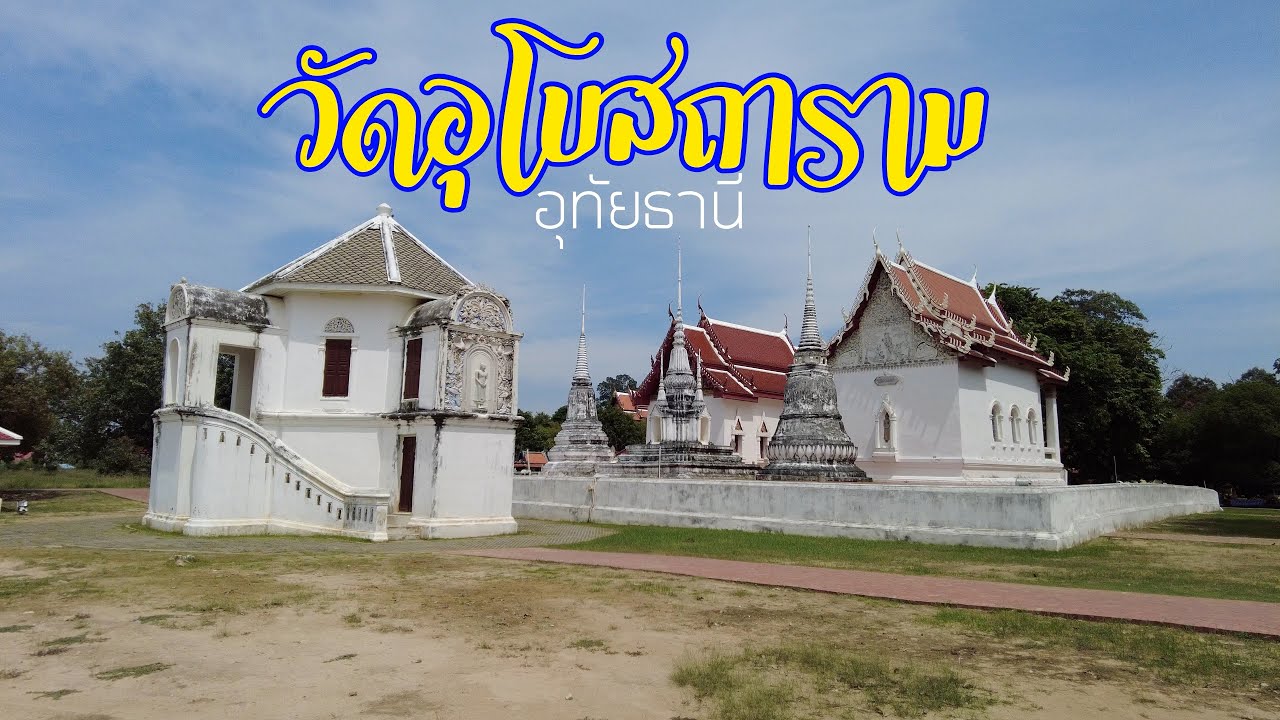
 Click to Access the Navigation Map GPS
Wat Ubosatharam (Wat Bot Manorom) Map
Gellery
Recommend

 Art, Culture and Heritage
 Historical Sites and Monuments(3)
 Landmarks and Memorials(1)
 Art, Craft Centres, Tradition(5)
 Museums(1)
Temple(31)
Museums(1)
Temple(31)
 Other Sacred Sites(3)
 Suburban Living
 Village, Community(4)
 Local Market(1)
 Nature and Wildlife
 National Parks and Marine Reserves(2)
 Mountain (Doi)(7)
 Dam, Reservoir, Lake(5)
 Waterfalls(5)
 Hot Springs(1)
 Caves(9)
 Flower Field(2)
 River, Canal(2)
 Islands(1)
 Other natural attractions(1)
 Entertainment and Agricultural
 Farms, Parks and Ecotourism(2)
 Shopping
 Shopping and Night Market(1)


