
lovethailand home >North Travel Attractions >Uthai Thani Travel Attractions >Muang Uthai Thani >Koh The Pho > Local History And Cultural Museum
TL;DR: Local History And Cultural Museum is located at Non-Formal Education Centre, Si Uthai Road, Mueang Uthai Thani District, Uthai Thani Province, open Monday – Friday; Advance Contact Is Recommended For Weekend Visits, hours 09.00 – 16.30.
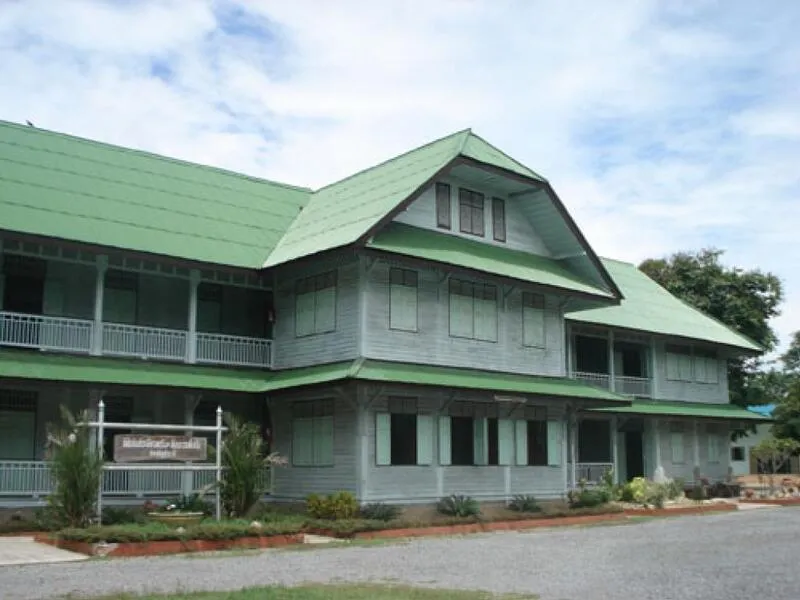
Local History And Cultural Museum
Open Days: Monday – Friday; Advance Contact Is Recommended For Weekend Visits
Opening Hours: 09.00 – 16.30
The Local History And Cultural Museum Of Uthai Thani Province is located inside the Non-Formal Education Centre on Si Uthai Road in Mueang Uthai Thani District, opposite the Tourism Authority of Thailand, Uthai Thani Office. It is one of the most useful places for understanding the province before exploring the town, temples, riverside communities, archaeological sites, and cultural routes nearby. The museum brings together local history, archaeology, traditional occupations, environmental knowledge, carved woodwork, Thai house models, local dress, tools, and evidence of prehistoric human life. For foreign travelers, it offers a clear introduction to Uthai Thani as a province with deep cultural roots, not only a quiet riverside town.
The museum is valuable because it presents local history through everyday life as well as through major historical evidence. It does not focus only on famous events or great monuments. Instead, it helps visitors see how ordinary people lived, worked, farmed, used natural resources, made tools, built houses, dressed, and understood their environment. This makes the museum a useful cultural gateway. After visiting it, travelers can better understand places such as Sakae Krang Hill, Trok Rong Ya, the Sakae Krang riverside community, Wat Uposatharam, Wat Tha Sung, and other heritage sites across the province.
The location is convenient for travelers staying in Uthai Thani town. Si Uthai Road connects with government areas, town attractions, and routes toward the riverside. Because the museum stands opposite the TAT Uthai Thani Office, it is easy to use this area as a starting point for a cultural walking or driving route. Visitors can begin with the museum in the morning, then continue to nearby old streets, temples, viewpoints, and local food spots. This route helps make the town more meaningful because the museum provides background before visitors encounter the living landscape outside.
Inside the museum, exhibitions are arranged into different learning rooms. One important section is the occupational development room, which introduces local livelihoods and inherited knowledge. This room helps visitors understand how people in Uthai Thani made a living through farming, craft, resource use, and practical community knowledge. The objects and explanations in this section show that occupations are not separate from culture. They are shaped by land, water, seasons, local materials, and knowledge passed from one generation to the next.
The occupational displays are especially useful for students and cultural travelers because they show the intelligence of local work. Traditional tools, craft objects, and livelihood-related items reflect how people created useful things from available materials such as wood, bamboo, clay, plant fiber, and agricultural resources. This part of the museum helps visitors appreciate local labor and practical wisdom, rather than seeing rural occupations as simple or outdated.
The environmental conservation room is another important part of the museum. Uthai Thani is a province with rivers, farmland, hills, forests, wildlife habitats, and links to the western forest complex. The room presents the relationship between people and nature, helping visitors understand why environmental protection is important in local history. Displays related to native plants, local animals, and ecosystems encourage visitors to see that Uthai Thani’s culture developed together with its natural surroundings.
The archaeological section is one of the museum’s strongest highlights. It includes evidence of prehistoric human life, including human skeletal remains, pottery, tools, ornaments, and related archaeological materials. These displays show that Uthai Thani has been inhabited by humans for a very long time. The province did not begin only with written history or later town records. Its past reaches back into prehistoric communities that lived, worked, created objects, and developed social systems in the area.
Pottery and ornaments in the archaeological displays are important because they reveal daily life, technology, taste, belief, and possible exchange networks. Pottery may relate to cooking, water storage, food keeping, or ritual use. Ornaments may reflect identity, social status, personal taste, or connections with other communities. When displayed together with human remains and tools, these objects help visitors imagine ancient people not as abstract figures, but as real communities with skills, beliefs, and social organization.
Another notable section displays the formal dress and rank-related costume of local rulers. This helps explain the historical structure of authority in the province. Such clothing was not merely decorative. It represented status, official duty, dignity, and the relationship between local administration and wider political power. Details of fabric, decoration, and dress style help visitors understand how clothing functioned as a visual language of authority in Thai local history.
The carved wood and Thai house model section presents another side of Uthai Thani’s cultural heritage. Carved wooden details show the skill of local craftsmen and the artistic beauty of traditional Thai design. The Thai house model helps visitors understand how traditional homes were built in response to climate, family life, ventilation, flood awareness, and the surrounding environment. A Thai house is not only an architectural form. It is a practical and cultural solution shaped by daily life and local conditions.
The museum is also useful as a preparation point before visiting other historical and archaeological sites in Uthai Thani Province. After seeing objects and explanations in the museum, travelers can better understand places such as Bueng Khok Chang Ancient Town, Ban Karung Ancient Town, Old Uthai Thani Town, and cultural sites in Ban Rai and Lan Sak districts. The museum gives context, while the real sites outside allow visitors to see the landscape where history took place.
For foreign travelers, the museum provides an accessible way to understand Uthai Thani beyond its famous temples and scenic river life. The province has prehistoric evidence, local crafts, environmental knowledge, old administrative history, traditional architecture, and community-based ways of life. Visiting the museum first helps travelers interpret the town and surrounding province with greater depth.
Getting There is simple from Uthai Thani town. Travel along Si Uthai Road to the Non-Formal Education Centre, opposite the Tourism Authority of Thailand, Uthai Thani Office. The museum can be reached by private car, local transport, or from nearby accommodation in town. Its central location makes it easy to combine with Trok Rong Ya, Sakae Krang Hill, Wat Sangkat Rattana Khiri, the Sakae Krang riverside community, Wat Uposatharam, and local restaurants.
Visitors should contact the museum or its caretaker in advance, especially for group visits or weekend visits. The museum is a local learning space within an educational setting, not a large commercial museum with extended daily operating hours. Advance contact helps confirm opening times, staff availability, and access to exhibition rooms. This is especially important for school groups, researchers, and foreign visitors who want a fuller explanation.
The best time to visit is during working hours from morning to afternoon. Visitors should allow at least 1–2 hours to explore the rooms, read the displays, and observe the objects carefully. The museum works well as the first stop before continuing into Uthai Thani town. A visit here provides background that makes nearby temples, old streets, river communities, and archaeological routes easier to understand.
Visitors should follow museum etiquette. Do not touch objects unless permitted, do not move displays, keep noise low, and ask before photographing sensitive areas. Many objects have historical and cultural value. Respectful behavior helps preserve the museum as a learning place for future generations.
In summary, the Local History And Cultural Museum Of Uthai Thani Province is a recommended stop for anyone who wants to understand the province deeply. Its exhibitions cover local occupations, environmental conservation, prehistoric archaeology, former local authority, carved woodwork, traditional Thai houses, and the everyday cultural life of Uthai Thani. The museum acts as a bridge between past and present, helping visitors see the province as a layered cultural landscape shaped by people, nature, belief, craft, and memory.
| Name | Local History And Cultural Museum Of Uthai Thani Province |
| Location | Non-Formal Education Centre, Si Uthai Road, Mueang Uthai Thani District, Uthai Thani Province |
| Address | Non-Formal Education Centre, Si Uthai Road, Mueang Uthai Thani District, Uthai Thani 61000, Thailand |
| Landmark | Located opposite the Tourism Authority of Thailand, Uthai Thani Office |
| Highlights | Prehistoric human skeletal remains, pottery, ornaments, local ruler ceremonial dress, occupational displays, environmental conservation room, carved woodwork, and Thai house model |
| Distinctive Features | A local museum presenting Uthai Thani’s history, archaeology, livelihood, environment, traditional occupations, folk wisdom, and local arts |
| Main Exhibition Rooms | Occupational development room, environmental conservation room, prehistoric Uthai Thani room, local ruler dress room, carved woodwork room, and Thai house model room |
| Activities | View archaeological objects, learn local history, study traditional occupations, explore environmental knowledge, and use the museum as an introduction before traveling around Uthai Thani town |
| Travel Information | From Uthai Thani town, travel along Si Uthai Road to the Non-Formal Education Centre opposite the TAT Uthai Thani Office. Private car and local transport are convenient. |
| Current Status | Local history and cultural learning site. Advance contact is recommended, especially for weekend or group visits. |
| Open Days | Monday – Friday; advance contact recommended for weekend visits |
| Opening Hours | 09.00 – 16.30 |
| Fees | Free Admission |
| Facilities | Exhibition rooms, archaeological objects, local learning displays, caretaker support by arrangement, and parking within the institutional area |
| Main Areas / Zones | Local history zone, prehistoric archaeology zone, traditional occupation zone, environmental conservation zone, local ruler dress zone, carved woodwork zone, and Thai house model zone |
| Caretaker / Main Contact | Local History And Cultural Museum Of Uthai Thani Province / Mueang Uthai Thani Non-Formal Education Office, Tel. 0-5651-4525 And 0-5652-0526 |
| Nearby Tourist Attractions | 1. Trok Rong Ya Old Market Street, about 1 km 2. Wat Sangkat Rattana Khiri And Sakae Krang Hill, about 2 km 3. Sakae Krang Riverside Community, about 2 km 4. Wat Uposatharam, about 3 km 5. Wat Chantharam Or Wat Tha Sung, about 7 km |
| Nearby Restaurants | 1. Ko Ti Khao Man Kai Uthai Thani, about 1 km 2. Je Da Pla Luak, about 2 km, Tel. 056-571-409 3. Ruean Phae Pramong Restaurant, about 4 km, Tel. 056-511-996 4. Nok Noi Restaurant, about 1 km, Tel. 087-197-2794, 056-511-952 5. Lek Som Tam Near Uthai Thani Post Office, about 1 km |
| Nearby Accommodations | 1. Uthai Heritage Hotel, about 1 km, Tel. 082-623-9426 2. MY UTHAI HOTEL, about 2 km, Tel. 061-262-6936 3. Payamai Resort Uthai Thani, about 3 km 4. Sam Num Resort Uthai Thani, about 1 km, Tel. 090-697-9969 5. TJ Mansion Uthai Thani, about 1 km, Tel. 081-909-0437 |
Frequently Asked Questions (FAQ)
Q: Where is the Local History And Cultural Museum Of Uthai Thani Province located?
A: It is located inside the Non-Formal Education Centre on Si Uthai Road in Mueang Uthai Thani District, opposite the Tourism Authority of Thailand, Uthai Thani Office.
Q: What can visitors see inside the museum?
A: Visitors can see local history displays, archaeological evidence, prehistoric human skeletal remains, pottery, local ruler dress, occupational displays, environmental conservation exhibits, carved woodwork, and Thai house models.
Q: What are the opening days and hours?
A: The museum is open Monday to Friday from 09.00 to 16.30. Advance contact is recommended for weekend or group visits.
Q: Is there an admission fee?
A: No. Admission is free, but visitors should contact the museum in advance to confirm access and staff availability.
Q: Who should visit this museum?
A: It is suitable for students, families, cultural travelers, history lovers, archaeology enthusiasts, and foreign visitors who want to understand Uthai Thani more deeply.
Q: How long should visitors spend at the museum?
A: Visitors should allow at least 1–2 hours to explore the exhibition rooms and understand the displays properly.
Q: How do travelers get to the museum?
A: From Uthai Thani town, travel along Si Uthai Road to the Non-Formal Education Centre opposite the TAT Uthai Thani Office. Private car and local transport are convenient.
Q: What nearby attractions can visitors explore after the museum?
A: Nearby places include Trok Rong Ya, Wat Sangkat Rattana Khiri, Sakae Krang Hill, the Sakae Krang riverside community, Wat Uposatharam, and Wat Tha Sung.
Tel : 056511511, 056571143
 Tel : 056511511, 056571143
 Category: ●Art, Culture and Heritage
 Group: ●Museums
Last Update : 5 MonthAgo
 Last Update : 5 MonthAgo
 Click to Access the Navigation Map GPS
Local History And Cultural Museum Map
Recommend

 Historical Sites and Monuments(3)
 Landmarks and Memorials(1)
 Art, Craft Centres, Tradition(5)
Museums(1)
Art, Craft Centres, Tradition(5)
Museums(1)
 Places of Worship
 Temple(31)
 Other Sacred Sites(3)
 Suburban Living
 Village, Community(4)
 Local Market(1)
 Nature and Wildlife
 National Parks and Marine Reserves(2)
 Mountain (Doi)(7)
 Dam, Reservoir, Lake(5)
 Waterfalls(5)
 Hot Springs(1)
 Caves(9)
 Flower Field(2)
 River, Canal(2)
 Islands(1)
 Other natural attractions(1)
 Entertainment and Agricultural
 Farms, Parks and Ecotourism(2)
 Shopping
 Shopping and Night Market(1)
 Travel Articles, Recipes
 Travel Review, Food Review(1)


