
lovethailand home >Central Travel Attractions >Suphan Buri Travel Attractions >Nong Ya Sai >Nong Ratcha Wat > Nong Ratchawat Archaeological Site
TL;DR: Nong Ratchawat Archaeological Site is located at Moo 5, Ban Nong Plao, Nong Ratchawat Subdistrict, Nong Ya Sai District, Suphan Buri Province, open Daily, hours Open for Daytime Visits.

Nong Ratchawat Archaeological Site
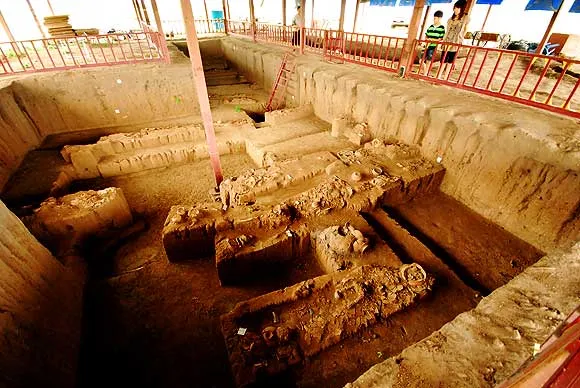
Open Days: Daily
Opening Hours: Open for Daytime Visits
Nong Ratchawat Archaeological Site in Suphan Buri Province is one of the most important prehistoric archaeological sites in western central Thailand. Located at Moo 5, Ban Nong Plao, Nong Ratchawat Subdistrict, Nong Ya Sai District, the site provides significant evidence of Neolithic settlement in the Tha Chin – Mae Klong river basin. The discoveries include ancient human skeletons, animal bones, polished stone axes, flaked stone tools, stone bracelets, pottery fragments, rice husk traces, and distinctive three-legged pottery vessels. For foreign visitors interested in archaeology, this site offers a rare opportunity to understand early farming communities in Thailand dating back roughly 4,000 to 2,500 years.
The importance of Nong Ratchawat is not limited to the objects found there. The site helps explain how prehistoric communities lived, worked, buried their dead, produced tools, made pottery, and interacted with their environment. The evidence suggests that people in this area had already begun practicing agriculture during the Neolithic period. The discovery of rice husks mixed with pottery fragments is especially important because it shows a connection between ceramic production, daily life, and early rice cultivation in the region.
The site was discovered on 12 June 2003 by Mr. Wimon Ubon, the landowner, while he was leveling the land for agricultural use. After finding unusual remains and artifacts, he informed the Nong Ratchawat Subdistrict Administrative Organization. The local authority then notified the 2nd Regional Office of Fine Arts in Suphan Buri so that specialists could inspect and protect the site. This discovery is a strong example of how local communities can play an important role in preserving archaeological heritage. Without timely reporting, many fragile pieces of evidence could have been lost during agricultural land preparation.
The first inspection was carried out by Mr. Khemachat Thepchai, then Director of the 2nd Regional Office of Fine Arts in Suphan Buri, and Ms. Suphamat Duangsakul, an archaeologist. They found a large number of archaeological remains, including human skeletal fragments, animal bones, polished stone axes, flaked stone tools, pottery fragments, and parts of special three-legged pots. These discoveries confirmed that the site was not an ordinary rural mound, but an important prehistoric settlement and burial area.
The three-legged pottery is one of the key features of Nong Ratchawat Archaeological Site. Similar vessels have been found at Ban Kao Archaeological Site in Kanchanaburi Province and Chaeng Ngam Archaeological Site in Nong Ya Sai District, Suphan Buri Province. The discovery of three-legged pottery at Nong Ratchawat connects the site with a broader Neolithic cultural network. However, the earliest three-legged pottery legs found here are particularly distinctive because they are short and rounded, resembling forms known from the Longshan culture of China more closely than some of the later forms widely found in Thailand.
Excavation results show that the Nong Ratchawat mound was occupied and used by prehistoric communities during at least two major periods. One important difference between the two periods is the orientation of burials. By examining artifacts found in each soil layer, archaeologists have been able to estimate the age of the site. The first period belongs to the Neolithic period, dating roughly 4,000 – 3,500 years ago. The second period belongs to the late Neolithic period, dating roughly 3,500 – 2,500 years ago. This sequence allows researchers to study cultural change over a long period within the same settlement area.
During the first period, artifacts were found both with burials and in habitation areas. These included flaked stone axes, polished stone axes, stone bracelets, and pottery vessels. The discovery of three-legged pottery legs allows the site to be compared with Ban Kao in Kanchanaburi, a well-known Neolithic archaeological site. The evidence indicates that the people who lived at Nong Ratchawat used stone tools, produced pottery, practiced burial rituals, and began rice cultivation from an early phase of their settlement.
During the second period, many everyday objects remained similar to those of the first period, but there were important changes. Polished stone axes became more common than flaked stone tools, and shouldered polished axes began to appear. The forms of three-legged pottery also became more varied. No metal artifacts were found in this cultural layer, which supports its classification as late Neolithic. These changes show technological development, cultural continuity, and adaptation within the community over time.
What makes Nong Ratchawat especially important is that its pottery may help explain broader cultural movements in prehistoric Southeast Asia. The rounded legs of early three-legged pots at Nong Ratchawat resemble pottery traditions associated with the Longshan culture of southern China. Later, the site shows more varied forms, including pottery types similar to those found at Ban Kao. This has led to the interpretation that Nong Ratchawat may have been one of the early Neolithic farming communities in the Tha Chin – Mae Klong basin where external cultural influences and local traditions interacted.
One important scholarly interpretation is that groups from southern China may have moved southward and exchanged cultural practices with local communities in this region. The three-legged pot may have been a distinctive vessel type associated with these groups. Over time, the form was adapted and blended with local traditions, resulting in pottery with more pointed and functional legs. Later forms of three-legged pottery spread across sites in the Khwae Noi – Khwae Yai river plains and other archaeological areas in the southern peninsula of Thailand.
The human skeletal remains found at Nong Ratchawat are highly valuable for physical anthropology. They help researchers understand the biological characteristics, health, age, sex, and burial practices of Neolithic people. The presence of numerous burials indicates that this was not merely a temporary campsite. It was a settled community with social practices, beliefs about death, and a designated burial area. Burial orientation, body position, and associated grave goods all provide evidence for interpreting prehistoric social life.
The stone tools found at the site also reveal important information about technology and daily life. Flaked stone tools represent a basic but effective tool-making tradition, while polished stone axes required more time, skill, and effort to produce. The appearance of shouldered polished axes during the later period suggests increasing specialization and adaptation to specific tasks. These tools were likely used for clearing land, woodworking, farming, and other daily activities related to village life.
The pottery fragments found at Nong Ratchawat help explain ancient ceramic technology. Pottery was not only used for storing food or water. It also reflects knowledge of clay selection, shaping, firing, decoration, and design. The three-legged pots are especially significant because their form suggests both practical use and cultural identity. Their distinctive legs helped the vessels stand firmly and may have been suited to particular cooking or storage functions. At the same time, their form served as a cultural marker linking different Neolithic communities.
Today, Nong Ratchawat Archaeological Site has been developed as an archaeological learning site. There is a protective building over the excavation area, interpretive panels, and a community learning center where some artifacts and information are presented. Visitors can see displays related to animal bones, stone tools, pottery fragments, burial evidence, and the history of discovery. This makes the site suitable for students, archaeology enthusiasts, cultural travelers, and anyone who wants to understand the deep prehistoric roots of Suphan Buri Province.
One human skeleton kept in the community learning center is locally known as “Mae Ya Nam Fon.” This local name reflects the way the community has connected with the archaeological remains. The site is therefore not only a place for academic study, but also part of local identity and memory. It shows how archaeology can become meaningful to the people who live near the site, not only to researchers and museums.
A visit to Nong Ratchawat should be approached calmly and thoughtfully. This is not an entertainment attraction, but a learning landscape. Visitors should read the information panels, observe the excavation area, and consider how the different types of evidence relate to one another. The burial pits, pottery, stone tools, and surrounding landscape help explain how prehistoric communities used space, lived with their environment, and gradually developed farming practices.
Getting There is most convenient by private car or rental vehicle. From Suphan Buri town, travel toward Nong Ya Sai District and continue to Nong Ratchawat Subdistrict, Moo 5, Ban Nong Plao. The coordinates of the site are Latitude 14.737077 and Longitude 99.927185. Travelers coming from Bangkok can use Highway 340 toward Suphan Buri and then continue toward Nong Ya Sai District. A private vehicle is recommended because it allows visitors to combine Nong Ratchawat with nearby sites such as Chaeng Ngam Archaeological Site, U Thong National Museum, Ancient U Thong City, Sam Chuk 100-Year Market, and Bueng Chawak Aquarium and Zoo.
Nong Ratchawat Archaeological Site should be understood as one of Suphan Buri’s most important knowledge heritage sites. It proves that this area had human settlement long before the historic city periods. The discovery of Neolithic farming evidence, three-legged pottery, polished stone axes, stone bracelets, pottery fragments, and human burials makes Nong Ratchawat an essential place for understanding the earliest communities in the Tha Chin – Mae Klong basin. For foreign travelers, it offers a deeper view of Thailand beyond temples and historic cities, reaching back into the prehistoric foundations of human life in the region.
| Name | Nong Ratchawat Archaeological Site |
| Location | Moo 5, Ban Nong Plao, Nong Ratchawat Subdistrict, Nong Ya Sai District, Suphan Buri Province |
| Address | Nong Ratchawat Subdistrict, Nong Ya Sai District, Suphan Buri 72240, Thailand |
| Coordinates | Latitude 14.737077, Longitude 99.927185 |
| Highlights | A Neolithic archaeological site with burial pits, ancient human skeletons, polished stone axes, pottery fragments, and distinctive three-legged pottery vessels |
| History | The site shows two major periods of occupation: the Neolithic period around 4,000 – 3,500 years ago and the late Neolithic period around 3,500 – 2,500 years ago |
| Key Evidence | Ancient human skeletal remains, animal bones, flaked stone axes, polished stone axes, stone bracelets, pottery fragments, rice husk traces, and three-legged pots |
| Distinctive Features | An important site for understanding early Neolithic farming communities in the Tha Chin – Mae Klong basin and the spread of three-legged pottery culture |
| Travel Information | From Suphan Buri town, travel toward Nong Ya Sai District and continue to Nong Ratchawat Subdistrict, Moo 5, Ban Nong Plao. A private car or rental vehicle is recommended. |
| Current Status | Open as an archaeological learning site with an excavation shelter, interpretive panels, and a community learning center |
| Open Days | Daily |
| Opening Hours | Open for Daytime Visits |
| Fees | No Admission Fee |
| Facilities | Excavation shelter, community learning center, interpretive panels, and archaeological display area |
| Main Areas / Zones | 1. Excavation Shelter 2. Neolithic Burial Pit Area 3. Community Learning Center 4. Pottery and Three-Legged Pot Display Zone 5. Stone Tool and Artifact Display Zone 6. Discovery and Excavation Information Panels |
| Caretaker | Fine Arts Department, together with Nong Ratchawat Subdistrict Administrative Organization and related local authorities |
| Nearby Tourist Attractions | 1. Chaeng Ngam Archaeological Site, about 18 km 2. Wat Khao Di Salak, about 33 km 3. U Thong National Museum, about 43 km 4. Ancient U Thong City, about 43 km 5. Bueng Chawak Aquarium and Zoo, about 48 km 6. Sam Chuk 100-Year Market, about 52 km 7. Don Chedi Monument, about 55 km |
| Nearby Restaurants | 1. Local Restaurants in Nong Ya Sai District, about 12 km 2. Noodle and Made-to-Order Food Shops in Nong Ya Sai Market, about 12 km 3. Community Food Shops Around Nong Ratchawat, about 5 km 4. Restaurants Along the Nong Ya Sai – U Thong Route, about 20 km 5. Restaurants in U Thong District, about 43 km |
| Nearby Accommodations | 1. Chanzhao Resort, about 13 km, Tel. 081-771-1266 2. Ingaun Resort, about 20 km 3. Krop Khrua Cultural @ Eco Resort, about 25 km 4. Accommodations in Nong Ya Sai District, about 15 km 5. Accommodations in U Thong District, about 43 km 6. Hotels in Suphan Buri Town, about 55 km |
Frequently Asked Questions (FAQ)
Q: Where is Nong Ratchawat Archaeological Site located?
A: It is located at Moo 5, Ban Nong Plao, Nong Ratchawat Subdistrict, Nong Ya Sai District, Suphan Buri Province.
Q: Why is Nong Ratchawat Archaeological Site important?
A: It is one of Suphan Buri’s most important Neolithic sites and provides evidence of early farming communities in prehistoric Thailand.
Q: What artifacts were found at Nong Ratchawat?
A: Archaeologists found ancient human skeletons, animal bones, flaked stone axes, polished stone axes, stone bracelets, pottery fragments, rice husk traces, and three-legged pots.
Q: Why are the three-legged pots important?
A: They help date the site and explain cultural connections between Neolithic communities, including possible links with pottery traditions from southern China.
Q: How old is Nong Ratchawat Archaeological Site?
A: The site has evidence from two major periods: around 4,000 – 3,500 years ago and around 3,500 – 2,500 years ago.
Q: Is there an admission fee?
A: No. Visitors can enter the archaeological site without an admission fee.
Q: Who manages Nong Ratchawat Archaeological Site?
A: The site is maintained by the Fine Arts Department in cooperation with Nong Ratchawat Subdistrict Administrative Organization and related local authorities.
Q: What nearby attractions can be visited with Nong Ratchawat?
A: Nearby attractions include Chaeng Ngam Archaeological Site, Wat Khao Di Salak, U Thong National Museum, Ancient U Thong City, Bueng Chawak Aquarium and Zoo, and Sam Chuk 100-Year Market.
 Category: ●Art, Culture and Heritage
 Group: ●Landmarks and Memorials
Last Update : 3 MonthAgo
 Last Update : 3 MonthAgo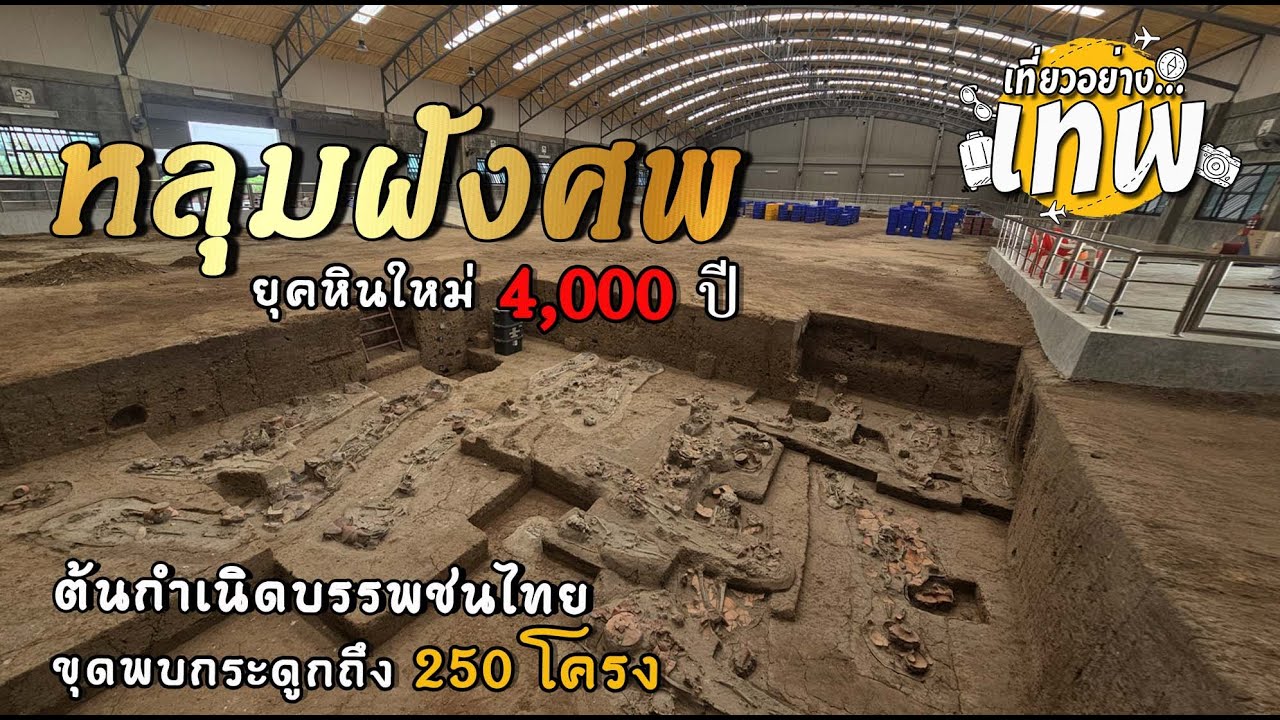
 Click to Access the Navigation Map GPS
Nong Ratchawat Archaeological Site Map
Recommend

 Historical Sites and Monuments(2)
Landmarks and Memorials(4)
Historical Sites and Monuments(2)
Landmarks and Memorials(4)
 Art, Craft Centres, Tradition(2)
 Museums(5)
 Educational Places
 Educational Gardens, Farm(4)
 Training Center(2)
 Places of Worship
 Temple(36)
 Other Sacred Sites(4)
 Suburban Living
 Village, Community(6)
 Local Market(7)
 Floating Market(1)
 Nature and Wildlife
 National Parks and Marine Reserves(4)
 Mountain (Doi)(2)
 Dam, Reservoir, Lake(3)
 Caves(1)
 Bays and Beaches(1)
 Entertainment and Agricultural
 Farms, Parks and Ecotourism(6)
 Theater(1)


