
lovethailand home >Central Travel Attractions >Suphan Buri Travel Attractions >Song Phi Nong >Song Phi Nong > Bang Li Market
TL;DR: Bang Li Market, Suphan Buri attractions : Suburban Living, Local Market.
Bang Li Market
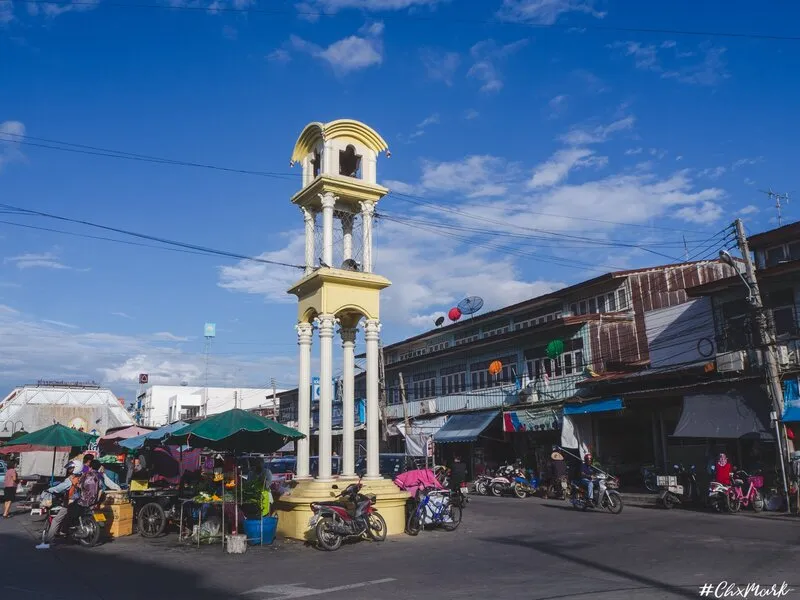
Open Days: Fresh Market Daily / Shop, Taste and Walk Along Bang Li Embankment Opens Saturday – Sunday
Opening Hours: Fresh Market From Morning – Evening / Weekend Walking Street Starts Around 16.00 Onwards
Bang Li Market in Suphan Buri Province is an old trading community in Song Phi Nong District, widely remembered as a “two-season town.” The name reflects the market’s close relationship with water, seasonality, and local adaptation. Located in a low-lying basin near Khlong Song Phi Nong, Bang Li developed as a market community that lived with both dry-season trade and flood-season life. During the dry season, trade took place on the lower floors of wooden shophouses and along the market streets. During the flood season, when water rose and remained for long periods, daily life shifted upward to the second floors, balconies, and connected walkways. This seasonal rhythm made Bang Li more than a market; it became a living example of how central Thai riverside communities adapted to water, commerce, migration, and changing transport routes.
Many people who are not familiar with Suphan Buri mistakenly think that Bang Li is the name of a district. In fact, Bang Li is the name of a large and historically important market community within Song Phi Nong District. The misunderstanding is understandable because Bang Li once functioned as a center of prosperity and activity in many aspects of local life. It was a commercial center, a transport node, a food hub, a meeting place, and a community landmark. In this sense, Bang Li played a role similar to some well-known old markets in other districts of Suphan Buri, where the market name became more widely recognized than the administrative name itself.
Bang Li Market is located in Song Phi Nong Subdistrict, Song Phi Nong District, Suphan Buri Province, around Rat Niyom Road and the area near Khlong Song Phi Nong. Khlong Song Phi Nong is an important natural waterway connected with the wider river system of Suphan Buri and the Tha Chin River basin. For generations, this canal served as a source of water for daily use, agriculture, transport, and trade. Before modern roads and vehicles became dominant, canals were the main routes that connected villages, markets, farms, and larger towns. Because of this, the market developed not as an isolated commercial zone, but as part of a larger water-based settlement system in central Thailand.
The phrase “Bang Li, the two-season town” has deep cultural meaning. It is not simply a poetic slogan for tourism. The market sits in a low-lying area where seasonal flooding shaped the way people built houses, organized trade, and moved around the community. Traditional wooden shophouses were commonly built with 2 storeys. The lower floor was used for shops, storage, and daily trade in the dry season, while the upper floor became more important during the flood season. Balconies, raised walkways, and second-floor connections allowed people to continue living and trading even when water covered the ground level. This adaptation shows the practical intelligence of local residents who did not resist the natural environment, but designed their lives around it.
In the past, Bang Li Market was an important trading point linking inland areas with riverside routes and larger markets. Traders from upland or inland zones brought forest products, timber, charcoal, medicinal plants, agricultural produce, fresh food, processed food, and local goods to sell. Some of these products were redistributed to larger markets in Suphan Buri and Bangkok. Bang Li therefore served as both a collection point and a distribution hub. Its growth was tied to the movement of goods, people, and boats, as well as to the later development of roads and land transport. This trading role explains why Bang Li became a major market community and why its name remained strongly recognized among local people.
There are 2 important local explanations about the origin of Bang Li Market. The first explanation says that Bang Li developed after the older Song Phi Nong district market, which was located near the original district office and the old police station. That older market was sometimes called Talat San, or possibly Talat San in the sense of a market near an official hall or court area. At that time, the old district market was likely the main commercial center of Song Phi Nong. However, traders traveling by ox carts from inland areas had to cross natural channels before reaching the old market. During the dry season, they could pass through easily, but when floodwater entered the channels from Khlong Song Phi Nong, the carts had to stop and wait.
The place where ox carts stopped before reaching the water channels corresponds with the present Bang Li Market area near the old Chinese vegetarian hall. When people, goods, and waiting time came together, informal trading naturally began. Chinese traders and local merchants gradually set up stalls, exchanged goods, and created a new commercial point. Later, wooden shophouses were built for Chinese residents to rent for living and trading. As more Chinese families joined the settlement, the small trading point expanded into a larger Chinese-Thai market community. If this explanation is followed, Bang Li Market likely rose to prominence around the reign of King Rama V, around the period when Song Phi Nong District was established in 1896.
The second explanation says that Bang Li Market was founded by pioneering Chinese merchants who migrated from China and settled among the older Thai local community of Song Phi Nong. At first, they lived, farmed, and traded in the older Song Phi Nong village. However, that area was low-lying and remained flooded for long periods, making trade inconvenient. The Chinese merchants therefore moved to the present Bang Li area, which was slightly higher and better suited for commerce and settlement. As families grew and more relatives arrived from mainland China, the community expanded and gradually became a large Chinese-Thai trading settlement. This explanation also emphasizes migration, trade, family networks, and adaptation to the local landscape.
Both origin stories share the same core idea: Bang Li Market grew from real needs related to transport, trade, water, and settlement. Whether it began as a stopping place for ox carts or as a relocation site for Chinese merchants seeking more suitable trading land, Bang Li was shaped by movement. Goods moved between inland and riverside areas. People moved according to economic opportunity. Families moved from flood-prone ground to more practical locations. The market grew because it served practical community needs, and this is why it became deeply rooted in local life rather than appearing as a planned tourist attraction.
Chinese migration played a major role in the development of Bang Li. Many Chinese families were skilled in trade, shopkeeping, supply networks, food businesses, and river-based commerce. As the Chinese-Thai community grew, the market gained wooden shophouses, shops, food stalls, shrines, vegetarian halls, pharmacies, grocery stores, and family businesses. This Thai-Chinese cultural mix remains visible in the market’s atmosphere, food, religious spaces, and local products. Items such as Bang Li mooncakes, braised duck, old-style noodle shops, traditional sweets, and Chinese-style community rituals reflect this heritage. For travelers interested in cultural history, Bang Li is an excellent place to see how Chinese migration became part of everyday Thai market life.
The old wooden houses and shophouses of Bang Li are among the most important features of the community. They are not merely scenic backgrounds for photographs. They are physical evidence of how local people designed buildings for a flood-prone environment. The lower floor served trade during normal conditions, while the upper floor became a living and circulation space during high water. Balconies and connected walkways allowed people to move between homes and shops when the ground level was flooded. This architecture represents practical local wisdom based on long experience with seasonal water. Visitors should therefore look carefully at the raised structures, wooden details, balconies, walkways, and relationships between houses and canals.
Bang Li Market was also a social center, not only a commercial space. People came to the market to buy food, meet relatives, exchange news, discuss business, eat breakfast, visit shops, and take part in community activities. A traditional market like Bang Li functioned almost like a small town center. Around it were schools, municipal offices, shops, religious spaces, restaurants, and homes. This concentration of activity made the name Bang Li widely known. Even though Bang Li is not a district name, its economic and social role made it more memorable than many formal administrative labels.
Today, Bang Li continues to serve as the municipal fresh market of Song Phi Nong and a living local marketplace. Visitors can walk through the market, see fresh produce, taste local dishes, and experience a real community market rather than a staged tourist venue. Local food is one of the strongest reasons to visit. Dishes and products associated with the area include Bang Li braised duck, freshwater fish dishes, market-style noodles, rice porridge, Bang Li mooncakes, Thai desserts, and weekend street food. These foods reflect both the natural abundance of the canal area and the Thai-Chinese character of the community.
The weekend walking street known as “Shop, Taste and Walk Along Bang Li Embankment” has added a contemporary tourism layer to the old market. Held around the Bang Li embankment area on Saturday and Sunday evenings, the walking street allows local residents and vendors to sell food, snacks, community products, souvenirs, and local goods. The evening atmosphere is lively and suitable for casual walking, tasting food, photography, and enjoying the canal-side environment. This activity helps connect the old market identity with modern local tourism while still relying on the participation of community vendors.
Food is central to the Bang Li experience. Braised duck is one of the best-known items associated with the market, while mooncakes and Thai-Chinese sweets reflect the community’s cultural background. Freshwater fish dishes connect the food culture to canals, wetlands, and agricultural surroundings. Simple breakfast dishes, rice porridge, noodles, and market snacks reveal the everyday side of the community. During the weekend walking street, visitors can also try a wider variety of street food and local snacks in a more festive atmosphere. Eating at Bang Li is therefore not just about filling a meal; it is a way to understand local history through taste.
A morning visit to Bang Li Market gives travelers the best view of the fresh market as part of daily life. Vendors arrange vegetables, meat, fish, cooked food, desserts, and household goods. Local residents come to buy ingredients and breakfast. The sounds, smells, and movements of the market show Bang Li as a real working community. By contrast, a Saturday or Sunday evening visit offers a livelier tourism atmosphere with the walking street, lights, food stalls, and people strolling near the embankment. These 2 experiences are different but complementary. Together they show why Bang Li can be understood as a town of more than one rhythm.
The idea of a two-season town can also be understood beyond flood and dry season. Bang Li changes by time of day and by day of the week. Morning belongs to the fresh market and daily shopping. Daytime is suitable for walking through the old market, observing wooden houses, and exploring the community. Weekend evenings bring food, lights, and walking-street activity. Travelers can choose the best time according to their purpose. Those who want to see real market life should come in the morning. Those who want photography and a calm cultural walk can come during the day. Those who want food and a livelier atmosphere should come on Saturday or Sunday evening.
For cultural travelers, Bang Li Market is especially valuable because it brings together old market history, Thai-Chinese settlement, riverside life, flood adaptation, local food, and vernacular architecture. Visitors should not rush through the market. Instead, they should observe Khlong Song Phi Nong, the wooden shophouses, old shops, vegetarian hall areas, shrines, schools, the fresh market, and the embankment. Seen together, these elements show that Bang Li is not a single attraction but a complete market community. Its value lies in the relationship between economy, belief, education, food, family networks, and collective memory.
Bang Li also makes a good starting point for exploring Song Phi Nong District and the southern part of Suphan Buri Province. Nearby attractions include Wat Phai Rong Wua, Wat Thap Kradan, Si Prachan Market, Wat Pa Lelai Worawihan, and Sam Chuk 100-Year Market. Travelers can plan a one-day trip by visiting Bang Li in the morning, continuing to temples or old markets during the day, and returning to the Bang Li walking street in the evening if traveling on a weekend. This route is suitable for families, photographers, cultural travelers, and anyone who wants to understand Suphan Buri through its real communities.
The market area is overseen by Song Phi Nong Municipality together with the Bang Li market community. The municipality plays an important role in managing the urban area, fresh market, public infrastructure, and local activities within the municipal zone. Community participation is also important, especially for food stalls, old shops, walking-street activities, and the preservation of local identity. This shared management helps Bang Li remain an active community space rather than a static heritage display.
Getting There is convenient by private car from Suphan Buri city. Travelers can drive toward Song Phi Nong District, with the journey usually taking around 40 – 60 minutes depending on traffic and route conditions. From Bangkok, travelers can reach Song Phi Nong via Nakhon Pathom or Bang Bua Thong routes before entering the Bang Li market area. The market is located within an urban community zone and is suitable for a day trip. Travelers using public transport can take buses or vans to Song Phi Nong District and continue by local transport to Bang Li Market.
For practical trip planning, visitors should think of Bang Li in 2 main experiences. The first is the daytime fresh market and old community walk, which is suitable for observing daily life, buying food, tasting local dishes, and learning about the market’s history. The second is the Saturday-Sunday evening walking street along the embankment, which is better for casual strolling, food tasting, photography, and a more festive atmosphere. If time is limited and visitors want a lively scene, the weekend evening is the best choice. If the goal is deeper cultural understanding, the morning or daytime visit is more rewarding.
Visitors should behave respectfully because Bang Li is still a working community and residential area. Some parts of the market are connected with private homes, family shops, and daily business. Travelers should take photographs politely, avoid entering private spaces without permission, and keep the market clean. Buying food or products from local vendors is a direct way to support the community and help the old market remain active. Respectful tourism is essential in places like Bang Li because its value depends on the continued life of local people, not only on preserved buildings.
Overall, Bang Li Market is more than an old marketplace. It tells the story of people and water, commerce and transport, Thai locals and Chinese migrants, wooden houses and seasonal floods, fresh-market life and modern walking-street activity. For travelers who want to understand Suphan Buri beyond famous temples and mainstream attractions, Bang Li is a meaningful destination. It shows that central Thai culture is not frozen in the past. It adapts, changes rhythm, and continues to live while preserving the roots of its community identity.
| Name | Bang Li Market / Song Phi Nong Municipal Fresh Market / Shop, Taste and Walk Along Bang Li Embankment |
| Location | Rat Niyom Road, Song Phi Nong Subdistrict, Song Phi Nong District, Suphan Buri Province 72110, Thailand |
| Address | Bang Li Market Area, near Khlong Song Phi Nong, Song Phi Nong Municipality, Song Phi Nong District, Suphan Buri Province |
| Highlights | Old market by Khlong Song Phi Nong, Thai-Chinese trading community, two-season town identity, two-storey wooden houses, local fresh market, and weekend embankment walking street |
| History | An old market community of Song Phi Nong District, shaped by canal trade, Chinese merchant settlement, and local flood-season adaptation. One local account connects its rise with the Rama V period and the establishment of Song Phi Nong District around 1896 |
| Name Origin | Bang Li is the name of a large market community in Song Phi Nong District, not the district name, but it became widely recognized because of its role as a local center of prosperity |
| Distinctive Features | A low-lying canal-side market that adapted to both flood season and dry season, creating a two-season town with dry-season market life, flood-season elevated living, and modern weekend walking-street activity |
| Travel Information | From Suphan Buri city, drive toward Song Phi Nong District, taking about 40 – 60 minutes. From Bangkok, routes via Nakhon Pathom or Bang Bua Thong can be used before entering Song Phi Nong and the Bang Li market area |
| Current Status | Still active as Song Phi Nong Municipal Fresh Market and a cultural community attraction, with weekend walking-street activities along the Bang Li embankment |
| Open Days | Fresh Market Daily / Walking Street Saturday – Sunday |
| Opening Hours | Fresh Market From Morning – Evening / Walking Street Starts Around 16.00 Onwards |
| Fees | No Admission Fee |
| Facilities | Fresh market, food stalls, souvenir shops, walking street, canal-side area, local shops, and parking areas arranged by the municipality or local community |
| Main Areas / Zones | 1. Song Phi Nong Municipal Fresh Market 2. Old shophouse and Bang Li trading community zone 3. Khlong Song Phi Nong / Bang Li embankment area 4. Shop, Taste and Walk Along Bang Li Embankment Walking Street 5. Thai-Chinese vegetarian hall and shrine area |
| Caretaker | Song Phi Nong Municipality and the Bang Li Market community |
| Main Contact Number | Song Phi Nong Municipality Tel. 035-531012 |
| Nearby Tourist Attractions | 1. Wat Phai Rong Wua, about 14 km 2. Wat Thap Kradan, about 21 km 3. Si Prachan Market, about 38 km 4. Wat Pa Lelai Worawihan, about 39 km 5. Sam Chuk 100-Year Market, about 57 km |
| Nearby Restaurants | 1. Jok Jay Sunee Bang Li Market, about 0 km 2. Krua Ton Tan Bang Li Market, about 0 km 3. Ton Tan Restaurant, about 0 km 4. Uncle Kluai Pork Blood Soup Bang Li, about 0 km 5. Chun Li Rad Na, about 0 km 6. Krua Rim Khlong Song Phi Nong, about 2 km, Tel. 086-7919797, 087-4000165, 035-531337 7. Mixue Bang Li, about 1 km, Tel. 098-8433299 |
| Nearby Accommodations | 1. Baan Yoo Dee Thaweesap, about 12 km 2. Ruean Thai Home Resort, about 15 km 3. Pool Villa Baan Ganes, about 15 km 4. Sa Plai Suan Resort, about 17 km 5. Suan Lung Chan Thai Homestay, about 17 km 6. Kram Farmstay, about 19 km |
Frequently Asked Questions (FAQ)
Q: Where is Bang Li Market located?
A: Bang Li Market is located in Song Phi Nong Subdistrict, Song Phi Nong District, Suphan Buri Province, around Rat Niyom Road and the Khlong Song Phi Nong area.
Q: Is Bang Li the name of a district?
A: No. Bang Li is not a district name. It is the name of a large and historically important market community within Song Phi Nong District.
Q: Why is Bang Li called a two-season town?
A: Because the market is located in a low-lying canal-side area. In the flood season, parts of the community historically shifted to elevated living and trading, while in the dry season it returned to normal ground-level market life.
Q: What is interesting about Bang Li Market?
A: Highlights include its old market history, Thai-Chinese community, two-storey wooden houses, local fresh market, traditional food, Bang Li braised duck, Bang Li mooncakes, Khlong Song Phi Nong, and the weekend embankment walking street.
Q: When does the Bang Li walking street open?
A: The Shop, Taste and Walk Along Bang Li Embankment walking street opens on Saturday and Sunday evenings, starting around 16.00 onwards.
Q: Is there an admission fee for Bang Li Market?
A: No. Visitors can walk around the fresh market, old community area, and weekend walking street without paying an admission fee.
Q: What is the best time to visit Bang Li Market?
A: Morning is best for seeing the fresh market and daily community life. Saturday or Sunday evening is best for food, walking-street activity, and a livelier atmosphere.
Q: What nearby attractions can be visited with Bang Li Market?
A: Travelers can combine Bang Li Market with Wat Phai Rong Wua, Wat Thap Kradan, Si Prachan Market, Wat Pa Lelai Worawihan, and Sam Chuk 100-Year Market.
Tel : 035531012
 Tel : 035531012
 Category: ●Suburban Living
 Group: ●Local Market
Last Update : 3 MonthAgo
 Last Update : 3 MonthAgo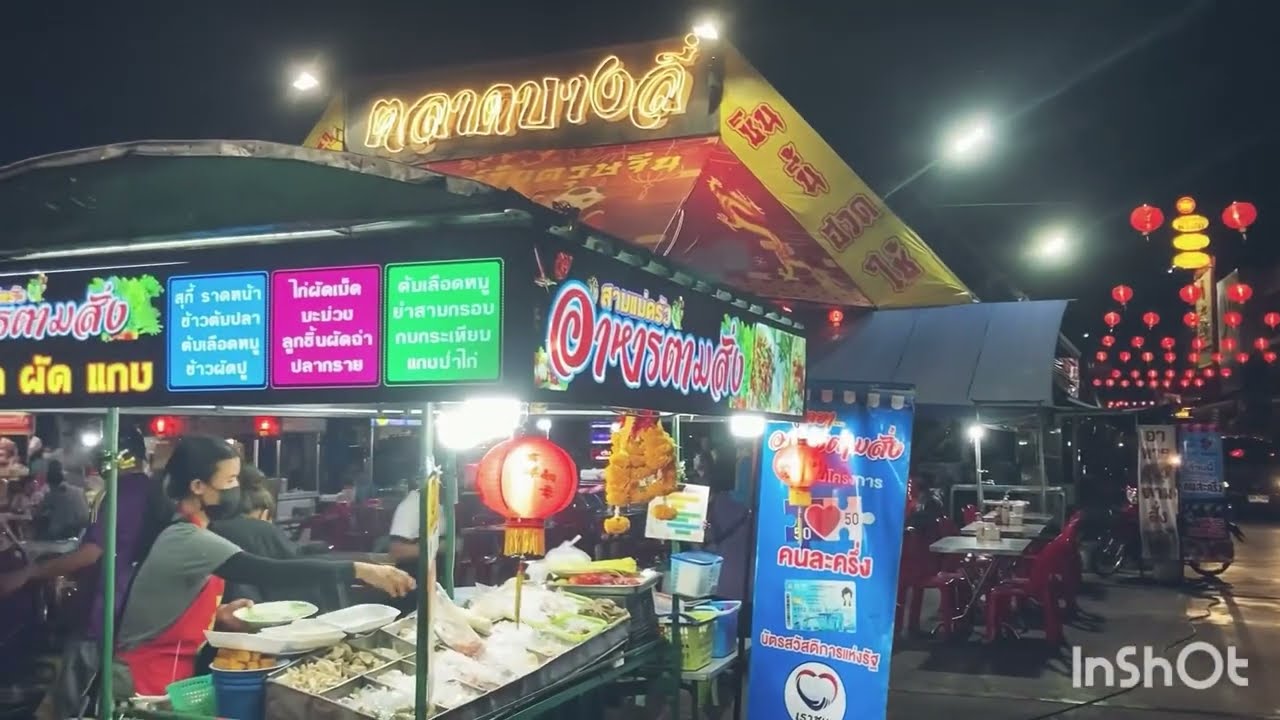
 Click to Access the Navigation Map GPS
Bang Li Market Map
Recommend

 Art, Culture and Heritage
 Historical Sites and Monuments(2)
 Landmarks and Memorials(4)
 Art, Craft Centres, Tradition(2)
 Museums(5)
 Educational Places
 Educational Gardens, Farm(4)
 Training Center(2)
 Places of Worship
 Temple(36)
 Other Sacred Sites(4)
 Village, Community(6)
Local Market(7)
Village, Community(6)
Local Market(7)
 Floating Market(1)
 Nature and Wildlife
 National Parks and Marine Reserves(4)
 Mountain (Doi)(2)
 Dam, Reservoir, Lake(3)
 Caves(1)
 Bays and Beaches(1)
 Entertainment and Agricultural
 Farms, Parks and Ecotourism(6)
 Theater(1)


