
lovethailand home >Central Travel Attractions >Suphan Buri Travel Attractions >Muang Suphan Buri >Sa Kaeo > Suphan Buri Railway Line
TL;DR: Suphan Buri Railway Line is located at Malai Maen Road Area, Mueang Suphan Buri District, Suphan Buri Province, open According to the State Railway of Thailand Train Schedule, hours According to the Operating Train Timetable.
Suphan Buri Railway Line
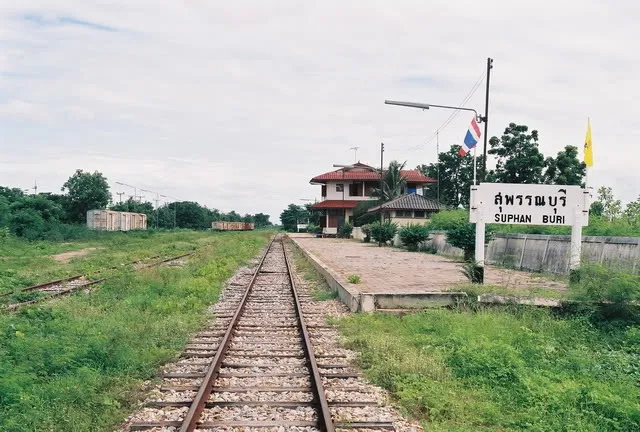
Open Days: According to the State Railway of Thailand Train Schedule
Opening Hours: According to the Operating Train Timetable
The Suphan Buri Railway Line is a historically significant railway route in western central Thailand. It was originally part of a larger railway project planned to connect Nong Pladuk in Ratchaburi Province with Ban Pa Wai in Lopburi Province, linking Thailand’s Southern Line with the Northern Line. If completed as originally planned, Suphan Buri would have become an important railway junction within the national rail network. However, due to unavoidable circumstances and project limitations, construction stopped in Suphan Buri town. The line became a distinctive terminal railway route, with Malai Maen Halt remembered by local people as the “end-of-the-line station.”
The Suphan Buri Railway Line is more than a transport route. It reflects a period when Thailand was expanding railway infrastructure to connect inland provinces with major national routes. The line was not intended only to serve passengers in Suphan Buri. Its broader purpose was strategic: to create a rail connection between the Southern and Northern railway systems, improve regional mobility, and open Suphan Buri to more efficient transportation. Although the project was never completed to its original destination, the existing line remains an important reminder of the country’s railway development ambitions.
The route branches from the Southern Line at Nong Pladuk Junction in Ratchaburi Province and continues toward Suphan Buri. The original plan was to extend further to Ban Pa Wai in Lopburi Province, where it would connect with the rail network serving the northern and upper central regions. Construction, however, stopped before reaching that goal. As a result, the Suphan Buri Railway Line became a terminal route ending in Suphan Buri town. This unfinished character gives the line a unique identity among Thailand’s railway routes.
For local residents, the phrase “end of the line” carries more than a technical meaning. Malai Maen Halt, located near Kannasoot Suksalai School on Malai Maen Road, is the final passenger stopping point on the route. When the train reaches Malai Maen, the rails end in Suphan Buri town. From this point, travelers can continue by local transport to nearby attractions such as Banharn-Jamsai Tower, Wat Pa Lelai Worawihan, Suphan Buri City Pillar Shrine, Dragon Descendants Museum, Suphan Buri National Museum, and the Old City Wall and City Gate.
One of the most appealing aspects of the Suphan Buri Railway Line is the slow and simple travel experience it offers. Unlike road travel, which focuses mainly on speed, this railway journey allows passengers to observe the rural landscapes of the central plains, agricultural areas, small communities, quiet stations, and local life along the way. It is suitable for travelers who are interested not only in reaching Suphan Buri, but also in understanding the route, the countryside, and the rhythm of railway travel.
In the history of Thai transport, this line represents the effort to extend rail access to provinces that were not located directly on the main north-south trunk routes. Suphan Buri has long been an important province in western central Thailand, with rich agricultural areas, historic communities, markets, temples, and riverine settlements. Bringing railway access into the province helped improve mobility, goods transport, and connections between Suphan Buri, Bangkok, and surrounding areas. Although road transport is now more dominant, the railway remains historically valuable.
Malai Maen Halt is a key symbol of the line because it marks the end of the railway in Suphan Buri town. The name comes from Malai Maen Road, an important road in the city. The area is close to schools, urban neighborhoods, shops, and routes leading to several attractions. Although many travelers may not know that Suphan Buri has a railway, local residents in the area recognize Malai Maen as the city’s railway terminus. This makes it part of the local memory of the town.
As a travel destination, the Suphan Buri Railway Line is especially interesting for railway enthusiasts, photographers, students, and visitors who enjoy lesser-known routes. A stop at Malai Maen may not take long, but when understood in the context of the Nong Pladuk – Suphan Buri route and the original plan to continue toward Lopburi, the site becomes much more meaningful. It is the physical end of an unfinished national railway project and a reminder of how transport plans shape provincial history.
The line does not stand out through grand station architecture or large-scale tourist facilities. Its value lies in the story of the route itself. Railway tracks are a physical trace of a time when rail transport played a central role in connecting people, goods, and towns. Before highways and private cars became dominant, railways shaped movement across many parts of Thailand. The fact that trains still reach Suphan Buri gives the province another dimension of access and identity beyond road travel.
Suphan Buri Station and Malai Maen Halt are also useful starting points for exploring the town. Many important attractions are located within a short distance. Travelers arriving by train can continue to cultural sites, temples, museums, markets, restaurants, and viewpoints around the city. With good planning, the railway journey can become a one-day or overnight trip with a character very different from a standard road trip.
For travelers starting from Bangkok, taking the train to Suphan Buri offers a slower and more reflective experience. The journey moves from urban areas into rural landscapes, showing the gradual transition between Bangkok, the surrounding provinces, and the agricultural plains of western central Thailand. This kind of travel suits visitors who see the train not only as transportation, but as part of the travel experience itself.
In the past, railway lines helped move agricultural goods and local passengers. Today, roads may be faster and more convenient for many journeys, but the railway still holds social and cultural meaning. It connects ordinary passengers with cities, offers an affordable form of travel, and preserves memories of an older style of movement. The Suphan Buri Railway Line therefore belongs not only to transport history, but also to the everyday history of local people.
After arriving at Malai Maen, visitors can use the area as a starting point for exploring Suphan Buri town. Banharn-Jamsai Tower offers city views and a public park atmosphere. Suphan Buri City Pillar Shrine and Dragon Descendants Museum present local belief and Chinese cultural heritage. Wat Pa Lelai Worawihan is one of the province’s most important temples. Suphan Buri National Museum provides historical and cultural interpretation. The Old City Wall and City Gate reveal traces of ancient urban planning. These places can be reached by local transport from the railway terminus.
Travelers should check the current train schedule with the State Railway of Thailand before planning a trip. Train frequency and operating times may change according to announcements, service conditions, and operational requirements. Advance planning is especially important for visitors who want to make a day trip or connect from Malai Maen to other attractions. Local transport options such as hired vehicles, local buses, or other town transport should be considered in advance.
The railway line also offers interesting photographic opportunities. Tracks, halt signs, the end-of-line atmosphere, roadside scenery, and local urban surroundings create simple but meaningful images. Photographers who enjoy documentary-style travel will find the line appealing, especially the visual contrast between a railway terminus and the everyday life of Suphan Buri town.
As an educational site, the Suphan Buri Railway Line can help explain railway planning, transport geography, urban development, and the relationship between roads and railways. Students can learn why the line was planned, why it stopped in Suphan Buri, how Malai Maen became a terminal point, and how the railway connects with the city’s schools, markets, roads, and attractions. Learning from the actual place makes transport history easier to understand.
Although the Suphan Buri Railway Line is often overlooked, that quiet quality is part of its charm. Visitors will not find the rush of a major railway station. Instead, they will find a modest line with a story hidden in the rails. It is ideal for slow travel, urban exploration, and anyone who wants to see Suphan Buri from a different angle. The province is known for temples, markets, historical sites, and cultural landmarks, but its railway story adds another important layer.
Getting There can be done by train according to the State Railway of Thailand timetable, or by private car via Highway 340 from Bangkok to Suphan Buri town. Malai Maen Halt is located in the town area near Malai Maen Road and Kannasoot Suksalai School. Travelers arriving by bus can get off at Suphan Buri Bus Terminal and continue by local transport to the Malai Maen area. From the halt, it is convenient to continue to attractions within Suphan Buri town.
Visitors should approach the Suphan Buri Railway Line as a historical transport route rather than a conventional tourist attraction. Reading about the route before traveling, observing the end-of-the-line area, and connecting the site with nearby urban landmarks will make the visit more meaningful. A small halt can become a gateway to understanding the city’s transport history, local development, and everyday life.
The Suphan Buri Railway Line deserves to be remembered as part of the province’s transport heritage. It is not just a railway with occasional trains. It is the surviving trace of a plan to connect the Northern and Southern Lines, the end point of an ambitious national infrastructure project, a local memory for people in Suphan Buri, and a starting point for travelers who want to understand the city through a different perspective. The rails that end at Malai Maen do not only mark the end of a route; they also preserve the story of how travel, planning, and local identity meet in Suphan Buri.
| Name | Suphan Buri Railway Line / Malai Maen Halt |
| Location | Malai Maen Road Area, Mueang Suphan Buri District, Suphan Buri Province |
| Address | Malai Maen Road, Rua Yai Subdistrict / Suphan Buri Town Area, Mueang Suphan Buri District, Suphan Buri 72000, Thailand |
| Highlights | A terminal railway route in Suphan Buri and Malai Maen Halt, locally remembered as the end-of-the-line station |
| History | Part of the original Nong Pladuk, Ratchaburi – Ban Pa Wai, Lopburi railway project designed to connect the Southern Line with the Northern Line, but construction stopped in Suphan Buri town |
| Name Origin | Malai Maen takes its name from Malai Maen Road, an important road in Suphan Buri town where the railway reaches its end point |
| Distinctive Features | A historically significant railway route reflecting Thailand’s former plan to connect major railway systems and a convenient starting point for exploring Suphan Buri town |
| Travel Information | Travel by train according to the State Railway of Thailand timetable, or drive from Bangkok via Highway 340 to Suphan Buri town and continue to Malai Maen Road |
| Current Status | A railway route with historical transport value; visitors should confirm current train schedules with the State Railway of Thailand before traveling |
| Open Days | According to the State Railway of Thailand Train Schedule |
| Opening Hours | According to the Operating Train Timetable |
| Fees | No admission fee for general viewing of the halt area; train fares follow State Railway of Thailand rates |
| Facilities | Halt platform area and local transport connections near Malai Maen Road and Suphan Buri town |
| Main Areas / Zones | 1. Malai Maen Halt 2. End-of-the-Line Area 3. Railway Track Into Suphan Buri Town 4. Malai Maen Road Connection Area 5. Local Transport Route to Suphan Buri Town Attractions |
| Caretaker | State Railway of Thailand |
| Main Contact Number | State Railway of Thailand Call Center 1690 |
| Nearby Tourist Attractions | 1. Banharn-Jamsai Tower, about 2 km 2. Suphan Buri City Pillar Shrine and Dragon Descendants Museum, about 3 km 3. Old City Wall and City Gate of Suphan Buri, about 3 km 4. Wat Pa Lelai Worawihan, about 4 km 5. Suphan Buri National Museum, about 4 km 6. Hall of Fame of H.E. Banharn Silpa-Archa, about 5 km 7. Sam Chuk 100-Year Market, about 38 km |
| Nearby Restaurants | 1. Nopparatana Restaurant, about 4 km, Tel. 035-555-333, 081-587-6154 2. Surachai Pla Phao, about 6 km, Tel. 081-763-6102, 081-942-4654 3. Lainam Restaurant, about 3 km 4. Restaurants Around Banharn-Jamsai Tower, about 2 km 5. Restaurants in Suphan Buri Town Market, about 2 km |
| Nearby Accommodations | 1. Vasidtee City Hotel Suphan Buri, about 2 km, Tel. 035-526-111, 035-526-123 2. Hop Inn Suphan Buri, about 3 km, Tel. 02-080-2222 3. Songphanburi Hotel, about 2 km 4. B2 Suphan Buri Premier Hotel, about 4 km 5. Country Lake View Hotel, about 6 km 6. Hotels and Resorts in Mueang Suphan Buri District, about 5 km |
Frequently Asked Questions (FAQ)
Q: What is the Suphan Buri Railway Line?
A: It is a railway route originally planned as part of the Nong Pladuk, Ratchaburi – Ban Pa Wai, Lopburi project to connect Thailand’s Southern Line with the Northern Line, but construction stopped in Suphan Buri town.
Q: Where is Malai Maen Halt located?
A: Malai Maen Halt is located around Malai Maen Road in Suphan Buri town, near Kannasoot Suksalai School, and is locally known as the end-of-the-line station.
Q: Why is the Suphan Buri Railway Line historically important?
A: It is important as transport heritage, reflecting Thailand’s former plan to connect major railway systems and the role of rail transport in Suphan Buri’s urban development.
Q: Can travelers still take a train to Suphan Buri?
A: Travelers should check the current timetable with the State Railway of Thailand before traveling, as operating days and train times may change.
Q: Is there an admission fee to visit Malai Maen Halt?
A: There is no admission fee for general viewing of the halt area. Train fares follow the State Railway of Thailand’s fare system.
Q: What attractions can visitors reach after arriving at Malai Maen?
A: Visitors can continue to Banharn-Jamsai Tower, Suphan Buri City Pillar Shrine, Dragon Descendants Museum, Wat Pa Lelai Worawihan, Suphan Buri National Museum, and the Old City Wall and City Gate.
Q: Who would enjoy visiting the Suphan Buri Railway Line?
A: The route is suitable for railway enthusiasts, transport history lovers, students, photographers, and slow travelers who want to see a different side of Suphan Buri.
Q: How should travelers plan a visit to the Suphan Buri Railway Line?
A: Travelers should check train schedules in advance, plan local transport from Malai Maen Halt, and combine the visit with nearby attractions in Suphan Buri town.
 Category: ●Art, Culture and Heritage
 Group: ●Landmarks and Memorials
Last Update : 3 WeekAgo
 Last Update : 3 WeekAgo
 Click to Access the Navigation Map GPS
Suphan Buri Railway Line Map
Recommend

 Historical Sites and Monuments(2)
Landmarks and Memorials(4)
Historical Sites and Monuments(2)
Landmarks and Memorials(4)
 Art, Craft Centres, Tradition(2)
 Museums(5)
 Educational Places
 Educational Gardens, Farm(4)
 Training Center(2)
 Places of Worship
 Temple(36)
 Other Sacred Sites(4)
 Suburban Living
 Village, Community(6)
 Local Market(7)
 Floating Market(1)
 Nature and Wildlife
 National Parks and Marine Reserves(4)
 Mountain (Doi)(2)
 Dam, Reservoir, Lake(3)
 Caves(1)
 Bays and Beaches(1)
 Entertainment and Agricultural
 Farms, Parks and Ecotourism(6)
 Theater(1)


