
lovethailand home >Central Travel Attractions >Suphan Buri Travel Attractions >Don Che Di >Nong Sarai > Bueng Nong Sarai Historical Site
TL;DR: Bueng Nong Sarai Historical Site is located at Nong Sarai Subdistrict, Don Chedi District, Suphan Buri Province, open Daily, hours 09.00 – 17.00. Highlights include A natural wetland associated with King Naresuan the Great and the historic elephant battle.
Bueng Nong Sarai Historical Site
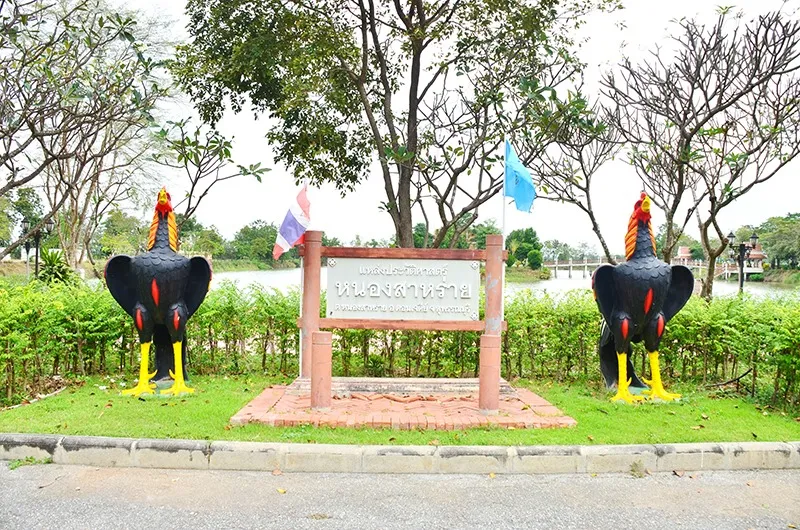
Open Days: Daily
Opening Hours: 09.00 – 17.00
Bueng Nong Sarai Historical Site in Suphan Buri Province is a natural wetland and an important historical landscape connected with the legendary elephant battle of King Naresuan the Great. Located in Nong Sarai Subdistrict, Don Chedi District, the site lies about 40 km from Suphan Buri town and about 3 km beyond Don Chedi Monument along Highway 3038. Although the pond has become much shallower over time and today covers about 29 rai of water area, its historical meaning remains significant. For foreign travelers interested in Thai history, this place helps explain why water sources, terrain, and strategic positioning were essential in ancient warfare.
Bueng Nong Sarai is not a highly commercial tourist attraction with large facilities or entertainment activities. Instead, it is a quiet historical site best suited for visitors who want to understand the landscape behind the story of King Naresuan the Great. If Don Chedi Monument represents remembrance, victory, and royal honor, Bueng Nong Sarai represents the strategic preparation that came before the great battle. Visiting both places together gives travelers a clearer understanding of the historical geography of Don Chedi and the wider context of the Ayutthaya period.
The importance of Bueng Nong Sarai begins with its natural setting. In the past, this area was a large natural pond with enough water to support a massive army. King Naresuan the Great selected the Nong Sarai area as a military campsite because water was essential for soldiers, war elephants, horses, supplies, and supporting personnel. Ancient armies could not operate for long without reliable water sources. A large pond such as Nong Sarai therefore provided a major logistical advantage and helped the army remain in the area for an extended period.
In the context of the elephant battle, a large water source near a military camp was more than a convenience. It was a strategic necessity. Armies in the Ayutthaya period depended heavily on the landscape. Commanders had to consider water, elevation, distance from enemy forces, routes of movement, and the ability to organize troops safely. Bueng Nong Sarai therefore should not be viewed only as a natural pond. It was part of the broader military landscape that supported King Naresuan’s planning before one of the most important battles in Thai history.
Historical accounts explain that King Naresuan chose the Nong Sarai area because it had enough water for a large number of soldiers, elephants, and horses to stay for weeks or even longer. The site was also considered a favorable position because it was located on relatively higher ground and at a safe distance from the enemy. These qualities allowed the army to rest, organize its forces, manage supplies, and prepare for confrontation. In this sense, Bueng Nong Sarai reflects the intelligent use of nature in military strategy.
Today, the landscape has changed considerably. The pond is shallower than it was in the past, and the remaining water area is about 29 rai. Trees line the surrounding area, creating a quiet and shaded atmosphere. Visitors will not find a grand monument or a dramatic architectural structure here. Instead, they will encounter a modest natural site whose value lies in its historical context. The simplicity of Bueng Nong Sarai makes it especially meaningful for travelers who enjoy reading landscapes as part of history.
Although some parts of the site are not developed as a major tourist destination, Bueng Nong Sarai remains valuable as an outdoor learning place. It is particularly suitable for students and visitors who have studied the story of King Naresuan from books and want to connect that knowledge with a real location. Standing beside the pond helps visitors understand that historical events did not occur in isolation. They were shaped by real geography, real routes, real resources, and real decisions made by leaders in times of war.
A visit to Bueng Nong Sarai is best combined with Don Chedi Monument. The two places are close to each other and are historically connected. Travelers can begin at Don Chedi Monument to pay respect at the statue of King Naresuan the Great and see the Yutthahatthi Chedi. After that, they can continue to Bueng Nong Sarai to understand the campsite area and the natural setting associated with the campaign. This route gives the journey more depth because it connects royal commemoration with the practical realities of military preparation.
For travelers who enjoy deeper historical interpretation, Bueng Nong Sarai raises several important questions. Why did ancient armies need to camp near water? Why did high ground and distance from enemy troops matter? How could a large army with elephants and horses stay in one area for an extended period? These questions transform the visit from a simple stop at a pond into a study of military geography. The site allows visitors to understand how water, land, and strategy worked together in the past.
The name “Nong Sarai” also reflects the local landscape. In Thai, “nong” refers to a pond or marsh, while “sarai” is associated with aquatic plants or algae. The name is simple, local, and closely tied to the natural environment. Many important historical places in Thailand began not as grand structures, but as practical landscapes that became meaningful because of the events that took place there. Bueng Nong Sarai is one of those places where geography became history.
The atmosphere around the pond is calm and suitable for a short, reflective visit. Travelers can walk around the area, observe the landscape, read any available information, and imagine how the setting may have supported an ancient military camp. It is best to visit with an understanding of the historical background, as the site is more meaningful when viewed through the story of King Naresuan and the elephant battle. Visitors should prepare for an outdoor historical stop rather than a full-service tourist attraction.
In cultural tourism, Bueng Nong Sarai is a good example of a place whose value is greater than what first appears to the eye. The present-day landscape is quiet and simple, yet it once played a role in a national historical event. The site should therefore be understood through context, not only through visual beauty. For visitors who know the story before arriving, the water, trees, open land, and silence become part of a larger historical memory.
If visiting during the annual Don Chedi Memorial Fair in January, Bueng Nong Sarai can be added as a meaningful extension to the main event at Don Chedi Monument. During that period, Don Chedi District becomes more active with commemorative ceremonies, cultural activities, and historical performances. A stop at Bueng Nong Sarai helps complete the journey by connecting the ceremonial remembrance at the monument with the real landscape associated with the military campaign.
Visitors should approach Bueng Nong Sarai with a clear purpose. Reading about the elephant battle before the trip, comparing the site with Don Chedi Monument, and observing the terrain will make the visit more rewarding. For families and school groups, this is a useful outdoor classroom. It can help younger visitors understand that history is not only about kings and battles, but also about geography, resources, and the decisions that shaped events.
Getting There is most convenient by private car or rental vehicle. From Suphan Buri town, drive toward Don Chedi District along Highway 322. After passing Don Chedi Monument, continue on Highway 3038 for about 3 km to reach Bueng Nong Sarai. The total distance from Suphan Buri town is about 40 km. Travelers coming from Bangkok can use Highway 340 toward Suphan Buri and then continue toward Don Chedi. A private vehicle is recommended because it allows visitors to combine Bueng Nong Sarai with Don Chedi Monument, Wat Lat Sing, Sam Chuk 100-Year Market, and other nearby attractions.
Visitors should respect the site as both a natural area and a place connected with national history. Even though it does not have a large ceremonial building, it remains part of the historical memory of King Naresuan the Great. Travelers should avoid littering, making excessive noise, or disturbing the surrounding environment. Responsible travel helps preserve the site as a local heritage landscape and an educational resource for future visitors.
Bueng Nong Sarai Historical Site is therefore most suitable for travelers who want to understand Thai history through real geography. It does not attract visitors with grand architecture, but with the story hidden within water, land, trees, and silence. When visited together with Don Chedi Monument, the site completes the historical route of King Naresuan the Great and offers a deeper view of Suphan Buri as a province rich in national memory and cultural meaning.
| Name | Bueng Nong Sarai Historical Site |
| Location | Nong Sarai Subdistrict, Don Chedi District, Suphan Buri Province |
| Address | Nong Sarai Subdistrict, Don Chedi District, Suphan Buri 72170, Thailand |
| Highlights | A natural wetland associated with King Naresuan the Great and the historic elephant battle |
| History | Connected with the Ayutthaya period, when King Naresuan selected the Nong Sarai area as a military campsite before the elephant battle |
| Name Origin | The name comes from the natural pond landscape of Nong Sarai, a local wetland environment associated with aquatic plants |
| Distinctive Features | A historical wetland site with about 29 rai of remaining water area, shaded surroundings, and a calm atmosphere suitable for educational visits |
| Travel Information | From Suphan Buri town, take Highway 322 toward Don Chedi, pass Don Chedi Monument, and continue on Highway 3038 for about 3 km. The total distance from the town is about 40 km. |
| Current Status | Open as a historical learning site and local natural area in Nong Sarai community |
| Open Days | Daily |
| Opening Hours | 09.00 – 17.00 |
| Fees | No admission fee |
| Facilities | Parking area and outdoor walking area, suitable for short historical visits and educational trips |
| Main Areas / Zones | 1. Natural Pond Area 2. Shaded Surrounding Landscape 3. Historical Viewpoint Area 4. Learning Area Related to Military Camping and the Elephant Battle 5. Connecting Route to Don Chedi Monument |
| Caretaker | Nong Sarai Subdistrict Administrative Organization and related local authorities |
| Main Contact Number | 0-3554-5466 |
| Nearby Tourist Attractions | 1. Wat Lat Sing, about 4 km 2. Don Chedi Monument, about 5 km 3. Don Chedi Municipal Market / Don Chedi Street Food, about 6 km 4. Sam Chuk 100-Year Market, about 28 km 5. Wat Pa Lelai Worawihan, about 38 km 6. Dragon Descendants Museum and Suphan Buri City Pillar Shrine, about 39 km 7. Bueng Chawak Aquarium and Zoo, about 43 km |
| Nearby Restaurants | 1. Khrua Kap Khao Kap Pla, about 6 km, Tel. 080-716-5919 2. Baan Saen Zab, about 7 km, Tel. 090-994-8631 3. Don Chedi Street Food / Don Chedi Municipal Market, about 6 km 4. Local Restaurants Around Don Chedi Market, about 6 km 5. Roadside Restaurants Along the Don Chedi – Suphan Buri Route, about 8 km |
| Nearby Accommodations | 1. Country Resort Don Chedi, about 7 km, Tel. 035-592321, 083-030-5886 2. U-Turn Resort Don Chedi, about 8 km, Tel. 088-455-8500, 081-943-9768 3. Ruenpinwilai Resort, about 9 km 4. Local Resorts in Don Chedi District, about 7 km 5. Hotels in Suphan Buri Town, about 38 km |
Frequently Asked Questions (FAQ)
Q: Where is Bueng Nong Sarai Historical Site located?
A: It is located in Nong Sarai Subdistrict, Don Chedi District, Suphan Buri Province, about 3 km beyond Don Chedi Monument along Highway 3038.
Q: Why is Bueng Nong Sarai historically important?
A: It is associated with King Naresuan the Great, who selected the Nong Sarai area as a military campsite before the historic elephant battle against the Crown Prince of Burma.
Q: What are the opening hours of Bueng Nong Sarai Historical Site?
A: The site is open daily from 09.00 to 17.00.
Q: Is there an admission fee for Bueng Nong Sarai Historical Site?
A: No. Visitors can enter the site without an admission fee.
Q: Is Bueng Nong Sarai still a large pond today?
A: The pond has become much shallower over time, and the remaining water area is about 29 rai, but it remains important as a historical landscape.
Q: What nearby attractions can be combined with Bueng Nong Sarai?
A: Travelers can combine the visit with Don Chedi Monument, Wat Lat Sing, Sam Chuk 100-Year Market, Wat Pa Lelai Worawihan, and Bueng Chawak Aquarium and Zoo.
Q: Who should visit Bueng Nong Sarai Historical Site?
A: The site is ideal for history lovers, students, families, and travelers who want to follow the historical route of King Naresuan the Great and the elephant battle.
Q: How can travelers get from Suphan Buri town to Bueng Nong Sarai?
A: Drive toward Don Chedi District on Highway 322, pass Don Chedi Monument, and continue on Highway 3038 for about 3 km. The total distance from Suphan Buri town is about 40 km.
Tel : 035545466-7
 Tel : 035545466-7
 Category: ●Art, Culture and Heritage
 Group: ●Historical Sites and Monuments
Last Update : 5 MonthAgo
 Last Update : 5 MonthAgo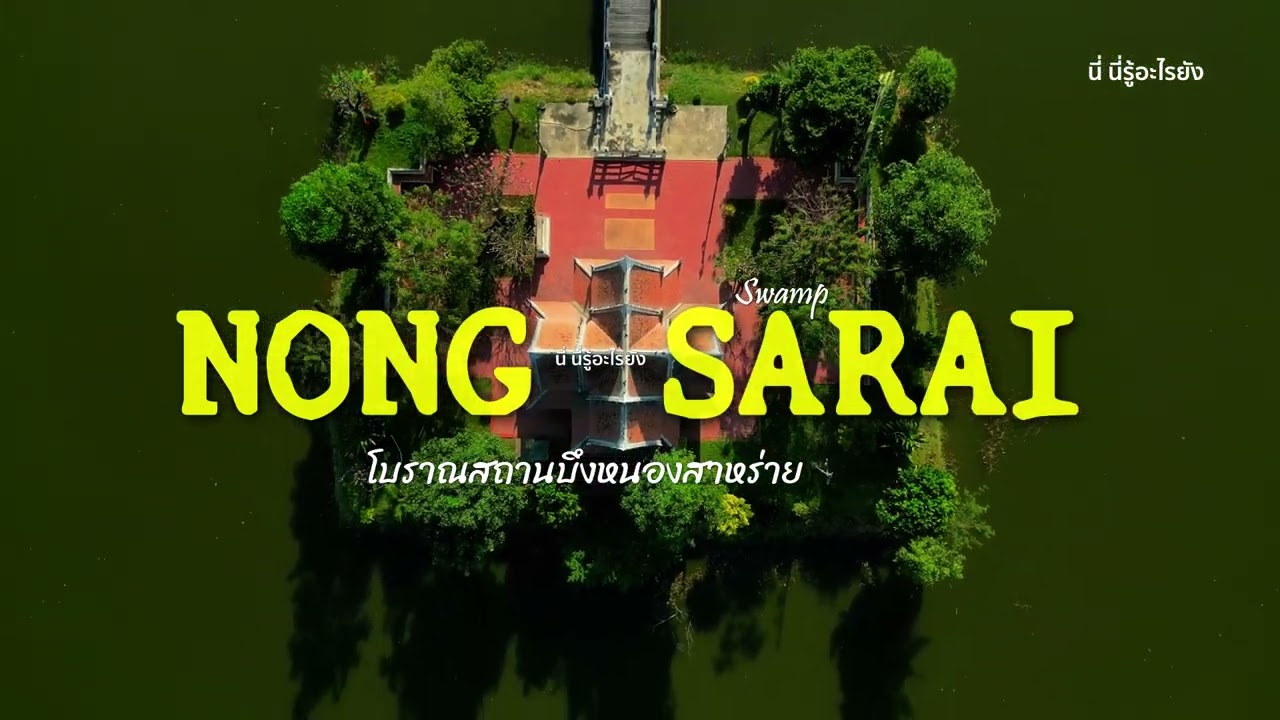
 Click to Access the Navigation Map GPS
Bueng Nong Sarai Historical Site Map
Recommend
 Historical Sites and Monuments(2)
 Landmarks and Memorials(4)
 Art, Craft Centres, Tradition(2)
 Museums(5)
 Educational Places
 Educational Gardens, Farm(4)
 Training Center(2)
 Places of Worship
 Temple(36)
 Other Sacred Sites(4)
 Suburban Living
 Village, Community(6)
 Local Market(7)
 Floating Market(1)
 Nature and Wildlife
 National Parks and Marine Reserves(4)
 Mountain (Doi)(2)
 Dam, Reservoir, Lake(3)
 Caves(1)
 Bays and Beaches(1)
 Entertainment and Agricultural
 Farms, Parks and Ecotourism(6)
 Theater(1)
 Travel Articles, Recipes
 Travel Review, Food Review(1)


