
lovethailand home >Central Travel Attractions >Suphan Buri Travel Attractions >Muang Suphan Buri >Tha Phi Liang > Suphan Buri Agricultural Learning and Agro-Tourism..
TL;DR: Suphan Buri Agricultural Learning and Agro-Tourism Centers, open Advance Contact Recommended Before Visiting, hours Advance Contact Recommended Before Visiting.
Suphan Buri Agricultural Learning and Agro-Tourism Centers
Open Days: Advance Contact Recommended Before Visiting
Opening Hours: Advance Contact Recommended Before Visiting
Suphan Buri Agricultural Learning and Agro-Tourism Centers represent an important educational network for agriculture, plant protection, plant propagation, farmer wisdom, and modern agricultural technology in Suphan Buri Province. The province has developed key agricultural sites as learning destinations where farmers, students, study groups, families, and visitors can understand how local wisdom and modern science work together. The main related sites include the Suphan Buri Agricultural Technology Promotion Center for Plant Protection and the Agricultural Occupation Promotion and Development Center for Tissue-Cultured Plant Varieties in U Thong District.
Suphan Buri has long been known as an agricultural province in Thailand’s central region. Rice fields, field crops, vegetables, fruit trees, irrigation systems, and farming communities form an important part of the province’s identity. Agricultural learning centers therefore help expand the image of Suphan Buri from a production area into a knowledge-based agricultural destination. These centers connect government agricultural expertise with farmers and the public, showing that modern agriculture involves pest management, beneficial organisms, plant propagation, microbial technology, demonstration plots, herbal gardens, and sustainable production systems.
The Suphan Buri Agricultural Technology Promotion Center for Plant Protection plays an important role in promoting knowledge about plant pest management. Its learning themes include insect pests, beneficial insects, microorganisms useful for plants, biological control, and integrated pest management. These topics are highly important for farmers because pests and plant diseases directly affect yield, income, and production stability. By understanding pest life cycles and beneficial organisms, farmers can manage crops more safely and sustainably.
The concept of a plant protection learning center is to make agricultural problem-solving visible. Visitors do not only listen to technical explanations; they can also learn through examples of insect rearing, beneficial insect use, microbial agents, pest control demonstrations, and plant protection practices. This helps visitors understand that nature contains both threats and solutions. Some insects damage crops, while others act as predators or parasitoids. Some microorganisms can also be used to support plant health and reduce reliance on chemical inputs.
The Thai Farmer Wisdom Museum section helps connect modern agricultural technology with traditional farming knowledge. Farmer wisdom is not simply a matter of the past. It explains how Thai farmers observed soil, water, rainfall, seasons, seeds, animals, and labor systems over many generations. Displays on farming tools, rice cultivation, and rural life help visitors understand that agriculture is a knowledge system built through experience, adaptation, and intergenerational learning. When this local wisdom is presented together with biological pest control and modern plant propagation, the learning experience becomes more complete.
Herbal gardens and demonstration plots make agricultural learning more concrete. Visitors can see real plants, compare leaf shapes, smell herbs, observe cultivation patterns, and understand practical uses of plants in food, traditional medicine, household care, and community life. Demonstration plots also show planting methods, plant care, water management, crop selection, and field organization. These areas are useful for farmers, students, and families who want to learn by seeing real examples rather than only reading information.
Decorative pot gardens and landscaped agricultural areas make the centers more accessible to general visitors. Agricultural education does not have to happen only in training rooms. Gardens, potted plants, flowering plants, ornamental plants, and shaded walking areas can turn a technical learning site into a pleasant agro-tourism destination. This makes the centers suitable not only for farmers but also for visitors who enjoy plants, gardens, photography, and relaxed learning.
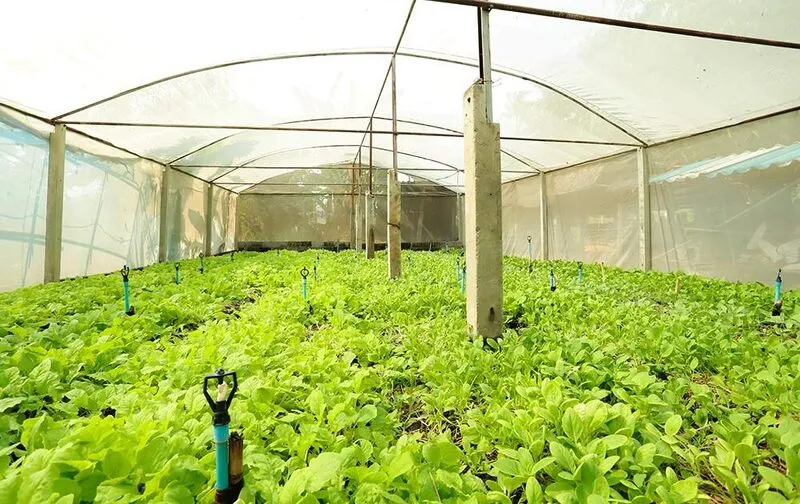
The Agricultural Occupation Promotion and Development Center for Tissue-Cultured Plant Varieties in Suphan Buri, also known as the Plant Propagation Center, is located in Phlapphla Chai Subdistrict, U Thong District. It focuses on high-quality plant propagation, especially tissue culture and nursery production. Tissue culture is an important modern agricultural technology because it allows selected plant materials to be multiplied under controlled conditions. The resulting plantlets are then acclimatized in nursery houses before being distributed or used for agricultural production.
Tissue culture is valuable because it can produce uniform, high-quality plantlets in significant numbers. It also helps reduce some disease risks associated with conventional propagation and supports the production of strong planting materials for farmers. Visitors to the center can better understand what happens before a plant reaches the field. Good agricultural production begins not only with soil preparation or field management, but also with the quality of planting materials. The plant propagation center therefore represents the starting point of many successful farming systems.
The plant propagation center also features plant displays and landscaped areas that change according to seasons and activities. Visitors interested in flowers, ornamental plants, fruit crops, and plant propagation can see both the technical and aesthetic sides of agriculture. In some periods, flowering plots or seasonal displays may add color to the landscape, making the center suitable for study visits, garden walks, and photography.
Together, the plant protection center and the plant propagation center create a broad agricultural learning system for Suphan Buri. One side teaches how to protect crops from pests and diseases through biological and integrated methods. The other side teaches how to produce high-quality plant varieties using tissue culture and nursery systems. Combined with farmer wisdom, herbal gardens, demonstration plots, and landscaped learning areas, these centers show agriculture as a complete process from knowledge and seedling production to crop care and sustainable management.
These learning sites are especially valuable for students and study groups. They connect with science, biology, environmental studies, sufficiency economy, agricultural careers, and local development. Students can learn about insects, microorganisms, plant propagation, tissue culture, nursery systems, herbs, and farming wisdom from real examples. This kind of place-based learning makes agriculture easier to understand and shows how science supports food production, rural livelihoods, and environmental care.
For general travelers, Suphan Buri’s agricultural learning centers offer a slower and more meaningful travel experience. Visitors can walk through demonstration areas, observe plants, learn about crop protection, see nursery houses, and understand the role of agriculture in the province. This type of travel is suitable for families, garden lovers, farmers seeking new ideas, and visitors who prefer educational tourism rather than purely entertainment-based attractions.
Getting There depends on the site visitors want to reach. For general information, visitors can contact Suphan Buri Provincial Agricultural Office in Rua Yai Subdistrict, Mueang Suphan Buri District. For the plant propagation center, travel to Phlapphla Chai Subdistrict, U Thong District. From Bangkok, Highway 340 is the main route toward Suphan Buri. The U Thong area can also be combined with nearby attractions such as U Thong National Museum, Ancient U Thong City, Wat Khao Tham Thiam, and Phra Phuttha Pushaya Khiri Si Suvarnabhumi.
Visitors should contact the relevant office in advance before planning a visit. These sites are learning centers and working agricultural facilities, not commercial tourist attractions that are open freely at all times. Advance coordination helps confirm suitable visiting times, available learning stations, staff support, and any special rules for entering nursery houses, tissue culture areas, or plant protection facilities. This is especially important for group visits, schools, universities, farmers’ groups, and technical study tours.
Suphan Buri Agricultural Learning and Agro-Tourism Centers are therefore more than recreational gardens. They bring together traditional farmer wisdom, beneficial insects, useful microorganisms, herbal gardens, demonstration plots, tissue culture technology, nursery houses, and high-quality plant production. They show that Suphan Buri is not only an agricultural production province, but also a province where agricultural knowledge, technology, and sustainability are actively developed and shared.
| Name | Suphan Buri Agricultural Learning and Agro-Tourism Centers |
| Main Sites | Suphan Buri Agricultural Technology Promotion Center for Plant Protection and the Agricultural Occupation Promotion and Development Center for Tissue-Cultured Plant Varieties |
| Information Office | Suphan Buri Provincial Agricultural Office, 235/1 Moo 4, Rua Yai Subdistrict, Mueang Suphan Buri District, Suphan Buri 72000, Thailand |
| Plant Propagation Center Location | 1 Moo 12, Phlapphla Chai Subdistrict, U Thong District, Suphan Buri 72160, Thailand |
| Highlights | Insect rearing houses, beneficial microorganisms for plants, Thai Farmer Wisdom Museum, herbal gardens, decorative pot gardens, demonstration plots, nursery houses, and tissue culture plant production facilities |
| Distinctive Features | A knowledge-based agro-tourism destination combining local farmer wisdom with modern agricultural technology, biological plant protection, tissue culture, and landscape-based learning |
| Travel Information | From Bangkok, take Highway 340 toward Suphan Buri. For the plant propagation center, continue to U Thong District and Phlapphla Chai Subdistrict. For general information, contact Suphan Buri Provincial Agricultural Office in Mueang Suphan Buri District. |
| Current Status | Agricultural learning and study visit sites in Suphan Buri Province; advance contact is recommended before visiting |
| Open Days | Advance Contact Recommended Before Visiting |
| Opening Hours | Advance Contact Recommended Before Visiting |
| Facilities | Agricultural learning areas, greenhouses, demonstration plots, herbal gardens, landscaped garden areas, study visit briefing areas, and parking areas according to each center |
| Main Areas / Zones | 1. Beneficial Insect Rearing House 2. Useful Microorganism for Plant Zone 3. Thai Farmer Wisdom Museum 4. Herbal Garden 5. Decorative Pot Garden and Agricultural Landscape Zone 6. Demonstration Crop Plots 7. Plant Nursery Houses 8. Tissue Culture Plant Production Houses 9. Quality Plant Propagation Learning Zone |
| Caretaker / Related Organizations | Department of Agricultural Extension, Ministry of Agriculture and Cooperatives, Suphan Buri Provincial Agricultural Office, Suphan Buri Agricultural Technology Promotion Center for Plant Protection, and the Agricultural Occupation Promotion and Development Center for Tissue-Cultured Plant Varieties |
| Main Contact Number | Suphan Buri Provincial Agricultural Office Tel. 0 3555 5455 / Plant Propagation Center Tel. 035-440360, 061-3868815, 089-8373277 |
| Nearby Tourist Attractions | 1. U Thong National Museum, about 12 km 2. Ancient U Thong City, about 13 km 3. Wat Khao Phra Si Sanphetchayaram, about 14 km 4. Phra Phuttha Pushaya Khiri Si Suvarnabhumi / Luang Pho U Thong, about 16 km 5. Wat Khao Tham Thiam, about 17 km 6. Thai Farmer’s Way of Life and Spirit Learning Center, Na Hia Chai, about 22 km 7. Wat Pa Lelai Worawihan, about 30 km |
| Nearby Restaurants | 1. Local Restaurants in U Thong District, about 12 km 2. The Little Hut Cafe U Thong, about 13 km 3. GreenBough Cafe U Thong, about 15 km, Tel. 064-661-4936 4. Restaurants Around Phra Phuttha Pushaya Khiri Si Suvarnabhumi, about 16 km 5. Restaurants Along the U Thong – Suphan Buri Route, about 15 km 6. Restaurants in Suphan Buri Town, about 30 km |
| Nearby Accommodations | 1. Prem Mansion U Thong, about 12 km, Tel. 099-481-8899, 090-880-9997 2. U Thong Hotel, about 13 km 3. Tolopoti Hotel & Resort, about 14 km, Tel. 082-333-3308 4. Hotels and Resorts in U Thong District, about 15 km 5. Accommodations Along the U Thong – Suphan Buri Route, about 20 km 6. Hotels in Suphan Buri Town, about 30 km |
Frequently Asked Questions (FAQ)
Q: What are Suphan Buri Agricultural Learning and Agro-Tourism Centers?
A: They are agricultural study visit sites where visitors can learn about plant protection, beneficial insects, useful microorganisms, farmer wisdom, herbal gardens, demonstration plots, and tissue culture plant propagation.
Q: What are the main related centers?
A: The main related centers are the Suphan Buri Agricultural Technology Promotion Center for Plant Protection and the Agricultural Occupation Promotion and Development Center for Tissue-Cultured Plant Varieties.
Q: Where is the plant propagation center located?
A: It is located at 1 Moo 12, Phlapphla Chai Subdistrict, U Thong District, Suphan Buri Province 72160.
Q: Who should visit these agricultural learning centers?
A: They are suitable for farmers, students, study groups, families, garden lovers, and visitors interested in modern agriculture, plant propagation, pest management, and agro-tourism.
Q: Should visitors contact the centers before visiting?
A: Yes. Advance contact is recommended because these are working agricultural learning facilities, and some areas may require staff coordination or special access arrangements.
Q: What is the highlight of the plant protection center?
A: Its highlight is learning about pest management, beneficial insects, useful microorganisms, biological control, and ways to reduce chemical dependency in agriculture.
Q: What is the highlight of the tissue culture plant center?
A: Its highlight is the production of high-quality plant varieties through tissue culture, nursery houses, and plant propagation systems that support farmers.
Q: What nearby attractions can be visited with these centers?
A: Nearby attractions include U Thong National Museum, Ancient U Thong City, Wat Khao Phra Si Sanphetchayaram, Phra Phuttha Pushaya Khiri Si Suvarnabhumi, Wat Khao Tham Thiam, and Na Hia Chai learning center.
 Category: ●Educational Places
 Group: ●Educational Gardens, Farm
Last Update : 4 MonthAgo
 Last Update : 4 MonthAgo
 Click to Access the Navigation Map GPS
Suphan Buri Agricultural Learning and Agro-Tourism Centers Map
Recommend

 Art, Culture and Heritage
 Historical Sites and Monuments(2)
 Landmarks and Memorials(4)
 Art, Craft Centres, Tradition(2)
 Museums(5)
Educational Gardens, Farm(4)
Museums(5)
Educational Gardens, Farm(4)
 Training Center(2)
 Places of Worship
 Temple(36)
 Other Sacred Sites(4)
 Suburban Living
 Village, Community(6)
 Local Market(7)
 Floating Market(1)
 Nature and Wildlife
 National Parks and Marine Reserves(4)
 Mountain (Doi)(2)
 Dam, Reservoir, Lake(3)
 Caves(1)
 Bays and Beaches(1)
 Entertainment and Agricultural
 Farms, Parks and Ecotourism(6)
 Theater(1)


