
lovethailand home >Central Travel Attractions >Suphan Buri Travel Attractions >Muang Suphan Buri >Don Ma Sang > Suphan Buri Provincial Dharma Practice Center
TL;DR: Suphan Buri Provincial Dharma Practice Center, Suphan Buri attractions : Educational Places, Training Center.
Suphan Buri Provincial Dharma Practice Center
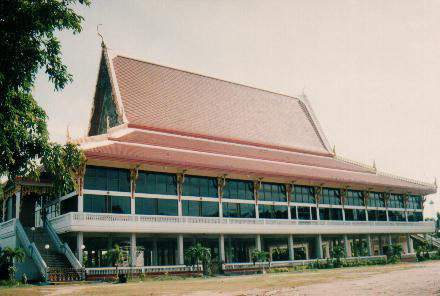
Open Days: Advance Contact With Wat Sai Ngam Thammathararam Recommended Before Practising
Opening Hours: Advance Contact With Wat Sai Ngam Thammathararam Recommended Before Practising
Suphan Buri Provincial Dharma Practice Center at Wat Sai Ngam Thammathararam is an important Buddhist meditation and Dharma practice site in Suphan Buri Province. Located at Wat Sai Ngam Thammathararam, Ban Don Masang, Don Masang Subdistrict, Mueang Suphan Buri District, the temple is known for its peaceful atmosphere and its role as a place for meditation training, mindfulness practice, moral discipline, and Buddhist learning. Each year, monks, novices, laymen, laywomen, teachers, students, government officers, and organized groups come here for Dharma training and meditation practice.
The distinctive character of Wat Sai Ngam Thammathararam is that it is not mainly a sightseeing temple. It is a place where people come to practise. Visitors who come for meditation should approach the temple with respect, simplicity, and discipline. The center supports learning about Buddhist practice, meditation, mindfulness, walking meditation, sitting meditation, listening to Dharma teachings, and contemplation of the impermanent nature of conditioned things. These practices are central to Buddhist spiritual training and help practitioners observe body and mind more clearly.
As a provincial Dharma practice center, the temple plays a broader role than an ordinary local temple. It provides a place where different groups of people can temporarily step away from daily distractions and train their minds in a structured environment. Students may come for moral education. Government officers and organizations may come for inner development and reflection. Lay practitioners may come to observe precepts and practise mindfulness. This makes the temple a living center of Buddhist education and mental cultivation in Suphan Buri.
The practice environment emphasizes quietness, order, and simplicity. Practitioners are usually expected to dress modestly, observe moral discipline, reduce unnecessary conversation, follow the temple schedule, and respect other practitioners. Such conditions are important because meditation requires both external calm and internal intention. When the environment is quiet and orderly, practitioners can more easily observe thoughts, feelings, bodily sensations, and mental states as they arise and pass away.
The core activities include studying the approach to Dharma practice, meditation, mindfulness training, walking meditation, sitting meditation, Dharma listening, and contemplation. These activities help practitioners understand that Buddhism is not only something to read or hear about. It must be practised directly through awareness of body and mind. By observing breathing, movement, posture, sensations, emotions, and thoughts, practitioners gradually learn to see experience more clearly.
For beginners, the temple can serve as a gentle introduction to meditation. Many people first discover that sitting quietly is difficult because the mind wanders, thoughts appear continuously, and the body may feel uncomfortable. With proper guidance, however, practitioners learn that meditation is not about forcing the mind to become empty immediately. It is about knowing what is happening. Even restlessness, sleepiness, doubt, or discomfort can become part of the practice when they are observed with mindfulness.
Walking meditation is an important part of the training. It helps practitioners develop mindfulness through slow and deliberate movement. Instead of thinking of meditation only as sitting with closed eyes, walking meditation shows that awareness can be cultivated in movement. Practitioners learn to observe lifting, moving, and placing the feet, or simply to be aware of the body while walking. This practice helps connect meditation with ordinary daily activities.
Sitting meditation allows practitioners to observe the mind more closely. When the body becomes still, thoughts, emotions, sensations, boredom, pain, calmness, or anxiety may become more noticeable. The practitioner learns to observe these experiences without clinging to them or pushing them away. This is an important foundation for insight practice because it reveals that bodily and mental conditions arise, remain briefly, and pass away. Seeing this process repeatedly can deepen understanding of impermanence.
The center is also suitable for teachers, students, and organizations seeking moral and mental training. Dharma practice can help develop discipline, patience, responsibility, self-awareness, and emotional balance. For young people, staying in a quiet practice environment can be a valuable experience because it differs from normal daily life filled with distractions. For adults and working groups, meditation can support stress reduction, reflection, and a more mindful attitude toward work and relationships.
Wat Sai Ngam Thammathararam also reflects the wider role of Thai temples as centers of spiritual education. A temple is not only a place for ceremonies. It can also be a place for learning how to live, how to face suffering, how to observe change, and how to train the mind. A provincial Dharma practice center makes structured practice more accessible to people in the province and visitors from nearby areas.
Visitors should follow proper temple etiquette. Modest clothing is recommended, preferably simple and respectful. Visitors should avoid loud conversation, unnecessary phone use, disruptive photography, and behavior that disturbs practitioners. Those who wish to stay for practice should contact the temple in advance to ask about schedules, accommodation arrangements, clothing requirements, precepts, and any items they should bring.
For cultural travelers, Wat Sai Ngam Thammathararam offers another dimension of Suphan Buri. The province is well known for historical sites, temples, museums, old communities, and local food. This temple shows Suphan Buri as a place of meditation and inner training. Foreign visitors who are interested in Thai Buddhism should come with a learning attitude rather than a casual sightseeing mindset. The value of the place lies in silence, discipline, and practice.
Getting There is most convenient by private car or local transport from Suphan Buri town. The temple is located in Don Masang Subdistrict, Mueang Suphan Buri District, along or near routes connected with Suphan Buri – Chainat Road and local roads to Ban Don Masang. From Bangkok, travelers can take Highway 340 toward Suphan Buri, enter Mueang Suphan Buri District, and continue to Don Masang Subdistrict. Visitors planning to practise should contact the temple before traveling.
A visit to the temple can be combined with important attractions in Mueang Suphan Buri District, such as Wat Pa Lelai Worawihan, Suphan Buri City Pillar Shrine, Dragon Descendants Museum, Banharn-Jamsai Tower, Suphan Buri National Museum, and the Thai Farmers National Museum. However, visitors who intend to practise meditation should avoid planning an overly busy itinerary. Dharma practice requires time, calmness, continuity, and sincerity.
Suphan Buri Provincial Dharma Practice Center at Wat Sai Ngam Thammathararam is therefore a meaningful place for those who want to practise mindfulness, meditation, moral discipline, and Buddhist reflection. It is suitable for individuals and groups seeking a quiet environment for inner training. The temple is valuable not only as a religious place, but also as a living learning center where Buddhist practice remains part of community life and personal development.
| Name | Suphan Buri Provincial Dharma Practice Center (Wat Sai Ngam Thammathararam) |
| Location | Ban Don Masang, Don Masang Subdistrict, Mueang Suphan Buri District, Suphan Buri Province |
| Address | No. 116, Ban Don Masang, Suphan Buri – Chainat Road, Moo 1, Don Masang Subdistrict, Mueang Suphan Buri District, Suphan Buri 72000, Thailand |
| Highlights | A peaceful Dharma practice center for meditation, mindfulness, precept observance, Dharma training, and spiritual development for monks, novices, lay practitioners, students, government officers, and organized groups |
| Distinctive Features | Suphan Buri Provincial Dharma Practice Center No. 5, supporting Vipassana practice, mindfulness training, and structured Buddhist learning |
| Temple Area | About 73 rai, 3 ngan, 98 square wah |
| Travel Information | From Suphan Buri town, travel to Don Masang Subdistrict via Suphan Buri – Chainat Road or local roads leading to Ban Don Masang. From Bangkok, take Highway 340 toward Suphan Buri and continue to the temple. |
| Current Status | A Buddhist temple and Dharma practice center for meditation and spiritual training; advance contact is recommended before joining practice or group training |
| Open Days | Advance Contact With Wat Sai Ngam Thammathararam Recommended Before Practising |
| Opening Hours | Advance Contact With Wat Sai Ngam Thammathararam Recommended Before Practising |
| Main Activities | Dharma practice guidance, meditation, walking meditation, sitting meditation, Dharma listening, precept observance, mindfulness training, and contemplation of conditioned phenomena according to Buddhist practice |
| Main Areas / Zones | 1. Wat Sai Ngam Thammathararam 2. Vipassana Meditation Center 3. Dharma Practice Area 4. Walking Meditation Area 5. Sitting Meditation Area 6. Group Training Area 7. Dharma Hall or Listening Area 8. Practitioner Accommodation Area According to Temple Rules |
| Caretaker / Related Organization | Wat Sai Ngam Thammathararam / Maha Nikaya Sangha / Suphan Buri Provincial Dharma Practice Center |
| Abbot / Meditation Teacher | Phra Ajarn Thongban Panato |
| Main Contact Number | 035-522-005, 035-535-530, 035-535-530-1 |
| Visitor Practice Guidelines | Dress modestly, observe precepts, follow the temple schedule, keep quiet, avoid disturbing practitioners, and contact the temple before arranging a stay or practice course |
| Nearby Tourist Attractions | 1. Wat Pa Lelai Worawihan, about 15 km 2. Suphan Buri City Pillar Shrine and Dragon Descendants Museum, about 16 km 3. Old City Wall and City Gate of Suphan Buri, about 16 km 4. Banharn-Jamsai Tower, about 17 km 5. Suphan Buri National Museum, about 18 km 6. Thai Farmers National Museum, about 18 km 7. Hall of Fame of H.E. Banharn Silpa-Archa, about 18 km |
| Nearby Restaurants | 1. Local Restaurants Around Don Masang Subdistrict, about 2 km 2. Restaurants in Suphan Buri Town, about 15 km 3. Nopparatana Restaurant, about 16 km, Tel. 035-555-333, 081-587-6154 4. Lainam Restaurant, about 17 km 5. Surachai Pla Phao, about 18 km, Tel. 081-763-6102, 081-942-4654 6. Restaurants Around Dragon Descendants Museum, about 16 km |
| Nearby Accommodations | 1. Songphanburi Hotel, about 16 km 2. Vasidtee City Hotel Suphan Buri, about 17 km, Tel. 035-526-111, 035-526-123 3. Hop Inn Suphan Buri, about 18 km, Tel. 02-080-2222 4. B2 Suphan Buri Premier Hotel, about 18 km 5. Country Lake View Hotel, about 19 km 6. Hotels in Mueang Suphan Buri District, about 15 km |
Frequently Asked Questions (FAQ)
Q: Where is Suphan Buri Provincial Dharma Practice Center at Wat Sai Ngam Thammathararam located?
A: It is located at No. 116, Ban Don Masang, Suphan Buri – Chainat Road, Moo 1, Don Masang Subdistrict, Mueang Suphan Buri District, Suphan Buri Province.
Q: Who is this Dharma practice center suitable for?
A: It is suitable for monks, novices, laymen, laywomen, students, government officers, organizations, and general visitors who want to practise meditation, mindfulness, precepts, and Buddhist learning.
Q: What activities are available at the temple?
A: Activities include Dharma practice guidance, meditation, walking meditation, sitting meditation, Dharma listening, precept observance, mindfulness training, and contemplation according to Buddhist practice.
Q: Should visitors contact the temple before practising?
A: Yes. Visitors should contact Wat Sai Ngam Thammathararam in advance to ask about schedules, accommodation rules, clothing requirements, and practice arrangements.
Q: Is there an admission fee?
A: Visitors should ask the temple directly about practice arrangements, accommodation rules, and any related conditions because these may vary by schedule and group activity.
Q: What should visitors wear when joining Dharma practice?
A: Visitors should wear modest, respectful clothing. Those staying for practice or observing precepts should contact the temple in advance about white clothing and necessary personal items.
Q: How can travelers get to Wat Sai Ngam Thammathararam?
A: From Suphan Buri town, travel to Don Masang Subdistrict via Suphan Buri – Chainat Road or local roads leading to Ban Don Masang. From Bangkok, take Highway 340 toward Suphan Buri and continue to the temple.
Q: What nearby attractions can be visited with Wat Sai Ngam Thammathararam?
A: Nearby attractions include Wat Pa Lelai Worawihan, Suphan Buri City Pillar Shrine, Dragon Descendants Museum, Banharn-Jamsai Tower, Suphan Buri National Museum, and the Thai Farmers National Museum.
 Category: ●Educational Places
 Group: ●Training Center
Last Update : 4 MonthAgo
 Last Update : 4 MonthAgo
 Click to Access the Navigation Map GPS
Suphan Buri Provincial Dharma Practice Center Map
Recommend

 Art, Culture and Heritage
 Historical Sites and Monuments(2)
 Landmarks and Memorials(4)
 Art, Craft Centres, Tradition(2)
 Museums(5)
 Educational Gardens, Farm(4)
Training Center(2)
Educational Gardens, Farm(4)
Training Center(2)
 Places of Worship
 Temple(36)
 Other Sacred Sites(4)
 Suburban Living
 Village, Community(6)
 Local Market(7)
 Floating Market(1)
 Nature and Wildlife
 National Parks and Marine Reserves(4)
 Mountain (Doi)(2)
 Dam, Reservoir, Lake(3)
 Caves(1)
 Bays and Beaches(1)
 Entertainment and Agricultural
 Farms, Parks and Ecotourism(6)
 Theater(1)


