
lovethailand home >Central Travel Attractions >Suphan Buri Travel Attractions >Muang Suphan Buri >Tha Phi Liang > Ta Yai Shrine
TL;DR: Ta Yai Shrine is located at Nang Phim Road, Tha Phi Liang Subdistrict, Mueang Suphan Buri District, Suphan Buri Province, open Daily, hours Daytime to early evening is recommended for worship and walking around Nang.
Ta Yai Shrine
Open Days: Daily
Opening Hours: Daytime to early evening is recommended for worship and walking around Nang Phim Road
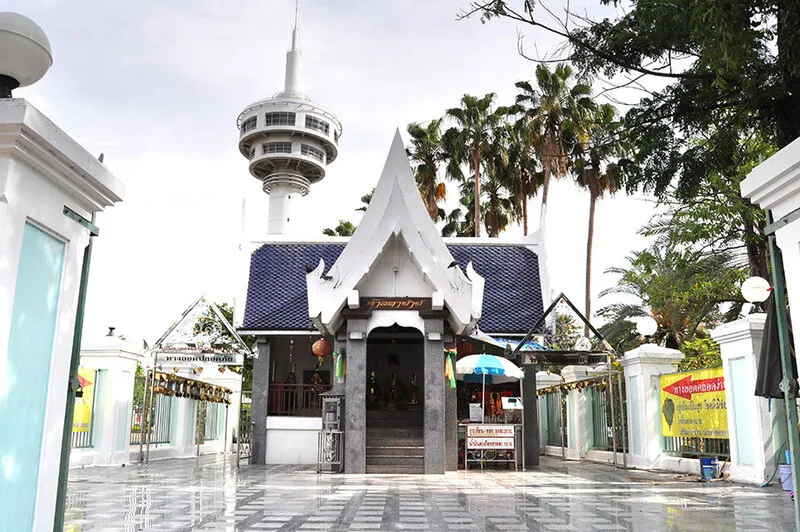
Ta Yai Shrine in Suphan Buri Province is one of the most respected sacred shrines in the old city area of Suphan Buri. Located on Nang Phim Road near Chalerm Patthara Rachini Park and Banharn-Jamsai Tower in Tha Phi Liang Subdistrict, Mueang Suphan Buri District, the shrine has been worshiped by local people for more than 100 years. Although it is a small shrine, it carries deep cultural meaning as a place of ancestral faith, local memory, and spiritual protection for the people of Suphan Buri.
The name Ta Yai means grandfather and grandmother. In Thai cultural belief, these words are not only family terms, but also expressions of respect toward elder ancestral spirits who protect a community. Local people believe that Ta and Yai were the ancestors of Suphan Buri people, full of kindness, compassion, and moral virtue. Whenever people were troubled or emotionally burdened, they could come to them and receive generosity, guidance, and comfort. This belief gives the shrine a warm and protective character, different from shrines that feel distant or formal.
The sacredness of Ta Yai Shrine does not come from monumental architecture. It comes from the continuity of local faith. For generations, people have come to pay respect, ask for protection, seek help with personal difficulties, pray for safe travel, and give thanks when their wishes were fulfilled. The shrine has therefore served as a quiet place where the hopes, anxieties, gratitude, and memories of local people have gathered over time.
The original story of Ta Yai Shrine is connected with a place known as a four-way crossing. In traditional society, such a crossing was not merely a road junction. It was a meeting point, a gateway, and a passage through which people from all four directions regularly traveled. In earlier times, the area was described as a kind of forest gate. Anyone traveling in different directions had to pass through this place. Because it was a major crossing for travelers, traders, villagers, and market-goers, it naturally became a place associated with spiritual protection.
As Suphan Buri grew and became more urban, the old four-way crossing became an important route where people from many directions passed into the market area. Over time, this place became known as Si Yaek Nang Phim, or Nang Phim Intersection. The story of Ta Yai Shrine is therefore deeply connected with the growth of Suphan Buri town, from an old crossing and forest gateway into a modern urban center with roads, markets, parks, and landmarks.
The shrine was later moved from the Nang Phim Intersection area to its present location near Chalerm Patthara Rachini Park and Banharn-Jamsai Tower. The relocation did not weaken local faith. Instead, the shrine continued to be respected and became easier to care for, restore, and visit. The shrine restoration committee later resolved to improve and restore the shrine so that it would remain a beautiful and dignified sacred place for the city.
The restoration of Ta Yai Shrine reflects the community’s respect for its intangible heritage. A shrine is not only a small building for offerings. It is a place where memories, stories, relationships, and feelings of belonging are gathered. Keeping the shrine clean, beautiful, and suitable for worship means preserving the emotional and spiritual landscape of the city.
Ta Yai Shrine also holds an annual celebration ceremony. This annual event ensures that the shrine remains part of living community life rather than a silent historical object. The celebration allows older generations to pass on the story of Ta and Yai to younger people. It reminds the community that the shrine has a history, a legend, and a role in the identity of Suphan Buri.
From a folklore perspective, Ta Yai Shrine is a good example of a Thai ancestral shrine in a central Thai town. Such shrines are often located at important points in a community, such as intersections, market entrances, old riverside areas, or gateways. People believe that ancestral spirits protect the place and those who pass through it. Paying respect is therefore both a request for blessing and an expression of gratitude toward those who came before.
To understand the shrine properly, visitors should see it as a shrine of kindness and elder protection. In Thai culture, sacred beings are often addressed with familiar terms such as grandfather, grandmother, father, mother, guardian lord, or guardian mother. These names make the sacred feel close and caring. At Ta Yai Shrine, worshipers often feel as though they are approaching respected elders who listen, protect, and give moral support.
Worship at Ta Yai Shrine is usually simple and respectful. Visitors may bring flowers, incense, candles, garlands, or other appropriate offerings. They should focus their mind, pay respect to Ta and Yai as ancestral protectors of the city, and make wishes sincerely. If a vow has been made and fulfilled, visitors should return to give thanks or fulfill the promise they made. Keeping one’s word is an important part of Thai devotional ethics.
For travelers, Ta Yai Shrine offers a deeper view of Suphan Buri beyond its better-known attractions. Visiting only Banharn-Jamsai Tower, Wat Pa Lelai Worawihan, or the Dragon Descendants Museum may show Suphan Buri as a tourist and historical city. Visiting Ta Yai Shrine reveals another layer: the city of crossings, ancestors, market routes, local memories, and protective spirits.
The shrine is conveniently located near Chalerm Patthara Rachini Park and Banharn-Jamsai Tower. The park is a pleasant green space in the city center, while Banharn-Jamsai Tower is one of Suphan Buri’s major landmarks and viewpoints. Because these places are close to each other, visitors can easily combine shrine worship, a park walk, and a tower visit in one short city-center route.
A half-day itinerary can begin with paying respect at Ta Yai Shrine, followed by a walk in Chalerm Patthara Rachini Park, then a visit to Banharn-Jamsai Tower for a panoramic view of the city. Travelers can also stop at cafés and restaurants along Nang Phim Road. With more time, the route can continue to the Suphan Buri City Pillar Shrine, the Dragon Descendants Museum, Wat Pa Lelai Worawihan, and Suphan Buri National Museum.
For cultural travelers, the shrine is valuable because it is small but rich in stories. It preserves the memory of the four-way crossing, Nang Phim Intersection, the relocation of the shrine, its restoration, and the annual celebration. These elements show that a city is not made only of buildings and roads. It is also made of beliefs, sacred points, and places that local people continue to value.
In terms of urban history, Ta Yai Shrine is a clear example of a sacred place that adapted to urban change. It was once associated with a major crossing where people passed in all directions. As the city developed, the shrine was moved to a more suitable location while still remaining in the central area. This shows how local faith can adapt to changing urban conditions while preserving its original meaning.
For international visitors, Ta Yai Shrine can be understood as a Thai ancestral shrine. Ta and Yai may be explained as elder ancestral spirits who protect the community. Such shrines help visitors understand that Thai religious culture often blends Buddhism, Brahmanical elements, ancestral spirits, and local beliefs in everyday life. This blending is one of the most important characteristics of Thai spiritual culture.
Visitors should behave respectfully at the shrine. They should speak softly, avoid blocking worship areas with offerings, and give space to those who are praying. Photography should be done discreetly, especially when people are making offerings or praying. Respecting these small manners helps cultural tourism remain sensitive to the local community.
Ta Yai Shrine is also suitable for cultural documentary photography because it combines a Thai shrine, Nang Phim Road, and nearby urban landmarks. However, visitors should avoid intrusive photography of worshipers. The shrine is a shared sacred place, and many people come with sincere personal wishes.
Getting There is very convenient because the shrine is located on Nang Phim Road in central Suphan Buri, near Chalerm Patthara Rachini Park and Banharn-Jamsai Tower. Visitors traveling by private car can head into Suphan Buri town and use the tower or the park as navigation points. Those staying in hotels around Nang Phim Road, Nenkhaew Road, or Prachathipatai Road can easily include the shrine in a walking route around the city center.
Ta Yai Shrine does not require a long visit, but it offers strong cultural value. It is suitable as a first stop before exploring Suphan Buri town, or as a quiet stop after visiting the park and tower. Visitors who take time to understand the story of Ta and Yai, the old four-way crossing, and Nang Phim Intersection will gain a deeper understanding of the city’s local identity.
Overall, Ta Yai Shrine is a small sacred place with great cultural significance. It connects the old four-way crossing with modern Nang Phim Road, ancestors with descendants, travelers from all directions with the market town of Suphan Buri, and the kindness of Ta and Yai with the continuing hopes of worshipers. Anyone visiting Suphan Buri should consider stopping here to experience a quieter and more intimate layer of the city’s heritage.
| Name | Ta Yai Shrine, Suphan Buri Province |
| Location | Nang Phim Road, Tha Phi Liang Subdistrict, Mueang Suphan Buri District, Suphan Buri Province |
| Address | Nang Phim Road area, near Chalerm Patthara Rachini Park and Banharn-Jamsai Tower, Tha Phi Liang Subdistrict, Mueang Suphan Buri District, Suphan Buri Province |
| Highlights | A sacred city shrine worshiped for more than 100 years, associated with elder ancestral spirits, the old four-way crossing, Nang Phim Intersection, and an annual celebration ceremony |
| History | A long-standing ancestral shrine of Suphan Buri people, originally associated with the old four-way crossing before being moved to its present location near Chalerm Patthara Rachini Park |
| Name Origin | The name Ta Yai refers to respected elder ancestors of Suphan Buri, believed to be compassionate guardians who help and protect the people of the city |
| Distinctive Features | A central-city ancestral shrine reflecting local belief, community protection, and the memory of Nang Phim Intersection in Suphan Buri |
| Travel Information | Travel into central Suphan Buri and head to Nang Phim Road, Chalerm Patthara Rachini Park, or Banharn-Jamsai Tower. The shrine is within easy walking distance of these landmarks |
| Current Status | An important local shrine of Suphan Buri, maintained by the community and associated with an annual celebration ceremony |
| Open Days | Daily |
| Opening Hours | Daytime to early evening is recommended for worship and walking around Nang Phim Road |
| Fees | No admission fee |
| Facilities | Worship area, shrine pavilion, nearby walking area, cafés, restaurants, and hotels in the city center |
| Main Areas / Zones | Ta and Yai enshrinement area Offering and worship area Shrine frontage Nang Phim Road area Nearby Chalerm Patthara Rachini Park and Banharn-Jamsai Tower area |
| Caretaker | Ta Yai Shrine restoration committee and Suphan Buri local community |
| Nearby Tourist Attractions | 1. Chalerm Patthara Rachini Park, about 0.1 km 2. Banharn-Jamsai Tower, about 0.2 km 3. Suphan Buri City Pillar Shrine and Dragon Descendants Museum, about 1 km 4. Wat Pa Lelai Worawihan, about 4 km 5. Suphan Buri National Museum, about 5 km 6. Wat Phra Si Rattana Mahathat Suphan Buri, about 3 km |
| Nearby Restaurants | 1. AT_LOVE COFFEE in front of Ta Yai Shrine, about 0.1 km, Tel. 098-104-4487 2. Khua Restaurant on Nang Phim Road, about 0.5 km, Tel. 035-521-045 3. Tong Ped Palo Talat Bang Li Branch 2, about 0.2 km 4. Tao Kae Noi Coconut Shake, about 0.2 km 5. Tam Tem Toh near the rear area of Banharn-Jamsai Tower, about 0.5 km |
| Nearby Accommodations | 1. Sri U-Thong Grand Hotel, about 0.3 km, Tel. 035-501-290 2. Khum Suphan Hotel, about 0.6 km, Tel. 035-522-273 3. Songphanburi Hotel, about 1 km, Tel. 035-522-555-7 4. Vasidtee City Hotel, about 1.5 km, Tel. 035-526-111, 035-526-123 5. HOP INN Suphanburi, about 2 km, Tel. 065-945-9006 |
Frequently Asked Questions (FAQ)
Q: Where is Ta Yai Shrine in Suphan Buri located?
A: Ta Yai Shrine is located on Nang Phim Road in Tha Phi Liang Subdistrict, Mueang Suphan Buri District, near Chalerm Patthara Rachini Park and Banharn-Jamsai Tower.
Q: Why is Ta Yai Shrine important?
A: It is a sacred shrine worshiped by Suphan Buri people for more than 100 years. Ta and Yai are believed to be compassionate ancestral guardians who protect and help the people of the city.
Q: Where was Ta Yai Shrine originally located?
A: Local tradition connects the shrine with an old four-way crossing, which later became an important city route known as Nang Phim Intersection, before the shrine was moved to its present location.
Q: Is there an admission fee at Ta Yai Shrine?
A: No admission fee is collected. Visitors may pay respect quietly and should behave respectfully toward local worshipers.
Q: What should visitors bring for worship at Ta Yai Shrine?
A: Visitors may bring flowers, incense, candles, garlands, or appropriate offerings. The most important practice is to pay respect with sincerity and gratitude.
Q: Does Ta Yai Shrine have an annual ceremony?
A: Yes. The shrine has an annual celebration ceremony that helps preserve local faith and the community’s connection with the shrine.
Q: What nearby places can be visited with Ta Yai Shrine?
A: Nearby places include Chalerm Patthara Rachini Park, Banharn-Jamsai Tower, Suphan Buri City Pillar Shrine, Dragon Descendants Museum, Wat Pa Lelai Worawihan, and Suphan Buri National Museum.
 Category: ●Places of Worship
 Group: ●Other Sacred Sites
Last Update : 3 MonthAgo
 Last Update : 3 MonthAgo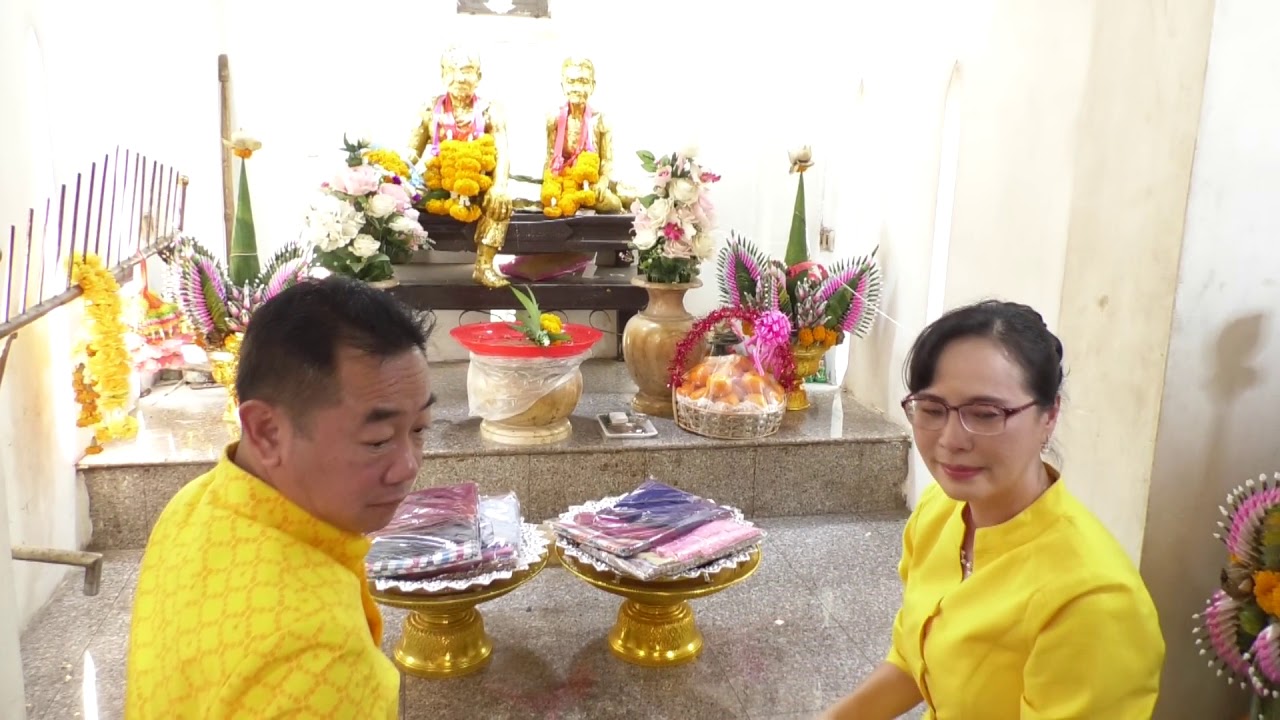
 Click to Access the Navigation Map GPS
Ta Yai Shrine Map
Recommend

 Art, Culture and Heritage
 Historical Sites and Monuments(2)
 Landmarks and Memorials(4)
 Art, Craft Centres, Tradition(2)
 Museums(5)
 Educational Places
 Educational Gardens, Farm(4)
 Training Center(2)
 Temple(36)
Other Sacred Sites(4)
Temple(36)
Other Sacred Sites(4)
 Suburban Living
 Village, Community(6)
 Local Market(7)
 Floating Market(1)
 Nature and Wildlife
 National Parks and Marine Reserves(4)
 Mountain (Doi)(2)
 Dam, Reservoir, Lake(3)
 Caves(1)
 Bays and Beaches(1)
 Entertainment and Agricultural
 Farms, Parks and Ecotourism(6)
 Theater(1)


