
lovethailand home >Central Travel Attractions >Suphan Buri Travel Attractions >Muang Suphan Buri >Tha Phi Liang > Wat Phra Rup
TL;DR: Wat Phra Rup is located at Khun Chang Road, Tha Phi Liang Subdistrict, Mueang Suphan Buri District, Suphan Buri Province, open Daily, hours 08.00 – 17.00.
Wat Phra Rup

Open Days: Daily
Opening Hours: 08.00 – 17.00
Wat Phra Rup in Suphan Buri Province is one of the most important historic temples in the city of Suphan Buri. Located on Khun Chang Road on the western bank of the Tha Chin River, directly across from Suphan Buri Market, the temple preserves a remarkable collection of Buddhist art, archaeological remains, sacred objects, and local legends. It is an essential destination for travelers who want to understand Suphan Buri beyond its modern town center, because Wat Phra Rup connects the history of the U Thong period, Ayutthaya-period craftsmanship, Buddhist devotion, and the famous Khun Phaen tradition in one compact temple compound.
The temple dates back to the late U Thong period and stands in an area that has long been connected with river-based communities. The Tha Chin River was historically a major waterway for transportation, trade, religious movement, and community life. Because Wat Phra Rup stands close to the river and opposite the market area, it reflects the traditional relationship between temples, rivers, and urban settlement in central Thailand. In the past, people could reach the temple by boat, make merit, attend ceremonies, and participate in community life along the river. Today, the temple remains a living place of worship while also functioning as a valuable cultural learning site.
Wat Phra Rup is especially suitable for travelers interested in Thai Buddhist art and local history. The temple contains several important highlights: the reclining Buddha image known locally as Nen Kaeo, the rare wooden Buddha footprint, the U Thong-style chedi, remains of Dvaravati-period structures, a bronze bell, an Ayutthaya-period ceremonial pulpit, and the famous Khun Phaen amulet tradition. These elements make the temple much more than a simple stop for merit-making. It is a layered historical site where visitors can walk through different periods of Suphan Buri’s cultural development.
The first major highlight is the reclining Buddha image known as Nen Kaeo. This Buddha image is made of brick and stucco, measuring about 13 meters long and approximately 3 meters high. The face is rounded and elongated, often compared to the shape of a bael fruit, and the image faces east. It is believed to have been created around B.E. 1800–1893, corresponding to the late U Thong period. The image is widely admired for the beauty of its face and is often described as one of the most beautiful reclining Buddha images in Thailand.
Nen Kaeo is not merely impressive because of its size. Its artistic value lies in the calm expression, the distinctive facial structure, the simple yet powerful form, and the sense of serenity that surrounds it. Reclining Buddha images are generally associated with the Buddha’s passing into parinirvana, but in Thai devotional contexts they also invite reflection on peace, impermanence, and spiritual release. At Wat Phra Rup, the reclining Buddha feels deeply connected to the local community. The name Nen Kaeo, used by local people, reflects long-standing affection and reverence for this sacred image.
The eastward orientation of the Buddha image also adds symbolic meaning. In Buddhist and cultural interpretation, the east is often associated with light, awakening, and renewal. When visitors enter the viharn and stand before Nen Kaeo, the experience is quiet and contemplative. The image does not overwhelm through excessive decoration; instead, it communicates through proportion, age, and the gentle dignity of its expression. Visitors should take time to observe the face, body, posture, and surrounding space in order to appreciate the artistic and spiritual qualities of the image.
Another nationally important treasure at Wat Phra Rup is the wooden Buddha footprint. Made from pradu wood, it is carved on both sides and measures 221.5 centimeters long, 74 centimeters wide, and 10 centimeters thick. This rare object is considered priceless because of its craftsmanship, religious meaning, and uniqueness. It is known as the only wooden Buddha footprint of its kind in Thailand. The carved details reveal the skill of Thai artisans who transformed a wooden surface into a sacred symbolic object filled with Buddhist meaning.
According to temple tradition, the wooden Buddha footprint was originally kept at Wat Khao Din. During a period of conflict between Siam and Burma, a monk feared that the sacred object might be destroyed. He transported it by water and brought it to Wat Phra Rup for safekeeping. This story gives the object an additional historical layer. It is not only a work of sacred art but also a witness to protection, movement, and cultural memory during a time of danger. The Tha Chin River, in this story, becomes a route of preservation rather than merely a physical waterway.
In Buddhist symbolism, a Buddha footprint represents the presence of the Buddha and the path of the Dharma. Even after the Buddha’s physical passing, the footprint remains as a sign for followers to remember his teachings and follow his way. Buddha footprints are found in different materials across Buddhist cultures, including stone, metal, and wood. The wooden footprint at Wat Phra Rup is especially rare because wood is more fragile than stone or metal. Its survival until the present day makes it one of the most significant sacred objects in Suphan Buri.
The temple also preserves an important U Thong-style chedi. This structure helps visitors understand the artistic and religious development of the region before the full rise of Ayutthaya. The chedi and other ancient remains in the temple area reflect a long historical continuity that includes Dvaravati, U Thong, Ayutthaya, and Rattanakosin influences. For travelers interested in archaeology, Wat Phra Rup is valuable because it does not present history as a single moment. Instead, it shows how different layers of Buddhist culture accumulated in one place over centuries.
The remains of Dvaravati-period structures add even greater depth to the site. Dvaravati culture played a major role in central Thailand before the establishment of Ayutthaya as a dominant kingdom. The presence of these remains suggests that the area around Suphan Buri had long been a place of settlement and religious activity. Wat Phra Rup therefore allows visitors to see Suphan Buri not only as an Ayutthaya-related city but as part of a much older cultural landscape in the Chao Phraya and Tha Chin river basin.
Other important objects include a bronze bell and a ceremonial pulpit known in Thai as a thammas sangkhet, crafted by late Ayutthaya artisans. Such objects reveal the ritual life of the temple in earlier periods. The pulpit is associated with monks who preached or performed funerary rites, reflecting the relationship between Buddhist teaching, merit-making, and community ceremonies. These objects are important because they show how art, ritual, and everyday religious life were connected in traditional Thai society.
Wat Phra Rup is also famous as a source of Khun Phaen amulets. The Khun Phaen tradition is deeply associated with Suphan Buri, Thai literature, local belief, and the culture of amulet collecting. For those interested in Thai amulets, Wat Phra Rup carries special significance as a historic source connected with one of the most well-known amulet names in Thailand. This adds another dimension to the temple: it is a place of Buddhist devotion, archaeological value, artistic heritage, and popular religious belief.
The Wat Phra Rup Museum is another key part of the visitor experience. The museum was developed to preserve and present the temple’s ancient objects, including the wooden Buddha footprint and other cultural materials. It allows visitors to understand the temple’s treasures in a more organized way. Instead of seeing sacred objects as isolated items, the museum helps connect them with the history of the temple, the role of former abbots, the local community, and the wider cultural development of Suphan Buri.
A good walking route through the temple begins with paying respect to Nen Kaeo, the reclining Buddha image. Visitors can then continue to the wooden Buddha footprint, the museum area, the U Thong chedi, ancient remains, and the riverside temple environment. This route allows travelers to move from devotion to historical learning and then to a broader appreciation of place. Because the temple contains many details, visitors should not rush. A stay of at least 1–2 hours is recommended for those who want to see both the sacred and historical highlights properly.
Getting There is convenient because Wat Phra Rup is located within Mueang Suphan Buri District. The temple stands on Khun Chang Road, on the western side of the Tha Chin River, opposite Suphan Buri Market. Travelers staying in town can reach the temple by private car, local transport, or hired vehicle. From Bangkok, visitors can drive to Suphan Buri and include Wat Phra Rup in a one-day cultural itinerary. Its central location makes it easy to combine with Wat Phra Si Rattana Mahathat, Wat Khae, Wat Phra Loi, Wat Pa Lelai Worawihan, the Dragon Descendants Museum, and Suphan Buri National Museum.
The best time to visit is in the morning or late afternoon, when the weather is more comfortable for walking around the temple. The temple and museum area are open daily from 08.00 to 17.00, and there is no admission fee. Visitors who want to study the museum displays or take photographs of the architecture should allow enough time. The temple is suitable for both independent travelers and families because it offers religious, educational, and cultural value in one accessible location.
As with all active Buddhist temples, visitors should dress modestly and behave respectfully. Shoulders and knees should be covered, and voices should be kept low inside the viharn and museum. Ancient objects should not be touched unless permission is clearly given. The wooden Buddha footprint and other objects are rare cultural heritage items, and their preservation depends partly on responsible visitor behavior. Ancient structures should not be climbed or used as photo props in inappropriate ways.
Wat Phra Rup is suitable for many types of travelers. History lovers can explore its Dvaravati, U Thong, and Ayutthaya connections. Art lovers can appreciate the reclining Buddha and the wooden Buddha footprint. Those interested in Thai amulets will find the Khun Phaen connection meaningful. Families and students can use the temple as an outdoor classroom for learning about Buddhist art and local history. For foreign travelers, Wat Phra Rup offers an authentic and intellectually rich experience in the heart of Suphan Buri.
What makes Wat Phra Rup especially valuable today is the way it preserves faith and knowledge together. Nen Kaeo remains a focus of devotion. The wooden Buddha footprint serves as a rare masterpiece of sacred craftsmanship. The U Thong chedi and ancient remains stand as archaeological evidence. The museum connects these objects to the present generation. A visit to Wat Phra Rup is therefore not only a temple visit but also a journey through the layered history of Suphan Buri, a city shaped by rivers, legends, Buddhist art, and community memory.
For travelers who want to see a deeper side of Suphan Buri, Wat Phra Rup deserves a place on the itinerary. It offers merit-making, art appreciation, historical learning, and local cultural context in one site. The temple’s reclining Buddha, unique wooden Buddha footprint, archaeological remains, museum, and Khun Phaen tradition make it one of the most meaningful cultural destinations in the province. It is a place where visitors can slow down, observe carefully, and understand how Thai faith and history continue to live beside the Tha Chin River.
| Name | Wat Phra Rup, Suphan Buri |
| Location | Khun Chang Road, Tha Phi Liang Subdistrict, Mueang Suphan Buri District, Suphan Buri Province |
| Address | 112/1 Khun Chang Road, Tha Phi Liang Subdistrict, Mueang Suphan Buri District, Suphan Buri Province, Thailand |
| Highlights | Nen Kaeo reclining Buddha, wooden Buddha footprint, U Thong chedi, Dvaravati-period remains, bronze bell, Ayutthaya-period ceremonial pulpit, and Khun Phaen amulet tradition |
| History | An ancient temple dating to the late U Thong period, with artistic and archaeological evidence connected to Dvaravati, U Thong, Ayutthaya, and Rattanakosin periods |
| Distinctive Features | A brick-and-stucco reclining Buddha image about 13 meters long and 3 meters high, facing east, with a rounded face often compared to a bael fruit and admired as one of Thailand’s most beautiful reclining Buddha faces |
| Wooden Buddha Footprint | Made from pradu wood, carved on both sides, measuring 221.5 cm long, 74 cm wide, and 10 cm thick; regarded as the only wooden Buddha footprint of its kind in Thailand |
| Travel Information | Located on Khun Chang Road on the western bank of the Tha Chin River, opposite Suphan Buri Market. Easily reached from downtown Suphan Buri by private car, local transport, or hired vehicle. |
| Current Status | Open to visitors as an active temple and cultural learning site with important ancient objects and a temple museum |
| Open Days | Daily |
| Opening Hours | 08.00 – 17.00 |
| Fees | No Admission Fee |
| Facilities | Temple grounds, reclining Buddha hall, Wat Phra Rup Museum, wooden Buddha footprint pavilion, archaeological area, and parking space |
| Main Areas / Zones | 1. Viharn of Nen Kaeo Reclining Buddha 2. Wooden Buddha Footprint Pavilion 3. Wat Phra Rup Museum 4. U Thong Chedi and Dvaravati-period remains 5. Ancient object display area, including bronze bell and ceremonial pulpit 6. Riverside temple area by the Tha Chin River |
| Abbot / Caretaker | Phra Khru Sangharak Wutthiphan Phengsuwan Siritharo |
| Main Contact Number | 086-0684065, 089-1095650 |
| Nearby Tourist Attractions | 1. Wat Phra Si Rattana Mahathat, about 1 km 2. Wat Khae and Khum Khun Phaen, about 1 km 3. Wat Phra Loi, about 2 km 4. Dragon Descendants Museum and Suphan Buri City Pillar Shrine, about 2 km 5. Suphan Buri National Museum, about 3 km 6. Wat Pa Lelai Worawihan, about 4 km 7. Wat Phra Non, about 5 km |
| Nearby Restaurants | 1. Raed Zaap Nua, about 0.2 km 2. Tang Nguan Thai, about 0.4 km 3. Kuai Tiao Je Pai, about 0.6 km 4. Kuai Tiao Tom Yum Nai Klae Suphan Buri, about 0.9 km 5. Pa Iang Ahan Tam Sang, about 1 km 6. Chao Sua Noi, about 1 km 7. U DOM, Coffee Slow Bar, about 1 km |
| Nearby Accommodations | 1. Songphanburi Hotel, about 2 km 2. Sri U-Thong Grand Hotel, about 2 km 3. Lertthanee Hotel, about 2 km 4. Soi 4 Service Residence, about 3 km 5. B2 Suphan Buri Premier Hotel, about 4 km 6. The Scene Suphan Buri, about 4 km 7. Hop Inn Suphan Buri, about 4 km |
Frequently Asked Questions (FAQ)
Q: Where is Wat Phra Rup located?
A: Wat Phra Rup is located on Khun Chang Road, Tha Phi Liang Subdistrict, Mueang Suphan Buri District, on the western bank of the Tha Chin River, opposite Suphan Buri Market.
Q: What is Wat Phra Rup famous for?
A: The temple is famous for the Nen Kaeo reclining Buddha, the rare wooden Buddha footprint, the U Thong chedi, Dvaravati-period remains, and the Khun Phaen amulet tradition.
Q: Why is the Nen Kaeo reclining Buddha important?
A: Nen Kaeo is a brick-and-stucco reclining Buddha about 13 meters long and 3 meters high. Its rounded, graceful face is admired as one of the most beautiful reclining Buddha faces in Thailand.
Q: What makes the wooden Buddha footprint special?
A: It is made from pradu wood, carved on both sides, measuring 221.5 cm long, 74 cm wide, and 10 cm thick. It is regarded as the only wooden Buddha footprint of its kind in Thailand.
Q: Is Wat Phra Rup connected with Khun Phaen amulets?
A: Yes. Wat Phra Rup is known as a historic source of Khun Phaen amulets, making it important for people interested in Thai amulets, local belief, and Suphan Buri legends.
Q: What are the opening hours of Wat Phra Rup?
A: Wat Phra Rup is open daily from 08.00 to 17.00, and there is no admission fee.
Q: How can visitors get to Wat Phra Rup?
A: The temple is located in downtown Suphan Buri on Khun Chang Road, opposite Suphan Buri Market. It is easily reached by private car, hired local transport, or local vehicles from the town center.
Q: What attractions can be visited near Wat Phra Rup?
A: Nearby attractions include Wat Phra Si Rattana Mahathat, Wat Khae, Khum Khun Phaen, Wat Phra Loi, Dragon Descendants Museum, Suphan Buri National Museum, and Wat Pa Lelai Worawihan.
 Category: ●Places of Worship
 Group: ●Temple
Last Update : 3 MonthAgo
 Last Update : 3 MonthAgo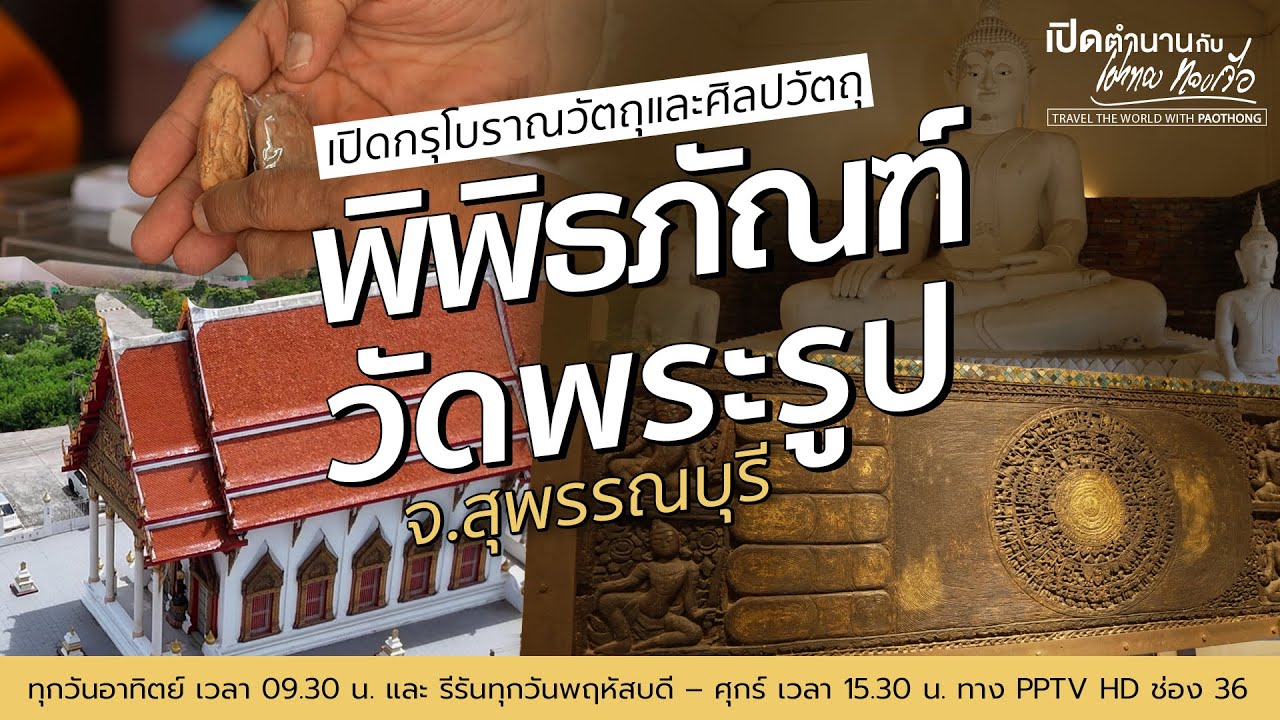
 Click to Access the Navigation Map GPS
Wat Phra Rup Map
Recommend

 Art, Culture and Heritage
 Historical Sites and Monuments(2)
 Landmarks and Memorials(4)
 Art, Craft Centres, Tradition(2)
 Museums(5)
 Educational Places
 Educational Gardens, Farm(4)
 Training Center(2)
Temple(36)
Training Center(2)
Temple(36)
 Other Sacred Sites(4)
 Suburban Living
 Village, Community(6)
 Local Market(7)
 Floating Market(1)
 Nature and Wildlife
 National Parks and Marine Reserves(4)
 Mountain (Doi)(2)
 Dam, Reservoir, Lake(3)
 Caves(1)
 Bays and Beaches(1)
 Entertainment and Agricultural
 Farms, Parks and Ecotourism(6)
 Theater(1)


