
lovethailand home >Central Travel Attractions >Suphan Buri Travel Attractions >Muang Suphan Buri >Tha Phi Liang > Thai Rice Farmers National Museum
TL;DR: Thai Rice Farmers National Museum is located at Suphan Buri Provincial Government Center, Mueang Suphan Buri District, Suphan Buri Province, open Wednesday – Sunday, hours 09.00 – 16.00.
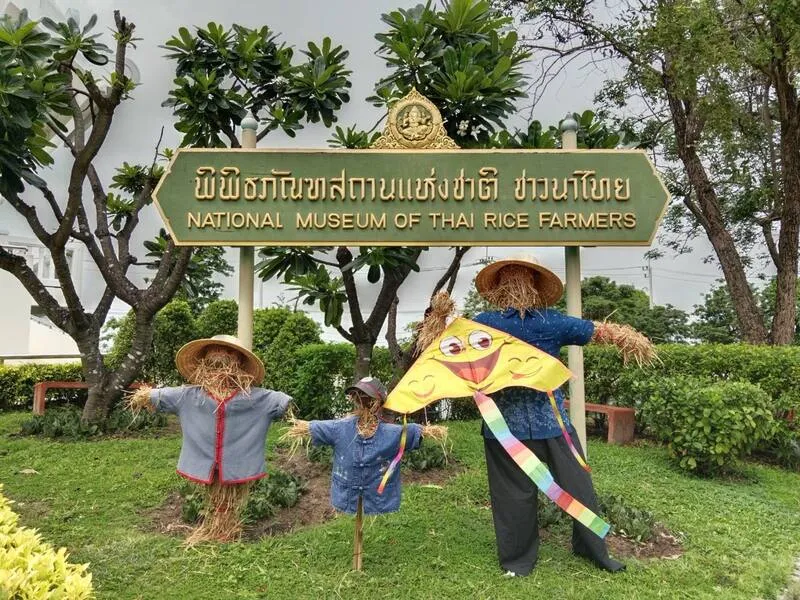
Thai Rice Farmers National Museum
Open Days: Wednesday – Sunday
Opening Hours: 09.00 – 16.00
The Thai Farmers National Museum in Suphan Buri Province is an important cultural learning center dedicated to rice, Thai farming wisdom, agricultural traditions, and the way of life of Thai farmers. Located within the Suphan Buri Provincial Government Center near the Provincial Hall, the museum stands on Phra Phanwasa Road / Suphan Buri – Chainat Road, Highway 340, in Mueang Suphan Buri District. The building is a two-storey applied Thai-style structure, designed with the atmosphere of a traditional Thai house and a rice granary, making the architecture itself part of the story of Thai rice culture.
This museum is a meaningful place for travelers who want to understand Thailand through rice. Rice is not only the country’s staple food; it is a foundation of family life, rural economy, ritual practice, seasonal rhythm, and social cooperation. Inside the museum, visitors can learn about farming tools, rice cultivation processes, agricultural traditions, everyday objects, ancient artifacts, and important items connected with royal rice-farming demonstrations, including the golden-handled sickle and the first 9 auspicious rice ears harvested during a ceremonial demonstration.
The importance of the Thai Farmers National Museum lies in the way it makes the life of farmers visible and understandable. Farmers have fed Thai society for generations, yet their knowledge is often reduced to a simple image of people working in rice fields. This museum shows that farming is a sophisticated knowledge system. It requires understanding of water, soil, rainfall, seasons, seeds, animal labor, tools, family cooperation, and community networks. For foreign travelers, the museum offers a deeper view of Thailand beyond temples and markets by presenting the agricultural foundation of Thai civilization.
The museum is located in an area that is closely connected with the identity of Suphan Buri. The province has long been associated with rice fields, irrigation, fertile plains, and agricultural communities in Thailand’s central region. Visiting the museum therefore feels appropriate to the landscape around it. Travelers can learn about rice inside the exhibition building and then connect that knowledge with the real agricultural character of Suphan Buri, where rural roads, canals, fields, old markets, and farming communities remain part of the province’s identity.
One of the most useful parts of the museum is its collection of rice-farming tools and equipment. These objects help visitors understand the entire farming process, from preparing the soil and ploughing the field to sowing, transplanting, tending rice plants, harvesting, threshing, winnowing, storing grain, and preparing rice for consumption. Each tool is more than an old object. It represents accumulated experience, practical invention, and knowledge passed down through rural families and communities.
The sickle is one of the most symbolic tools in rice farming. Harvesting rice by hand requires skill, timing, patience, and care. A farmer must know when the rice is mature, how to cut the stalks efficiently, and how to reduce loss during harvesting. The museum’s display of a golden-handled sickle used in a royal rice-farming demonstration gives this ordinary tool a ceremonial and national dimension. The 9 auspicious rice ears displayed with it also represent blessing, productivity, and the symbolic importance of rice in Thai society.
The museum does not present farming only as labor. It also explains the traditions, beliefs, and social life connected with rice. In Thai farming communities, rice has been associated with Mae Phosop, the rice goddess, with rituals for blessing the crop, with communal labor during harvesting, and with seasonal festivals. These traditions show that a rice field was not only a workplace. It was also a cultural space shaped by faith, cooperation, family ties, and respect for nature.
The displays also help visitors understand changes in Thai farming over time. In the past, rice cultivation depended heavily on human labor, buffaloes, wooden ploughs, hand tools, and family-based work. Later, tractors, harvesters, irrigation systems, improved rice varieties, and market-oriented production transformed agricultural life. These changes increased productivity but also altered community relationships and traditional knowledge. The museum preserves the memory of this transition and allows visitors to reflect on how rural Thailand has changed.
For children, students, and families, the Thai Farmers National Museum is especially useful because its content is concrete and easy to understand. Children can see real tools and connect them with the rice they eat every day. The visit helps them understand that a bowl of rice comes from effort, knowledge, weather risk, and the patience of farmers. For school groups, the museum functions as a practical classroom for social studies, agriculture, Thai culture, and local history.
For cultural travelers, the museum adds depth to a trip to Suphan Buri. Many visitors know the province for temples, the Dragon Descendants Museum, the City Pillar Shrine, Banharn-Jamsai Tower, and old markets. The Thai Farmers National Museum adds another layer by explaining the agricultural roots of the province and of Thailand as a whole. It is a compact museum, but its subject is large: the relationship between rice, people, landscape, and Thai identity.
The building itself strengthens the visitor experience. Its applied Thai-style design and agricultural references create an atmosphere connected with traditional rural life. The museum does not feel detached from the subject it presents. From the exterior form to the interior displays, it guides visitors into the memory of rice farming and the social world of Thai farmers.
Another advantage is that the museum has no admission fee, making it accessible to local residents, students, families, and general travelers. Group visitors should contact the museum in advance for planning, especially school groups or study groups that want to use the museum as an educational site. Because the museum is within the provincial government center area, parking and local access are generally convenient.
Visitors should take time to read the exhibition texts and observe the objects carefully. Farming tools may appear simple at first, but each one represents a specific task and a specific kind of knowledge. Some tools are connected with physical labor, some with water and soil management, some with harvesting, and others with storage or food preparation. A careful visit will show that rice farming is not a repetitive activity only, but a complete system of practical science, social organization, and cultural belief.
Getting There is convenient by private car, rental vehicle, or local transport in Suphan Buri town. From Bangkok, travelers can take Highway 340 toward Suphan Buri and continue to the Suphan Buri Provincial Government Center near the Provincial Hall. Those arriving by bus can get off at Suphan Buri Bus Terminal and continue by local transport to the government center area. The museum can be combined easily with Suphan Buri National Museum and the Hall of Fame of H.E. Banharn Silpa-Archa, which are located nearby.
A half-day itinerary can begin with the Thai Farmers National Museum, followed by Suphan Buri National Museum and the Hall of Fame of H.E. Banharn Silpa-Archa. With a full day, travelers can continue to Suphan Buri City Pillar Shrine, Dragon Descendants Museum, Wat Pa Lelai Worawihan, Banharn-Jamsai Tower, or the Thai Farmer’s Way of Life and Spirit Learning Center, also known as Na Hia Chai. This route allows visitors to understand Suphan Buri through agriculture, history, local identity, religion, and modern cultural memory.
The Thai Farmers National Museum is therefore a highly worthwhile stop for anyone who wants to understand Thailand through the story of rice. It connects farmers, tools, traditions, royal ceremonial objects, community life, and national identity in one accessible place. For foreign travelers, it provides a clear and meaningful introduction to the agricultural heart of Thai culture and shows why rice remains one of the most important symbols of Thailand.
| Name | Thai Farmers National Museum, Suphan Buri Province |
| Location | Suphan Buri Provincial Government Center, Mueang Suphan Buri District, Suphan Buri Province |
| Address | Suphan Buri Provincial Government Center, Phra Phanwasa Road / Suphan Buri – Chainat Road, Highway 340, Mueang Suphan Buri District, Suphan Buri 72000, Thailand |
| Highlights | A museum dedicated to Thai farmers, rice-farming wisdom, agricultural traditions, farming tools, artifacts, the golden-handled sickle, and the first 9 auspicious rice ears from a royal rice-farming demonstration |
| History | The current museum building was completed in 2009 and officially opened in 2010 as a learning center for Thai agriculture and the way of life of Thai farmers |
| Distinctive Features | A two-storey applied Thai-style building combining the atmosphere of a traditional Thai house and rice granary, matching its exhibition theme of rice and farming culture |
| Travel Information | From Bangkok, take Highway 340 toward Suphan Buri and continue to the Suphan Buri Provincial Government Center. Bus travelers can continue from Suphan Buri Bus Terminal by local transport. |
| Current Status | Open as a national museum and learning center for Thai farming wisdom, traditions, and the way of life of Thai farmers under the Fine Arts Department |
| Open Days | Wednesday – Sunday; closed Monday, Tuesday, and public holidays |
| Opening Hours | 09.00 – 16.00 |
| Fees | No Admission Fee |
| Facilities | Two-storey exhibition building, display rooms, farming tool displays, rice culture exhibitions, group visit area, and parking within the provincial government center area |
| Main Areas / Zones | 1. Thai Farming Wisdom Zone 2. Farming Tools and Equipment Zone 3. Rice Traditions and Beliefs Zone 4. Thai Farmers’ Way of Life Zone 5. Agricultural Artifacts and Antiquities Zone 6. Golden-Handled Sickle and 9 Auspicious Rice Ears Zone 7. Thai Agricultural Change and Learning Zone |
| Caretaker | Fine Arts Department / Thai Farmers National Museum, Suphan Buri Province |
| Main Contact Number | 0 3553 6113 |
| Official Website / Official Page | Fine Arts Department Virtual Museum website and Facebook page: Thai Farmers National Museum, Suphan Buri |
| Nearby Tourist Attractions | 1. Suphan Buri National Museum, about 1 km 2. Hall of Fame of H.E. Banharn Silpa-Archa, about 1 km 3. Dragon Descendants Museum and Suphan Buri City Pillar Shrine, about 4 km 4. Wat Pa Lelai Worawihan, about 5 km 5. Banharn-Jamsai Tower, about 6 km 6. Wat Khae, about 7 km 7. Thai Farmer’s Way of Life and Spirit Learning Center, Na Hia Chai, about 12 km |
| Nearby Restaurants | 1. Nopparatana Restaurant, about 5 km 2. Lainam Restaurant, about 6 km 3. Surachai Pla Phao, about 7 km, Tel. 081-763-6102, 081-942-4654 4. Restaurants Around Dragon Descendants Museum, about 4 km 5. Restaurants in Suphan Buri Town, about 5 km |
| Nearby Accommodations | 1. Songphanburi Hotel, about 5 km 2. Vasidtee City Hotel Suphan Buri, about 6 km, Tel. 035-526-111, 035-526-123 3. Hop Inn Suphan Buri, about 7 km, Tel. 02-080-2222 4. B2 Suphan Buri Premier Hotel, about 7 km 5. Country Lake View Hotel, about 8 km 6. Hotels in Mueang Suphan Buri District, about 5 km |
Frequently Asked Questions (FAQ)
Q: Where is the Thai Farmers National Museum located?
A: It is located within the Suphan Buri Provincial Government Center in Mueang Suphan Buri District, near the Provincial Hall and Highway 340.
Q: What does the Thai Farmers National Museum display?
A: The museum displays Thai farming wisdom, rice traditions, farmers’ way of life, farming tools, agricultural artifacts, the golden-handled sickle, and the first 9 auspicious rice ears from a royal rice-farming demonstration.
Q: When is the Thai Farmers National Museum open?
A: It is open from Wednesday to Sunday, 09.00 to 16.00, and is closed on Monday, Tuesday, and public holidays.
Q: Is there an admission fee?
A: No. Visitors can enter the museum without an admission fee.
Q: Who should visit this museum?
A: It is suitable for families, students, cultural travelers, visitors interested in agriculture, and anyone who wants to understand rice and the life of Thai farmers.
Q: What is the main highlight of the museum?
A: Its main highlight is the comprehensive story of rice and Thai farmers, including tools, traditions, beliefs, farming life, and important ceremonial objects connected with rice cultivation.
Q: What nearby attractions can be visited with the museum?
A: Nearby attractions include Suphan Buri National Museum, the Hall of Fame of H.E. Banharn Silpa-Archa, Dragon Descendants Museum, Suphan Buri City Pillar Shrine, Wat Pa Lelai Worawihan, Banharn-Jamsai Tower, and Na Hia Chai learning center.
Q: How can travelers get to the Thai Farmers National Museum?
A: From Bangkok, take Highway 340 toward Suphan Buri and continue to the Suphan Buri Provincial Government Center. Bus travelers can continue from Suphan Buri Bus Terminal by local transport.
Tel : 035522191
 Tel : 035522191
 Category: ●Art, Culture and Heritage
 Group: ●Museums
Last Update : 4 MonthAgo
 Last Update : 4 MonthAgo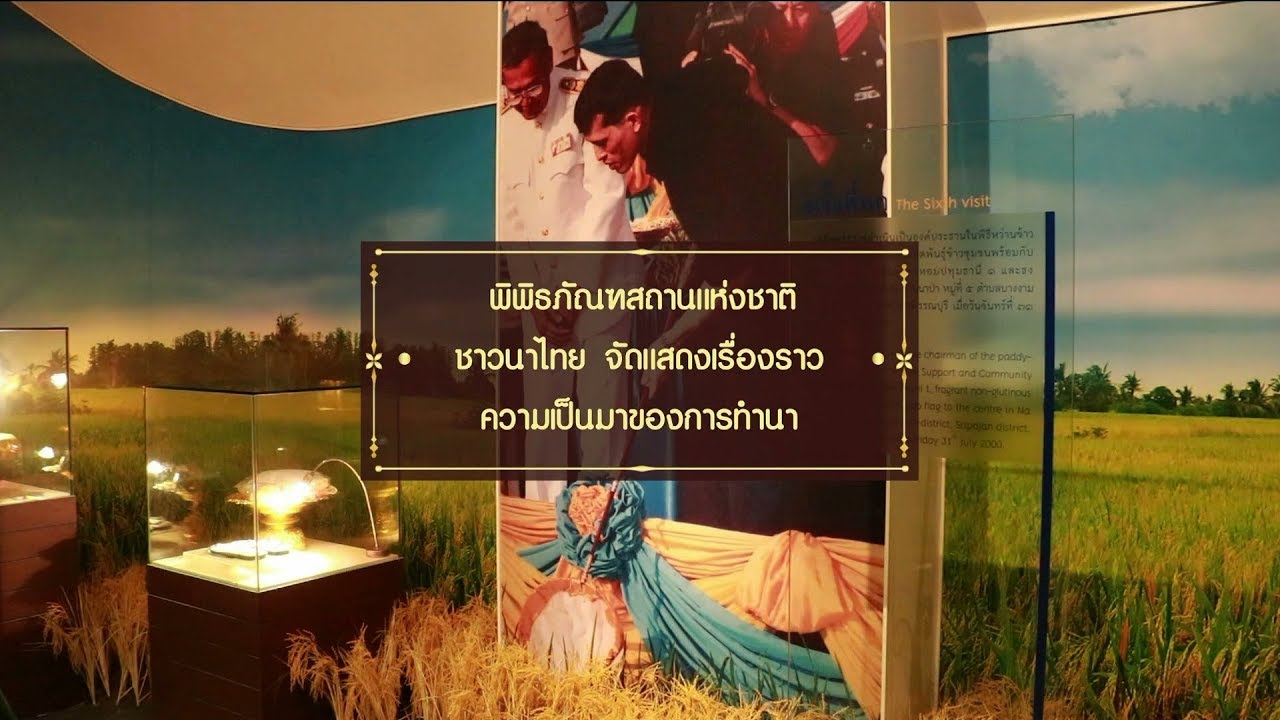
 Click to Access the Navigation Map GPS
Thai Rice Farmers National Museum Map
Recommend

 Historical Sites and Monuments(2)
 Landmarks and Memorials(4)
 Art, Craft Centres, Tradition(2)
Museums(5)
Art, Craft Centres, Tradition(2)
Museums(5)
 Educational Places
 Educational Gardens, Farm(4)
 Training Center(2)
 Places of Worship
 Temple(36)
 Other Sacred Sites(4)
 Suburban Living
 Village, Community(6)
 Local Market(7)
 Floating Market(1)
 Nature and Wildlife
 National Parks and Marine Reserves(4)
 Mountain (Doi)(2)
 Dam, Reservoir, Lake(3)
 Caves(1)
 Bays and Beaches(1)
 Entertainment and Agricultural
 Farms, Parks and Ecotourism(6)
 Theater(1)


