
lovethailand home >Central Travel Attractions >Suphan Buri Travel Attractions >Muang Suphan Buri >Tha Phi Liang > Yamaratcho House
TL;DR: Yamaratcho House, Suphan Buri attractions : Suburban Living, Village, Community.
Yamaratcho House
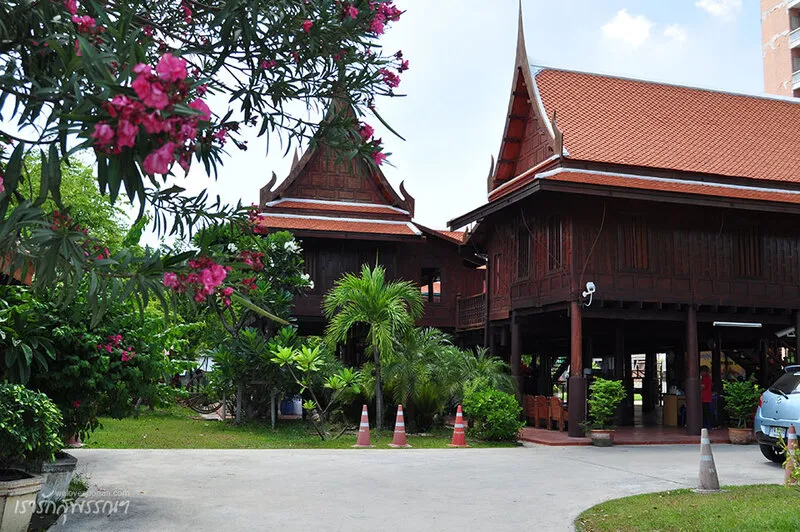
Open Days: Please contact the Administrative Department of Chaophraya Yommarat Hospital before visiting
Opening Hours: Please contact the Administrative Department of Chaophraya Yommarat Hospital before visiting
Yamaratcho House in Suphan Buri Province is an important historic Thai wooden house in Mueang Suphan Buri District. Located on Muen Han Road in Tha Phi Liang Subdistrict, near Acha Si Mok Bridge and not far from Chaophraya Yommarat Hospital, the house is closely connected with Chao Phraya Yommarat, also known as Pan Sukhum, one of the most distinguished statesmen from Suphan Buri. He served as Regent during the reign of King Ananda Mahidol, Rama VIII, and also held ministerial positions in 3 major ministries: the Ministry of Interior, the Ministry of the Capital, and the Ministry of Public Works. Yamaratcho House is therefore not merely an old riverside residence, but a historical memorial to a national figure whose life and work remain a source of pride for the people of Suphan Buri.
The charm of Yamaratcho House lies in its traditional central Thai architectural form. It is a cluster of Thai wooden houses, reflecting the lifestyle, climate adaptation, and family structure of earlier Thai society. The remaining original structures include 2 sleeping houses and 1 central pavilion, while 1 sitting pavilion has been rebuilt to replace the original. This arrangement allows visitors to understand how a traditional Thai house was organized as a living compound rather than a single enclosed building. Each structure had a different function and was connected by open platforms that allowed air circulation, social interaction, and flexible daily use.
The location of Yamaratcho House is also historically meaningful. It stands near the Suphan Buri River, also known as the Tha Chin River, which was once a major route of transportation, trade, and urban life. Before roads became dominant, rivers connected communities, markets, government activity, and family networks. A house located near the river was therefore well positioned for movement and communication. The house reflects the old riverside way of life in Suphan Buri, where water, trade, administration, and residence were closely connected.
Chao Phraya Yommarat, Pan Sukhum, was born in Suphan Buri and rose to the highest levels of Siamese administration through ability, integrity, discipline, and royal trust. His career represents a remarkable path from a provincial background to national service. He was trusted by several kings of the Chakri dynasty and played an important role in the development of modern Siamese administration. His service in multiple ministries shows his broad administrative ability in governance, urban order, and public works.
His work in the Ministry of Interior was connected with provincial administration and the management of the country’s internal governance. His role in the Ministry of the Capital involved the administration of Bangkok and urban order. His work in the Ministry of Public Works reflected the development of infrastructure and physical improvements in the country. To hold major responsibilities in these different areas required rare administrative skill and exceptional trust from the state.
Chao Phraya Yommarat’s importance became even more evident when he served as Regent during the reign of King Ananda Mahidol, Rama VIII. This was one of the most important constitutional and royal responsibilities in the kingdom. A regent acts on behalf of the monarch under specific circumstances, requiring trustworthiness, judgment, loyalty, and deep experience in public affairs. His appointment to such a role reflects his high standing in Thai history.
The name Yamaratcho is itself significant. King Chulalongkorn, Rama V, visited this house twice and bestowed the name upon it. A royal name given to a private residence is not an ordinary matter. It reflects the importance of the owner, the relationship between the house and royal history, and the special status of the place in local memory. The name Yamaratcho has therefore become part of the house’s historical identity.
King Rama V’s visits to the house add a major layer of historical value. They show that the house was connected with the world of high-ranking officials and royal journeys, not only with private family life. For visitors today, standing at Yamaratcho House makes it possible to sense how national history can be preserved in a wooden house beside the river, not only in palaces, official buildings, or museums.
The architectural layout of Yamaratcho House reflects the logic of central Thai living. A traditional Thai house compound is designed for climate, family life, social hierarchy, and daily flexibility. Raised floors help protect the house from flooding and animals. Open platforms allow ventilation and create shared spaces. Separate houses within the same compound provide privacy while maintaining family connection. This makes Yamaratcho House an excellent example of Thai residential intelligence adapted to the environment of the central plains.
The value of the house is not limited to beauty. It is also a record of building knowledge, social life, and the lifestyle of an important family in old Suphan Buri. The wooden structures, roof forms, platforms, and spatial connections reveal how people lived before modern concrete buildings became common. For anyone interested in Thai architecture, the house is a valuable place to observe proportion, craftsmanship, and the relationship between built form and climate.
Over time, old wooden houses face natural deterioration from weather, humidity, insects, and changing urban conditions. Many historic Thai houses have disappeared because of development pressure, road expansion, fire, or the high cost of maintenance. Yamaratcho House survived because conservation efforts were made. Suphan Buri Province implemented a conservation project for the house and submitted it to an urban architectural conservation award program, where it received recognition with an award, plaque, and certificate.
This conservation achievement is important because it shows that Yamaratcho House is valued not only as a family property, but as part of the architectural and cultural heritage of the city. Preserving the house allows future generations to learn about Chao Phraya Yommarat, traditional Thai architecture, riverside urban life, and the historical development of Suphan Buri. The house is therefore a bridge between personal biography, local pride, and national memory.
At present, Yamaratcho House belongs to the Fund of the Phraya Sunthon Songkhram Foundation, associated with Pui Suwannasorn. Visitors who wish to view the house should contact Chaophraya Yommarat Hospital, especially its Administrative Department, in advance. The house should not be treated like a commercial tourist attraction open for walk-in visits at all times. Advance contact helps visitors confirm availability, access conditions, and appropriate arrangements.
The nearby Chaophraya Yommarat Hospital is also historically connected with Chao Phraya Yommarat. The hospital is one of the most important public health institutions in Suphan Buri, and its name honors the same statesman. The close location of the house and the hospital gives this area a special meaning: it preserves both the residence of an important historical figure and a public institution connected with his legacy of service to society.
Yamaratcho House is located in Tha Phi Liang, one of the important urban areas of Suphan Buri. It is near Acha Si Mok Bridge, Muen Han Road, Nang Phim Road, Banharn-Jamsai Clock Tower, Chalerm Patthara Rachini Park, and the old market area. This makes the house suitable for inclusion in a walking or short city route focusing on old Suphan Buri. Visitors can combine it with riverside scenery, Ta Yai Shrine, the clock tower area, city restaurants, and nearby cultural landmarks.
The house is best suited for travelers interested in historical figures, traditional architecture, and urban conservation. It is not a place designed primarily for entertainment or casual photography. Visitors should take time to understand the life of Chao Phraya Yommarat, observe the layout of the house compound, and notice details such as the sleeping houses, central pavilion, sitting pavilion, platforms, and the way the buildings relate to the surrounding environment.
For those interested in Thai administrative history, Yamaratcho House offers an excellent entry point into the life of a high-ranking official in modern Siam. Chao Phraya Yommarat represents a generation of administrators who helped shape the modern state during a period of reform and transition. His career reflects changes in governance, urban administration, public works, education, and royal service. Learning about his life helps visitors understand how provincial talent could rise to national importance.
For the people of Suphan Buri, the house is a source of local pride. It shows that the province was not only a place of temples, markets, and local attractions, but also the birthplace of a national statesman. Preserving the house means preserving visible evidence of that pride. It allows young people, students, and visitors to understand that Suphan Buri has contributed important people to the history of Thailand.
Visitors should treat Yamaratcho House carefully because it is an old wooden heritage building. They should follow the instructions of caretakers, avoid touching wooden elements unnecessarily, avoid climbing or sitting on areas not intended for visitors, and keep the place clean. Photography should be done only where permitted, especially inside the house or in areas with conservation restrictions. Respectful behavior helps protect the structure for future generations.
Yamaratcho House is also suitable for educational visits. Students and researchers can learn about Thai wooden architecture, historical biography, local heritage conservation, and the relationship between riverside settlements and urban development. Studying history in a real place makes the subject more tangible. A wooden platform, a stairway, a roofline, or a room arrangement can teach as much as a written document when interpreted carefully.
For international visitors, Yamaratcho House can be described as a historic Thai wooden house connected with Chao Phraya Yommarat, an important statesman of modern Siam. Its value lies in the combination of central Thai domestic architecture, royal association, local identity, and heritage conservation. It helps foreign travelers understand that Thai heritage is not limited to temples and palaces. Historic homes also preserve stories of administration, family life, architecture, and provincial pride.
Getting There is convenient from central Suphan Buri. The house is located on Muen Han Road in Tha Phi Liang Subdistrict, near Acha Si Mok Bridge and Chaophraya Yommarat Hospital. Visitors traveling by private car can use the hospital or the bridge as a navigation landmark. Because access should be arranged in advance, visitors should contact the Administrative Department of Chaophraya Yommarat Hospital before arriving.
Daytime visits are recommended because the architectural details of the wooden house are easier to see in natural light. However, the most important preparation is to contact the hospital administration before visiting. This ensures that the visit does not interfere with site care or institutional activities and that visitors receive proper guidance.
Overall, Yamaratcho House is one of the most valuable historical and architectural learning sites in Suphan Buri town. It connects the life of Chao Phraya Yommarat, Pan Sukhum, with traditional Thai architecture, King Rama V’s royal visits, urban conservation, the Tha Chin riverside landscape, and the civic memory of Suphan Buri. For travelers who want to understand the city beyond its temples and markets, Yamaratcho House offers a deeper and more personal layer of Thai history.
| Name | Yamaratcho House, Suphan Buri Province |
| Location | Muen Han Road, Tha Phi Liang Subdistrict, Mueang Suphan Buri District, Suphan Buri Province |
| Address | Muen Han Road area, Tha Phi Liang Subdistrict, near Acha Si Mok Bridge and Chaophraya Yommarat Hospital, Mueang Suphan Buri District, Suphan Buri Province |
| Highlights | Historic central Thai wooden house, former residence of Chao Phraya Yommarat (Pan Sukhum), royal visits by King Rama V, and an award-winning urban architectural conservation site |
| History / Importance | Former residence of Chao Phraya Yommarat, Pan Sukhum, Regent during the reign of King Rama VIII and former minister of 3 ministries: Interior, Capital, and Public Works |
| Architectural Characteristics | Traditional central Thai house compound. The remaining important structures include 2 sleeping houses, 1 central pavilion, and 1 sitting pavilion rebuilt to replace the original |
| Name Origin | King Chulalongkorn, Rama V, visited the house twice and bestowed the name “Yamaratcho” upon it |
| Conservation / Recognition | Suphan Buri Province implemented a conservation project for Yamaratcho House and submitted it to an urban architectural conservation award program, where it received an award, plaque, and certificate |
| Travel Information | Travel along Muen Han Road in Tha Phi Liang Subdistrict, using Acha Si Mok Bridge or Chaophraya Yommarat Hospital as landmarks. Visitors should contact the hospital administration before visiting |
| Current Status | A historical and architectural learning site in Suphan Buri town, currently owned by the Fund of the Phraya Sunthon Songkhram Foundation (Pui Suwannasorn) |
| Open Days | Please contact the Administrative Department of Chaophraya Yommarat Hospital before visiting |
| Opening Hours | Please contact the Administrative Department of Chaophraya Yommarat Hospital before visiting |
| Facilities | Historic Thai house learning area, architectural study area, and surrounding facilities in central Suphan Buri |
| Main Areas / Zones | 2 sleeping houses 1 central pavilion Rebuilt sitting pavilion Open platforms connecting the house compound Learning area related to Chao Phraya Yommarat Area near Acha Si Mok Bridge and Chaophraya Yommarat Hospital |
| Caretaker / Visit Coordination | Fund of the Phraya Sunthon Songkhram Foundation (Pui Suwannasorn). Visits should be coordinated through the Administrative Department of Chaophraya Yommarat Hospital |
| Main Contact Number | Administrative Department, Chaophraya Yommarat Hospital, Tel. +66 3550 2784-8, +66 3552 4088-98 |
| Nearby Tourist Attractions | 1. Acha Si Mok Bridge, about 0.1 km 2. Chaophraya Yommarat Hospital, about 0.2 km 3. Banharn-Jamsai Clock Tower, about 1 km 4. Chalerm Patthara Rachini Park, about 1 km 5. Ta Yai Shrine on Nang Phim Road, about 1 km 6. Suphan Buri City Pillar Shrine and Heavenly Dragon Park, about 3 km 7. Wat Pa Lelai Worawihan, about 4 km |
| Nearby Restaurants | 1. MIZU CHA’FE, in front of Chaophraya Yommarat Hospital, about 0.3 km, Tel. 083-017-5792 2. Chaophraya Yommarat Hospital Food Court, about 0.3 km 3. Khua Restaurant on Nang Phim Road, about 1 km, Tel. 035-521-045, 088-224-5578 4. AT_LOVE COFFEE in front of Ta Yai Shrine, about 1 km, Tel. 098-104-4487 5. Ruean Phae Krua Suphan, about 5 km, Tel. 035-440-698, 035-440-699 6. Restaurants in central Suphan Buri, about 1–3 km |
| Nearby Accommodations | 1. B2 Suphan Buri Premier Hotel, about 0.7 km 2. Sri U-Thong Grand Hotel, about 1 km, Tel. 035-501-293 3. Khum Suphan Hotel, about 1 km, Tel. 035-522-273 4. Songphanburi Hotel, about 2 km, Tel. 035-522-555-7 5. Vasidtee City Hotel, about 2 km, Tel. 035-526-111, 035-526-123 6. HOP INN Suphanburi, about 3 km, Tel. 065-945-9006 |
Frequently Asked Questions (FAQ)
Q: Where is Yamaratcho House located?
A: Yamaratcho House is located on Muen Han Road in Tha Phi Liang Subdistrict, Mueang Suphan Buri District, near Acha Si Mok Bridge and Chaophraya Yommarat Hospital.
Q: Who lived at Yamaratcho House?
A: The house was the residence of Chao Phraya Yommarat, Pan Sukhum, Regent during the reign of King Rama VIII and former minister of 3 ministries: Interior, Capital, and Public Works.
Q: What type of architecture is Yamaratcho House?
A: It is a traditional central Thai wooden house compound. The remaining important structures include 2 sleeping houses, 1 central pavilion, and 1 sitting pavilion rebuilt to replace the original.
Q: Why is it called Yamaratcho House?
A: King Chulalongkorn, Rama V, visited the house twice and bestowed the name “Yamaratcho” upon it.
Q: How can visitors arrange a visit to Yamaratcho House?
A: Visitors should contact the Administrative Department of Chaophraya Yommarat Hospital in advance at +66 3550 2784-8 or +66 3552 4088-98 to ask about visiting arrangements.
Q: Why is Yamaratcho House important to Suphan Buri?
A: It is a memorial to Chao Phraya Yommarat, a major national statesman from Suphan Buri, and an important example of preserved traditional Thai architecture in the city.
Q: What nearby places can be visited with Yamaratcho House?
A: Nearby places include Acha Si Mok Bridge, Banharn-Jamsai Clock Tower, Chalerm Patthara Rachini Park, Ta Yai Shrine, Suphan Buri City Pillar Shrine, Heavenly Dragon Park, and Wat Pa Lelai Worawihan.
Tel : 035502784-8, 035524088-98
 Tel : 035502784-8, 035524088-98
 Category: ●Suburban Living
 Group: ●Village, Community
Last Update : 4 MonthAgo
 Last Update : 4 MonthAgo
 Click to Access the Navigation Map GPS
Yamaratcho House Map
Recommend

 Art, Culture and Heritage
 Historical Sites and Monuments(2)
 Landmarks and Memorials(4)
 Art, Craft Centres, Tradition(2)
 Museums(5)
 Educational Places
 Educational Gardens, Farm(4)
 Training Center(2)
 Places of Worship
 Temple(36)
 Other Sacred Sites(4)
Village, Community(6)
Other Sacred Sites(4)
Village, Community(6)
 Local Market(7)
 Floating Market(1)
 Nature and Wildlife
 National Parks and Marine Reserves(4)
 Mountain (Doi)(2)
 Dam, Reservoir, Lake(3)
 Caves(1)
 Bays and Beaches(1)
 Entertainment and Agricultural
 Farms, Parks and Ecotourism(6)
 Theater(1)
 Travel Articles, Recipes
 Travel Review, Food Review(1)


