
lovethailand home >Central Travel Attractions >Suphan Buri Travel Attractions >Si Prachan >Si Prachan > Si Prachan Market (Ban Chao Khun)
TL;DR: Si Prachan Market (Ban Chao Khun) is located at Si Prachan Subdistrict, Si Prachan District, Suphan Buri Province, Thailand, open Tuesday – Sunday, hours 09.00 – 17.00.
Si Prachan Market (Ban Chao Khun)
Open Days: Tuesday – Sunday
Opening Hours: 09.00 – 17.00
Si Prachan Market, also known as Si Prachan Old Market or Ban Chao Khun, is a historic riverside market in Si Prachan District, Suphan Buri Province. Set near the Tha Chin River, the market preserves the atmosphere of an old central Thai trading community with wooden two-storey shophouses, traditional food stalls, a calm local way of life, and the historically significant Ban Chao Khun P. A. Payutto. For foreign travelers who want to experience Suphan Buri beyond the main tourist routes, Si Prachan Market offers a slower, more meaningful journey into the province’s riverside heritage, community memory, local cuisine, and old wooden architecture.
Si Prachan Market is located about 20 km north of Suphan Buri city. Its location near the Tha Chin River explains much of its historical importance. Before modern roads became the main form of transportation, rivers were the lifelines of many communities in central Thailand. Boats carried people, agricultural products, food, household goods, and news from one riverside settlement to another. Markets developed naturally along these waterways because they served as meeting points between traders, farmers, boatmen, local families, and travelers. Si Prachan Market grew from this same riverside culture, making it not just a place for buying and selling goods, but also a social and cultural center for the surrounding district.
In the past, Si Prachan Market was an important wholesale and community market. Local people came here to trade rice, dried food, vegetables, fish, fruit, clothing, household items, betel nut, and everyday necessities. The market reflected the agricultural economy of Suphan Buri and the close relationship between the river, the fields, and the local community. Although its role as a wholesale trading center has declined over time, the market still preserves traces of its former importance. The old wooden shophouses, the layout of the market, the riverside setting, and the stories connected with local families all help visitors understand how deeply markets once shaped everyday life in central Thailand.
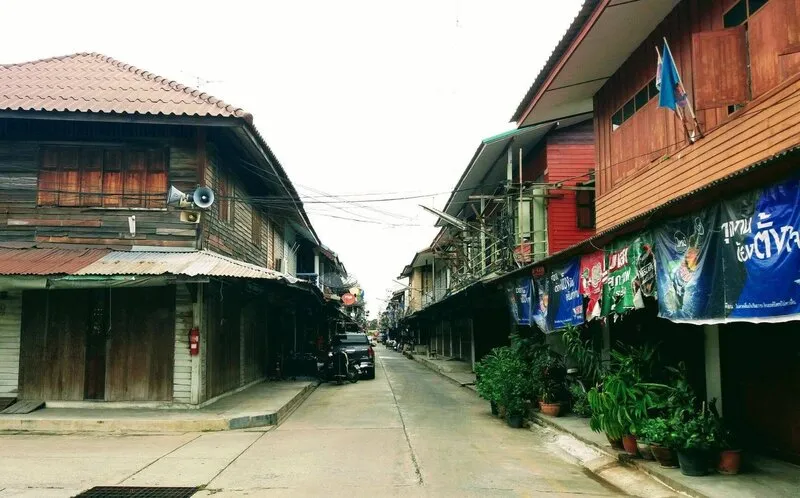
One of the most attractive features of Si Prachan Market is its row of old two-storey wooden shophouses. These buildings are typical of traditional market communities in central Thailand. The ground floor was usually used for selling goods, receiving customers, or storing merchandise, while the upper floor served as the family living space. Wooden doors, ventilation panels, windows, balconies, and rooflines create a nostalgic atmosphere that feels very different from modern shopping areas. The beauty of Si Prachan Market is not loud or heavily decorated. Its charm comes from simplicity, age, and authenticity. Travelers who enjoy photography will find many quiet details here: weathered wood, old shop signs, narrow walkways, light and shadow under the eaves, and the gentle rhythm of local life.
Si Prachan Market received the Thailand Tourism Award in 2008 as an Outstanding Cultural Tourist Attraction. This recognition reflects the cultural value of the market as a place where local heritage, old architecture, community life, food traditions, and historical memory remain visible. The market should therefore be seen as more than a food stop or a small old-town attraction. It is a living cultural space where visitors can walk through layers of local history. Each shophouse, shrine, riverside corner, and food stall contributes to the story of a community that once depended on the Tha Chin River and still carries the identity of old Suphan Buri.
Although Si Prachan Market is quieter today than it was in the past, this calmness is part of its appeal. Travelers who prefer old markets that are not overly crowded will appreciate its relaxed pace. On weekdays, visitors can enjoy a peaceful walk, observe the architecture, and take photographs without rushing. On weekends, the market becomes livelier as local vendors open food stalls and prepare traditional dishes for visitors. Both experiences have their own value. A weekday visit offers a quiet cultural atmosphere, while a weekend visit is better for tasting local food and seeing more activity in the market.
Food is an important part of the Si Prachan Market experience. On Saturdays and Sundays, local residents and vendors often sell traditional savory and sweet dishes. Popular items associated with the market include duck noodles, wide noodles in gravy, crispy noodles, old-style coffee, Thai desserts, and Chinese-influenced sweets. These foods are not only about taste; they are part of the market’s cultural memory. Eating in an old market allows travelers to experience local life through smell, flavor, sound, and atmosphere. A simple bowl of noodles or a glass of traditional coffee becomes more meaningful when enjoyed among wooden shophouses that have witnessed generations of community life.
Old-style coffee is another small but memorable detail of the market. Drinking traditional Thai coffee in a historic market is different from visiting a modern cafe. The experience includes the tables, chairs, shopfronts, conversations, and pace of the place. Many visitors take a short break during their walk to enjoy coffee, snacks, or local sweets. These small pauses are often the most memorable parts of visiting Si Prachan Market because they allow travelers to observe the everyday life of the community rather than simply pass through it.
One of the most important places within the market is Ban Chao Khun P. A. Payutto, a preserved historic house connected with Phra Brahmagunabhorn, widely known as P. A. Payutto. He is one of Thailand’s most respected Buddhist scholars and writers, recognized for his extensive works on Buddhism, ethics, education, and Thai intellectual culture. His writings include hundreds of books in Thai and English, and his influence extends beyond the local community. The house in Si Prachan Market, once connected with a cloth shop in the old market, has been preserved so that visitors can learn about his background and the community environment in which he grew up.
Inside Ban Chao Khun P. A. Payutto, old household objects and items from the past are preserved with care. These objects help visitors imagine the daily life of a market family nearly a century ago. They show how people lived, traded, studied, and interacted within a small riverside community. The house is therefore more than a preserved residence of an important person. It is also a learning space about family life, local education, community values, and the relationship between Buddhism and Thai society. Travelers interested in Thai culture, Buddhist thought, local history, or the life of respected Thai scholars should spend time here rather than treating it as a quick stop.
Another meaningful place in the market area is the Guanyin Shrine. Shrines in old market communities often reflect the cultural diversity of central Thailand, especially the presence of Thai-Chinese families in trading communities. The Guanyin Shrine represents faith, protection, compassion, and the spiritual life of the market. Visitors may stop to pay respect and observe how religious spaces are integrated into everyday community life. When visiting the shrine, travelers should dress and behave respectfully, avoid disturbing local worshippers, and remember that the area is both a cultural attraction and an active place of devotion.
The Tha Chin River remains central to the identity of Si Prachan Market. A walk toward the riverside helps visitors understand why the market developed here. In the past, the river was the main transportation route and economic artery of the community. Today, it provides cultural context and a peaceful backdrop to the old market. In some periods, visitors may be able to enjoy a boat ride or riverside views that reveal the market from a different perspective. Seeing the market from the river helps travelers understand the relationship between waterways and old settlements in central Thailand, where rivers were once as important as roads are today.
Si Prachan Market also works well as part of a northern Suphan Buri travel route. Nearby attractions include the Thai Buffalo Conservation Village, Wat Pa Lelai Worawihan, Sam Chuk 100-Year Market, Suphan Buri National Museum, and Bueng Chawak Chaloem Phrakiat. Travelers can plan a one-day cultural trip starting from Si Prachan Market, then continue to temples, museums, family-friendly attractions, or other old markets depending on their interests. This makes the market suitable for families, cultural travelers, photographers, students, and visitors who want a quieter and deeper experience of Suphan Buri.
For those interested in local history, Si Prachan Market is a useful example of how central Thai communities changed from river-based settlements to road-based towns. When roads and motor vehicles became more important, many riverside markets gradually lost their economic role. Some disappeared, some became tourist attractions, and some remained as quiet community spaces. Si Prachan Market still preserves the feeling of an old community without becoming overly commercialized. This balance is valuable because it allows visitors to see the market not only as a photo location, but as evidence of social, economic, and cultural transformation in central Thailand.
Visitors should take time to look carefully at the market. The wooden architecture, old shopfronts, narrow walkways, household details, and relationship between commercial and residential spaces all reveal how traditional markets functioned. In the past, home, shop, family, work, and community were closely connected. This is very different from modern commercial areas, where living space and shopping space are usually separated. Walking through Si Prachan Market helps travelers understand this older form of community life in a direct and visual way.
If visiting on a weekend, travelers will find the market more suitable for tasting traditional food and experiencing a livelier local atmosphere. If visiting on a weekday, the market will be quieter and better for photography, architecture, and slow cultural observation. Both options are worthwhile. Visitors who want to eat local dishes should prioritize Saturday or Sunday, while those who prefer a calm walk and more time to study the buildings may prefer a weekday visit.
Getting There is convenient from Suphan Buri city. By private car, travel north toward Si Prachan District; the distance is about 20 km and the drive usually takes around half an hour depending on traffic. Travelers using public transport can take a local songthaew or bus on the Suphan Buri – Si Prachan route and get off at Si Prachan Market. Public transport is suitable for budget travelers who want a local experience, while a private car is more convenient for those planning to visit several nearby attractions in the same day.
Si Prachan Market is suitable for many types of travelers. Families can bring children to learn about old markets and Thai community life. Elderly visitors may enjoy the familiar atmosphere of wooden houses and traditional food. Students and cultural travelers can use the market as a learning site for riverside communities, local architecture, and important Thai figures. International travelers can also gain a more nuanced understanding of Suphan Buri by visiting a place that is quieter and more rooted in local life than many mainstream tourist attractions.
When visiting Si Prachan Market, travelers should remember that this is still a community space. Some buildings and areas are connected with local homes and everyday life. Visitors should take photographs respectfully, avoid entering private spaces without permission, and keep the market clean. Buying food or products from local vendors is a practical way to support the community and help preserve the life of the old market. Respectful tourism is especially important in places like this, where the value of the destination depends on the continued presence of local people and their way of life.
Overall, Si Prachan Market is not impressive because of its size or modern facilities. Its value lies in its age, authenticity, riverside setting, wooden architecture, local food, and connection with Chao Khun P. A. Payutto. For travelers who enjoy cultural tourism, old markets, Thai wooden shophouses, local communities, and slow travel, Si Prachan Market is one of the most meaningful stops in Suphan Buri. It shows that the charm of Thai travel is not limited to famous landmarks or large attractions, but can also be found in small communities that continue to preserve memory, identity, and everyday beauty.
| Name | Si Prachan Market / Si Prachan Old Market, Ban Chao Khun |
| Location | Si Prachan Subdistrict, Si Prachan District, Suphan Buri Province, Thailand |
| Address | Si Prachan Market Area, Si Prachan Subdistrict, Si Prachan District, Suphan Buri Province |
| Highlights | Historic riverside market by the Tha Chin River, two-storey wooden shophouses, local food, Ban Chao Khun P. A. Payutto, and an old community atmosphere dating back around 100 years |
| History | A former wholesale and community market by the Tha Chin River, around 100 years old, and winner of the 2008 Thailand Tourism Award as an Outstanding Cultural Tourist Attraction |
| Name Origin | The name comes from Si Prachan, the district and local community where the market is located |
| Distinctive Features | Rows of old two-storey wooden shophouses, riverside market atmosphere, quiet community life, and traditional food that is especially active on weekends |
| Travel Information | About 20 km north of Suphan Buri city. Travelers can drive toward Si Prachan District or take a local songthaew/bus on the Suphan Buri – Si Prachan route and get off at the market |
| Current Status | Open as a cultural tourist attraction, with preserved wooden shophouses and Ban Chao Khun as an important learning site |
| Open Days | Tuesday – Sunday |
| Opening Hours | 09.00 – 17.00 |
| Fees | No admission fee |
| Facilities | Local food stalls, community shops, old market walking area, Ban Chao Khun, shrine area, and riverside surroundings near the Tha Chin River |
| Main Areas / Zones | 1. Old wooden shophouse zone 2. Traditional food and dessert zone 3. Ban Chao Khun P. A. Payutto 4. Guanyin Shrine 5. Tha Chin River area |
| Caretaker | Si Prachan Subdistrict Municipality and the Si Prachan Market community |
| Main Contact Number | 035-582220 |
| Nearby Tourist Attractions | 1. Thai Buffalo Conservation Village, about 4 km 2. Wat Pa Lelai Worawihan, about 18 km 3. Sam Chuk 100-Year Market, about 19 km 4. Suphan Buri National Museum, about 21 km 5. Bueng Chawak Chaloem Phrakiat, about 39 km |
| Nearby Restaurants | 1. Baan Suan Restaurant, about 3 km 2. Si Prachan Boat Noodle Shop, about 1 km 3. Krua Rim Thung Si Prachan, about 4 km 4. Food stalls inside Si Prachan Market, about 0 km 5. Traditional coffee stalls inside Si Prachan Market, about 0 km |
| Nearby Accommodations | 1. Songphanburi Hotel, about 21 km, Tel. 035-502555 2. Sri U-Thong Grand Hotel, about 22 km, Tel. 035-501507 3. Muaan Resort, about 19 km 4. Sab Suwarn Mansion, about 21 km 5. Country Lake View Hotel, about 24 km |
Frequently Asked Questions (FAQ)
Q: Where is Si Prachan Market located?
A: Si Prachan Market is located in Si Prachan Subdistrict, Si Prachan District, Suphan Buri Province, about 20 km north of Suphan Buri city.
Q: What is Si Prachan Market known for?
A: It is known for its old two-storey wooden shophouses, riverside market atmosphere, traditional local food, Ban Chao Khun P. A. Payutto, the Guanyin Shrine, and its 100-year-old community heritage.
Q: When is Si Prachan Market open?
A: Si Prachan Market is open from Tuesday to Sunday. Weekends are the best time for visitors who want to try local food and experience a livelier market atmosphere.
Q: Is there an admission fee for Si Prachan Market?
A: No. Visitors can walk around the old market, wooden shophouses, and community area without paying an admission fee.
Q: Why is Ban Chao Khun P. A. Payutto important?
A: Ban Chao Khun is the former home connected with Phra Brahmagunabhorn, or P. A. Payutto, one of Thailand’s most respected Buddhist scholars and writers. The house is preserved as a learning site within Si Prachan Market.
Q: Can travelers reach Si Prachan Market by public transport?
A: Yes. Travelers can take a local songthaew or bus on the Suphan Buri – Si Prachan route and get off near Si Prachan Market.
Q: What is the best time to visit Si Prachan Market?
A: Morning to afternoon is suitable for walking, photography, and visiting Ban Chao Khun. Saturday and Sunday are best for traditional food and a more active local atmosphere.
Q: What nearby attractions can be visited with Si Prachan Market?
A: Travelers can combine the market with Thai Buffalo Conservation Village, Wat Pa Lelai Worawihan, Sam Chuk 100-Year Market, Suphan Buri National Museum, and Bueng Chawak Chaloem Phrakiat.
 Category: ●Suburban Living
 Group: ●Local Market
Last Update : 4 MonthAgo
 Last Update : 4 MonthAgo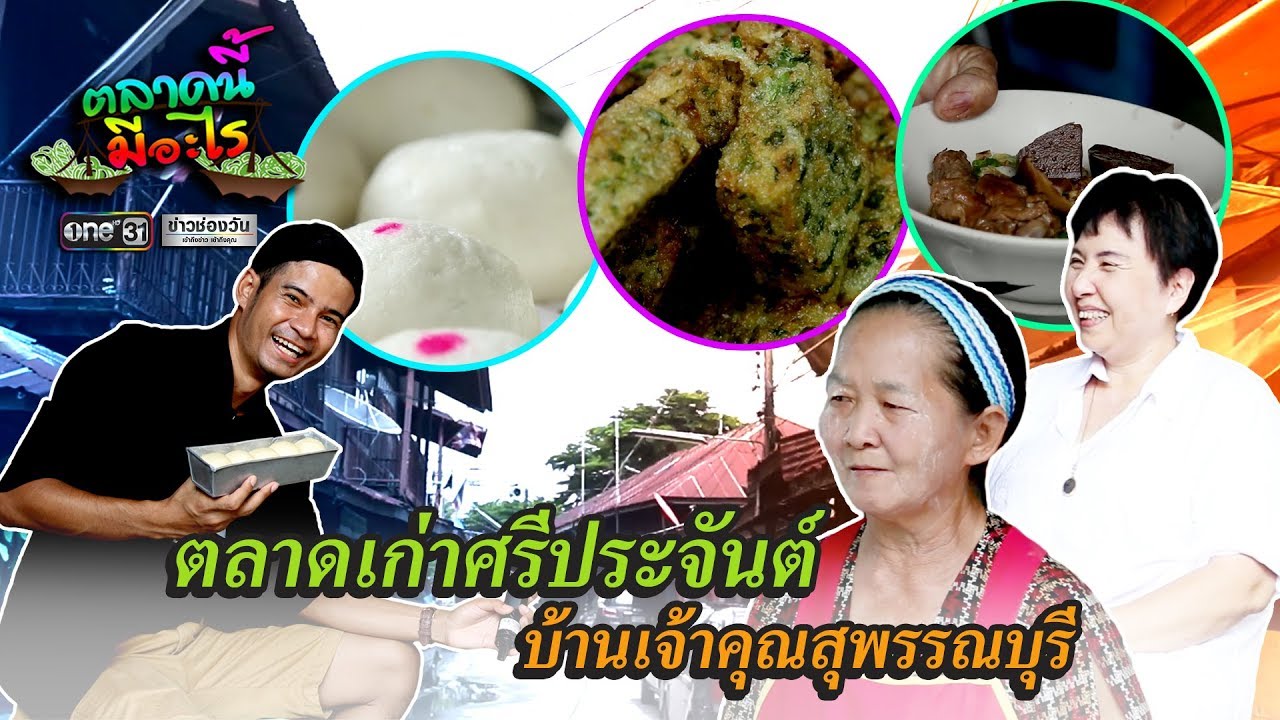
 Click to Access the Navigation Map GPS
Si Prachan Market (Ban Chao Khun) Map
Recommend

 Art, Culture and Heritage
 Historical Sites and Monuments(2)
 Landmarks and Memorials(4)
 Art, Craft Centres, Tradition(2)
 Museums(5)
 Educational Places
 Educational Gardens, Farm(4)
 Training Center(2)
 Places of Worship
 Temple(36)
 Other Sacred Sites(4)
 Village, Community(6)
Local Market(7)
Village, Community(6)
Local Market(7)
 Floating Market(1)
 Nature and Wildlife
 National Parks and Marine Reserves(4)
 Mountain (Doi)(2)
 Dam, Reservoir, Lake(3)
 Caves(1)
 Bays and Beaches(1)
 Entertainment and Agricultural
 Farms, Parks and Ecotourism(6)
 Theater(1)
 Travel Articles, Recipes
 Travel Review, Food Review(1)


