
lovethailand home >Central Travel Attractions >Suphan Buri Travel Attractions >Sam Chuk >Sam Chuk > 100 Years Old Sam Chuk Market
TL;DR: 100 Years Old Sam Chuk Market is located at Sam Chuk Subdistrict, Sam Chuk District, Suphan Buri Province, Thailand, open Daily, hours 08.00 – 17.00.
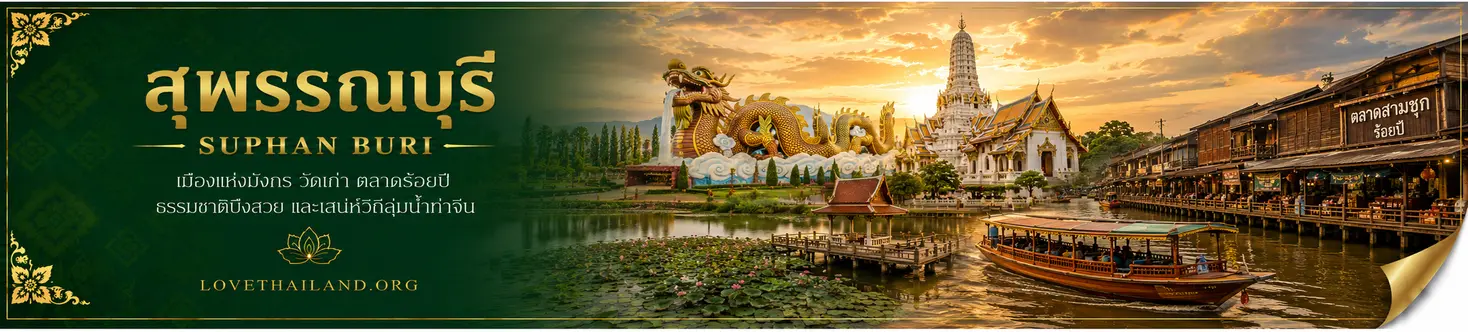
100 Years Old Sam Chuk Market
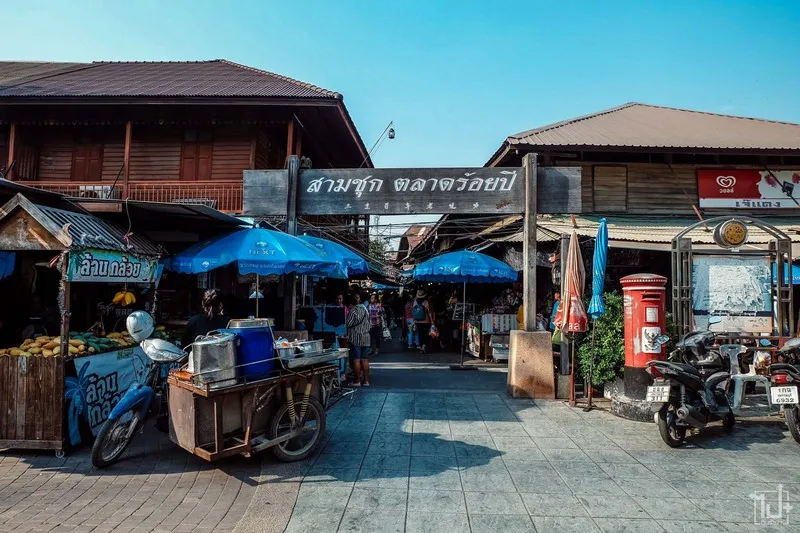
Open Days: Daily
Opening Hours: 08.00 – 17.00
Sam Chuk Market, also known as Sam Chuk 100-Year Riverside Market, is one of the most famous old markets in Suphan Buri Province and one of the best-preserved riverside trading communities in central Thailand. Located by the Tha Chin River near Sam Chuk District Office and accessible from Highway 340, the market preserves the atmosphere of an old Thai-Chinese community through its wooden shophouses, traditional food stalls, old photo studio, herbal medicine shops, riverside coffee houses, local museum, and everyday market culture. For international travelers who want to understand Suphan Buri beyond major temples and modern attractions, Sam Chuk Market offers a rich cultural experience that combines history, architecture, food, community life, and river heritage in one walkable area.
Sam Chuk Market is located in Sam Chuk District, Suphan Buri Province, beside the Tha Chin River. This location is central to the identity of the market. Before roads and cars became the main forms of transport, the river was the lifeline of many communities in central Thailand. Boats carried people, rice, agricultural products, household goods, food, and local news between villages and towns. Riverside markets developed naturally because they were meeting points for traders, farmers, boatmen, families, and travelers. Sam Chuk Market is one of the clearest surviving examples of this river-based market culture. Even today, visitors can still feel how closely the market, the river, and the community are connected.
The importance of Sam Chuk Market is not only its age of more than 100 years. Its deeper value lies in the fact that many elements of the old community still remain visible and active. Wooden houses, shophouses, food stalls, small lanes, old shops, shrines, the local museum, coffee shops, and riverside areas still work together as part of a living market environment. Visitors do not simply walk through a row of souvenir shops. They encounter traces of old trade, Thai-Chinese family businesses, riverside lifestyles, and the memory of people who used the market as part of their daily lives. Old signs, wooden doors, medicine cabinets, weighing scales, coffee-roasting equipment, and historic photographs all help tell the story of the market.
Sam Chuk Market is an old Thai-Chinese community that has preserved its traditional market character with remarkable clarity. In the past, many Chinese migrants settled in central Thai towns because river towns were important commercial locations. Chinese families played significant roles in trade, shopkeeping, food businesses, transport networks, herbal medicine, and household goods. Over time, these Chinese trading families blended with local Thai communities, creating a distinctive Thai-Chinese market culture. At Sam Chuk, this heritage can still be seen in old grocery stores, food shops, herbal medicine shops, traditional sweets, family-run businesses, and religious spaces that reflect both Thai and Chinese cultural influences.
Walking through Sam Chuk Market is like reading local history through wooden architecture. Many buildings inside the market are old wooden houses and shophouses arranged along narrow lanes and near the river. The ground floor was traditionally used for selling goods, receiving customers, and storing products, while the upper floor served as a living space for the family. Wooden eaves, ventilation panels, balconies, decorative woodwork, and old doors reveal the craftsmanship and lifestyle of an earlier period. The overall atmosphere is not artificial or overly polished. It is attractive because it grew from real community life, not from a recreated tourist setting.
One of the most distinctive qualities of Sam Chuk Market is that it functions as a living museum. The market does not preserve only old buildings as visual scenery. It also preserves everyday practices, food traditions, old family shops, local stories, and the rhythm of a working market. Visitors can see shops that have been operating for generations, food businesses that maintain family recipes, herbal medicine shops that retain old cabinets and tools, and coffee shops where traditional equipment is still part of the atmosphere. This kind of conservation allows travelers to experience the past through the present. The market feels alive because local people, vendors, and community members continue to give meaning to the place.
The most important historical building in Sam Chuk Market is Khun Chamnong Chinarak House Museum, located inside the market around Soi 2. This 3-storey wooden building once belonged to Khun Chamnong Chinarak, a former tax officer and an important figure connected with the community. The building is notable for its traditional wooden form, decorative woodwork, and architectural details that reflect the status and taste of its owner in that period. Later, the owner’s descendants allowed the Sam Chuk Market development committee to preserve and improve the building as a local museum. Today, it serves as a place where visitors can learn about the history, people, and way of life of Sam Chuk in earlier times.
Inside Khun Chamnong Chinarak House Museum, visitors can see old photographs, household objects, documents, tools, and community stories. These displays help explain the market beyond its food and shopping. They show how people dressed, traded, traveled, lived, celebrated, and interacted in the old community. The museum is therefore one of the best places to start a visit to Sam Chuk Market. By understanding the people and history behind the market, visitors can appreciate the wooden houses, old shops, and riverside lanes with greater depth. The museum turns a market walk into a cultural learning experience.
The old photo studio is another memorable attraction at Sam Chuk Market. It gives visitors a glimpse into a time when photography was a special event in family and community life. The shop preserves an old atmosphere and displays antique cameras, some of which are more than 100 years old. At certain times, visitors may find retro-style photo services or displays that evoke the early age of photography in Thailand. The value of the photo studio is cultural as well as visual. It reminds visitors that photographs were once precious records of families, weddings, ceremonies, personal identity, and social status. In a market full of old photographs and memories, the studio becomes a powerful bridge between past and present.
Traditional herbal medicine shops and old pharmacies are also important parts of the Sam Chuk experience. Before modern hospitals and pharmacies became widely accessible, Thai and Chinese herbal medicine shops played essential roles in community health. Medicine cabinets, herbal smells, weighing tools, old labels, and traditional remedies reveal the knowledge systems that local people once relied on. Some shops have adapted to modern times, but their atmosphere still reflects the medical and commercial history of old market communities. For travelers interested in local wisdom, these shops show how health, commerce, family business, and cultural knowledge were once closely connected.
Old-style coffee shops by the river are among the most enjoyable stops in the market. Many visitors like to sit down for traditional Thai coffee in a wooden shophouse atmosphere, especially where old roasting equipment or classic preparation tools are still visible. Drinking coffee at Sam Chuk is not simply a refreshment break. It is part of the slow market experience. The tables, chairs, conversations, smell of coffee, river breeze, and old wooden surroundings create a mood that modern cafes cannot easily reproduce. Travelers who want to understand the market more deeply should allow time to sit, observe, and enjoy this slower rhythm.
Food and traditional sweets are major reasons why visitors return to Sam Chuk Market. The market offers a wide variety of local dishes, noodles, wonton noodles, roasted pork, meatballs, Thai desserts, traditional snacks, old-style coffee, souvenirs, and local products. The appeal of food here comes from both variety and memory. Many shops have sold food for many years, and some are known for family recipes or long-standing customer loyalty. Food is therefore not just a tourist product. It is part of the market’s identity. On weekends and public holidays, the market becomes especially lively as visitors queue for popular dishes, buy snacks, and enjoy the energetic atmosphere of the old lanes.
The riverside setting adds another layer of charm to Sam Chuk Market. Visitors can walk toward the Tha Chin River to enjoy the view and understand why the market grew in this location. In the past, boats, traders, and riverside households would have been part of the daily scene. Today, the river functions as a cultural backdrop that gives the market a strong sense of place. Seeing the market from the riverside helps visitors understand the relationship between water transport and the growth of central Thai towns. A visit to Sam Chuk is therefore more complete when it includes time near the river, not only in the shop lanes.
Sam Chuk Market is also an important example of community-based conservation. Many old markets in Thailand declined when transport shifted from rivers to roads and modern commerce changed local economies. Some old markets disappeared, while others lost their role in daily life. Sam Chuk found a way to adapt by using cultural heritage as a foundation for renewal. The community helped preserve old buildings, improve walking routes, create a local museum, and reshape the market as a cultural tourism destination. This success makes Sam Chuk an important case study of how an old market can survive through community effort rather than outside development alone.
Another reason Sam Chuk Market is appealing is that it suits many types of visitors. Families can bring children to learn about old market life. Elderly visitors often enjoy the nostalgic atmosphere of wooden houses, traditional food, and familiar shop styles. Students and cultural travelers can use the market as a learning site for riverside communities, Thai-Chinese heritage, local architecture, and community conservation. International travelers can experience a clear and accessible example of an old Thai market without traveling too far from Bangkok or central Suphan Buri.
Accessibility is another practical point to consider. Sam Chuk Market has parking areas and some signs for facilities such as parking and toilets. Elderly visitors and travelers with disabilities may use accessible toilets arranged near Sam Chuk District Office and the nearby parking area. The main market area is generally walkable and does not have major level changes throughout the whole route. However, some individual shops have steps, narrow entrances, or raised floors. Wheelchair users may therefore need assistance when entering certain shops. This information is useful for families traveling with elderly relatives or visitors who need to plan accessibility in advance.
For trip planning, visitors should choose the time of day according to the experience they want. Those who prefer a quieter visit should come in the morning or on weekdays. Those who want a lively atmosphere, more food choices, and a fuller market experience should visit on Saturday, Sunday, or public holidays. Late morning to early afternoon is ideal for walking, eating, photography, and visiting the museum. Some shops begin to close toward the evening, so visitors should allow at least 2 – 3 hours to explore the market, visit the museum, sit at a coffee shop, taste local food, and enjoy the riverside area.
Getting There is convenient by private car. From Bangkok, travelers can take the Bang Bua Thong route toward Suphan Buri on Highway 340 and turn into Sam Chuk District. The market is located by the Tha Chin River near Sam Chuk District Office. From Suphan Buri city, follow Highway 340 north toward Sam Chuk District. The distance is about 30 km, and the drive usually takes around 30 – 45 minutes depending on traffic. Travelers without a private car can take buses or vans on the Suphan Buri – Sam Chuk route and continue by local transport to the market area.
Sam Chuk Market is suitable for a one-day trip from Bangkok or as part of a northern Suphan Buri route. Travelers can start at the market in the morning, visit Khun Chamnong Chinarak House Museum, stop at an old-style coffee shop, enjoy lunch and traditional snacks, and then continue to nearby attractions such as Bueng Chawak Chaloem Phrakiat, Si Prachan Market, Thai Buffalo Conservation Village, Wat Pa Lelai Worawihan, or Suphan Buri National Museum. This route works well for families, couples, groups of friends, photographers, and travelers interested in local history.
For visitors looking for souvenirs, Sam Chuk Market offers many local food products and traditional items, including Thai sweets, old-style snacks, preserved food, herbal products, toys, local drinks, and handmade souvenirs. Buying directly from market vendors supports the local economy and helps old shops continue operating. Visitors should take time to talk politely with shop owners because many shops have interesting histories. In many cases, the stories behind the shops are as valuable as the products themselves.
Visitors should be respectful because Sam Chuk Market is still a real community and trading space. Some buildings are privately owned, and some areas are connected to homes or family businesses. Travelers should take photographs politely, avoid entering private areas without permission, avoid touching antique items or old equipment without approval, and help keep the market clean. Responsible tourism helps preserve Sam Chuk as a living cultural destination for both the local community and future visitors.
Overall, Sam Chuk Market or Sam Chuk 100-Year Riverside Market brings together many layers of cultural value: Thai-Chinese community history, old wooden architecture, riverside trading culture, traditional food, a local museum, community memory, and grassroots conservation. It is not simply a place for shopping. It is a place that helps visitors understand how old markets once served as the heart of central Thai communities. For travelers who want to experience Suphan Buri through its cultural roots, Sam Chuk Market deserves time, attention, and a slower pace. Every lane, wooden house, food stall, and riverside corner still has a story to tell.
| Name | Sam Chuk Market / Sam Chuk 100-Year Riverside Market |
| Location | Sam Chuk Subdistrict, Sam Chuk District, Suphan Buri Province, Thailand |
| Address | By the Tha Chin River, near Sam Chuk District Office, Highway 340, Sam Chuk District, Suphan Buri Province |
| Highlights | Old riverside market by the Tha Chin River, traditional wooden houses, Thai-Chinese community, Khun Chamnong Chinarak House Museum, old photo studio, herbal medicine shops, local food, traditional sweets, and riverside old-style coffee |
| History | A riverside trading community more than 100 years old, rooted in Thai-Chinese market culture and preserved as one of Suphan Buri’s most important cultural tourist attractions |
| Name Origin | The name Sam Chuk comes from the district where the market is located, while 100-Year Riverside Market refers to its age and riverside setting by the Tha Chin River |
| Distinctive Features | Old wooden architecture, riverside lanes, traditional shops, community museum, local food, and a living-museum atmosphere that preserves the original market way of life |
| Travel Information | From Bangkok, use Highway 340 via Bang Bua Thong toward Suphan Buri and turn into Sam Chuk District. From Suphan Buri city, drive north on Highway 340 for about 30 km, taking around 30 – 45 minutes |
| Current Status | Open as a cultural tourist attraction and active community market with shops, restaurants, museum areas, and year-round tourism activity |
| Open Days | Daily |
| Opening Hours | 08.00 – 17.00 |
| Fees | No Admission Fee |
| Facilities | Parking area, ramps in some areas, signs at some points, restaurants, souvenir shops, and accessible toilets near Sam Chuk District Office and nearby parking area |
| Main Areas / Zones | 1. Old Market And Wooden Shophouse Zone 2. Khun Chamnong Chinarak House Museum 3. Old Photo Studio 4. Herbal Medicine And Traditional Shop Zone 5. Local Food, Sweets And Old-Style Coffee Zone 6. Tha Chin River Riverside Area |
| Caretaker | Sam Chuk Subdistrict Municipality, Sam Chuk Market Development Committee, and the Sam Chuk Market community |
| Main Contact Number | Sam Chuk Market Tel. 035-571571 / Sam Chuk Subdistrict Municipality Tel. 035-571067 |
| Official Website / Official Page | Facebook Page: Sam Chuk 100-Year Market |
| Nearby Tourist Attractions | 1. Bueng Chawak Chaloem Phrakiat, about 16 km 2. Si Prachan Market, about 19 km 3. Thai Buffalo Conservation Village, about 23 km 4. Wat Pa Lelai Worawihan, about 31 km 5. Suphan Buri National Museum, about 33 km |
| Nearby Restaurants | 1. Jek Ao Wonton Noodles, about 0 km, Tel. 086-3859385 2. Tee Moo Ob Sam Chuk Market, about 0 km 3. Issara Big Meatball, about 0 km 4. Chuang Heng Salted Egg Pastry, 100-Year Market, about 0 km 5. Tha Ruea Song Coffee Shop, about 0 km 6. Kung Pen Jae Noei Sam Chuk, about 5 km, Tel. 035-504273, 035-571661 |
| Nearby Accommodations | 1. Phanphisa Resort, about 3 km 2. Nam Ing Resort Cafe & Restaurant, about 3 km 3. Klin Din Ai Tawan Resort Sam Chuk, about 3 km 4. Thararin Villa Suphan Buri, about 7 km 5. Baan Amorn Resort, about 11 km 6. Baan Suan Resort Sam Chuk, about 3 km, Tel. 089-4825751 |
Frequently Asked Questions (FAQ)
Q: Where is Sam Chuk Market located?
A: Sam Chuk Market is located in Sam Chuk District, Suphan Buri Province, beside the Tha Chin River near Sam Chuk District Office and accessible from Highway 340.
Q: What are the opening days and hours of Sam Chuk Market?
A: Sam Chuk Market opens daily from 08.00 to 17.00. Some shops may open earlier in the morning or close at slightly different times.
Q: Is there an admission fee for Sam Chuk Market?
A: No. Visitors can walk around the market, museum area, old shops, and riverside zone without paying an admission fee.
Q: What are the main highlights of Sam Chuk Market?
A: Highlights include old wooden houses, Khun Chamnong Chinarak House Museum, an old photo studio, herbal medicine shops, traditional coffee, local food, old sweets, and the Tha Chin riverside atmosphere.
Q: Why is Khun Chamnong Chinarak House Museum important?
A: It is a 3-storey wooden house that once belonged to Khun Chamnong Chinarak, a former tax officer. The house now displays old photographs, objects, and stories about the past way of life in Sam Chuk.
Q: Is Sam Chuk Market accessible for elderly visitors or wheelchair users?
A: The main market area is generally walkable and has some ramps, signs, parking, and accessible toilets nearby. However, some individual shops have raised floors or narrow entrances, so wheelchair users may need assistance in certain places.
Q: What is the best time to visit Sam Chuk Market?
A: Morning to early afternoon is the best time for walking, visiting the museum, tasting food, and taking photographs. Weekends and public holidays offer the liveliest market atmosphere.
Q: What nearby attractions can be visited with Sam Chuk Market?
A: Travelers can combine Sam Chuk Market with Bueng Chawak Chaloem Phrakiat, Si Prachan Market, Thai Buffalo Conservation Village, Wat Pa Lelai Worawihan, and Suphan Buri National Museum.
Tel : 035504498, 035571571
 Tel : 035504498, 035571571
 Category: ●Suburban Living
 Group: ●Local Market
Last Update : 3 MonthAgo
 Last Update : 3 MonthAgo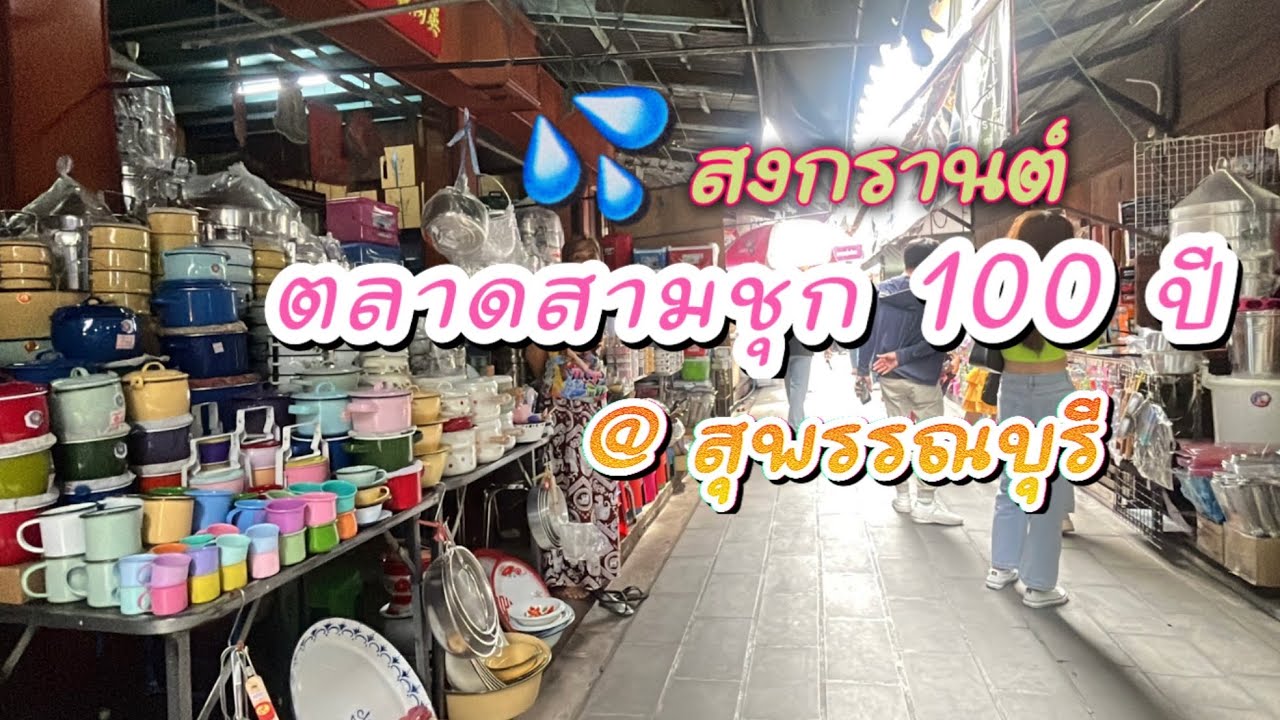
 Click to Access the Navigation Map GPS
100 Years Old Sam Chuk Market Map
Recommend

 Art, Culture and Heritage
 Historical Sites and Monuments(2)
 Landmarks and Memorials(4)
 Art, Craft Centres, Tradition(2)
 Museums(5)
 Educational Places
 Educational Gardens, Farm(4)
 Training Center(2)
 Places of Worship
 Temple(36)
 Other Sacred Sites(4)
 Village, Community(6)
Local Market(7)
Village, Community(6)
Local Market(7)
 Floating Market(1)
 Nature and Wildlife
 National Parks and Marine Reserves(4)
 Mountain (Doi)(2)
 Dam, Reservoir, Lake(3)
 Caves(1)
 Bays and Beaches(1)
 Entertainment and Agricultural
 Farms, Parks and Ecotourism(6)
 Theater(1)


