
lovethailand home >Central Travel Attractions >Sing Buri Travel Attractions >Muang Sing Buri >Bang Man > Wat Sao Thong Thong
TL;DR: Wat Sao Thong Thong is located at Bang Man Subdistrict, Mueang Sing Buri District, Sing Buri Province, open Daily, hours Daytime Visits Are Recommended.
Wat Sao Thong Thong
Open Days: Daily
Opening Hours: Daytime Visits Are Recommended
Wat Sao Thong Thong in Sing Buri Province is an important community temple in Bang Man Subdistrict, Mueang Sing Buri District. It is a spiritual center for the people of Bang Man and nearby communities, and it is especially meaningful because of its local history, peaceful temple atmosphere, old rubber trees, and the life-size statue of Luang Pho Maen, also known as Phra Khru Phiphit Suttakan. Unlike temples that are known only for large monuments, Wat Sao Thong Thong is valuable because it preserves layers of community memory, Buddhist faith, natural shade, and local identity in one place.
The temple was formerly known as Wat Bang Lao. Local history says that the old community in this area was once associated with Lao people from Vientiane who settled in the village. The village was first called Ban Lao, and over time the name changed in local pronunciation to Ban Bang Lao. The temple was therefore known by the village name. This history is important because it shows how temple names often preserve the movement of people, settlement memory, and cultural identity. Wat Sao Thong Thong is not simply a temple name; it is a record of the community’s older roots.
The present name Wat Sao Thong Thong is connected with a meaningful local story from the reign of King Rama V. According to local tradition, when King Chulalongkorn traveled by royal boat along the Chao Phraya River, people along the river decorated their communities with flags and set up offerings to welcome the royal procession. At that time, Wat Bang Lao raised a tall national flagpole, beautifully gilded by the villagers. When the royal procession passed and the king saw the temple, the story says that the temple was auspiciously renamed Wat Sao Thong Thong, meaning the temple of the golden flagpole. This story gives the temple a name filled with pride and local memory.
Wat Sao Thong Thong is located in Bang Man Subdistrict, not far from the Bang Man Subdistrict Administrative Organization, about 2 km away. This makes the temple easily accessible for local people and visitors. More importantly, the location shows the temple’s role as a real community center. People come here for Buddhist holy days, merit-making, ordination ceremonies, Kathin, Pha Pa, funerals, community gatherings, and personal worship. It is a living temple that continues to serve the daily religious life of Bang Man.
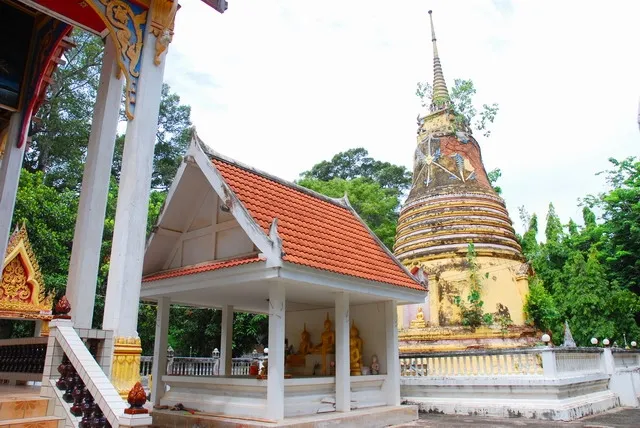
Local history suggests that the temple was established around the early Rattanakosin period. Some local accounts also mention old stupa remains behind the ordination hall, which may indicate earlier historical layers. Although the temple is not presented as a major archaeological site, its oral history, former name, connection with King Rama V, and old religious remains give it cultural depth. Visitors who enjoy local history should look beyond the surface and understand the temple as part of the long development of Sing Buri’s riverside communities.
One of the most memorable features of Wat Sao Thong Thong is its large number of old rubber trees, many of which are over 100 years old. These trees create a cool, shaded, and peaceful atmosphere throughout the temple grounds. In Thai temple culture, old trees are more than natural decoration. They are silent witnesses to generations of worshippers, monks, ceremonies, and community life. Walking under the shade of these old trees gives visitors a strong sense of time, calmness, and continuity.
The old rubber trees also make the temple important as a community green space. Many Thai temples preserve large trees because temple land is often protected from ordinary development. These trees provide shade, reduce heat, support birds and small animals, and create a peaceful environment for worship and meditation. At Wat Sao Thong Thong, the trees are part of the temple’s identity. Visitors should respect them by not damaging roots, carving trunks, leaving rubbish, or disturbing the natural setting.
Another important sacred feature is the life-size statue of Luang Pho Maen, Phra Khru Phiphit Suttakan, a former respected monk of Wat Sao Thong Thong. His statue allows devotees to pay respect and remember the teacher who helped shape the temple’s spiritual life. In Thai Buddhist culture, respected former abbots often remain central to a temple’s identity even after their passing. Their teachings, discipline, kindness, and service continue to live in the memory of the community.
Local temple history records several former abbots who cared for Wat Sao Thong Thong across generations, including names such as Luang Pho Nut, Luang Pho Chom, Luang Pho Sin, Luang Pho Ruen, Luang Pho Dongman, Luang Pho Ho, Luang Pho Uam, and Luang Pho Maen. This continuity shows that the temple has not been an abandoned place. It has been guided, maintained, and developed by monastic leadership across time. The statue of Luang Pho Maen therefore represents not only one monk, but also the broader memory of the temple’s monastic lineage.
The current abbot publicly associated with Wat Sao Thong Thong is Phra Khru Thaworn Thammaphon, or Bunlue Thawaro. The temple is also recognized as the 9th provincial Dhamma practice center of Sing Buri. This role gives the temple additional importance beyond local worship. It means the temple is also a place for Dhamma learning, mental training, meditation, and Buddhist practice. The natural shade of the old trees makes the temple especially suitable for quiet reflection.
Visitors should understand Wat Sao Thong Thong as both a community temple and a Dhamma-practice place. It is not mainly an entertainment-oriented attraction. Its atmosphere is better suited for paying respect, walking quietly, learning local history, appreciating the old trees, and reflecting on the continuity of faith. The temple rewards visitors who slow down and observe carefully rather than those who rush through only for photographs.
Main areas of interest include the ordination hall, the area for paying respect to Luang Pho Maen, the old rubber tree grove, the sermon hall, the Dhamma practice area, monks’ residences, and the temple courtyard used for annual ceremonies. Each area reflects a different function: worship, teacher remembrance, natural calm, community activity, monastic life, and Buddhist practice. This combination gives Wat Sao Thong Thong a quiet but substantial cultural identity.
For travelers interested in community Buddhism, Wat Sao Thong Thong is a useful example of how Thai temples remain closely connected with local people. Elderly villagers come to make merit, families bring children to learn temple manners, monks provide spiritual guidance, and the temple serves as a gathering place during important events. Such temples may not always appear in mainstream travel lists, but they are essential to understanding real Buddhist life in central Thailand.
For visitors interested in local history, the temple opens several meaningful themes: the settlement of Lao people from Vientiane, the transformation of Ban Lao into Ban Bang Lao, the renaming of the temple during the reign of King Rama V, the continuity of former abbots, and the preservation of old trees. These themes show that Sing Buri’s heritage is not limited to famous battle sites or major temples. It also lives in village temples and local memory.
Photography at Wat Sao Thong Thong should be done respectfully. Good subjects include the old rubber trees, the ordination hall, the statue of Luang Pho Maen, the temple courtyard, and the shaded atmosphere of Bang Man community life. Visitors should not photograph monks or worshippers without permission and should avoid inappropriate poses in front of sacred objects. Public captions should present the temple as a place of faith and local heritage, not merely as a scenic backdrop.
Getting There is convenient by private car. The temple is about 2 km from the Bang Man Subdistrict Administrative Organization. From Mueang Sing Buri, travelers can search for Wat Sao Thong Thong, Bang Man Subdistrict, Mueang Sing Buri District, Sing Buri Province. A private car or local hired vehicle is recommended, especially for visitors who want to combine the temple with nearby attractions such as Sing Buri City Pillar Shrine, Wat Sawang Arom, Wat Phra Non Chakkrasi Worawihan, Wat Na Phra That, and Wat Amphawan.
The best time to visit is during the morning or afternoon, when the weather is more comfortable and the shade of the old trees can be enjoyed fully. Weekdays are suitable for a quiet visit, while Buddhist holy days or temple events offer a chance to see the community’s religious life more actively. Visitors who want to join a Dhamma activity or temple ceremony should contact the temple in advance.
Proper temple etiquette is important. Visitors should dress modestly, covering shoulders and knees. Shoes should be removed before entering sacred buildings. Voices should be kept low. Do not enter monks’ private areas without permission. Do not touch sacred statues unnecessarily. Do not litter, especially around the old rubber trees. Respecting both the temple and its natural environment is part of respecting the sacred space.
Overall, Wat Sao Thong Thong is one of the meaningful community temples of Bang Man Subdistrict. Its value lies in its former identity as Wat Bang Lao, its royal-era name story, its old rubber trees, the life-size statue of Luang Pho Maen, and its present role under Phra Khru Thaworn Thammaphon or Bunlue Thawaro. For foreign travelers seeking a quieter and more authentic view of Sing Buri, this temple offers a sincere experience of local faith, nature, and community history.
| Name | Wat Sao Thong Thong |
| Former Name / Local Name | Wat Bang Lao |
| Location | Bang Man Subdistrict, Mueang Sing Buri District, Sing Buri Province |
| Address | Moo 5, Ban Bang Lao, Bang Man Subdistrict, Mueang Sing Buri District, Sing Buri 16000, Thailand |
| Highlights | Hundreds of old rubber trees, many over 100 years old; the life-size statue of Luang Pho Maen, Phra Khru Phiphit Suttakan; the local story of the temple’s renaming during the reign of King Rama V; and its role as a spiritual center of Bang Man |
| History | Formerly known as Wat Bang Lao. The temple is believed to date from the early Rattanakosin period. Local history says it received the name Wat Sao Thong Thong after King Rama V saw the gilded flagpole when traveling by royal boat along the Chao Phraya River |
| Distinctive Features | An old community temple in Bang Man with a shaded natural atmosphere, local historical memory, teacher reverence, and recognition as a provincial Dhamma practice center |
| Main Areas / Zones | 1. Ordination Hall 2. Area For Paying Respect To Luang Pho Maen, Phra Khru Phiphit Suttakan 3. Old Rubber Tree Grove 4. Sermon Hall And Community Activity Area 5. Dhamma Practice Area 6. Monks’ Residences And Monastic Area 7. Temple Courtyard And Annual Ceremony Area |
| Travel Information | The temple is about 2 km from the Bang Man Subdistrict Administrative Organization. From Mueang Sing Buri, search for Wat Sao Thong Thong, Bang Man Subdistrict, Mueang Sing Buri District, Sing Buri Province |
| Current Status | Open as a local Buddhist temple and recognized as the 9th provincial Dhamma practice center of Sing Buri |
| Open Days | Daily |
| Recommended Visiting Time | Daytime, especially morning to afternoon |
| Fees | No admission fee; visitors may make merit according to personal faith |
| Abbot / Caretaker | Phra Khru Thaworn Thammaphon, also known as Bunlue Thawaro, Abbot of Wat Sao Thong Thong |
| Main Contact Number | 036-521-055 |
| Official Website / Official Page | Local Website: Bang Man Subdistrict Administrative Organization Public Contact Information: YellowPages |
| Nearby Tourist Attractions | 1. Bang Man Subdistrict Administrative Organization, about 2 km 2. Sing Buri City Pillar Shrine, about 5 km 3. Wat Sawang Arom And Nang Yai Museum, about 6 km 4. Wat Phra Non Chakkrasi Worawihan, about 7 km 5. Wat Na Phra That, about 8 km 6. Wat Amphawan, about 9 km |
| Nearby Restaurants | 1. Kesara Bakery Sing Buri, about 5 km, Tel. 095-639-9779 2. Lueat Mu Hia Lek, about 5 km, Tel. 083-963-6577, 081-293-5861 3. Pad Thai Bang Mon, about 6 km, Tel. 062-329-3531 4. Kuai Tiao Ruea Soda (Chama Kala), about 7 km, Tel. 097-951-9326 5. Khwai Art Sing Buri, about 7 km |
| Nearby Accommodations | 1. Chaisaeng Villa Hotel, about 5 km 2. Baanbudsarin Apartment, about 5 km 3. Golden Dragon Resort, about 6 km 4. Central Park Mansion, about 6 km 5. Heyday Singburi Hotel, about 7 km |
Frequently Asked Questions (FAQ)
Q: Where is Wat Sao Thong Thong located?
A: Wat Sao Thong Thong is located in Bang Man Subdistrict, Mueang Sing Buri District, Sing Buri Province, about 2 km from the Bang Man Subdistrict Administrative Organization.
Q: What was the former name of Wat Sao Thong Thong?
A: The temple was formerly known as Wat Bang Lao, after the old Ban Bang Lao community in Bang Man Subdistrict.
Q: Why is the temple called Wat Sao Thong Thong?
A: Local history says that during the reign of King Rama V, the temple raised a tall gilded flagpole to welcome the royal procession traveling along the Chao Phraya River, and the temple was later known as Wat Sao Thong Thong.
Q: What is Wat Sao Thong Thong known for?
A: The temple is known for its many old rubber trees, the life-size statue of Luang Pho Maen, Phra Khru Phiphit Suttakan, and its role as a spiritual center of the Bang Man community.
Q: Who is the abbot of Wat Sao Thong Thong?
A: The abbot of Wat Sao Thong Thong is Phra Khru Thaworn Thammaphon, also known as Bunlue Thawaro.
Q: Who was Luang Pho Maen?
A: Luang Pho Maen, or Phra Khru Phiphit Suttakan, was a respected former monk of Wat Sao Thong Thong. A life-size statue of him is enshrined at the temple for devotees to pay respect.
Q: Is there an admission fee for Wat Sao Thong Thong?
A: No. There is no admission fee. Visitors may make merit according to personal faith.
Q: What nearby attractions can be visited with Wat Sao Thong Thong?
A: Nearby attractions include Sing Buri City Pillar Shrine, Wat Sawang Arom and Nang Yai Museum, Wat Phra Non Chakkrasi Worawihan, Wat Na Phra That, and Wat Amphawan.
 Category: ●Places of Worship
 Group: ●Temple
Last Update : 4 MonthAgo
 Last Update : 4 MonthAgo
 Click to Access the Navigation Map GPS
 Art, Culture and Heritage
 Historical Sites and Monuments(4)
 Landmarks and Memorials(3)
 Art, Craft Centres, Tradition(3)
 Museums(1)
 Educational Places
 Library(1)
Temple(42)
Library(1)
Temple(42)
 Church(1)
 Other Sacred Sites(2)
 Research and Development
 Royal Project(3)
 Suburban Living
 Village, Community(1)
 Local Market(1)
 Nature and Wildlife
 National Parks and Marine Reserves(1)
 River, Canal(7)
 Bays and Beaches(1)
 Other natural attractions(2)
 Entertainment and Agricultural
 Animal camps and shows(1)
 Farms, Parks and Ecotourism(1)


