
lovethailand home >Central Travel Attractions >Sing Buri Travel Attractions >Phrom Buri >Ban Mo > Flying Foxes
TL;DR: Flying Foxes, Sing Buri attractions : Nature and Wildlife, Other natural attractions.
Flying Foxes
Open Days: Wat Kao Chang is a temple and natural flying fox viewing area; contact Wat Kao Chang or Ban Mor Subdistrict Administrative Organization before visiting or requesting use of the area
Opening Hours: Daytime to early evening visits are recommended, with the evening period being the best time to see the flying foxes leave the trees to feed
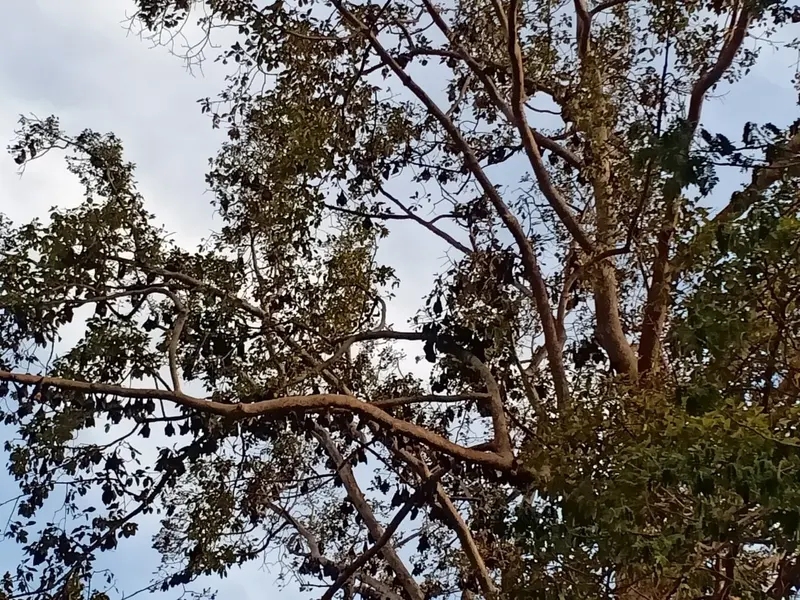
Flying Foxes at Wat Kao Chang in Sing Buri Province are one of the most unusual natural sights in Ban Mor Subdistrict, Phrom Buri District. Inside Wat Kao Chang, a large number of flying foxes live among the tall rubber trees in the temple grounds. During the daytime, they hang upside down from the branches. As evening approaches, the colony begins to stir and gradually flies out to search for food, creating a mysterious and memorable scene for visitors.
Wat Kao Chang is a local Buddhist temple in Ban Mor Subdistrict, Phrom Buri District, Sing Buri Province. The temple has long been part of the community landscape. It is not only a place of worship but also a shaded natural area where large trees provide shelter for wildlife. The presence of flying foxes gives the temple a special identity, connecting religion, community life, trees, and wildlife in one setting.
Flying foxes are large fruit bats. They are noticeably bigger than many small insect-eating bats and are known for their broad wings, large bodies, and habit of roosting together in groups on tall trees. At Wat Kao Chang, visitors can observe them hanging from the branches in the daytime and flying out in the evening. This behavior makes the temple an interesting place for nature observation as well as a cultural visit.
The most distinctive feature of Wat Kao Chang is the large colony of flying foxes roosting on big rubber trees inside the temple. These trees function as a natural shelter. They provide height, shade, and relative safety from disturbance. The fact that so many flying foxes have chosen the temple as their daytime roost shows that the area still offers suitable conditions for wildlife. Protecting the trees and maintaining a quiet environment are therefore essential for preserving the character of the place.
Wat Kao Chang also has religious significance for the local community. The temple is associated with Luang Pu Noi, a respected monk revered by many people in the area. Visitors can pay respect, make merit, enjoy the calm temple atmosphere, and observe the flying foxes in the same visit. The combination of faith and nature makes Wat Kao Chang different from ordinary wildlife viewing spots.
Ecologically, flying foxes play an important role in nature. As fruit-eating bats, they can help disperse seeds when they feed in surrounding areas. This makes them part of the broader ecosystem that supports plant regeneration. Watching flying foxes at Wat Kao Chang is therefore not only a visual experience; it is also an opportunity to understand how animals, trees, and local environments are connected.
The best time to visit is late afternoon to early evening. During the day, visitors can see the flying foxes resting upside down in the trees. As the light begins to fade, the colony becomes more active and starts flying out to search for food. This is the most impressive moment of the visit. Travelers should arrive early enough to explore the temple and choose a safe viewing spot before evening.
Visitors should remember that the flying foxes are wild animals, not performers. They should be observed respectfully and without disturbance. Do not throw objects, shout, shake trees, use strong flash photography, or try to touch the animals. A quiet and respectful approach helps keep the colony safe and allows future visitors to enjoy the same natural sight.
Wat Kao Chang is also suitable as an educational site for families, students, and nature lovers. It offers a clear example of how wildlife can live close to a temple and community when the environment is protected. Children can learn why large trees matter, why animals need safe roosting places, and how humans should behave around wildlife. This makes the site valuable for environmental learning at the community level.
For photographers, Wat Kao Chang offers several interesting subjects: the temple grounds, large trees, flying foxes hanging from branches, and the evening flight of the colony. A zoom lens is recommended because visitors should not get too close to the roosting area. Flash should be avoided, especially in the evening. Respectful photography protects both the animals and the calm atmosphere of the temple.
The temple can be included in a wider travel route around Phrom Buri District. Nearby attractions include Wat Amphawan, Wat Phikun Thong, local community areas, and nature-related places in Ban Mor Subdistrict. Travelers with a private car can plan a daytime temple route and end the day at Wat Kao Chang to watch the flying foxes leave the trees around dusk.
Wat Kao Chang adds a different dimension to travel in Sing Buri. The province is often known for temples, history, and local food, but the flying fox colony introduces a natural wildlife experience within a temple setting. It shows that Sing Buri has small but meaningful nature-based attractions that can be enjoyed alongside Buddhist sites and local communities.
Conservation is important here. If the large trees are damaged or if the animals are heavily disturbed, the flying foxes may move elsewhere. Responsible tourism should help protect the environment rather than change animal behavior. Visitors should keep the area clean, avoid disturbing the colony, and follow any guidance from temple caretakers or local authorities.
Families visiting with children should choose safe viewing spots and explain proper behavior before entering the area. Children should not run under the roosting trees, throw objects, or shout at the animals. Watching the colony quietly can become a meaningful experience that teaches respect for wildlife and temple etiquette at the same time.
Food and accommodation can be planned around Phrom Buri District, Sing Buri town, and nearby districts. Visitors making a day trip can combine Wat Kao Chang with Wat Amphawan, local restaurants, and other attractions in the area. Those staying overnight can choose hotels or resorts in Phrom Buri, In Buri, or Mueang Sing Buri depending on their route.
Getting There is easiest by private car. Travel to Phrom Buri District, Sing Buri Province, then continue to Ban Mor Subdistrict and use Wat Kao Chang as the main destination. The temple is in the Ban Mor community area and near Wat Kao Chang School. Visitors coming from the Asia Highway can enter the Phrom Buri area and follow local roads toward Ban Mor. Using a navigation map together with local signs is recommended.
Visitors using public transport should first reach Phrom Buri District or Sing Buri town, then continue by local hired transport to Wat Kao Chang. Because the best viewing time is near evening, travelers should arrange their return trip in advance, especially if they do not have a private vehicle.
The recommended visiting period is late afternoon to early evening. This gives visitors enough time to make merit, walk around the temple, see the flying foxes resting in the trees, and wait for the moment when they begin to fly out for feeding. The evening flight may last only a limited time, but it can be one of the most memorable natural experiences in Sing Buri.
In summary, the flying foxes at Wat Kao Chang in Sing Buri Province form a distinctive nature-based attraction within a Buddhist temple. The site combines the peaceful atmosphere of a rural temple, the shade of large trees, and the remarkable sight of many flying foxes leaving their roost at dusk. It is suitable for respectful visitors who want to experience Sing Buri through wildlife, local faith, and community nature.
| Name | Flying Foxes At Wat Kao Chang, Sing Buri Province |
| Location | Wat Kao Chang, Ban Mor Subdistrict, Phrom Buri District, Sing Buri 16120 |
| Address / Reference Point | Wat Kao Chang, Ban Mor Subdistrict, Phrom Buri District, Sing Buri Province, near Wat Kao Chang School, Moo 1, Ban Mor Subdistrict |
| Highlights | A large colony of flying foxes roosting on big rubber trees inside the temple and flying out to feed in the evening |
| History / Importance | Wat Kao Chang is an old local temple in Ban Mor Subdistrict, with records indicating establishment in 1765 and recognition as a major flying fox viewing site in Sing Buri |
| Distinctive Features | Shaded temple grounds, large trees, daytime roosting flying foxes, and the evening flight of the colony |
| Best Time To Visit | Late afternoon to early evening, when visitors can see the flying foxes resting in the trees and then flying out to feed |
| Travel Information | Travel to Phrom Buri District, then continue to Ban Mor Subdistrict and use Wat Kao Chang as the main destination; private car or hired local transport is recommended |
| Current Status | A local temple and natural flying fox viewing site in Ban Mor Subdistrict, Phrom Buri District, Sing Buri Province |
| Facilities | Temple grounds, open temple area, shaded tree area, informal viewing points, and nearby community facilities |
| Main Areas / Zones | 1. Temple Worship Area 2. Large Rubber Tree And Flying Fox Roosting Area 3. Temple Yard And Viewing Area 4. Shaded Nature Area Inside The Temple 5. Ban Mor Community And Nearby Wat Kao Chang School Area |
| Caretaker / Related Authorities | Wat Kao Chang and Ban Mor Subdistrict Administrative Organization, Phrom Buri District, Sing Buri Province |
| Main Contact Number | Ban Mor Subdistrict Administrative Organization, Tel. 036-599-846 |
| Nearby Tourist Attractions | 1. Wat Si Phrom Prasit, about 3 km 2. Wat Amphawan, about 6 km 3. Nong Hu Chang, Ban Mor Subdistrict, about 6 km 4. Wat Phikun Thong, about 13 km 5. Mae La Maharachanusorn Park, about 20 km |
| Nearby Restaurants | 1. Restaurants In Phrom Buri District, about 6 km 2. Restaurants In Phrom Buri Market, about 6 km 3. Baan Suan Mae La Ka Rong, about 20 km, Tel. 036-501-047, 081-448-3678 4. Rim Mae La Restaurant, about 22 km 5. Restaurants In Sing Buri Town, about 18 km |
| Nearby Accommodations | 1. Kwanruean Boutique Hotel, about 7 km, Tel. 088-749-7945 2. Baan Chidchol Resort Singburi, about 10 km 3. Route652 Resort Singburi, about 25 km, Tel. 096-047-4652 4. Chaisaeng Palace Hotel, about 18 km, Tel. 036-520-904 5. Chaisaeng Villa, about 18 km, Tel. 095-254-3174, 036-510-895 |
Frequently Asked Questions (FAQ)
Q: Where are the flying foxes at Wat Kao Chang located?
A: The flying foxes live inside Wat Kao Chang in Ban Mor Subdistrict, Phrom Buri District, Sing Buri Province, mainly on large trees within the temple grounds.
Q: When is the best time to see the flying foxes at Wat Kao Chang?
A: Late afternoon to early evening is the best time because visitors can see the flying foxes resting in the trees and then flying out to feed around dusk.
Q: What makes Wat Kao Chang special?
A: Wat Kao Chang is an old community temple with large trees that shelter a major flying fox colony, making it one of the most unusual nature-based temple attractions in Sing Buri.
Q: What time do the flying foxes usually fly out?
A: They usually begin flying out in the evening to search for food, depending on weather, light, and natural conditions on that day.
Q: Is there an admission fee for Wat Kao Chang?
A: No official admission fee is listed. As it is a temple and natural viewing area, visitors should behave respectfully and may make merit according to personal faith.
Q: How should visitors behave when watching the flying foxes?
A: Visitors should watch quietly, avoid loud noise, avoid flash photography, not throw objects, not shake trees, and never try to touch the animals.
Q: How can travelers get to Wat Kao Chang?
A: Travel to Phrom Buri District in Sing Buri Province, then continue to Ban Mor Subdistrict and use Wat Kao Chang as the main destination. Private car or hired local transport is recommended.
Q: What nearby attractions can be visited after Wat Kao Chang?
A: Travelers can continue to Wat Amphawan, Wat Phikun Thong, Nong Hu Chang, Mae La Maharachanusorn Park, or restaurants in Phrom Buri and Sing Buri town.
 Category: ●Nature and Wildlife
 Group: ●Other natural attractions
Last Update : 4 MonthAgo
 Last Update : 4 MonthAgo
 Click to Access the Navigation Map GPS
 Art, Culture and Heritage
 Historical Sites and Monuments(4)
 Landmarks and Memorials(3)
 Art, Craft Centres, Tradition(3)
 Museums(1)
 Educational Places
 Library(1)
 Places of Worship
 Temple(42)
 Church(1)
 Other Sacred Sites(2)
 Research and Development
 Royal Project(3)
 Suburban Living
 Village, Community(1)
 Local Market(1)
 National Parks and Marine Reserves(1)
 River, Canal(7)
 Bays and Beaches(1)
Other natural attractions(2)
Bays and Beaches(1)
Other natural attractions(2)
 Entertainment and Agricultural
 Animal camps and shows(1)
 Farms, Parks and Ecotourism(1)


