
lovethailand home >Central Travel Attractions >Sing Buri Travel Attractions >Bang Ra Chan >Mae La > Wat Sadao
TL;DR: Wat Sadao is located at Village No. 1, Mae La Subdistrict, Bang Rachan District, Sing Buri Province, Thailand, open Daily, hours Daytime and regular temple visiting hours.
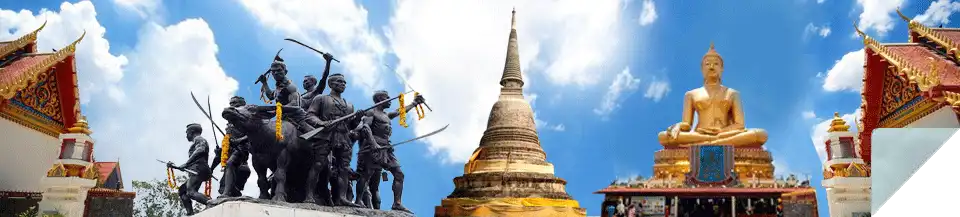
Wat Sadao
Open Days: Daily
Opening Hours: Daytime and regular temple visiting hours
Wat Sadao in Sing Buri Province is an important local temple in Mae La Subdistrict, Bang Rachan District. It is known for the Viharn of Luang Pho Fung Uttamo, an old ordination hall decorated with antique Sangkhalok-style bowls and plates, a large protective amulet known as bia kae, and a memorable local story about a clever cow that once followed monks on their morning alms round. For foreign travelers who want to experience a temple with real community character, local Buddhist devotion, unusual art, and stories rarely found in standard guidebooks, Wat Sadao is one of the most distinctive cultural stops in Sing Buri.
The temple is located in Village No. 1, Mae La Subdistrict, Bang Rachan District, Sing Buri Province, about 6 km from Sing Buri town. This area is part of the Mae La waterway community, a local landscape closely connected with freshwater fish, riverside living, agriculture, and Buddhist traditions. Wat Sadao is easy to reach by private car, motorcycle, or local hired transport. It can be included in a half-day or one-day route with nearby temples and historical sites such as Wat Phra Non Chak Si Worawihan, Wat Phikun Thong, Wat Laem Khang, Wat Pho Kao Ton, and the Bang Rachan Heroes Monument.
Wat Sadao was formerly known as Wat Mae La, a name connected with the local Mae La area and the Mae La waterway. It later became known as Wat Sadao because many neem trees, both large and small, once grew within the temple grounds. The name therefore preserves a memory of the natural environment around the temple. Like many Thai temple names, it is not merely a formal religious name but a record of landscape, plants, and community identity. Understanding this name helps visitors see how closely Thai temples are connected with their surroundings.
The charm of Wat Sadao lies in its combination of devotion, local art, and unusual community stories. Many visitors come to pay respect to Luang Pho Fung, admire the old ordination hall decorated with antique bowls and plates, and see the large bia kae, a protective charm associated with Thai spiritual belief. The temple is not only a place for worship but also a site where Buddhist faith, folk belief, craftsmanship, and local memory coexist. This layered character makes Wat Sadao different from many more conventional temple attractions.
Luang Pho Fung Uttamo is the most important spiritual figure associated with Wat Sadao. Local histories describe him as a highly respected monk of Sing Buri. He was born on 18 September 1892 in Bang Krabue Subdistrict, Mueang Sing Buri District. As a child, he studied with monks at Wat Bang Krabue and learned both Thai and Khom script. He later helped his family with farming and fishing around the Mae La waterway before entering the monkhood. His life story reflects the path of a local monk deeply connected with rural life, local people, and Buddhist practice.
The Viharn of Luang Pho Fung is one of the key places to visit inside Wat Sadao. Devotees come here to pay respect, make merit, and remember the virtues of this revered monk. The viharn is more than a shrine; it is a space of shared memory between the temple and the surrounding community. Older generations remember Luang Pho Fung through oral stories and personal faith, while younger visitors learn about him through the viharn and the temple’s continuing devotional practices.
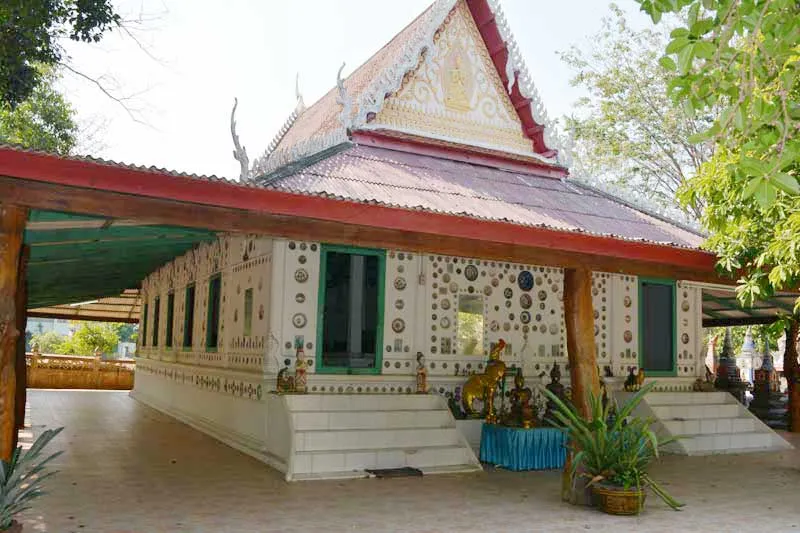
Another remarkable feature of Wat Sadao is its old ordination hall, which is around 100 years old. Its walls are decorated with antique Sangkhalok-style bowls and plates, creating a striking visual style rarely seen in ordinary temple buildings. Instead of conventional mural paintings alone, the wall decoration uses ceramic vessels arranged as part of the sacred interior. These bowls and plates turn everyday objects and old collectibles into a form of religious art. For visitors interested in Thai local craftsmanship, this ordination hall is one of the most memorable parts of the temple.
The beauty of the old ordination hall is not based on royal grandeur but on local creativity and personal devotion. Each bowl and plate has its own shape, color, and pattern. When placed together on the wall, they create texture, rhythm, and a sense of historical depth. Visitors can spend time observing the details carefully, noticing how the ceramics work together as a decorative surface. This gives Wat Sadao a distinctive artistic identity and makes the temple especially appealing to cultural travelers and photographers.
Wat Sadao is also known for its large bia kae. In Thai belief, bia kae is a protective charm associated with warding off negative influences, black magic, spirits, and misfortune. Such charms are often connected with respected monks and local spiritual traditions. The large bia kae at Wat Sadao has become a point of worship and photography. Visitors often stop here after paying respect to Luang Pho Fung and seeing the old ordination hall, as it represents another layer of belief within the temple.
One of the most unusual stories connected with Wat Sadao is the story of a clever cow named Si Nuan. Older news reports describe a young female cow that had been given to the temple and later followed a monk on morning alms rounds. The cow was said to eat leftover rice from the alms bowl and enjoy soft drinks. This story once attracted media attention because it was unusual, charming, and reflected the warm relationship between animals, monks, and temple life. It should be understood as a memorable local story from the past rather than a current tourist activity.
The story of Si Nuan adds a human and emotional dimension to Wat Sadao. Thai temples are not only places for Buddha images, buildings, and ceremonies; they can also be places where animals, monks, villagers, and visitors live in close contact. A cow following a monk on an alms round became a memorable image because it showed the kindness and everyday life of a community temple. This is part of what makes Wat Sadao feel warm, local, and alive in the memory of people who know the story.
Wat Sadao is located in the Mae La area, a part of Sing Buri famous for its freshwater fish and riverside way of life. The Mae La waterway is strongly associated with local food culture, especially Mae La fish. This makes a visit to Wat Sadao easy to combine with a food trip in the area. Travelers can pay respect at the temple, admire its unusual art, then continue to riverside restaurants or local eateries in Mae La and Sing Buri town. In this way, the temple visit becomes part of a broader cultural experience that includes faith, art, community, and food.
Wat Sadao is best experienced slowly. Important areas include the Viharn of Luang Pho Fung, the old ordination hall with ceramic wall decoration, the large bia kae, the Mae La riverside viewpoint, fish-feeding areas, and the general temple grounds. Each area tells a different story: the revered monk, the local art, the protective charm, the waterway community, and the temple’s informal everyday life. Visitors who walk through the temple carefully will find more depth than a quick stop can reveal.
On important Buddhist days such as Makha Bucha Day, Visakha Bucha Day, Asalha Bucha Day, Buddhist Lent, the end of Buddhist Lent, and Kathin season, Wat Sadao becomes a gathering place for local residents. People come to make merit, offer food to monks, listen to sermons, and participate in Buddhist ceremonies. These activities show that the temple remains a living religious site, not simply a tourist attraction. For foreign travelers, visiting during a temple event can offer insight into how Buddhism continues to shape community life in central Thailand.
The current abbot of Wat Sadao is Phra Khru Woratham Sophon. The temple is a local temple under the Mahanikaya order and continues to serve the Mae La community. The presence of resident monks and annual ceremonies confirms that Wat Sadao remains active. Visitors who wish to make merit or ask about temple activities should approach respectfully and may seek information through local community channels or nearby administrative offices.
Traveling to Wat Sadao is convenient from Sing Buri town. The temple is about 6 km away and is located along a rural road in Mae La Subdistrict. Travelers can use a navigation app to search for Wat Sadao, Bang Rachan District, Sing Buri Province. Private cars and motorcycles are the easiest ways to reach the temple, but local hired transport can also be arranged from Sing Buri town or Bang Rachan District. The temple is suitable for families, elderly visitors, cultural travelers, and photographers.
A one-day route including Wat Sadao can be arranged in several ways. For a temple and art route, visitors can start with Wat Phra Non Chak Si Worawihan, continue to Wat Phikun Thong, then visit Wat Sadao to see the ceramic-decorated ordination hall and pay respect to Luang Pho Fung. For a historical route, Wat Sadao can be combined with Wat Pho Kao Ton and the Bang Rachan Heroes Monument. For a food and community route, visitors can combine the temple with Mae La riverside restaurants and local fish dishes.
The best times to visit are in the morning or late afternoon, when the weather is more comfortable and the light is suitable for photography. Visitors who want to appreciate the ceramic wall decoration should allow enough time to observe the details carefully. They should avoid touching the old ceramics or any sacred objects unnecessarily. Photography should be done respectfully, and flash should be avoided when it might disturb others or affect the atmosphere of the sacred space.
Temple etiquette is important at Wat Sadao. Visitors should dress modestly, with shirts that cover the shoulders and trousers or skirts of appropriate length. Shoes should be removed before entering sacred buildings. Loud behavior, climbing on structures, touching wall decorations, or disturbing monks and worshippers should be avoided. If visitors wish to make offerings or ask questions, they should do so politely and respectfully.
Nearby restaurants make Wat Sadao a good stop in a broader Mae La food route. Options include riverside noodles near the temple, Ban Suan Mae La Ka Rong, Mae La Pla Phao, Phaibun Kai Yang, Ramphueng Restaurant, and Charoen Thip Restaurant. These places allow travelers to combine temple sightseeing with local food, especially dishes connected with Mae La’s freshwater fish reputation. This makes the trip more complete and more useful for travelers planning a real visit.
For accommodation, visitors can stay either in Sing Buri town or near the Mae La and Bang Rachan area. Options with publicly available contact information include Ing Mae La Resort, Golden Dragon Resort, Chaisaeng Palace Hotel, and Tawan Na Resort Sing Buri. Staying in Sing Buri town is convenient for travelers who want access to restaurants, shops, and several attractions, while accommodation closer to Mae La offers a quieter local atmosphere.
Overall, Wat Sadao is a valuable destination for travelers interested in Buddhist faith, local art, and community-based cultural travel in Sing Buri. Its appeal comes from several elements working together: Luang Pho Fung, the old ordination hall decorated with Sangkhalok-style bowls and plates, the large bia kae, the story of the clever cow, the Mae La riverside setting, and the continuing life of a local temple. These details make Wat Sadao more than a place to make merit; it is a place that tells the story of Sing Buri through devotion, craftsmanship, memory, and everyday community life.
For foreign travelers exploring Sing Buri beyond the better-known Bang Rachan historical sites, Wat Sadao offers a quiet but distinctive experience. It introduces visitors to a form of Thai temple culture where sacred art, folk belief, local stories, and riverside life remain closely connected. The temple is easy to reach from town, rewarding to explore slowly, and suitable for those who want to understand the local character of central Thailand beyond major tourist routes.
| Name | Wat Sadao |
| Location | Village No. 1, Mae La Subdistrict, Bang Rachan District, Sing Buri Province, Thailand |
| Address | Rural Road 4020, Mae La Subdistrict, Bang Rachan District, Sing Buri Province 16130 |
| Highlights | Viharn of Luang Pho Fung, a 100-year-old ordination hall decorated with antique Sangkhalok-style bowls and plates, a large bia kae, Mae La riverside atmosphere, and the old story of a clever cow that followed monks on alms rounds |
| History | Formerly known as Wat Mae La, the temple later became Wat Sadao because many neem trees once grew within the temple grounds. The old ordination hall is around 100 years old |
| Name Origin | The name Wat Sadao comes from the neem trees, or sadao in Thai, that once grew abundantly around the temple |
| Distinctive Features | A Mae La community temple with the Viharn of Luang Pho Fung, ceramic-decorated ordination hall, large bia kae, fish-feeding area, and peaceful local atmosphere |
| Main Sacred Objects / Features | Luang Pho Fung Uttamo, large bia kae, old ordination hall with Sangkhalok-style ceramic walls, and wooden Thao Wessuwan shrine area |
| Local Story | Wat Sadao is remembered for Si Nuan, a clever cow that once followed a monk on morning alms rounds, ate leftover rice from the alms bowl, and enjoyed soft drinks |
| Travel Information | About 6 km from Sing Buri town. The temple is accessible by private car, motorcycle, or local hired transport via Mae La Subdistrict, Bang Rachan District |
| Current Status | An active local Buddhist temple in Mae La Subdistrict and a cultural worship site in Sing Buri Province |
| Open Days | Daily |
| Opening Hours | Daytime and regular temple visiting hours |
| Fees | No admission fee |
| Facilities | Parking area, worship areas, viharn, ordination hall, Mae La riverside area, fish-feeding area, and nearby community food stalls |
| Main Areas / Zones | Viharn of Luang Pho Fung, old ordination hall with ceramic decoration, large bia kae, wooden Thao Wessuwan area, Mae La riverside viewpoint, and fish-feeding area |
| Abbot / Caretaker | Phra Khru Woratham Sophon |
| Official Website / Related Page | Temple information from Sangha sources, local travel references, news sources, and public map listings |
| Nearby Tourist Attractions | 1. Wat Laem Khang, about 4 km 2. Wat Phra Non Chak Si Worawihan, about 5 km 3. Wat Phikun Thong, about 6 km 4. Wat Pho Kao Ton, about 8 km 5. Bang Rachan Heroes Monument, about 8 km 6. Wat Pho Rattanaram, also known as Wat Pho Chon Kai, about 10 km 7. Ban Khok Wat Community Market, about 10 km |
| Nearby Restaurants | 1. Riverside Noodles at Wat Sadao, about 1 km 2. Ban Suan Mae La Ka Rong, about 3 km, Tel. 036-501-047, 081-448-3678 3. Mae La Pla Phao, about 6 km, Tel. 036-813-701, 080-910-8563 4. Phaibun Kai Yang, about 7 km, Tel. 09-9104-0362, 0-3651-2132 5. Ramphueng Restaurant, about 8 km, Tel. 0-3652-0757 6. Charoen Thip Restaurant, about 8 km, Tel. 0-3651-2539 |
| Nearby Accommodations | 1. Ing Mae La Resort, about 4 km, Tel. 036-510-408 2. Homestay Sing Buri Thailand, about 6 km 3. Golden Dragon Resort, about 7 km, Tel. 036-521-891, 089-801-9719 4. Chaisaeng Palace Hotel, about 8 km, Tel. 036-520-904, 084-541-4466 5. Tawan Na Resort Sing Buri, about 13 km, Tel. 092-919-1594 |
Frequently Asked Questions (FAQ)
Q: Where is Wat Sadao located?
A: Wat Sadao is located in Village No. 1, Mae La Subdistrict, Bang Rachan District, Sing Buri Province, about 6 km from Sing Buri town.
Q: What is Wat Sadao known for?
A: Wat Sadao is known for the Viharn of Luang Pho Fung, the old ordination hall decorated with Sangkhalok-style bowls and plates, the large bia kae, the Mae La riverside setting, and the story of a clever cow that once followed monks on alms rounds.
Q: Who was Luang Pho Fung of Wat Sadao?
A: Luang Pho Fung Uttamo was a highly respected monk associated with Wat Sadao and Sing Buri Province. Devotees still visit the temple to pay respect to him at his viharn.
Q: What makes the old ordination hall at Wat Sadao special?
A: The old ordination hall is around 100 years old and has walls decorated with antique Sangkhalok-style bowls and plates, creating a rare and beautiful form of local religious art.
Q: What is the story of the five-legged cow at Wat Sadao?
A: Wat Sadao is remembered for a clever cow named Si Nuan, which once followed a monk on morning alms rounds, ate leftover rice from the alms bowl, and liked soft drinks. The story became a memorable part of the temple’s local identity.
Q: Is there an admission fee for Wat Sadao?
A: There is no admission fee. Visitors can enter the temple to pay respect, make merit, see the old ordination hall, and enjoy the Mae La riverside atmosphere during regular visiting hours.
Q: What should visitors wear when visiting Wat Sadao?
A: Visitors should dress modestly, wear shirts with sleeves and appropriate trousers or skirts, remove shoes before entering sacred areas, and avoid touching the old ceramic wall decorations unnecessarily.
Q: What nearby places can visitors see after Wat Sadao?
A: Nearby places include Wat Laem Khang, Wat Phra Non Chak Si Worawihan, Wat Phikun Thong, Wat Pho Kao Ton, the Bang Rachan Heroes Monument, and Ban Khok Wat Community Market.
 Category: ●Places of Worship
 Group: ●Temple
Last Update : 5 DayAgo
 Last Update : 5 DayAgo
 Click to Access the Navigation Map GPS
 Art, Culture and Heritage
 Historical Sites and Monuments(4)
 Landmarks and Memorials(3)
 Art, Craft Centres, Tradition(3)
 Museums(1)
 Educational Places
 Library(1)
Temple(42)
Library(1)
Temple(42)
 Church(1)
 Other religious and spiritural sites(2)
 Research and Development
 Royal Project(3)
 Suburban Living
 Village, Community(1)
 Local Market(1)
 Nature and Wildlife
 National Parks and Marine Reserves(1)
 River, Canal(7)
 Bays and Beaches(1)
 Other natural attractions(2)
 Entertainment and Agricultural
 Animal camps and shows(1)
 Farm, Parks, Gardens and Ecotourism(1)


