
lovethailand home >Central Travel Attractions >Sing Buri Travel Attractions >Bang Ra Chan >Mae La > Mae La Waterway
TL;DR: Mae La Waterway, Sing Buri attractions : Nature and Wildlife, River, Canal.
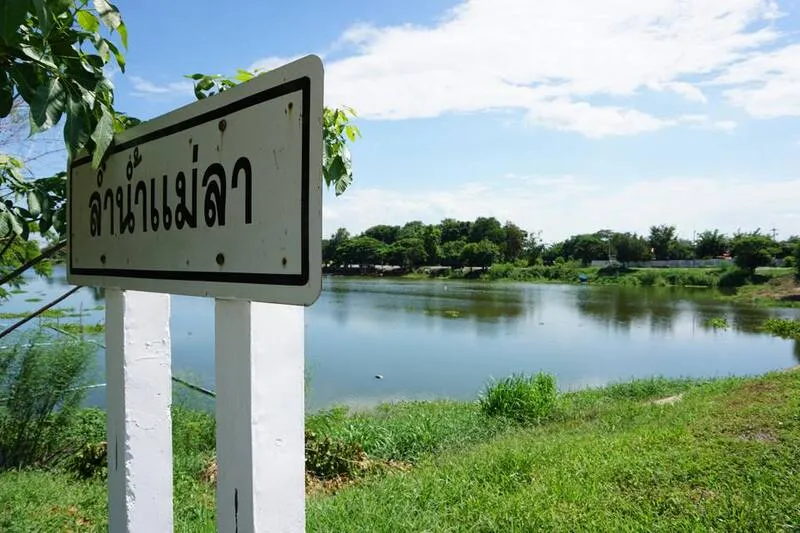
Mae La Waterway
Open Days: Mae La is a natural waterway; contact local authorities or Sing Buri Provincial Administrative Organization before requesting use of activity areas
Opening Hours: Mae La is a natural waterway; contact local authorities or Sing Buri Provincial Administrative Organization before requesting use of activity areas
Mae La Waterway in Sing Buri Province is one of the most meaningful natural waterways in central Thailand. For local people, Mae La is more than a river-like stream passing through rural landscapes. It is a source of food, income, community memory, and local pride. Most importantly, it is closely associated with “Pla Chon Mae La”, the famous Mae La snakehead fish known for its firm, tender, rich, and flavorful flesh.
Mae La flows through 3 districts of Sing Buri Province: In Buri, Bang Rachan, and Mueang Sing Buri. This makes the waterway an important natural thread connecting several local communities. Along its course, Mae La is linked with agriculture, freshwater fish, local restaurants, community life, and cultural identity. Travelers who visit the Mae La area are not simply seeing a body of water; they are encountering one of the natural foundations behind Sing Buri’s best-known culinary heritage.
The main appeal of Mae La lies in its natural atmosphere and ecological value. The waterway has long been described as a fertile freshwater environment rich in natural fish food. This natural abundance is one of the reasons fish from Mae La, especially snakehead fish, became famous for their taste and texture. The name “Pla Chon Mae La” therefore refers not only to a fish dish, but to a relationship between water, habitat, local knowledge, and place-based flavor.
For many people in Sing Buri, Mae La is like the heart of the province’s food culture. It supports a way of life in which water, fish, cooking, and local identity are closely connected. Traditional knowledge of freshwater fish, fish preservation, grilling, frying, and central Thai cooking has helped turn Mae La snakehead fish into one of the province’s most respected local products. The fish is widely associated with grilled snakehead fish, fried snakehead fish, sun-dried fish, spicy soups, curries, and other Thai dishes.
The reputation of Mae La snakehead fish became even stronger when it was registered as a Thai Geographical Indication, or GI. This recognition confirms that the name, quality, and reputation of the product are closely connected with its geographical origin. For travelers, this makes a visit to Mae La more meaningful. Eating Mae La snakehead fish in Sing Buri is not just about tasting good food; it is also about understanding the landscape and local culture that give the dish its identity.
Mae La is not a single-point tourist attraction. It is a waterway passing through different local areas, each with its own character. For visitors, one of the easiest starting points is the Mae La Maharachanusorn Park area in Tambon Thap Ya, In Buri District. This area helps travelers access the story of Mae La through a public recreational space connected with the waterway, fish culture, and local conservation. It can serve as a practical starting point before continuing to nearby restaurants and attractions.
The landscape around Mae La is calm and local rather than commercial. Some areas are close to farms and communities, some are near restaurants, and some are connected with public recreational spaces. This gives travelers a chance to experience Sing Buri beyond its major temples and historical sites. Mae La represents a quieter side of the province, where nature, food, and community life remain deeply intertwined.
For food-focused travelers, Mae La is one of the most important names in Sing Buri. Restaurants in the Mae La and Sing Buri areas often highlight fish dishes, especially snakehead fish. Popular preparations include grilled snakehead fish, fried snakehead fish, sun-dried snakehead fish, spicy fish soup, and central Thai-style freshwater fish dishes. These meals become more meaningful when visitors understand that the reputation of the fish is tied to the Mae La waterway itself.
A trip to Mae La can be planned as a half-day or full-day route. A half-day itinerary may begin at Mae La Maharachanusorn Park, continue with a riverside or local restaurant serving Mae La fish, and end with a short rest in Sing Buri town. A full-day itinerary can add In Buri National Museum, Wat Phikun Thong, Wat Na Phrathat, Wat Phra Non Chakkrasi Worawihan, or Bang Rachan Heroes Monument. This creates a well-rounded trip covering nature, food, Buddhism, history, and local culture.
Mae La is also valuable as an educational destination. It helps visitors understand how freshwater ecosystems support local food culture. Children and young travelers can learn why water quality matters, how fish depend on natural habitats, and how communities benefit from protecting local waterways. This makes Mae La a useful example of community-level environmental learning in central Thailand.
Responsible travel is especially important in the Mae La area. Visitors should avoid throwing waste into the water, disturbing fish habitats, trespassing on private land, or doing anything that may harm water quality. The fame of Mae La snakehead fish depends on the health of the waterway and the surrounding environment. Respecting local rules and keeping the area clean helps protect both the ecosystem and the cultural value of the place.
Photographers and slow travelers will appreciate the soft, rural atmosphere of Mae La. Morning and late afternoon are the best times for natural light, cooler weather, and a more peaceful mood. Depending on the access point, visitors may find views of water, trees, local houses, restaurants, and agricultural areas. Photography should be done respectfully, especially near community areas and private property.
The Mae La area is also a good base for understanding Sing Buri’s broader identity. The province is known for history, temples, heroism associated with Bang Rachan, and central Thai food. Mae La adds another layer to this identity by showing how a natural waterway can create a powerful food reputation. It connects ecological abundance with local craftsmanship and the everyday knowledge of cooking fish well.
Travelers coming from Bangkok can visit the Mae La area as a day trip, especially by private car. Driving is the most convenient option because the waterway passes through several districts and visitors may want to stop at parks, restaurants, temples, and museums along the way. Those using public transport should first travel to Sing Buri town or In Buri District, then continue by local hired transport to the desired Mae La access point.
Getting There is most convenient when using Mae La Maharachanusorn Park as a reference point. From Sing Buri town, follow Highway 309 for about 9 km, then turn left toward Ban Choeng Klat and continue for around 1.2 km. This route gives visitors easy access to a public area connected with the Mae La story before continuing to nearby fish restaurants and local attractions.
Visitors who want to enjoy Mae La properly should allow enough time to see the area, understand its connection with Pla Chon Mae La, and taste local fish dishes. The experience is not about rushing from one landmark to another. It is about appreciating a natural waterway that has shaped the taste, economy, and memory of Sing Buri for generations.
In summary, Mae La Waterway is one of the key natural and cultural entities of Sing Buri Province. It is a freshwater environment, a source of local identity, a food heritage area, and the origin behind the reputation of Mae La snakehead fish. For foreign travelers, Mae La offers a deeper way to understand Sing Buri through its water, fish, local communities, and central Thai food culture.
| Name | Mae La Waterway, Sing Buri Province |
| Location | Flowing through In Buri, Bang Rachan, and Mueang Sing Buri districts, Sing Buri Province |
| Tourist Reference Area | Tambon Thap Ya, In Buri District, and Mae La Maharachanusorn Park, a convenient access point for travelers learning about Mae La |
| Highlights | A natural waterway closely connected with Mae La snakehead fish, local food culture, conservation, and the riverside way of life in Sing Buri |
| History / Importance | A historic local waterway that has served as a food source, income source, and the origin of the famous Mae La snakehead fish reputation |
| Name Origin | “Mae La” is the local name of an important waterway in Sing Buri Province and is strongly associated with local communities and Mae La snakehead fish |
| Distinctive Features | Calm natural setting, freshwater ecology, fish habitat, and a strong connection with local food heritage |
| Famous Local Product | Pla Chon Mae La, or Mae La snakehead fish, registered as a Thai Geographical Indication on September 19, 2019 |
| Travel Information | Using Mae La Maharachanusorn Park as a reference point, travel from Sing Buri town via Highway 309 for about 9 km, then turn left toward Ban Choeng Klat and continue for around 1.2 km |
| Current Status | A natural waterway and community landscape that remains important for local food culture, conservation, and community-based tourism in Sing Buri |
| Facilities | Recreational and activity areas around Mae La Maharachanusorn Park, nearby local restaurants, and accommodations in surrounding districts |
| Main Areas / Zones | 1. Mae La Waterway In In Buri District 2. Mae La Subdistrict Area In Bang Rachan District 3. Connected Area In Mueang Sing Buri District 4. Mae La Maharachanusorn Park Area 5. Local Restaurant And Mae La Fish Community Zone |
| Caretaker / Related Authorities | Local authorities along the Mae La waterway and Sing Buri Provincial Administrative Organization for Mae La Maharachanusorn Park area |
| Main Contact Number | Sing Buri Provincial Administrative Organization, Tel. 036-699-388 |
| Nearby Tourist Attractions | 1. Mae La Maharachanusorn Park, about 0 km 2. In Buri National Museum, about 6 km 3. Wat Phikun Thong, about 11 km 4. Wat Na Phrathat, about 13 km 5. Bang Rachan Heroes Monument, about 18 km |
| Nearby Restaurants | 1. Baan Suan Mae La Ka Rong, about 1 km, Tel. 036-587-077, 036-501-047, 092-802-4928 2. Rim Mae La Restaurant, about 5 km, Tel. 036-587-166, 081-850-4153 3. Mae La Pla Pao, about 17 km, Tel. 036-813-701, 080-910-8563 4. Restaurants In In Buri Area, about 6 km 5. Restaurants In Sing Buri Town, about 10 km |
| Nearby Accommodations | 1. Rim Thung Mae La Resort, about 5 km 2. Route652 Resort Singburi, about 12 km, Tel. 096-047-4652 3. Chaisaeng Palace Hotel, about 15 km, Tel. 036-520-904 4. Chaisaeng Villa, about 15 km, Tel. 095-254-3174, 036-510-895 5. Baan Khao Hom Sing Buri Farmstay, about 18 km, Tel. 082-724-0322 |
Frequently Asked Questions (FAQ)
Q: Where is Mae La Waterway located?
A: Mae La Waterway is located in Sing Buri Province and flows through In Buri, Bang Rachan, and Mueang Sing Buri districts.
Q: Why is Mae La Waterway important?
A: Mae La is important because it supports local food culture, freshwater ecology, community life, and the reputation of Mae La snakehead fish.
Q: What is Pla Chon Mae La?
A: Pla Chon Mae La is the famous Mae La snakehead fish of Sing Buri, known for its firm, tender, rich, and flavorful flesh. It is registered as a Thai Geographical Indication.
Q: Where should travelers start when visiting Mae La?
A: A convenient starting point is Mae La Maharachanusorn Park in Tambon Thap Ya, In Buri District, where visitors can learn about the Mae La waterway and local fish culture.
Q: What type of trip is Mae La suitable for?
A: It is suitable for nature-based travel, local food trips, community learning, and routes combining temples, history, and restaurants in Sing Buri.
Q: Is there an admission fee for Mae La Waterway?
A: Mae La is a natural waterway, and no admission fee applies to the waterway itself. For organized activities, visitors should contact local authorities or Sing Buri Provincial Administrative Organization.
Q: Which restaurants are known for Mae La fish dishes?
A: Restaurants associated with Mae La fish dishes include Baan Suan Mae La Ka Rong, Rim Mae La Restaurant, and Mae La Pla Pao.
Q: When is the best time to visit Mae La Waterway?
A: Morning and late afternoon are the best times because the weather is cooler and the riverside atmosphere is more pleasant for sightseeing and photography.
 Category: ●Nature and Wildlife
 Group: ●River, Canal
Last Update : 4 MonthAgo
 Last Update : 4 MonthAgo
 Click to Access the Navigation Map GPS
 Art, Culture and Heritage
 Historical Sites and Monuments(4)
 Landmarks and Memorials(3)
 Art, Craft Centres, Tradition(3)
 Museums(1)
 Educational Places
 Library(1)
 Places of Worship
 Temple(42)
 Church(1)
 Other Sacred Sites(2)
 Research and Development
 Royal Project(3)
 Suburban Living
 Village, Community(1)
 Local Market(1)
 National Parks and Marine Reserves(1)
River, Canal(7)
National Parks and Marine Reserves(1)
River, Canal(7)
 Bays and Beaches(1)
 Other natural attractions(2)
 Entertainment and Agricultural
 Animal camps and shows(1)
 Farms, Parks and Ecotourism(1)


