
lovethailand home >Central Travel Attractions >Sing Buri Travel Attractions >Muang Sing Buri >Bang Krabue > Wat Pho Langka
TL;DR: Wat Pho Langka is located at Ban Bang Krabue Tai, Moo 1, Bang Krabue Subdistrict, Mueang Sing Buri District, Sing Buri Province, open Daily, hours Daytime Visits Are Recommended.
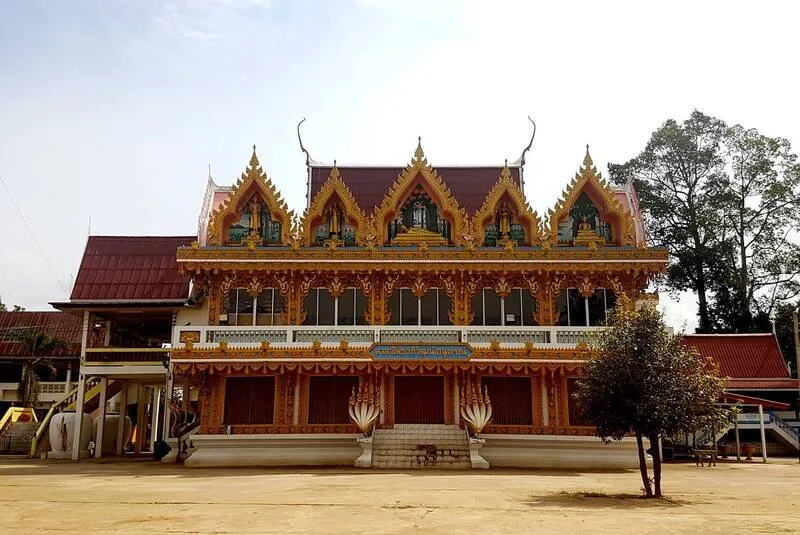
Wat Pho Langka
Open Days: Daily
Opening Hours: Daytime Visits Are Recommended
Wat Pho Langka in Sing Buri Province is an old local Buddhist temple located at No. 103, Moo 1, Ban Bang Krabue Tai, Bang Krabue Subdistrict, Mueang Sing Buri District. The temple stands on the western side of the Chao Phraya River and is closely connected with the riverside life of the Bang Krabue community. It was established as a temple around 1867. Before that, the site was an abandoned temple known as Wat Bang Krabue Tai. Wat Pho Langka first received its Wisungkhamsima, the official consecrated boundary for monastic ceremonies, in 1872, with an area measuring 30 meters wide and 40 meters long. For travelers interested in local Buddhist culture, riverside communities, and quiet temples in central Thailand, Wat Pho Langka offers a meaningful and less commercialized experience.
The temple is best understood as a living community temple rather than a large tourist attraction. Its value lies in its long history, its riverside location, and its strong commitment to keeping the temple area free from alcohol, drugs, gambling, fireworks, gunfire, ordination parades, and entertainment performances. For more than 21 years, the temple has followed the principle of being alcohol-free and drug-free. This makes Wat Pho Langka an important example of a Buddhist temple that actively maintains peace, discipline, and social responsibility within the community.
The history of Wat Pho Langka reflects the renewal of local Buddhist faith. The site was originally an abandoned temple called Wat Bang Krabue Tai. Around 1867, it was re-established as a functioning temple. In 1872, it received its first Wisungkhamsima, allowing the temple to properly conduct important monastic ceremonies within a consecrated boundary. This development shows how a deserted sacred site could be restored through the faith and cooperation of local people. The temple therefore represents both historical continuity and community revival.
The name Wat Pho Langka also carries Buddhist associations. The word “Pho” recalls the Bodhi tree, the tree of enlightenment under which the Buddha attained awakening. The word “Langka” may evoke Lanka or Sri Lanka, a place historically important to Theravada Buddhism. Whether the name came from local tradition or monastic naming practice, it gives the temple a strong Buddhist identity. It suggests a sacred place connected with enlightenment, Buddhist memory, and the continuity of Theravada faith.
One of the most distinctive aspects of Wat Pho Langka is its long-standing commitment to being an alcohol-free and drug-free temple. Within the temple grounds, alcoholic drinks and all kinds of narcotics are prohibited. Gambling is also forbidden. Firecrackers, gunfire, ordination parades, and entertainment performances are not allowed inside the temple. These rules are not merely administrative restrictions. They reflect the temple’s intention to preserve a peaceful, safe, and morally appropriate environment for worship, merit-making, and community activities.
This discipline gives Wat Pho Langka a clear identity. In many Thai communities, temples are used for ordinations, merit-making ceremonies, funerals, annual festivals, and public gatherings. If such spaces become associated with alcohol, gambling, loud entertainment, or unsafe activities, the sacred atmosphere may be weakened. Wat Pho Langka chooses a different path by emphasizing simplicity, restraint, and peace. For foreign travelers, this is an important example of how a Thai temple can also function as a social and ethical institution.
The rule against ordination parades and entertainment performances is especially interesting. In many parts of Thailand, ordination ceremonies are accompanied by music, processions, and celebration. At Wat Pho Langka, however, the focus is placed on the spiritual meaning of ordination rather than public festivity. This reflects a disciplined interpretation of temple space. The temple encourages visitors and devotees to approach religious ceremonies with calmness and respect rather than noise and spectacle.
The temple’s riverside location adds another layer of meaning. Wat Pho Langka stands near the Chao Phraya River, one of the most important waterways in Thailand. Rivers have shaped settlement, travel, agriculture, trade, and religious life throughout the central plains. Temples along rivers often became community centers because people could reach them by water and because riverside land formed the heart of village life. Wat Pho Langka preserves this relationship between Buddhism and the river landscape of Sing Buri.
During the flood season, water can enter the temple grounds because the temple is located beside the Chao Phraya River. This is part of the natural condition of lowland riverside communities in central Thailand. Rather than seeing flooding only as a problem, visitors can understand it as part of the temple’s geographical identity. Wat Pho Langka shows how a temple and community live with the rhythm of the river, adapting to seasonal changes while continuing religious life and local activities.
Wat Pho Langka is suitable for visitors who prefer quiet temple travel. It is not a place focused on entertainment or large-scale tourism. It is better suited for paying respect, making merit, walking peacefully through the temple grounds, and learning about how a Buddhist temple can support community discipline. Travelers who want to understand local Thai Buddhism beyond major landmarks will find this type of temple especially meaningful.
The current abbot listed in recent public temple activity information is Phra Khru Wibun Thammachot. The temple remains an active local Buddhist temple in Bang Krabue Subdistrict. It is also linked with public contact information through local directories and the Bang Krabue Subdistrict Administrative Organization. This confirms that the temple continues to function as a living religious institution rather than as an abandoned site or purely historical location.
Although no formal tourist admission fee is specified, visitors may enter respectfully and make merit according to personal faith. Since official tourist-style opening hours are not publicly specified, daytime visits are recommended, especially from morning to afternoon. Visitors should be particularly mindful during the flood season, when water levels may affect access to the riverside area. Checking local conditions before traveling is advisable when visiting during periods of high water.
Main areas of interest within Wat Pho Langka include the ordination hall and its consecrated boundary, worship areas, sermon hall, temple activity spaces, and the riverside area along the Chao Phraya River. The temple does not function like a large museum with formal exhibition zones. Its value comes from being a real working temple. Visitors should therefore move quietly, avoid entering monks’ private quarters without permission, and respect local worshippers who use the temple for religious purposes.
Wat Pho Langka can be included in a cultural route around Bang Krabue and Mueang Sing Buri. Nearby sites include Sing Buri City Pillar Shrine, Wat Sawang Arom and its Nang Yai Museum, Wat Prachotikaram, Wat Kradangnga Buppharam, and Wat Phra Non Chakkrasi Worawihan. This route shows different dimensions of Sing Buri’s temple culture: riverside community temples, shadow-puppet heritage, standing Buddha images, ancient stupas, and a major royal temple with a reclining Buddha.
For educational visitors, Wat Pho Langka is useful as a case study in temple-based social discipline. Its long-running alcohol-free and drug-free policy shows how Buddhist temples can help strengthen community standards. By prohibiting alcohol, drugs, gambling, fireworks, gunfire, entertainment, and noisy ordination parades, the temple creates a safe and peaceful environment. This helps explain the social role of temples in Thailand beyond worship and ceremony.
Visitors should follow proper temple etiquette. Dress modestly, covering shoulders and knees. Remove shoes where required. Speak quietly. Do not bring alcohol, drugs, gambling activities, fireworks, or weapons into the temple. Do not organize noisy celebrations or entertainment in the temple grounds. These practices are especially important at Wat Pho Langka because the temple has a clear identity as a peaceful and vice-free Buddhist space.
Photography should also be done respectfully. The temple offers views of local temple buildings, open grounds, and the riverside atmosphere of the Chao Phraya. Visitors should not photograph monks or worshippers without permission and should avoid entering private monastic areas. If sharing photographs publicly, captions should reflect the temple’s cultural and religious significance rather than present it as a casual entertainment venue.
Getting There is convenient from Sing Buri city. From the City Pillar Shrine intersection, travel along the Sing Buri – Chai Nat road for about 2 km toward Bang Krabue Subdistrict. Wat Pho Langka is located at No. 103, Moo 1, Ban Bang Krabue Tai, on the western side of the Chao Phraya River. Private car is the most convenient option, especially for travelers who plan to visit nearby temples and cultural attractions on the same day.
The best time to visit is during daylight hours, especially in the morning or afternoon. Visitors should be aware that the temple is located beside the Chao Phraya River and can be affected by seasonal flooding. Those visiting during the rainy or flood season should check local conditions before traveling. For annual merit-making events such as Kathin or community ceremonies, visitors should follow temple or local announcements for the correct schedule.
Overall, Wat Pho Langka is a meaningful local temple in Sing Buri. Its importance lies in its history from around 1867, its origin as the former abandoned Wat Bang Krabue Tai, its 1872 consecrated boundary, its riverside setting, and its strong commitment to being free from alcohol, drugs, gambling, fireworks, gunfire, ordination parades, and entertainment. For travelers seeking a sincere view of community Buddhism in central Thailand, Wat Pho Langka offers a quiet but valuable cultural experience.
| Name | Wat Pho Langka |
| Location | Ban Bang Krabue Tai, Moo 1, Bang Krabue Subdistrict, Mueang Sing Buri District, Sing Buri Province |
| Address | No. 103, Moo 1, Ban Bang Krabue Tai, Bang Krabue Subdistrict, Mueang Sing Buri District, Sing Buri 16000, Thailand |
| Highlights | An old riverside community temple on the western side of the Chao Phraya River, formerly an abandoned temple called Wat Bang Krabue Tai, known for its alcohol-free, drug-free, and vice-free temple policy |
| History | Established as a temple around 1867. It was formerly an abandoned temple named Wat Bang Krabue Tai. The temple first received its Wisungkhamsima in 1872, with a consecrated boundary measuring 30 meters wide and 40 meters long |
| Distinctive Features | A peaceful community temple that prohibits alcohol, drugs, gambling, firecrackers, gunfire, ordination parades, and entertainment performances within the temple grounds |
| Main Areas / Zones | 1. Ordination Hall and Consecrated Boundary 2. Worship and Merit-Making Area 3. Sermon Hall and Community Activity Area 4. Chao Phraya Riverside Area 5. Alcohol-Free Public Welfare Area 6. Drug-Free and Vice-Free Temple Zone |
| Travel Information | From the Sing Buri City Pillar Shrine intersection, travel along the Sing Buri – Chai Nat road for about 2 km toward Bang Krabue Subdistrict. The temple is located in Ban Bang Krabue Tai on the western side of the Chao Phraya River |
| Current Status | Open as an active local Buddhist temple and community religious center |
| Open Days | Daily |
| Recommended Visiting Time | Daytime, especially morning to afternoon |
| Fees | No admission fee; visitors may make merit according to personal faith |
| Abbot / Caretaker | Phra Khru Wibun Thammachot, Abbot of Wat Pho Langka |
| Main Contact Number | 036-522-954 Bang Krabue Subdistrict Administrative Organization: 036-699-257 |
| Official Website / Official Page | Local Website: Bang Krabue Subdistrict Administrative Organization |
| Nearby Tourist Attractions | 1. Sing Buri City Pillar Shrine, about 2 km 2. Wat Sawang Arom and Nang Yai Museum, about 3 km 3. Wat Prachotikaram, about 4 km 4. Wat Kradangnga Buppharam, about 5 km 5. Wat Phra Non Chakkrasi Worawihan, about 6 km |
| Nearby Restaurants | 1. Pad Thai Bang Mon, about 3 km, Tel. 062-329-3531 2. Kuai Tiao Ruea Soda (Chama Kala), about 6 km, Tel. 097-951-9326 3. Khwai Art Sing Buri, about 6 km 4. Kanlaya Pla Chon Nam Tok, about 6 km 5. Tamnan Mae La Restaurant, about 8 km |
| Nearby Accommodations | 1. Chaisaeng Villa Hotel, about 3 km 2. Baanbudsarin Apartment, about 3 km 3. Golden Dragon Resort, about 4 km 4. Heyday Singburi Hotel, about 5 km 5. Sumali Villa, about 6 km |
Frequently Asked Questions (FAQ)
Q: Where is Wat Pho Langka located?
A: Wat Pho Langka is located at No. 103, Moo 1, Ban Bang Krabue Tai, Bang Krabue Subdistrict, Mueang Sing Buri District, Sing Buri Province, on the western side of the Chao Phraya River.
Q: What was the former name of Wat Pho Langka?
A: The site was formerly an abandoned temple called Wat Bang Krabue Tai before it was re-established as Wat Pho Langka around 1867.
Q: When did Wat Pho Langka receive its Wisungkhamsima?
A: Wat Pho Langka first received its Wisungkhamsima in 1872, with a consecrated boundary measuring 30 meters wide and 40 meters long.
Q: What is Wat Pho Langka known for?
A: The temple is known as an old riverside community temple and for its alcohol-free, drug-free, and vice-free policy, which prohibits alcohol, drugs, gambling, firecrackers, gunfire, ordination parades, and entertainment inside the temple grounds.
Q: Who is the abbot of Wat Pho Langka?
A: The abbot of Wat Pho Langka is Phra Khru Wibun Thammachot.
Q: Is there an admission fee for Wat Pho Langka?
A: No. There is no admission fee. Visitors may make merit or donate according to personal faith.
Q: How can travelers get to Wat Pho Langka?
A: From the Sing Buri City Pillar Shrine intersection, travel along the Sing Buri – Chai Nat road for about 2 km toward Bang Krabue Subdistrict. The temple is located in Ban Bang Krabue Tai beside the Chao Phraya River.
Q: What nearby attractions can be visited with Wat Pho Langka?
A: Nearby attractions include Sing Buri City Pillar Shrine, Wat Sawang Arom and Nang Yai Museum, Wat Prachotikaram, Wat Kradangnga Buppharam, and Wat Phra Non Chakkrasi Worawihan.
 Category: ●Places of Worship
 Group: ●Temple
Last Update : 3 MonthAgo
 Last Update : 3 MonthAgo
 Click to Access the Navigation Map GPS
 Art, Culture and Heritage
 Historical Sites and Monuments(4)
 Landmarks and Memorials(3)
 Art, Craft Centres, Tradition(3)
 Museums(1)
 Educational Places
 Library(1)
Temple(42)
Library(1)
Temple(42)
 Church(1)
 Other Sacred Sites(2)
 Research and Development
 Royal Project(3)
 Suburban Living
 Village, Community(1)
 Local Market(1)
 Nature and Wildlife
 National Parks and Marine Reserves(1)
 River, Canal(7)
 Bays and Beaches(1)
 Other natural attractions(2)
 Entertainment and Agricultural
 Animal camps and shows(1)
 Farms, Parks and Ecotourism(1)


