
lovethailand home >Central Travel Attractions >Sing Buri Travel Attractions >Intha Buri >Huai Chan > Ban Khu Mueang Ancient City
TL;DR: Ban Khu Mueang Ancient City, Sing Buri attractions : Art, Culture and Heritage, Historical Sites and Monuments.
Ban Khu Mueang Ancient City
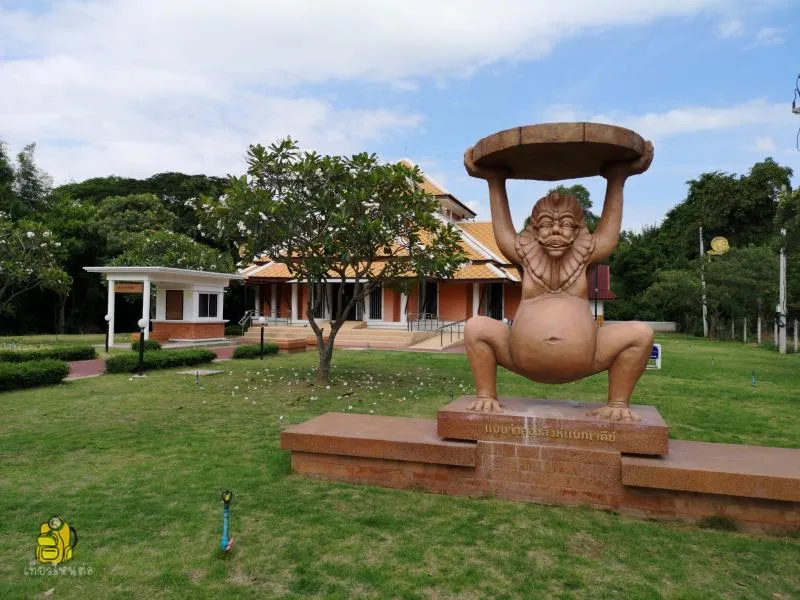
Open Days: Ku Mueang Arboretum Area Opens Daily / Ban Khu Mueang Museum Opens Wednesday – Sunday
Opening Hours: Ban Khu Mueang Museum 08.30 – 16.30
Ban Khu Mueang Ancient City in Sing Buri, located within Ku Mueang Arboretum, is one of the province’s most important archaeological and historical sites. It is situated at Ban Khu Mueang, Huai Chan Subdistrict, In Buri District, about 23 km from Sing Buri town and around 7–8 km from In Buri District. The site features a large ancient mound surrounded by a moat and earthen embankment, reflecting the urban layout of an early settlement in the upper central plains of Thailand. Closely associated with Dvaravati culture, Ban Khu Mueang offers visitors a rare opportunity to explore archaeology, nature, and local heritage in one peaceful destination.
The importance of Ban Khu Mueang comes from the large number of archaeological objects discovered in the area. These include pottery, bowls, jars, water vessels, colored stone beads, earthen lamps, a green stone Dharmachakra, earrings, ornaments, and a silver coin bearing the inscription “Sri Dvaravati Svarapunya.” These findings indicate that the area was once a significant ancient community with religious beliefs, craft production, trade connections, and long-term settlement. Some of the artifacts are preserved at In Buri National Museum, while the story of the site is also presented at Ban Khu Mueang Museum within the arboretum.
The physical layout of Ban Khu Mueang is one of the main features visitors should observe. The ancient city consists of a large mound with surrounding moat and embankment. In early settlements, moats and earthen ramparts were not merely boundaries. They were connected with water management, protection, settlement planning, and the organization of community space. When viewed together with the surrounding landscape, the site shows how ancient communities selected areas suitable for habitation, agriculture, and connections with other settlements in the central plains.
The name “Khu Mueang” refers directly to the visible moat and earthwork surrounding the ancient settlement. In Thai, “khu” means moat or ditch, while “mueang” means town or city. The local name therefore preserves the memory of the site’s original form. Walking through Ban Khu Mueang is not simply a visit to a forested park. It is a walk through a landscape once occupied by people who lived, traded, worshipped, and built a community many centuries ago.
Archaeologically, Ban Khu Mueang is strongly connected with Dvaravati culture. The silver coin inscribed with “Sri Dvaravati Svarapunya” is particularly important because it links the site with the broader Dvaravati cultural world of central Thailand. The discovery of a green stone Dharmachakra also reflects Buddhist influence in the ancient community. In Dvaravati culture, the Dharmachakra was a powerful Buddhist symbol representing the turning of the Wheel of Dharma and the spread of Buddhist teachings.
The pottery and household objects found at Ban Khu Mueang help visitors understand everyday life in the past. Jars, pots, water vessels, and bowls suggest cooking, storage, domestic activities, and craft production. Stone beads, earrings, and ornaments show personal adornment, social identity, and possible exchange networks with other communities. The variety of artifacts found in one area makes Ban Khu Mueang an excellent learning site for understanding ancient life from economic, social, religious, and cultural perspectives.
Another interesting aspect of Ban Khu Mueang is the continuity of settlement in the area. Local historical information connects the site with long-term occupation from early periods through the Dvaravati era and into later times. Whether visitors focus on the Dvaravati evidence, the ancient moat, or the later community landscape, the overall picture is clear: Ban Khu Mueang was not an isolated archaeological spot, but a meaningful place for people across generations.
Today, Ban Khu Mueang Ancient City is located within Ku Mueang Arboretum, one of the important green spaces in Sing Buri Province. The arboretum contains large trees, shaded walking areas, natural scenery, and a quiet atmosphere suitable for relaxation. This makes the site different from many other historical attractions. Visitors can experience both ancient earthworks and a natural landscape at the same time, making the visit calm, educational, and enjoyable.
Ban Khu Mueang Museum provides a clearer understanding of the archaeological site. It introduces the ancient city, Dvaravati culture, discovered artifacts, and the local historical landscape. Travelers who want to fully appreciate the site should visit the museum first, then continue walking through the arboretum and the ancient city area. This sequence helps transform the outdoor landscape from a simple green space into a meaningful archaeological setting.
The atmosphere of Ban Khu Mueang is suitable for many kinds of visitors, including history enthusiasts, students, families, nature lovers, and travelers looking for a quiet stop in Sing Buri. The site combines three experiences in one place: archaeological heritage, natural shade, and museum-based learning. It can be visited briefly as a rest stop or explored more deeply as part of a historical route through In Buri District.
For photography and slow travel, Ban Khu Mueang offers several appealing scenes: shaded paths, large trees, the ancient moat, the museum area, and the quiet forest-like atmosphere of the arboretum. Morning and late afternoon are the most comfortable times to visit, especially for walking outdoors. During the rainy season, visitors should wear suitable shoes because some areas include natural ground and garden paths.
Ban Khu Mueang can also be combined with other historical and cultural sites in Sing Buri Province, such as In Buri National Museum, the Mae Nam Noi Kiln Site and Wat Phra Prang, Wat Phikun Thong, Wat Phra Non Chaksi Worawihan, and riverside communities along the Chao Phraya River. This route allows travelers to see Sing Buri as a province with deep historical layers, from Dvaravati settlements to ancient kiln sites, temples, and local communities.
Getting There is convenient by private car. Travelers can take Highway 311, the old Sing Buri–In Buri route, to around kilometer 17, then turn onto Highway 3285, the In Buri–Nong Sum route, toward Ban Khu Mueang in Huai Chan Subdistrict. Visitors can also search for “Ban Khu Mueang Museum” or “Ku Mueang Arboretum” on a navigation map. The site is suitable for a day trip from Sing Buri town or as part of an In Buri historical itinerary.
Visitors should remember that Ban Khu Mueang is both an archaeological site and a natural area. Do not dig, remove objects, climb on ancient earthworks, damage plants, or disturb the landscape. If visiting the museum, check its opening days and hours before traveling, especially on Mondays, Tuesdays, and public holidays. Bringing drinking water, a hat, and comfortable walking shoes will make the visit easier.
In summary, Ban Khu Mueang Ancient City is a highly worthwhile destination for travelers interested in Dvaravati history, archaeology, nature, and local learning. It is not only a shaded arboretum, but also an ancient city with moats, earthworks, artifacts, and a museum that helps explain the past. A visit here offers both a peaceful natural setting and a deeper understanding of Sing Buri’s early cultural roots.
| Name | Ban Khu Mueang Ancient City |
| Location | Inside Ku Mueang Arboretum, Ban Khu Mueang, Huai Chan Subdistrict, In Buri District, Sing Buri Province |
| Address | Moo 6, Ban Khu Mueang, Huai Chan Subdistrict, In Buri District, Sing Buri 16110, Thailand |
| Coordinates | 14.992421347, 100.27922454 |
| Highlights | Dvaravati-period ancient city with moat and earthwork, located in a shaded arboretum with Ban Khu Mueang Museum |
| History | An important ancient settlement with strong Dvaravati evidence and long-term historical occupation in the area |
| Name Origin | The name refers to the ancient moat and earthwork surrounding the former settlement |
| Distinctive Features | Large ancient mound, surrounding moat, earthen embankment, arboretum landscape, and archaeological museum |
| Key Evidence | Pottery, bowls, jars, water vessels, colored stone beads, earthen lamps, green stone Dharmachakra, earrings, ornaments, and a silver coin inscribed “Sri Dvaravati Svarapunya” |
| Travel Information | Take Highway 311 on the old Sing Buri–In Buri route to around kilometer 17, then turn onto Highway 3285 toward Huai Chan Subdistrict |
| Current Status | Archaeological site, local learning center, museum, and arboretum in Sing Buri Province |
| Open Days | Ku Mueang Arboretum Area Opens Daily / Ban Khu Mueang Museum Opens Wednesday – Sunday |
| Opening Hours | Ban Khu Mueang Museum 08.30 – 16.30 |
| Fees | Ban Khu Mueang Museum Admission Fee 20 Baht |
| Facilities | Museum, arboretum area, nature trail, resting area, and parking space |
| Main Areas / Zones | Ancient city, moat and earthwork, arboretum, Ban Khu Mueang Museum, nature trail, and rare plant area |
| Caretaker | Ban Khu Mueang Museum is managed by the local administrative organization of Huai Chan Subdistrict |
| Main Contact Number | Ban Khu Mueang Museum, Tel. 08 9392 4636 |
| Official Website / Official Page | Ban Khu Mueang Museum Sing Buri Facebook Page / Huai Chan Subdistrict Administrative Organization |
| Nearby Tourist Attractions | 1. Ban Khu Mueang Museum, about 1 km 2. In Buri National Museum, about 12 km 3. Wat Phra Prang And Mae Nam Noi Kiln Site, about 18 km 4. Wat Phikun Thong, about 21 km 5. Wat Phra Non Chaksi Worawihan, about 30 km |
| Nearby Restaurants | 1. Rim Nam In Buri Restaurant, about 12 km, Tel. 098-923-7823, 036-581-390 2. Song Pla Mae Nam, about 15 km, Tel. 087-406-7301, 084-023-1417 3. Lung Choet Pla Phao, about 30 km, Tel. 036-510-368, 081-852-7213 4. Ban Suan Mae La Ka Rong Restaurant, about 24 km, Tel. 036-501-047, 092-802-4928 5. Local Restaurants Around In Buri Market, about 10 km |
| Nearby Accommodations | 1. Route652 Resort Singburi, about 17 km, Tel. 096-047-4652 2. In In Resort, about 14 km, Tel. 036-694-544, 097-136-0410 3. Ing Mae La Resort, about 22 km 4. Chaisaeng In The Park, about 27 km 5. Chaisaeng Palace Hotel, about 29 km |
Frequently Asked Questions (FAQ)
Q: Where is Ban Khu Mueang Ancient City located?
A: It is located inside Ku Mueang Arboretum at Moo 6, Ban Khu Mueang, Huai Chan Subdistrict, In Buri District, Sing Buri Province.
Q: Why is Ban Khu Mueang Ancient City important?
A: It is an important Dvaravati-period archaeological site with ancient moats, earthworks, and many significant artifacts, including a silver coin inscribed “Sri Dvaravati Svarapunya.”
Q: What can visitors see at Ban Khu Mueang?
A: Visitors can see the ancient city area, moat and earthwork, Ku Mueang Arboretum, Ban Khu Mueang Museum, nature trails, and shaded tree areas.
Q: When is Ban Khu Mueang Museum open?
A: Ban Khu Mueang Museum opens Wednesday to Sunday from 08.30 to 16.30 and closes on Monday and Tuesday.
Q: Is there an admission fee?
A: Ban Khu Mueang Museum has an admission fee of 20 baht. The arboretum area can be used for appropriate relaxation and nature study.
Q: How can travelers get to Ban Khu Mueang Ancient City?
A: Take Highway 311 on the old Sing Buri–In Buri route, then turn onto Highway 3285 toward Huai Chan Subdistrict and Ban Khu Mueang.
Q: Who should visit Ban Khu Mueang Ancient City?
A: It is suitable for travelers interested in Dvaravati history, archaeology, nature, local museums, family trips, and educational travel in Sing Buri.
 Category: ●Art, Culture and Heritage
 Group: ●Historical Sites and Monuments
Last Update : 4 MonthAgo
 Last Update : 4 MonthAgo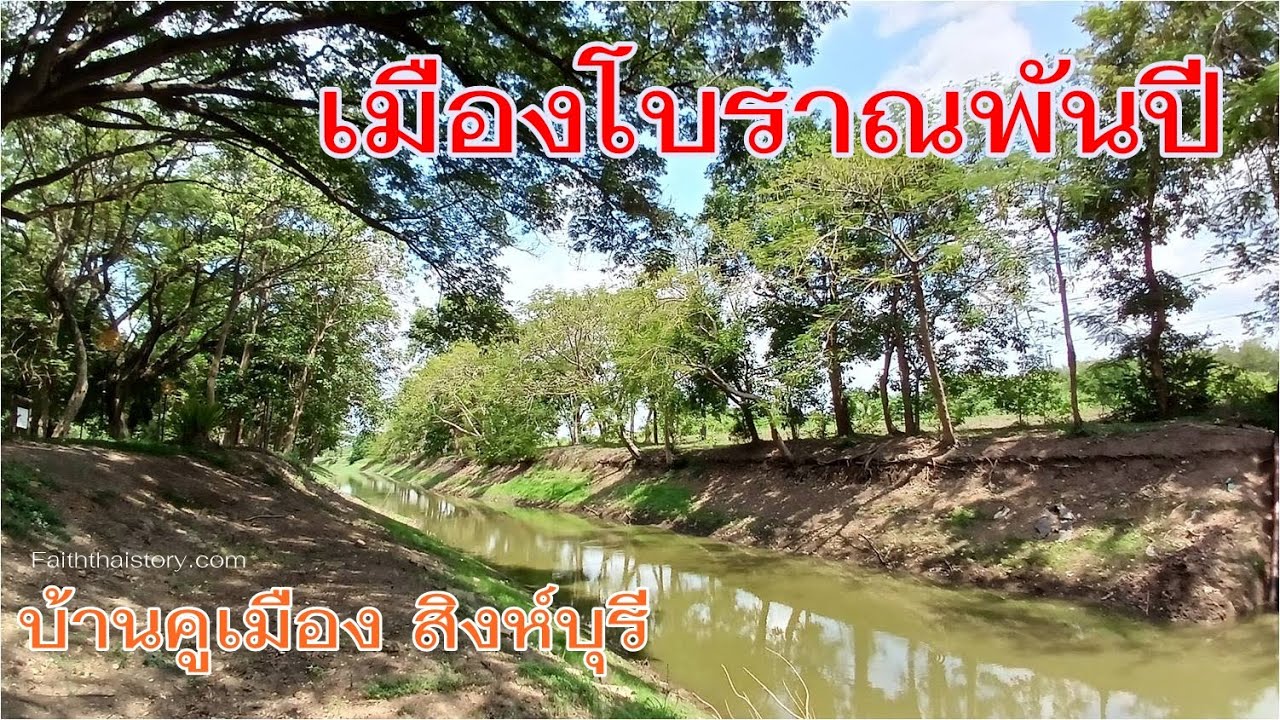
 Click to Access the Navigation Map GPS
Ban Khu Mueang Ancient City Map
 Historical Sites and Monuments(4)
 Landmarks and Memorials(3)
 Art, Craft Centres, Tradition(3)
 Museums(1)
 Educational Places
 Library(1)
 Places of Worship
 Temple(42)
 Church(1)
 Other Sacred Sites(2)
 Research and Development
 Royal Project(3)
 Suburban Living
 Village, Community(1)
 Local Market(1)
 Nature and Wildlife
 National Parks and Marine Reserves(1)
 River, Canal(7)
 Bays and Beaches(1)
 Other natural attractions(2)
 Entertainment and Agricultural
 Animal camps and shows(1)
 Farms, Parks and Ecotourism(1)


