
lovethailand home >Central Travel Attractions >Sing Buri Travel Attractions >Muang Sing Buri >Chakkrasi > Khao Ngam Thai Buffalo Conservation Center
TL;DR: Khao Ngam Thai Buffalo Conservation Center is located at Near Wat Phra Non Chakkrasi Worawihan, Chaksi Subdistrict, Mueang Sing Buri District, Sing Buri 16000, open Open Daily, hours 08:00–18:00.
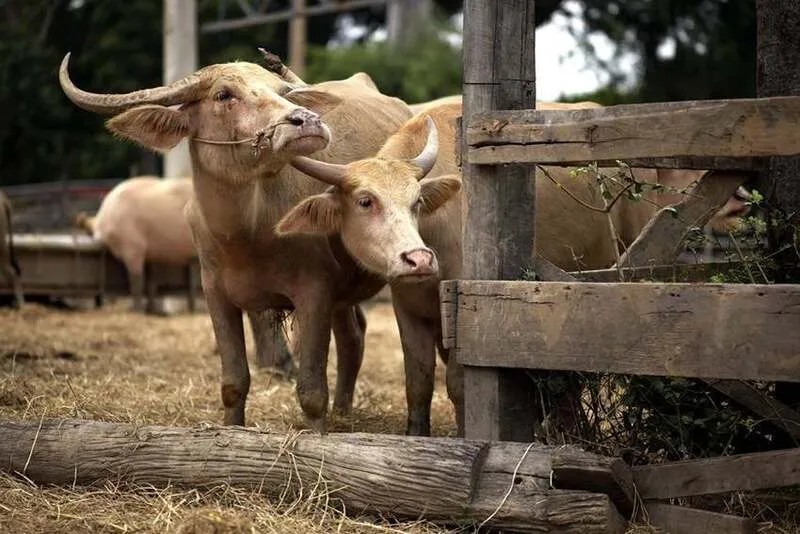
Khao Ngam Thai Buffalo Conservation Center
Open Days: Open Daily
Opening Hours: 08:00–18:00
Khao Ngam Thai Buffalo Conservation Center in Sing Buri Province is a cultural and conservation learning site located near Wat Phra Non Chakkrasi Worawihan in Chaksi Subdistrict, Mueang Sing Buri District. Established in 2000 by the Rotary Club of Sing Buri Province in cooperation with Wat Phra Non Chakkrasi, the center was created to raise, care for, and preserve Thai buffalo so that this important animal would not disappear from the country. For international travelers, it offers a meaningful introduction to Thai agricultural heritage, rural memory, Buddhist merit-making, and the historical identity of Sing Buri.
The Thai buffalo was once one of the most important animals in traditional Thai farming. Before tractors and modern agricultural machinery became common, buffalo helped farmers plow fields, prepare soil, pull carts, and support rice production. In many rural households, buffalo were not merely working animals. They were companions, sources of livelihood, and part of the family economy. Khao Ngam Thai Buffalo Conservation Center preserves this memory in a living form, allowing younger generations and visitors to see real Thai buffalo rather than learning about them only from books or old photographs.
The name “Khao Ngam” refers to the beautiful horns of Thai buffalo. The curved horns, strong body, calm character, and rural presence of the animal all reflect an older agricultural world that shaped Thai society for generations. For many modern visitors, buffalo may seem distant from everyday life. However, when seen up close, the animal reveals why it was respected by farmers and remembered in Thai culture. Its strength, patience, and quiet presence represent the foundation of rice farming in central Thailand.
The center is especially convenient because it is located near Wat Phra Non Chakkrasi Worawihan, one of the most important temples in Sing Buri. Visitors who come to pay respect to the large reclining Buddha image can include the buffalo conservation center in the same trip. This makes the route suitable for families, students, cultural travelers, and anyone who wants to combine Buddhist worship with learning about traditional Thai rural life.
The main purpose of the center is to conserve Thai buffalo and prevent them from disappearing from daily life and public memory. As machines replaced animal labor, many buffalo lost their traditional role. Some were sold, some were sent to slaughterhouses, and some were no longer bred in sufficient numbers. The center helps care for buffalo, supports conservation, and allows buffalo to be passed on to farmers for breeding, so that the animal can continue to exist beyond nostalgia.
The center is also connected with the Thai practice of releasing or redeeming animals from slaughter. People with faith and compassion may bring buffalo rescued from slaughterhouses to be cared for and used for breeding and conservation purposes. This reflects a Buddhist-influenced sense of mercy toward living beings. At the same time, the center gives that act of compassion a practical direction by linking rescued buffalo with long-term preservation and public learning.
Another important dimension of the center is its connection with the history of Bang Rachan. In Sing Buri’s local historical memory, buffalo are associated with the villagers of Bang Rachan, who resisted Burmese forces during the period surrounding the fall of Ayutthaya in the 18th century. Buffalo are remembered not only as farm animals but also as part of the courage, mobility, and rural strength of local people. Visiting the center can therefore deepen a later visit to Bang Rachan Heroes Monument or other historical sites in the province.
For children and young visitors, Khao Ngam Thai Buffalo Conservation Center is an effective outdoor learning site. Many children today have never seen a buffalo in a rice field and may not understand how rice was produced before mechanized farming. Seeing real buffalo helps them understand the relationship between farmers, animals, water, rice fields, and food. It also teaches respect for animals that once played a major role in feeding communities.
The experience at the center is simple but meaningful. Visitors can observe Thai buffalo, learn about their appearance and role, and take photographs in appropriate areas. The buffalo should be treated as living animals, not as display objects. Visitors should keep a respectful distance, avoid loud noises, not tease the animals, and never feed them without permission. Proper behavior keeps both visitors and animals safe.
The location near a temple gives the center a calm and compassionate atmosphere. Many travelers visit Wat Phra Non Chakkrasi to make merit, and the buffalo conservation center adds another dimension to that experience. It encourages reflection on mercy, gratitude, and responsibility toward animals. For visitors interested in Thai Buddhism and rural culture, this combination of temple and animal conservation is especially meaningful.
Culturally, the Thai buffalo is one of the strongest symbols of traditional farming society. The image of a farmer walking behind a buffalo in a rice field is deeply connected with rural Thailand. It appears in stories, songs, photographs, paintings, and memories of older generations. As modern farming changes, places like Khao Ngam Thai Buffalo Conservation Center help keep that cultural image alive in a real and tangible way.
The center is also suitable for family travel. A typical visit can begin with worship at Wat Phra Non Chakkrasi Worawihan, continue to the buffalo conservation area, and then end with food or local products at nearby community markets. This makes it a gentle half-day route in Sing Buri that combines faith, learning, animals, and local food. It is especially suitable for travelers who prefer meaningful places rather than entertainment-focused attractions.
For educational groups, the center can be used to discuss traditional agriculture, animal labor, rice farming, rural transformation, and the relationship between humans and working animals. It can also introduce the idea of conservation beyond wildlife alone. Domestic animals with cultural importance also need preservation when society changes and their practical roles disappear.
Photography should be done respectfully. Thai buffalo with beautiful horns can be impressive subjects, especially in natural light. However, visitors should avoid getting too close, making sudden movements, using flash in a way that startles animals, or trying to control the animal’s behavior for a photograph. A good photograph should preserve the dignity of the animal and the calm character of the site.
Khao Ngam Thai Buffalo Conservation Center broadens the image of Sing Buri tourism. The province is already known for temples, the Bang Rachan story, and local fish dishes, but this center adds agricultural heritage and animal conservation to the visitor experience. It shows that Sing Buri is not only a place of religious and historical landmarks, but also a province where rural memory and living traditions remain important.
Visitors should prepare simply. Wear comfortable clothes and shoes suitable for walking in an outdoor area. Bring drinking water and sun protection during hot weather. Families with children should supervise them closely near animal enclosures. Even calm buffalo are large animals and should be approached carefully. Children should be taught not to run, shout, hit fences, or attempt to touch animals without permission.
Visitors should also avoid feeding buffalo without permission. Some foods may not be suitable for the animals. If feeding is allowed, it should be done only under guidance from caretakers. Do not tease the animals, touch their horns, enter restricted areas, or disturb resting buffalo. Respectful behavior helps maintain the center as a safe conservation and learning space.
The center fits well into a wider Sing Buri itinerary. Wat Phra Non Chakkrasi Worawihan is the closest major attraction. Travelers can also continue to Wat Na Phrathat, Wat Phikun Thong, Bang Rachan Heroes Monument, and local food routes in Mueang Sing Buri and Mae La. This allows a single trip to include Buddhism, history, agriculture, conservation, and food culture.
For travelers interested in Bang Rachan history, the buffalo conservation center gives useful context before or after visiting Bang Rachan Heroes Monument. Seeing Thai buffalo in person helps visitors imagine the rural world of historical villagers more clearly. It connects the everyday life of farmers with the extraordinary story of resistance remembered in Sing Buri.
Food can be added easily to the trip. Sing Buri is known for freshwater fish dishes, especially Mae La snakehead fish, as well as central Thai food and local noodle shops. After visiting the temple and the buffalo conservation center, travelers can stop at nearby community markets, restaurants around Wat Phra Non Chakkrasi, or fish restaurants in the Mae La area.
Getting There is easiest by private car. Use Wat Phra Non Chakkrasi Worawihan as the main reference point. From Sing Buri town, follow Highway 3032, the Sing Buri – Suphan Buri route, toward Chaksi Subdistrict. The temple is about 4 km from Sing Buri town. Once in the temple area, ask for directions to the Khao Ngam Thai Buffalo Conservation Center or follow local signs within the area.
Travelers using public transport can first reach Sing Buri town, then continue by local hired transport to Wat Phra Non Chakkrasi Worawihan. Since the center is located near the temple area, it is convenient to combine both places in one visit. Those planning group visits should contact the relevant caretakers in advance to ensure an orderly and suitable visit.
The best time to visit is in the morning or late afternoon, when the weather is more comfortable for walking around an outdoor area. Midday can be hot, especially during the dry season. Visitors who want to take photographs should also consider morning or late afternoon light, which is softer and more suitable for both temple and animal photography.
In summary, Khao Ngam Thai Buffalo Conservation Center is a meaningful conservation attraction in Sing Buri Province. It preserves Thai buffalo, teaches visitors about traditional farming life, connects with Buddhist compassion and animal redemption, and recalls the historical role of buffalo in the Bang Rachan story. For foreign travelers who want to understand Thai rural culture beyond temples and monuments, this center is a valuable stop near Wat Phra Non Chakkrasi Worawihan.
| Name | Khao Ngam Thai Buffalo Conservation Center, Sing Buri Province |
| Location | Near Wat Phra Non Chakkrasi Worawihan, Chaksi Subdistrict, Mueang Sing Buri District, Sing Buri 16000 |
| Address / Reference Point | Near Wat Phra Non Chakkrasi Worawihan, about 4 km from Sing Buri town via Highway 3032, the Sing Buri – Suphan Buri route |
| Established | 2000 |
| Founders | Rotary Club Of Sing Buri Province In Cooperation With Wat Phra Non Chakkrasi Worawihan |
| Highlights | A Thai buffalo conservation center where visitors can learn about buffalo, traditional rice farming, animal redemption, and rural Thai heritage |
| History / Importance | Established to care for and preserve Thai buffalo, support breeding through farmers, and help younger generations understand the role of buffalo in plowing, rice threshing, and the Bang Rachan historical memory |
| Name Origin | “Khao Ngam” refers to the beautiful curved horns of Thai buffalo, a distinctive feature of this traditional farm animal |
| Distinctive Features | Thai buffalo conservation, traditional farming learning, animal redemption, cultural memory, and close observation of Thai buffalo in a temple-linked setting |
| Open Days | Open Daily |
| Opening Hours | 08:00–18:00 |
| Travel Information | From Sing Buri town, follow Highway 3032 toward Wat Phra Non Chakkrasi Worawihan in Chaksi Subdistrict, about 4 km from town, then use the temple area as the main reference point |
| Current Status | A conservation learning site and local attraction near Wat Phra Non Chakkrasi Worawihan in Sing Buri Province |
| Facilities | Thai buffalo viewing area, buffalo enclosure, learning area, nearby temple facilities, community market, and parking within the temple area depending on local conditions |
| Main Areas / Zones | 1. Thai Buffalo Enclosure Area 2. Traditional Farmer And Buffalo Learning Area 3. Thai Buffalo Conservation And Breeding Area 4. Animal Redemption And Care Area 5. Photo And Observation Area 6. Wat Phra Non Chakkrasi And Nearby Community Market Area |
| Caretaker / Related Authorities | Wat Phra Non Chakkrasi Worawihan, Rotary Club Of Sing Buri Province, and local authorities in Chaksi Subdistrict |
| Admission Fee | No officially confirmed admission fee is listed; group visits or organized activities should be coordinated with the area in advance |
| Nearby Tourist Attractions | 1. Wat Phra Non Chakkrasi Worawihan, about 0.2 km 2. Wat Phra Non Chakkrasi Community Market, about 0.5 km 3. Wat Na Phrathat, about 5 km 4. Wat Phikun Thong, about 10 km 5. Bang Rachan Heroes Monument, about 18 km |
| Nearby Restaurants | 1. Food Stalls And Local Eateries At Wat Phra Non Chakkrasi Community Market, about 0.5 km 2. Kuai Tiao Ruea Soda Cham Kala, about 1 km 3. Mae La Pla Pao, about 9 km, Tel. 036-813-701, 080-910-8563 4. Rim Mae La Restaurant, about 13 km, Tel. 036-587-166, 081-850-4153 5. Baan Suan Mae La Ka Rong, about 15 km, Tel. 036-501-047, 081-448-3678 |
| Nearby Accommodations | 1. Golden Dragon Resort, about 4 km 2. Pa Pan Resort, about 4 km 3. Saen Sabai Resort, about 5 km 4. Chaisaeng Palace Hotel, about 7 km, Tel. 036-520-904 5. Chaisaeng Villa, about 7 km, Tel. 095-254-3174, 036-510-895 |
Frequently Asked Questions (FAQ)
Q: Where is Khao Ngam Thai Buffalo Conservation Center located?
A: It is located near Wat Phra Non Chakkrasi Worawihan in Chaksi Subdistrict, Mueang Sing Buri District, Sing Buri Province, about 4 km from Sing Buri town.
Q: When was Khao Ngam Thai Buffalo Conservation Center established?
A: The center was established in 2000 by the Rotary Club of Sing Buri Province in cooperation with Wat Phra Non Chakkrasi Worawihan.
Q: What is special about the center?
A: It preserves Thai buffalo and teaches visitors about their role in traditional farming, rice cultivation, animal redemption, and the historical memory of Bang Rachan.
Q: What are the opening hours?
A: The center is open daily from 08:00 to 18:00.
Q: Is there an admission fee?
A: No officially confirmed admission fee is listed. Group visits or organized activities should be coordinated with the area in advance.
Q: Can people bring rescued buffalo to the center?
A: The center is connected with the idea of caring for rescued buffalo and using them for conservation and breeding. Anyone wishing to do so should contact the temple or caretakers directly in advance.
Q: What nearby attractions can be visited after the center?
A: Travelers can continue to Wat Phra Non Chakkrasi Worawihan, Wat Phra Non Chakkrasi Community Market, Wat Na Phrathat, Wat Phikun Thong, and Bang Rachan Heroes Monument.
Q: How should visitors behave around the buffalo?
A: Visitors should keep a respectful distance, avoid loud noise, not tease the animals, not feed them without permission, and follow caretaker guidance.
 Category: ●Entertainment and Agricultural
 Group: ●Animal camps and shows
Last Update : 4 MonthAgo
 Last Update : 4 MonthAgo
 Click to Access the Navigation Map GPS
Khao Ngam Thai Buffalo Conservation Center Map

 Art, Culture and Heritage
 Historical Sites and Monuments(4)
 Landmarks and Memorials(3)
 Art, Craft Centres, Tradition(3)
 Museums(1)
 Educational Places
 Library(1)
 Places of Worship
 Temple(42)
 Church(1)
 Other Sacred Sites(2)
 Research and Development
 Royal Project(3)
 Suburban Living
 Village, Community(1)
 Local Market(1)
 Nature and Wildlife
 National Parks and Marine Reserves(1)
 River, Canal(7)
 Bays and Beaches(1)
 Other natural attractions(2)
Animal camps and shows(1)
Other natural attractions(2)
Animal camps and shows(1)
 Farms, Parks and Ecotourism(1)


