
lovethailand home >Central Travel Attractions >Sing Buri Travel Attractions >Muang Sing Buri >Ton Pho > Old Sing Buri Provincial Court And Provincial Hall
TL;DR: Old Sing Buri Provincial Court And Provincial Hall is located at Wilai Chit Road, Bang Phutsa Subdistrict, Mueang Sing Buri District, Sing Buri Province, beside the Chao Phraya River, open Tuesday – Sunday And Public Holidays, hours 09.00 – 17.00.
Old Sing Buri Provincial Court And Provincial Hall
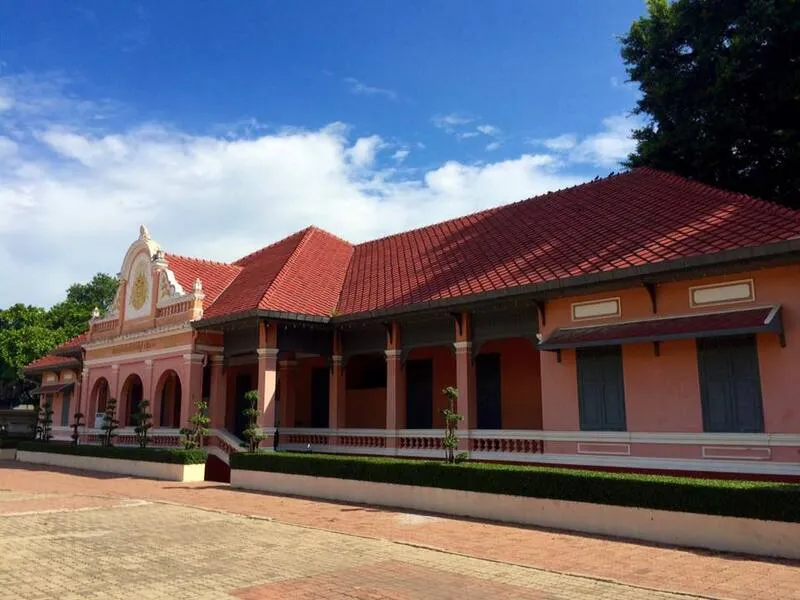
Open Days: Tuesday – Sunday And Public Holidays
Opening Hours: 09.00 – 17.00
The Old Sing Buri Provincial Court And Provincial Hall are among the most important historic government buildings in Sing Buri Province. Located on Wilai Chit Road in Bang Phutsa Subdistrict, Mueang Sing Buri District, along the Chao Phraya River, the buildings reflect the modernization of provincial administration during the reign of King Chulalongkorn, Rama V. The old provincial court was built in R.S. 129, or 1910, while the old provincial hall was built in R.S. 130, or 1911. These single-storey brick-and-plaster buildings were designed in a European-influenced architectural style and were registered as national historic monuments on 25 January 1990. Today, the old provincial hall area is closely connected with Museum Singburi, making the site a key destination for travelers who want to understand Sing Buri through architecture, history, public administration, and the cultural landscape of the Chao Phraya River.
The importance of this group of buildings goes far beyond their age. They represent a period when Siam was modernizing its system of government, law, and provincial administration. In the late 19th and early 20th centuries, official buildings were not created only for practical use. They also communicated authority, order, stability, and modernity. The adoption of European-style architecture in provincial government buildings reflected how the Thai state responded to a rapidly changing world during the colonial era in Southeast Asia.
The riverside location adds another important layer of meaning. In the past, the Chao Phraya River was the main transportation route for Sing Buri and many other central Thai provinces. Placing the court and provincial hall near the river made practical sense because officials, local residents, goods, and documents could move efficiently through the waterway network. The site therefore represents the relationship between government, urban development, and river-based life in central Thailand.
Architecturally, the old provincial court and provincial hall are single-storey brick-and-plaster buildings with European and colonial characteristics. Their design emphasizes proportion, balance, durability, and formal dignity. The façade, central projection, pediment, window rhythm, and decorative plaster details create a sense of official presence without excessive ornamentation. This restrained elegance is one of the reasons the buildings remain architecturally valuable today.
The buildings are often described as part of the oldest group of government structures in Sing Buri Province. Their survival allows visitors to see a physical record of the province’s transition from a river-based town into a modern administrative center. Instead of reading about history only in books, travelers can stand in front of the buildings and see how architecture once expressed the identity of the state, the province, and the local community.
The old provincial court and the old provincial hall had different functions but were closely related. The court represented justice, law, and social order. The provincial hall represented administration, governance, and official coordination. Together, the buildings formed the core of provincial authority in the old town area. Their location near the river and the old urban center shows how government activity was once integrated with everyday life in Sing Buri.
The registration of the buildings as national historic monuments on 25 January 1990 confirms their cultural and architectural significance. Monument registration is not merely a technical legal status. It is a recognition that the buildings form part of the nation’s cultural heritage. Visitors should therefore see the site not simply as an old photo spot, but as an important witness to the development of modern provincial government in Thailand.
Today, the old provincial hall area has gained renewed life through Museum Singburi. The museum presents the history, culture, people, and identity of Sing Buri in an accessible way. Using a historic government building as a learning space helps preserve the monument while giving it a meaningful contemporary function. Visitors can appreciate both the architecture outside and the local stories presented inside the museum.
The charm of visiting the Old Sing Buri Provincial Court And Provincial Hall lies in the combination of historic architecture and the riverside atmosphere. Travelers can walk slowly around the buildings, observe the walls, windows, columns, pediments, and overall composition, then connect the architecture with the Chao Phraya River beside it. The result is a calm and thoughtful heritage experience, suitable for slow travel and cultural learning.
The site is also suitable for architectural photography. The buildings have clear lines, balanced proportions, and a dignified old-town character. Morning and late afternoon light are especially suitable for photography, as the shadows help reveal the depth of the façade. Visitors should take photos respectfully, avoid climbing or touching fragile architectural elements, and follow any rules in the area.
For travelers interested in the history of Sing Buri town, this site is a good starting point. It is located near the Chao Phraya River, old urban areas, local food spots, and other cultural attractions. Starting a visit here helps travelers understand Sing Buri as more than a province known for Bang Rachan heroes or famous temples. It reveals another important dimension: the history of government, architecture, and urban identity.
The site also illustrates the transformation of Sing Buri from a river-connected settlement into a modern administrative town. Sing Buri is rich in history, including ancient settlements, temples, markets, riverside communities, and the memory of Bang Rachan. The old court and provincial hall add the history of governance and state modernization to this wider story, making the province more complete and easier to understand.
From a conservation perspective, buildings like these are essential to the character of a city. Many old government buildings in Thailand have disappeared or been altered beyond recognition, but the Old Sing Buri Provincial Court And Provincial Hall continue to stand as preserved heritage structures. Their reuse as a learning and museum space helps prevent the buildings from becoming abandoned monuments and allows younger generations to experience history directly.
Visitors should take time to read information panels, observe the site layout, and understand how the buildings relate to the river and the town. A careful visit reveals that these buildings are not only architectural objects. They are the result of politics, administration, geography, and the desire to present a modern image of the state during a significant historical period.
The site is also suitable for families, students, teachers, and educational groups. It can be used to explain how cities develop, why old buildings matter, and how architecture preserves memory. Learning from a real historic place helps make history more tangible than classroom study alone.
Travelers can combine the Old Sing Buri Provincial Court And Provincial Hall with nearby attractions such as Museum Singburi, the Sing Buri City Pillar Shrine, Wat Sawang Arom, Wat Phra Non Chaksi Worawihan, Wat Phikun Thong, and Bang Rachan-related sites. This route offers a well-rounded view of Sing Buri, covering government history, riverside culture, temples, museums, and local identity.
Getting There is convenient by private car. Travel into Mueang Sing Buri District and head to Wilai Chit Road in Bang Phutsa Subdistrict along the Chao Phraya River. On navigation maps, visitors can search for “Museum Singburi” or “Old Sing Buri Provincial Hall.” The site is in the town area, making it easy to continue to restaurants, hotels, temples, and other nearby attractions. Travelers using public transport can arrive in Sing Buri town and continue by local vehicle or taxi to Wilai Chit Road.
Before visiting, travelers should note that Museum Singburi opens Tuesday to Sunday and on public holidays from 09.00 to 17.00, and closes on Monday. Admission is free. Those who plan to see the museum exhibitions should check the opening schedule before traveling. When walking around the historic buildings, visitors should respect restricted areas, avoid damaging the structures, and help keep the heritage site clean.
In summary, the Old Sing Buri Provincial Court And Provincial Hall are essential heritage landmarks for understanding Sing Buri’s urban and administrative history. Their value comes from their construction during the reign of King Rama V, their European-influenced architecture, their riverside location, their status as registered national monuments, and their present role as part of a learning space for the province. For travelers who want to explore Sing Buri beyond its famous temples and heroic legends, this site is a highly meaningful stop.
| Name | Old Sing Buri Provincial Court And Provincial Hall |
| Location | Wilai Chit Road, Bang Phutsa Subdistrict, Mueang Sing Buri District, Sing Buri Province, beside the Chao Phraya River |
| Address | Wilai Chit Road, Bang Phutsa Subdistrict, Mueang Sing Buri District, Sing Buri 16000, Thailand |
| Highlights | Historic European-style government buildings from the reign of King Rama V, located beside the Chao Phraya River and registered as national monuments |
| History | The old provincial court was built in R.S. 129 / 1910, and the old provincial hall was built in R.S. 130 / 1911 during the late reign of King Chulalongkorn, Rama V |
| Distinctive Features | Single-storey brick-and-plaster buildings with European and colonial architectural elements, including a central projection, pediment, and formal government-building proportions |
| Historic Monument Status | Registered as a national historic monument on 25 January 1990 |
| Travel Information | Travel into Sing Buri town and head to Wilai Chit Road beside the Chao Phraya River. Search for “Museum Singburi” or “Old Sing Buri Provincial Hall” on a navigation map |
| Current Status | Historic monument and local learning area; the old provincial hall area is connected with Museum Singburi |
| Open Days | Tuesday – Sunday And Public Holidays; Closed Monday |
| Opening Hours | 09.00 – 17.00 |
| Fees | Free Admission |
| Facilities | Museum exhibitions, display rooms, photo areas, resting areas, and nearby parking space |
| Main Areas / Zones | Old provincial court building, old provincial hall building, Museum Singburi area, local history exhibition zones, and Chao Phraya riverside area |
| Caretaker | Local administrative organization / Sing Buri Provincial Administrative Organization for the Museum Singburi area |
| Main Contact Number | Museum Singburi, Tel. 036-699-388 |
| Official Website / Official Page | Museum Singburi / Museum Thailand |
| Nearby Tourist Attractions | 1. Museum Singburi, about 0 km 2. Sing Buri City Pillar Shrine, about 1 km 3. Wat Sawang Arom, about 2 km 4. Wat Phra Non Chaksi Worawihan, about 6 km 5. Wat Phikun Thong, about 13 km |
| Nearby Restaurants | 1. Cher Tam Coffee & Restaurant, about 0.3 km 2. Kesara Cafe & Bakery In Town Branch, about 0.5 km 3. Hat Yai Fried Chicken Phuwarin, about 0.6 km 4. Beside You Cafe Singburi, about 0.9 km 5. Baanbake Singburi, about 1 km |
| Nearby Accommodations | 1. Pa Pan Resort, about 0.4 km 2. Palm House Singburi, about 1 km 3. Golden Dragon Resort, about 1 km 4. Zen Garden Resort, about 2 km 5. Chaisaeng Palace Hotel, about 3 km |
Frequently Asked Questions (FAQ)
Q: Where are the Old Sing Buri Provincial Court And Provincial Hall located?
A: They are located on Wilai Chit Road, Bang Phutsa Subdistrict, Mueang Sing Buri District, Sing Buri Province, beside the Chao Phraya River.
Q: When were the buildings constructed?
A: The old provincial court was built in R.S. 129 / 1910, and the old provincial hall was built in R.S. 130 / 1911.
Q: Why are these buildings important?
A: They are historic government buildings from the reign of King Rama V, valued for their history, European-influenced architecture, and status as registered national monuments.
Q: What is the old provincial hall used for today?
A: The old provincial hall area is connected with Museum Singburi, a learning space presenting the history, culture, and identity of Sing Buri Province.
Q: What are the opening days and hours?
A: The museum area opens Tuesday to Sunday and on public holidays from 09.00 to 17.00, and closes on Monday.
Q: Is there an admission fee?
A: No. Admission is free.
Q: What nearby attractions can be combined with a visit?
A: Nearby attractions include Museum Singburi, Sing Buri City Pillar Shrine, Wat Sawang Arom, Wat Phra Non Chaksi Worawihan, and Wat Phikun Thong.
Q: Who should visit this site?
A: It is suitable for travelers interested in historic architecture, old government buildings, King Rama V-era modernization, museums, and cultural travel along the Chao Phraya River.
 Category: ●Art, Culture and Heritage
 Group: ●Landmarks and Memorials
Last Update : 4 MonthAgo
 Last Update : 4 MonthAgo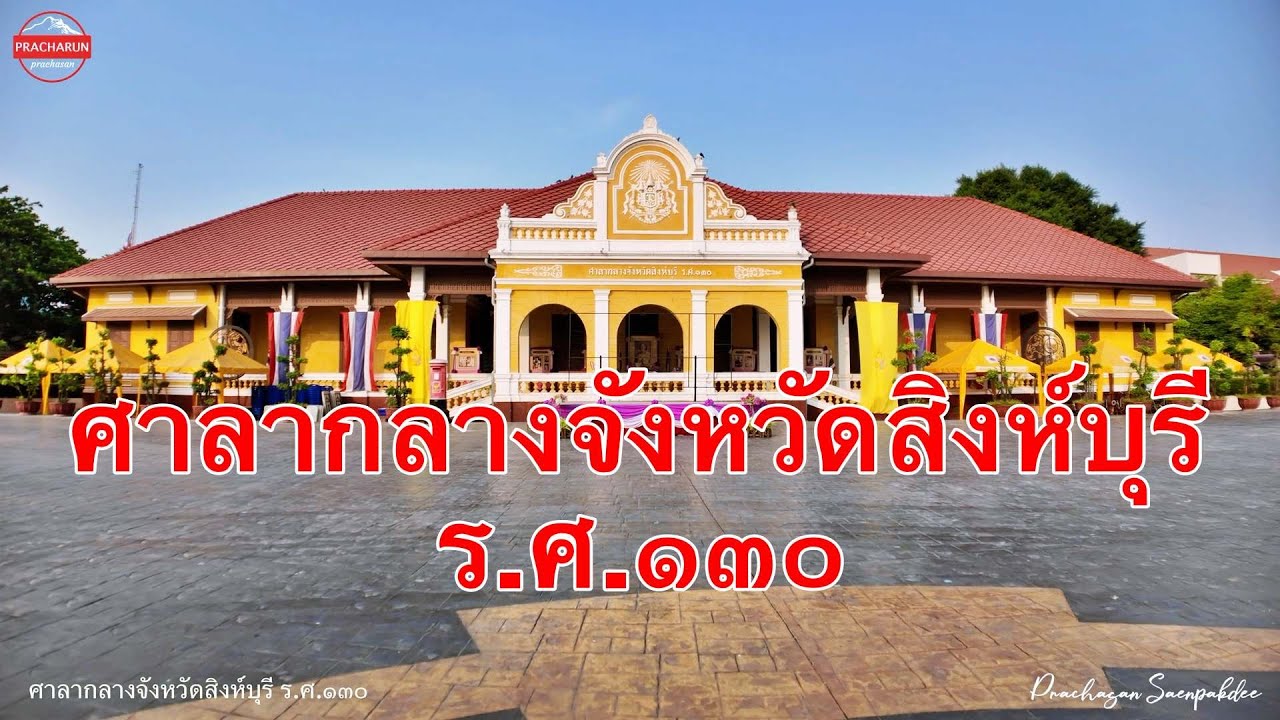
 Click to Access the Navigation Map GPS
Old Sing Buri Provincial Court And Provincial Hall Map

 Historical Sites and Monuments(4)
Landmarks and Memorials(3)
Historical Sites and Monuments(4)
Landmarks and Memorials(3)
 Art, Craft Centres, Tradition(3)
 Museums(1)
 Educational Places
 Library(1)
 Places of Worship
 Temple(42)
 Church(1)
 Other Sacred Sites(2)
 Research and Development
 Royal Project(3)
 Suburban Living
 Village, Community(1)
 Local Market(1)
 Nature and Wildlife
 National Parks and Marine Reserves(1)
 River, Canal(7)
 Bays and Beaches(1)
 Other natural attractions(2)
 Entertainment and Agricultural
 Animal camps and shows(1)
 Farms, Parks and Ecotourism(1)


