
lovethailand home >Central Travel Attractions >Sing Buri Travel Attractions >Muang Sing Buri >Muang Mu > Wat Phra Prang Muni
TL;DR: Wat Phra Prang Muni is located at Moo 1, Muang Mu Subdistrict, Mueang Sing Buri District, Sing Buri Province, open Daily, hours 08.00 – 16.30.
Wat Phra Prang Muni
Open Days: Daily
Opening Hours: 08.00 – 16.30
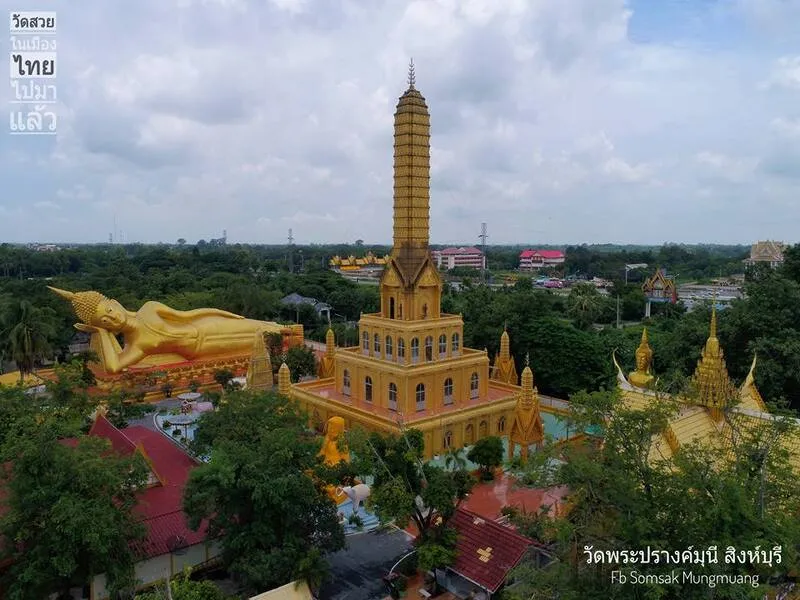
Wat Phra Prang Muni in Sing Buri Province is an old Buddhist temple in Muang Mu Subdistrict, Mueang Sing Buri District. It is best known for its tall golden square-shaped prang, which rises prominently beside Highway 32 and can be seen clearly from a distance. Located near kilometer markers 134 – 135 on the Asian Highway, opposite Sing Buri College of Agriculture and Technology, the temple is one of the most visually distinctive sacred sites in the province. It combines a golden architectural identity, Ayutthaya-period religious heritage, the revered Luang Pho Yen image, a sacred well, local mural paintings, and several devotional areas within one temple compound.
For foreign travelers looking for a beautiful and meaningful temple near Bangkok, Wat Phra Prang Muni is a worthwhile stop. It is easy to reach by car from downtown Sing Buri and is highly recognizable because of the golden prang that dominates the temple skyline. The temple is not only a photogenic golden landmark, but also a place with layered cultural meaning. Visitors can pay respect to Luang Pho Yen, see the sacred well, observe folk mural paintings inside the ordination hall, and walk through several worship areas that reflect both Buddhist devotion and local belief.
The temple is believed to date from the late Ayutthaya period. Its name is associated with the large golden prang that stands as the temple’s most important visual feature. In Thai Buddhist architecture, a prang is often connected with sacred cosmology and ancient religious symbolism. At Wat Phra Prang Muni, the prang functions as both a landmark and a spiritual center. Its tall square form, tapering upper section, and bright golden surface create a strong impression even before visitors enter the temple grounds.
The golden prang should be viewed from several angles. From the front, visitors can appreciate its overall height and proportion. From the sides, the relationship between the prang, the surrounding buildings, and the temple compound becomes clearer. The golden color gives the temple a bright and auspicious atmosphere. In Thai culture, gold is associated with merit, sacredness, prosperity, and spiritual radiance. This is why many visitors remember Wat Phra Prang Muni as a golden temple of Sing Buri.
Near the prang stands the viharn of Luang Pho Yen, one of the temple’s most important sacred images. Luang Pho Yen is an old stucco Buddha image believed to date from the Ayutthaya period. Local devotees deeply respect the image, which is associated with peace, coolness, comfort, and auspiciousness. The name “Yen” in Thai conveys a sense of coolness and calm. Visitors often come to pay respect, ask for blessings, and reflect quietly in front of the image.
Local stories connected with Luang Pho Yen add depth to the temple’s atmosphere. One well-known account tells of a wandering monk who once practiced meditation in the temple area and requested sacred water from Luang Pho Yen to help heal illnesses among local people. As devotion grew, people came to call the image Luang Pho Yen, reflecting the idea of peace, relief, and well-being. Whether approached as faith, folklore, or local memory, the story shows how a Buddha image can become a spiritual center for an entire community.
Beside the viharn is a sacred well, another important feature of the temple. Water in Thai Buddhist and local religious contexts often symbolizes purity, blessing, cleansing, and protection. The sacred well at Wat Phra Prang Muni is closely connected with the devotional story of Luang Pho Yen and the temple’s spiritual identity. Visitors should treat the area respectfully, avoid throwing anything into the well, and keep the surroundings clean. For many local people, the well is not only a physical water source but also part of the temple’s sacred landscape.
Wat Phra Prang Muni is also known as an old repository of sacred objects. Local accounts refer to the area as an old kru, or hidden deposit of Buddhist objects. In Thai cultural understanding, a kru is often associated with sacred Buddha images, amulets, or old religious materials preserved within soil, stupas, or temple grounds. This gives the temple an archaeological and devotional dimension. It suggests that the temple has long been a place where sacred materials, memory, and faith were preserved through time.
One of the most valuable artistic features of the temple is the mural painting inside the ordination hall. The paintings were created by a local artisan named Nai Pheng, a Lao man, around 1919. They depict stories of hell and heaven, a common Buddhist moral theme used to teach people about karma, virtue, wrongdoing, and the consequences of one’s actions. Although the paintings were made by a folk artist rather than a court painter, they remain beautiful and culturally significant. Their value lies not only in artistic technique but also in their role as visual teaching tools for the community.
Folk mural paintings are important because they reveal how ordinary people understood and transmitted Buddhist teachings. The scenes of heaven and hell were not merely decoration. They were moral lessons painted onto temple walls so that villagers, including those who could not read religious texts, could understand the principles of karma and ethical conduct. The murals at Wat Phra Prang Muni therefore function as both art and social history. They preserve the worldview of a local community in the early 20th century.
The fact that the artist is remembered as Nai Pheng, a Lao man, makes the murals even more interesting. Many temples in Thailand preserve works by unnamed artisans, but here the memory of the painter remains attached to the work. This helps visitors appreciate the role of folk artists in Thai religious culture. They may not have been royal craftsmen, but their work shaped the moral imagination of local communities. The murals of Wat Phra Prang Muni are therefore valuable as local art, Buddhist instruction, and cultural memory.
Besides Luang Pho Yen, the temple also has Luang Pho Khao and Luang Pho Nak, both associated with local devotion. Visitors can walk gradually through the temple compound and pay respect at different worship points. This slower route allows the temple to be experienced as a living sacred space rather than a single photo stop. It is recommended to begin with the golden prang, continue to Luang Pho Yen and the sacred well, then visit the ordination hall, the main Buddha image, the reclining Buddha, and other sacred areas.
The temple also contains Phra Phu Khao Thong, Luang Pho Yai Chai Mongkhon, or Phra Phuttha Nimit Phichit Mara Maha Chakkraphat, located on the sermon hall. Other notable elements include a simulated Nariphon tree, a shrine of Chao Mae Takhian Thong, and a Bodhi tree behind the viharn, where a Buddha image is associated with the base of the tree. These features reflect the way Thai temples often combine formal Buddhist devotion with local sacred stories, trees, shrines, and community beliefs.
The large golden reclining Buddha is another memorable feature of the temple. Its color and scale harmonize with the temple’s overall golden identity. Together with the prang, Luang Pho Yen, the sacred well, the murals, and other worship points, the reclining Buddha helps make Wat Phra Prang Muni a multi-layered temple. Travelers who take time to walk through the compound will find that the temple is more complex than it first appears from the highway.
The current abbot of Wat Phra Prang Muni is Phra Khru Samu Sompong Suthiro. The temple continues to function as a living religious center for the local community. It is connected with merit-making, Buddhist ceremonies, Kathin offerings, seasonal religious activities, and local worship. This active role is important because Wat Phra Prang Muni is not only a heritage attraction. It remains a temple where monks, villagers, and devotees continue to sustain Buddhist practice and community life.
Religious activities at the temple follow the rhythm of central Thai Buddhist life. Visitors may see people making merit, offering food to monks, giving donations, paying respect to Buddha images, or joining temple ceremonies. On ordinary days, the atmosphere is calm and suitable for sightseeing and prayer. During merit-making events, the temple becomes more lively and shows the close relationship between the temple and the local community. Travelers who wish to attend temple events should check announcements from the temple directly.
From an artistic perspective, Wat Phra Prang Muni is especially interesting because of its golden visual unity. The golden prang, golden temple buildings, and golden Buddha images create a strong aesthetic identity. However, the temple’s real value lies deeper than color. It combines late Ayutthaya-period heritage, an old stucco Buddha image, a sacred well, folk murals from 1919, and several layers of local belief. This combination makes the temple both beautiful and meaningful.
Visitors interested in murals should spend time inside the ordination hall. The scenes of hell and heaven should be read as visual Buddhist teaching. Look at the figures, colors, narrative arrangement, and moral messages. These paintings were meant to teach people directly through images. They show how temples served as classrooms of ethics and religion for communities long before modern media became common.
Wat Phra Prang Muni can be visited briefly or slowly. A short visit may focus on the golden prang, Luang Pho Yen, and major photo points. A longer visit should include the ordination hall murals, the sacred well, the reclining Buddha, the sermon hall, the Bodhi tree, and other worship areas. Travelers who want to understand the temple properly should allow at least 1 hour, and more time if they wish to study the murals or take photographs respectfully.
For families, the temple can be an excellent cultural learning site. Children can learn about a prang, sacred wells, Buddhist murals, Buddha images, and proper temple etiquette. Parents can explain why temples preserve art, why murals show heaven and hell, and why local communities continue to respect old Buddha images such as Luang Pho Yen. Learning from the actual site helps make Thai culture easier to understand than reading from a textbook alone.
Photography is popular at Wat Phra Prang Muni because of the golden prang and bright temple architecture. Good photo points include the prang against the sky, the golden ordination hall, the reclining Buddha, Luang Pho Yen’s viharn, and the mural details. However, photography should be done respectfully. Visitors should not climb on temple structures, should not touch murals, should not disturb worshippers, and should avoid poses that are inappropriate for a sacred site.
The temple’s location makes it easy to combine with other attractions in Sing Buri. Nearby places include Thewalai Phra Phrom, Wat Amphawan, Wat Phra Non Chakkrasi Worawihan, Wat Phikun Thong, and Sing Buri City Pillar Shrine. These places form a convenient one-day cultural route for travelers interested in Buddhist temples, meditation sites, large Buddha images, sacred architecture, and local heritage.
Getting There is convenient by private car. From downtown Sing Buri, take Highway 32, the Asian Highway, toward Phrom Buri District. The temple is located around kilometer markers 134 – 135 in Muang Mu Subdistrict, opposite Sing Buri College of Agriculture and Technology. The tall golden prang is clearly visible from the road, making the temple easy to identify. Travelers can also use online maps by searching for Wat Phra Prang Muni, Mueang Sing Buri District, Sing Buri Province.
The best time to visit is in the morning or late afternoon when the light is softer and the golden prang photographs well. Weekends and holidays may be busier, so visitors should allow extra time for parking and walking. Those interested in the murals should visit when natural light is sufficient and should avoid touching the walls or using flash near old paintings. Quiet behavior inside the ordination hall helps preserve the sacred atmosphere and the artwork.
Visitors should dress modestly, covering shoulders and knees, remove shoes before entering sacred buildings, speak quietly, avoid touching sacred objects, and keep the temple clean. These practices are important in all Thai Buddhist temples. Respectful behavior allows travelers to enjoy the visit while honoring the temple’s religious function and the local community that continues to care for it.
Overall, Wat Phra Prang Muni is one of the most distinctive temples in Sing Buri. It is not only a golden temple suitable for photographs, but also a layered cultural site with a late Ayutthaya-period background, Luang Pho Yen, a sacred well, an old hidden repository of Buddhist objects, folk murals from around 1919, and a strong local devotional identity. For travelers who want to understand Sing Buri through sacred architecture, folk art, and living Buddhist faith, Wat Phra Prang Muni is a highly worthwhile destination.
| Name | Wat Phra Prang Muni |
| Location | Moo 1, Muang Mu Subdistrict, Mueang Sing Buri District, Sing Buri Province |
| Address | Highway 32, around kilometer markers 134 – 135, Muang Mu Subdistrict, Mueang Sing Buri District, Sing Buri 16000, Thailand |
| Highlights | Tall golden square-shaped prang, Luang Pho Yen viharn, old Ayutthaya-period stucco Buddha image, sacred well, large golden reclining Buddha, and folk murals depicting heaven and hell |
| History | Believed to have been built in the late Ayutthaya period. The temple name is associated with the large golden prang. It also preserves Luang Pho Yen, an old stucco Buddha image, and murals painted around 1919 by Nai Pheng, a Lao folk painter |
| Distinctive Features | A golden temple combining sacred architecture, old Buddha images, a sacred well, folk mural paintings, and the living faith of the Muang Mu community |
| Main Areas / Zones | 1. Golden Phra Prang Muni 2. Viharn of Luang Pho Yen 3. Sacred Well 4. Ordination Hall and Heaven-Hell Murals 5. Main Buddha Image in the Golden Ordination Hall 6. Phra Phu Khao Thong, Luang Pho Yai Chai Mongkhon, or Phra Phuttha Nimit Phichit Mara Maha Chakkraphat 7. Golden Reclining Buddha 8. Chao Mae Takhian Thong Shrine, Simulated Nariphon Tree, and Bodhi Tree Area |
| Travel Information | From downtown Sing Buri, take Highway 32 toward Phrom Buri District. The temple is around kilometer markers 134 – 135, opposite Sing Buri College of Agriculture and Technology. The golden prang is visible from the Asian Highway |
| Current Status | Open to visitors and remains an important faith and cultural attraction in Sing Buri Province |
| Open Days | Daily |
| Opening Hours | 08.00 – 16.30 |
| Fees | No admission fee |
| Abbot / Caretaker | Phra Khru Samu Sompong Suthiro, Abbot of Wat Phra Prang Muni |
| Main Contact Number | 0 3652 0079 089-239-0228 |
| Official Website / Official Page | Facebook: Wat Phra Prang Muni |
| Nearby Tourist Attractions | 1. Thewalai Phra Phrom, about 1 km 2. Wat Amphawan, about 3 km 3. Wat Phra Non Chakkrasi Worawihan, about 6 km 4. Wat Phikun Thong, about 8 km 5. Sing Buri City Pillar Shrine, about 8 km |
| Nearby Restaurants | 1. Kesara Bakery Sing Buri, about 0.8 km, Tel. 095-639-9779 2. Cocochi Cafe Sing Buri, about 4 km 3. Pad Thai Bangmon, about 4 km, Tel. 062-329-3531 4. Lueat Mu Hia Lek, about 4 km, Tel. 083-963-6577, 081-293-5861 5. Nai Hua Korean BBQ, about 4 km |
| Nearby Accommodations | 1. Central Park Mansion, about 4 km 2. Zen Garden Resort, about 5 km 3. Na Ville Resort, about 5 km 4. Golden Dragon Resort, about 6 km 5. Chaisaeng Villa Hotel, about 7 km |
Frequently Asked Questions (FAQ)
Q: Where is Wat Phra Prang Muni located?
A: Wat Phra Prang Muni is located in Moo 1, Muang Mu Subdistrict, Mueang Sing Buri District, Sing Buri Province, beside Highway 32 around kilometer markers 134 – 135, opposite Sing Buri College of Agriculture and Technology.
Q: What is Wat Phra Prang Muni famous for?
A: The temple is famous for its tall golden square-shaped prang, Luang Pho Yen, the sacred well, the golden reclining Buddha, and folk murals depicting heaven and hell.
Q: Who is Luang Pho Yen?
A: Luang Pho Yen is an old Ayutthaya-period stucco Buddha image enshrined in a viharn near the golden prang. Local devotees respect the image as a symbol of peace, comfort, and auspiciousness.
Q: Why are the murals at Wat Phra Prang Muni important?
A: The murals inside the ordination hall were painted by a local Lao folk artist named Nai Pheng around 1919. They depict heaven and hell and serve as visual Buddhist teachings about karma and moral conduct.
Q: What are the opening hours of Wat Phra Prang Muni?
A: The temple is open daily from 08.00 to 16.30.
Q: Is there an admission fee for Wat Phra Prang Muni?
A: No. There is no admission fee. Visitors may make merit or donate according to personal faith.
Q: Who is the abbot of Wat Phra Prang Muni?
A: The abbot of Wat Phra Prang Muni is Phra Khru Samu Sompong Suthiro.
Q: What nearby attractions can be visited with Wat Phra Prang Muni?
A: Nearby attractions include Thewalai Phra Phrom, Wat Amphawan, Wat Phra Non Chakkrasi Worawihan, Wat Phikun Thong, and Sing Buri City Pillar Shrine.
 Category: ●Places of Worship
 Group: ●Temple
Last Update : 4 MonthAgo
 Last Update : 4 MonthAgo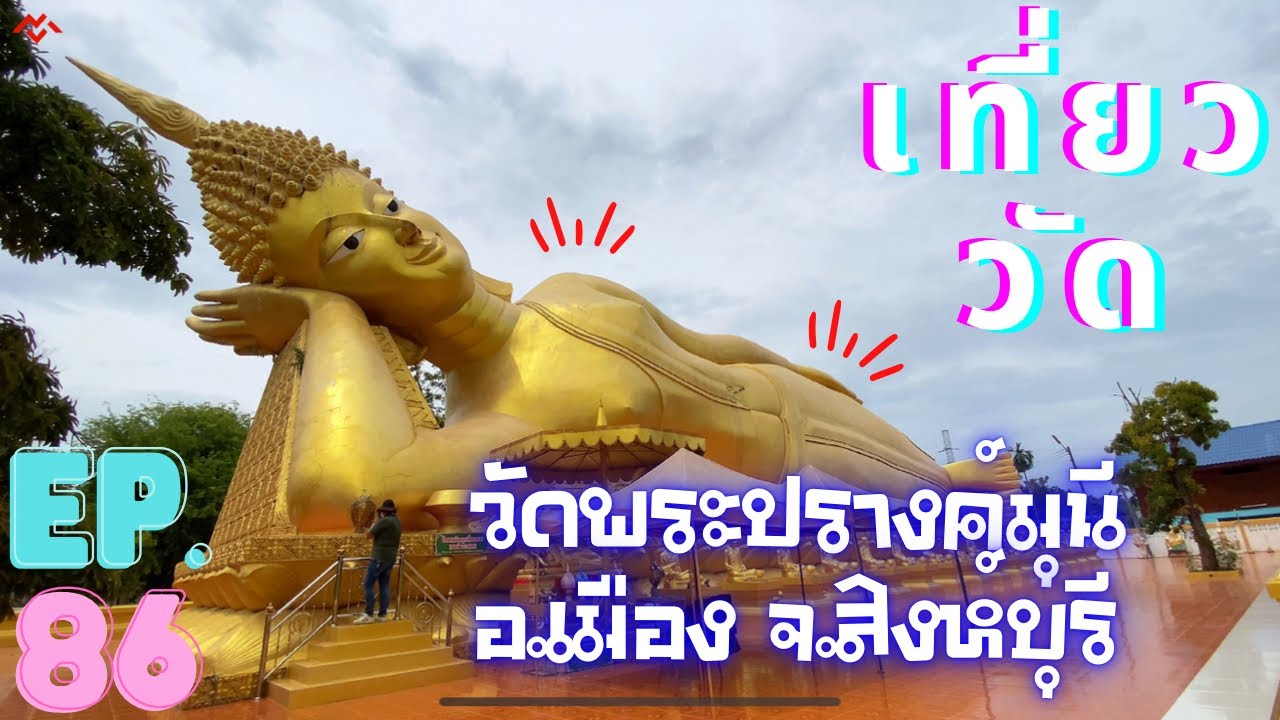
 Click to Access the Navigation Map GPS
Wat Phra Prang Muni Map

 Art, Culture and Heritage
 Historical Sites and Monuments(4)
 Landmarks and Memorials(3)
 Art, Craft Centres, Tradition(3)
 Museums(1)
 Educational Places
 Library(1)
Temple(42)
Library(1)
Temple(42)
 Church(1)
 Other Sacred Sites(2)
 Research and Development
 Royal Project(3)
 Suburban Living
 Village, Community(1)
 Local Market(1)
 Nature and Wildlife
 National Parks and Marine Reserves(1)
 River, Canal(7)
 Bays and Beaches(1)
 Other natural attractions(2)
 Entertainment and Agricultural
 Animal camps and shows(1)
 Farms, Parks and Ecotourism(1)
 Travel Articles, Recipes
 Travel Review, Food Review(1)


