
lovethailand home >North Travel Attractions >Sukhothai Travel Attractions >Si Nakhon >Nam Khum > Tak Bat Devo Tradition
TL;DR: Tak Bat Devo Tradition, Sukhothai attractions : Art, Culture and Heritage, Art, Craft Centres, Tradition.
Tak Bat Devo Tradition
Open Days: Annually Around The First Waning Moon Day Of The 11th Lunar Month, After The End Of Buddhist Lent, Or According To Each Temple’s Official Event Schedule
Opening Hours: Morning Hours According To The Almsgiving Ceremony And Procession Schedule Of Each Temple
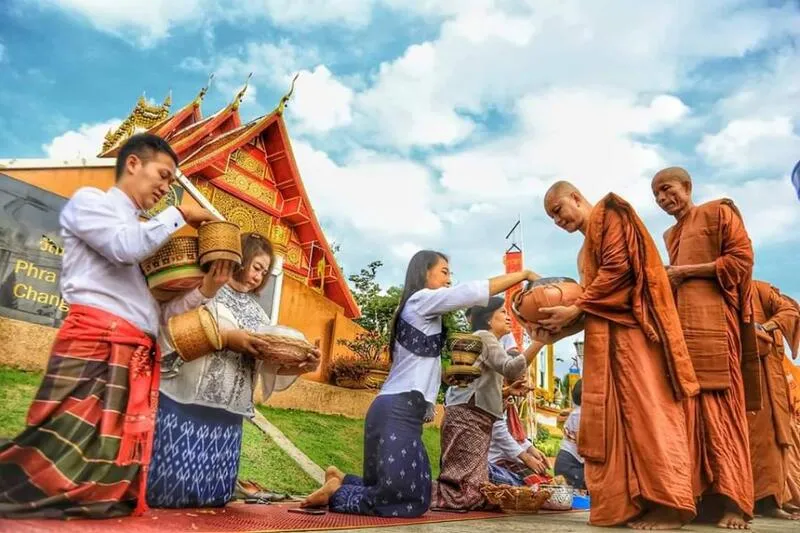
The Tak Bat Devo Tradition In Sukhothai Province is one of Thailand’s most meaningful Buddhist traditions after the end of Buddhist Lent. The word “Devo” is shortened from “Devorohana,” meaning the descent from the celestial world. In Buddhist belief, it refers to the day when the Buddha returned from the heavenly realm after spending the Buddhist Lent teaching Abhidhamma to his mother and celestial beings. On the first waning moon day of the 11th lunar month, devotees gather to welcome the Buddha’s symbolic return by offering food to monks. In Sukhothai, this tradition is especially significant at Wat Ratchathani in Mueang Sukhothai District and Wat Nam Khum in Si Nakhon District.
The importance of Tak Bat Devo is not limited to morning almsgiving. It carries deep religious, cultural, and social meanings. People prepare rice, dried food, drinking water, local sweets, khao tom mat, or khao tom luk yon to offer to monks. In some communities, processions are arranged to recreate the Buddha’s descent from heaven, with villagers dressed as angels, celestial beings, Indra, Brahma, hermits, hungry ghosts, animals from hell, and other figures drawn from Buddhist folk imagination. Through these visual elements, Buddhist teachings about merit, morality, heaven, the human world, and suffering become easier for people of all ages to understand.
Sukhothai is a particularly meaningful setting for this tradition because the province has long been associated with Buddhism, Thai history, and sacred art. As the former capital of an early Thai kingdom, Sukhothai is home to ancient temples, historical monuments, Buddhist images, and cultural landscapes that reflect the deep relationship between religion and society. The Tak Bat Devo ceremonies in Sukhothai therefore connect present-day communities with a long historical and spiritual memory.
Wat Ratchathani, located in Thani Subdistrict, Mueang Sukhothai District, is one of the best-known places for the Tak Bat Devo ceremony in the province. The temple stands near the Yom River and has long been important to the urban community of Sukhothai. Its annual Devorohana festival includes merit-making, almsgiving with rice and dried food, offerings of traditional wrapped sticky rice, and cultural activities organized by the temple and local community. The atmosphere begins early in the morning, when Buddhists arrive with offerings, dress respectfully, and gather around the ceremonial area to continue a tradition that has been practiced for decades.
One of the symbolic foods associated with Tak Bat Devo is khao tom luk yon, a small wrapped sticky rice offering. The belief behind it is connected to the Buddhist legend that when the Buddha descended from heaven, countless people gathered to welcome him. Because many could not approach him closely, they threw food offerings into his alms bowl. Today, the practice is more orderly, but khao tom luk yon remains an important cultural symbol that helps younger generations understand the meaning of the tradition through food and ritual action.
At Wat Ratchathani, the ceremony has also been associated with the community atmosphere along the Yom River. In some years, local events and water-related activities have added vibrancy to the occasion. The river is an important part of Sukhothai’s local geography, and the connection between temple, river, and community gives the event a distinctive character. People come not only to make merit but also to meet relatives, neighbors, and friends, turning the temple area into a shared space of faith and social connection.
Another remarkable site is Wat Nam Khum in Nam Khum Subdistrict, Si Nakhon District. Wat Nam Khum is an old community temple established as a temple in 1809. The Tak Bat Devo event at Wat Nam Khum is famous for its traditional procession, which reflects strong local creativity and folk craftsmanship. Villagers create ceremonial structures, heads and costumes representing Indra, Brahma, Shiva, Yama, hungry ghosts, dogs, monkeys, celestial beings, angels, and other symbolic figures. These handmade elements show the imagination, devotion, and local wisdom of the community.
The Tak Bat Devo tradition at Wat Nam Khum began in 1959, led by Kru Yom Chansuk together with local devotees. The community worked together to create decorative objects and procession elements based on their own artistic vision. This makes the Wat Nam Khum tradition distinctive because it was developed from local faith and folk creativity rather than copied from elsewhere. Over time, the original form has been preserved while additional objects, costumes, and procession details have been added.
Before the event, the community prepares extensively. Organizers invite local families to send children and young people to take part as angels, celestial beings, hermits, beggars, hungry ghosts, and other procession characters. This is more than decoration. It is a way of presenting Buddhist teachings in visual form. Spectators see representations of heaven, the human realm, and hell in the same procession, making the idea of the “day when the three worlds were opened” vivid and memorable.
The procession at Wat Nam Khum is one of the most memorable aspects of the event. It moves from outside the temple through local villages before entering Wat Nam Khum. Along the route, villagers wait to offer rice and dried food to monks and novices. The procession moves slowly so that everyone has the opportunity to participate in the merit-making. The sight of monks receiving alms alongside angels, celestial figures, folk characters, and villagers lining the route creates a powerful image of faith within everyday community life.
Wat Nam Khum’s Devo procession combines religious ceremony and folk art in a distinctive way. The ceremonial structures and character heads are made through local craftsmanship, and each year villagers help repair, prepare, and arrange them. Children and young people learn from elders through practice: making costumes, arranging the procession, understanding the characters, and taking part in the ceremony. The event therefore functions as a living cultural classroom for the whole community.
In Buddhist belief, Tak Bat Devo is connected to the Buddha’s return from Tavatimsa Heaven after teaching his mother. It is also associated with the idea of the three worlds—heaven, the human world, and hell—becoming visible to one another. This is why the day is sometimes known in Thai tradition as the “day of the opening of the worlds.” Through almsgiving, Buddhists express gratitude, accumulate merit, and reflect on moral conduct. The tradition encourages people to reduce harmful behavior, avoid vices, and turn toward generosity and spiritual practice.
Socially, Tak Bat Devo plays an important role in strengthening community unity. Preparing the event requires cooperation among monks, temple committees, local leaders, families, elders, artists, young people, and volunteers. People help prepare food, decorate the procession, make costumes, arrange the route, and welcome visitors. This shared work reduces distance between generations and builds a sense of ownership over local heritage. The unity created by the event is one of its most important values.
For travelers, the Tak Bat Devo Tradition in Sukhothai offers a deeper way to experience Thai culture. Visitors can witness Buddhist almsgiving, traditional wrapped rice offerings, local processions, handmade costumes, folk symbolism, and the warm participation of villagers. This is different from visiting historical ruins alone. It allows travelers to see Buddhism and Thai culture as living practices carried out by real communities.
Getting to Wat Ratchathani is convenient because it is located in Sukhothai town. Travelers staying in the city or visiting the old city area can include the temple in a cultural route with Ramkhamhaeng National Museum, Sukhothai Historical Park, Wat Mahathat, Wat Si Chum, local markets, and city restaurants. Those who wish to join the almsgiving ceremony should arrive early in the morning, dress modestly, and prepare offerings before the ceremony begins.
Wat Nam Khum is suitable for travelers who want to experience a more community-based version of the tradition in Si Nakhon District. The temple is located at 145 Ban Nam Khum, Moo 3, Nam Khum Subdistrict, Si Nakhon District, Sukhothai Province. Travelers from Sukhothai town should use a private car or rental car and plan their timing according to the procession schedule. Arriving before the procession begins allows visitors to choose a respectful viewing point and participate in merit-making properly.
Visitors attending Tak Bat Devo should respect the religious and community setting. Modest clothing is recommended. Visitors should not block the procession, walk in front of monks while they are receiving alms, or interrupt ceremonial activities. Photography is acceptable when done respectfully, but close-up photos of children, elders, monks, or performers should be taken with permission. Respectful behavior helps preserve the dignity of the event and creates a positive experience for both visitors and the host community.
Offerings commonly prepared for Tak Bat Devo include rice, dried food, bottled water, local sweets, khao tom mat, and khao tom luk yon. These offerings are not only food items but also expressions of devotion. Khao tom luk yon is especially meaningful because it connects the present ceremony with the old story of devotees offering food to the Buddha when they could not approach him directly.
The tradition is also valuable as a learning experience for children and young people. Those who join the procession or come with their families learn about the end of Buddhist Lent, the Buddha’s descent from heaven, generosity, gratitude, and moral cause and effect through direct experience. Visual figures such as angels, hungry ghosts, hell animals, and monks make abstract Buddhist teachings easier to understand at the community level.
In terms of cultural preservation, the Tak Bat Devo ceremonies at Wat Ratchathani and Wat Nam Khum are important for maintaining Sukhothai’s local identity. Wat Ratchathani reflects an urban temple tradition connected with the Yom River and the city community, while Wat Nam Khum reflects a rural community tradition with a large folk procession shaped by local craftsmanship. Together, they show the diversity of Tak Bat Devo in Sukhothai Province.
From a cultural tourism perspective, the tradition can be combined with historical and community-based travel routes. Visitors may begin the morning with almsgiving, then continue to temples, museums, historical parks, local markets, and restaurants. This approach gives a more complete picture of Sukhothai—not only as an ancient capital but also as a living province where Buddhist faith, community life, and local creativity continue today.
The Tak Bat Devo Tradition in Sukhothai is therefore a valuable living heritage. It is a Buddhist ceremony, a community merit-making event, a stage for folk creativity, and a cultural experience open to people of all ages. The morning chanting, monks receiving alms, khao tom luk yon in the hands of devotees, processions of celestial beings and symbolic characters, and the smiles of local people all make this tradition meaningful in contemporary Thai society.
For travelers who want to understand Sukhothai beyond its ancient monuments, joining or observing Tak Bat Devo is a meaningful experience. Wat Ratchathani and Wat Nam Khum are two important places where visitors can see faith, history, folk art, and community unity come together in one of Sukhothai’s most memorable Buddhist traditions.
| Name | Tak Bat Devo Tradition In Sukhothai Province |
| Period | The First Waning Moon Day Of The 11th Lunar Month, After The End Of Buddhist Lent, Or According To Each Temple’s Annual Schedule |
| Main Event Locations | Wat Ratchathani, Thani Subdistrict, Mueang Sukhothai District, Sukhothai Province, And Wat Nam Khum, Nam Khum Subdistrict, Si Nakhon District, Sukhothai Province |
| Address | Wat Ratchathani, Singhawat Road, Thani Subdistrict, Mueang Sukhothai District, Sukhothai 64000 Wat Nam Khum, 145 Ban Nam Khum, Moo 3, Nam Khum Subdistrict, Si Nakhon District, Sukhothai Province |
| Highlights | Post-Buddhist Lent almsgiving, khao tom luk yon, ceremonial procession representing the Buddha’s descent from heaven, angels, celestial beings, Indra, Brahma, hermits, hungry ghosts, and symbolic hell animals |
| History | The tradition commemorates the Buddha’s descent from Tavatimsa Heaven after teaching Abhidhamma to his mother during Buddhist Lent. In Sukhothai, the tradition has been preserved through temple and community ceremonies for many decades. |
| Name Origin | “Devo” comes from “Devorohana,” meaning the descent from the celestial world. |
| Distinctive Features | A Buddhist merit-making event that combines almsgiving, folk procession, local craftsmanship, symbolic food, and strong community participation |
| Travel Information | Wat Ratchathani is easily accessible from Sukhothai town and the old city area. Wat Nam Khum is best reached by private car or rental car from Sukhothai town to Si Nakhon District. Visitors should check the annual event schedule before traveling. |
| Current Status | The Tak Bat Devo tradition is still practiced in Sukhothai Province, with Wat Ratchathani and Wat Nam Khum recognized as important event locations. |
| Open Days | Annually around the first waning moon day of the 11th lunar month, after the end of Buddhist Lent, or according to each temple’s official event schedule |
| Opening Hours | Morning hours according to the almsgiving ceremony and procession schedule of each temple |
| Fees | No admission fee for general merit-making participation |
| Abbot / Caretaker / Local Coordinator | Wat Ratchathani: Phra Si Thammamanusit, Abbot Of Wat Ratchathani Wat Nam Khum: Wat Nam Khum, Nam Khum Community, And Nam Khum Subdistrict Administrative Organization |
| Main Contact Number | Nam Khum Subdistrict Administrative Organization Tel. 081-971-9197 Sukhothai Thani Municipality Tel. 055-612-690, 055-611-126 |
| What To Prepare | Rice, dried food, drinking water, khao tom mat, or khao tom luk yon for almsgiving; modest clothing is recommended. |
| Nearby Tourist Attractions | 1. Sukhothai Historical Park, About 13 km From Wat Ratchathani 2. Ramkhamhaeng National Museum, About 12 km From Wat Ratchathani 3. Wat Mahathat, Old Sukhothai, About 13 km From Wat Ratchathani 4. Wat Si Chum, About 15 km From Wat Ratchathani 5. Wat Chang Lom, About 11 km From Wat Ratchathani 6. Si Satchanalai Historical Park, About 45 km From Wat Nam Khum |
| Nearby Restaurants | 1. Auan Phochana Khao Tom Kui Si Samrong, About 1 km From Wat Ratchathani, Tel. 098-564-6265 2. Mai Klang Krung, About 2 km From Wat Ratchathani, Tel. 055-621882 3. Fueang Fa River Fish Restaurant, About 3 km From Wat Ratchathani, Tel. 055-612710, 089-8592084 4. Kuay Tiew Thai Ta Pui, About 2 km From Wat Ratchathani 5. Sit A Cup, Si Samrong District, About 25 km From Wat Nam Khum, Tel. 088-9629191 6. Ordina House, Si Samrong District, About 25 km From Wat Nam Khum, Tel. 099-1593957 |
| Nearby Accommodations | 1. Blue House Sukhothai, About 2 km From Wat Ratchathani 2. Ruean Thai Hotel, About 3 km From Wat Ratchathani 3. Foresto Sukhothai Guesthome, About 2 km From Wat Ratchathani 4. Midtown Sukhothai, About 2 km From Wat Ratchathani 5. Sukhothai Treasure Resort & Spa, About 11 km From Wat Ratchathani 6. Watthanakham Service Apartment, About 35 km From Wat Nam Khum |
Frequently Asked Questions (FAQ)
Q: When is the Tak Bat Devo Tradition in Sukhothai held?
A: It is held around the first waning moon day of the 11th lunar month, after the end of Buddhist Lent. Each temple may announce its annual schedule separately.
Q: What does Devorohana mean?
A: Devorohana means the descent from the celestial world. It refers to the Buddha’s symbolic return from Tavatimsa Heaven after teaching Abhidhamma to his mother.
Q: Where are the famous Tak Bat Devo events in Sukhothai?
A: The well-known locations are Wat Ratchathani in Mueang Sukhothai District and Wat Nam Khum in Si Nakhon District.
Q: What is khao tom luk yon?
A: Khao tom luk yon is a wrapped sticky rice offering associated with the legend of devotees throwing food into the Buddha’s alms bowl when they could not approach him closely.
Q: What makes the Wat Nam Khum procession special?
A: Its traditional procession includes angels, celestial beings, Indra, Brahma, hermits, hungry ghosts, and symbolic hell animals, reflecting Buddhist folk beliefs and local craftsmanship.
Q: How should travelers prepare before attending the event?
A: Travelers should check the temple schedule in advance, dress modestly, arrive early, and prepare suitable alms offerings such as rice, dried food, water, or khao tom luk yon.
Q: Is there an admission fee for Tak Bat Devo?
A: General participation in the merit-making ceremony does not require an admission fee. Visitors may prepare alms offerings or make donations according to their faith.
Q: Why is Tak Bat Devo important to the local community?
A: It strengthens Buddhist faith, brings villagers together, passes local wisdom to younger generations, and preserves a living cultural tradition of Sukhothai.
 Category: ●Art, Culture and Heritage
 Group: ●Art, Craft Centres, Tradition
Last Update : 1 WeekAgo
 Last Update : 1 WeekAgo
Recommend
 Historical Sites and Monuments(4)
 Landmarks and Memorials(5)
Art, Craft Centres, Tradition(11)
Landmarks and Memorials(5)
Art, Craft Centres, Tradition(11)
 Museums(5)
 Places of Worship
 Temple(40)
 Other religious and spiritural sites(10)
 Suburban Living
 Village, Community(3)
 Nature and Wildlife
 National Parks and Marine Reserves(3)
 Mountain (Doi)(2)
 Dam, Reservoir, Lake(4)
 Waterfalls(8)
 Caves(4)
 River, Canal(2)
 Entertainment and Agricultural
 Farm, Parks, Gardens and Ecotourism(3)


