
lovethailand home >North Travel Attractions >Sukhothai Travel Attractions >Thung Saliam >Thung Saliam > Luang Pho Sila
TL;DR: Luang Pho Sila is located at Wat Thung Saliam, Moo 3, Thung Saliam Subdistrict, Thung Saliam District, Sukhothai Province, open Daily, hours 08.00 – 17.00.
Luang Pho Sila
Open Days: Daily
Opening Hours: 08.00 – 17.00
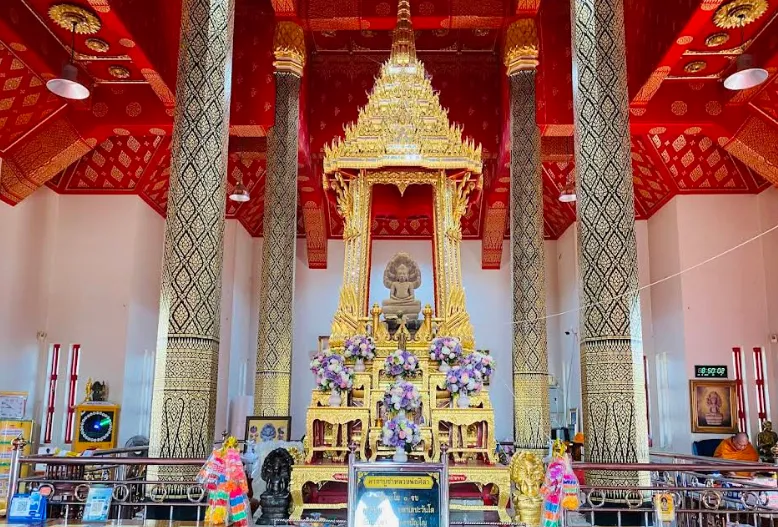
Luang Pho Sila at Wat Thung Saliam in Sukhothai Province is one of the most revered sacred Buddha images of Thung Saliam District. The image is a seated Buddha protected by a seven-headed naga, carved from grey sandstone in the Lopburi artistic style. It is admired for its beauty, historical value, and deep spiritual meaning. For local people, Luang Pho Sila is not only an ancient Buddhist image but also a powerful symbol of faith, protection, and community identity.
Luang Pho Sila is a Buddha image in meditation posture under the hood of a naga. The image has a square-shaped face, wears a headdress, earrings, a crown-like ornament, a necklace, and armlets, and sits cross-legged on a three-tiered coiled naga base. Above the Buddha’s head, a seven-headed naga spreads its hood protectively. Behind the image, the naga’s tail rises and curls beautifully toward the body, creating a strong and elegant sculptural composition. These details make Luang Pho Sila one of the most distinctive sacred images in Sukhothai Province.
The image is about 85.50 cm high from the base to the top of the naga hood and weighs about 126.5 kg. Although it is not a very large Buddha image, the grey sandstone material, the compact form, and the powerful naga composition give it a commanding presence. Visitors often feel that the image is both serene and majestic. The stillness of the meditation posture contrasts beautifully with the dynamic form of the naga, creating a strong sense of sacred protection.
The name Luang Pho Sila means “Venerable Stone Buddha.” The word “sila” refers to the stone material from which the image was carved, but it also suggests firmness, permanence, and endurance. This meaning fits the image very well. The Buddha image has passed through long periods of history, relocation, theft, recovery, and renewed worship, yet it continues to stand as the spiritual heart of Thung Saliam.
Originally, Luang Pho Sila was enshrined in Chao Ram Cave, a large cave deep in the forest near the area connected with Ban Dan Lan Hoi District. The cave setting gives the history of the image a mysterious and sacred atmosphere. A grey sandstone naga-protected Buddha image inside a deep forest cave naturally became associated with powerful spiritual presence. The cave was also known for large numbers of bats, making the story of Luang Pho Sila even more memorable in local tradition.
Around 1929 to 1932, the people of Thung Saliam invited Luang Pho Sila from Chao Ram Cave to be enshrined at Wat Thung Saliam. This movement was highly meaningful. It brought a sacred image from a remote forest cave into the center of community life, where people could worship it, protect it, and preserve it more easily. From that time onward, Luang Pho Sila became the sacred guardian image of Thung Saliam District.
Local stories also remember unusual signs during the arrival of the image at Wat Thung Saliam. It is said that when the image reached the temple, the sky, which had been clear, became covered with clouds and heavy rain fell for a long time. After the rain stopped, a group of bats circled above Wat Thung Saliam before flying back toward Chao Ram Cave. Local people regarded this as a sign of the sacred connection between the Buddha image, the cave, and its new home at the temple.
The importance of Luang Pho Sila increased further after a major incident in which the image was stolen and taken out of Thailand to England. For the people of Thung Saliam, the loss was deeply painful because Luang Pho Sila was not merely an art object. It was a spiritual treasure, a sacred image, and the center of community devotion. The image held memories, prayers, and identity for the local people.
Through the efforts and faith of the people of Thung Saliam and those involved in the recovery, Luang Pho Sila was eventually brought back and re-enshrined at Wat Thung Saliam. Its return brought great joy to local Buddhists. The event showed that an ancient Buddha image is not only a museum object or antique. It is a living cultural and spiritual heritage that belongs to a community and continues to shape people’s emotional and religious life.
To commemorate the return of the image and to express devotion to Luang Pho Sila, the people of Thung Saliam hold the annual Luang Pho Sila worship ceremony on February 24 every year. Buddhists from the district and from other areas come to Wat Thung Saliam to pay respect, make offerings, and pray before the image. The event is one of the most important annual religious occasions in Thung Saliam District.
The annual ceremony is not only a temple event. It is also a community gathering that renews local faith and unity. People who have moved away often return home for the occasion. Local residents help prepare the temple grounds and welcome visitors. The ceremony allows different generations to share the same spiritual experience and helps preserve the story of Luang Pho Sila for the future.
From an artistic perspective, Luang Pho Sila is an important example of a naga-protected Buddha image in the Lopburi style. This form refers to the story of the naga Mucalinda protecting the Buddha during meditation in a storm. The image therefore symbolizes protection, concentration, and spiritual calm in the face of hardship. The seven-headed naga above the Buddha’s head emphasizes the idea of sacred guardianship.
The details of the image reveal the skill of ancient craftsmen. The square face, royal ornaments, headdress, earrings, necklace, armlets, three-tiered naga base, and the carved naga tail at the back all show careful design. The image is powerful from both the front and the rear, which indicates that the sculptor considered the entire form, not only the main viewing angle. This makes Luang Pho Sila highly valuable for those interested in Buddhist art and Southeast Asian sculpture.
The Lopburi style is known for its strong form, symbolic power, and influence from Khmer-related artistic traditions. The presence of such an image in Sukhothai Province reminds visitors that Sukhothai’s cultural landscape is layered. It is not limited only to the graceful Sukhothai style familiar from the historical park. The province also contains older and related artistic traditions that help explain the region’s long cultural development.
For local residents, Luang Pho Sila is a sacred image for prayer and protection. People come to ask for blessings related to safety, health, work, family well-being, prosperity, and peace of mind. Some visitors come because they believe strongly in the sacred power of the image. Others come to appreciate its history and artistic beauty. Both forms of visitation are meaningful, because Luang Pho Sila carries value as both a religious object and a cultural treasure.
Wat Thung Saliam, where the image is enshrined, is an important temple in Thung Saliam District. The temple serves as a place for Buddhist ceremonies, merit-making, worship, and community activities. Its atmosphere is peaceful and suitable for visitors who want to pray quietly, learn the story of the image, and observe local Buddhist practice. The temple remains an active religious site, not just a tourist attraction.
Visitors should worship Luang Pho Sila respectfully. Common practices include bowing, offering flowers, incense, candles, or other suitable offerings, and making merit according to one’s faith. Modest dress is recommended. Visitors should speak quietly, avoid touching the image unnecessarily, and respect those who are praying. Because Luang Pho Sila is an old sandstone image of high artistic and spiritual value, respectful behavior also helps support preservation.
Wat Thung Saliam can be included in a cultural and local travel route around Thung Saliam District. Nearby attractions include Wat Pipat Mongkhon, Thung Saliam Water Park, Hom Do Farm, Do Mae Than, Ban Choeng Pha Weir, and further onward to Si Satchanalai Historical Park. This route allows travelers to experience temples, local faith, rural scenery, and historical heritage in one journey.
Getting There is most convenient by private car, rental car, or hired local vehicle. From Sukhothai town, travelers can drive toward Thung Saliam District and continue to Wat Thung Saliam on Rural Road 7018. A private vehicle is recommended because it allows visitors to combine the temple with nearby attractions in the same day. The route is suitable for a calm cultural trip through the countryside of Sukhothai Province.
The best time to visit is in the morning or late afternoon, when the weather is more comfortable and the temple atmosphere is calm. Travelers who want to experience the annual religious event should visit around February 24, when the Luang Pho Sila worship ceremony is held. Those who prefer a quieter experience should visit on an ordinary weekday outside the festival period.
For foreign travelers, Luang Pho Sila is a valuable place to understand Thai Buddhism, local faith, and Buddhist art beyond the main historical sites of Sukhothai. The image teaches visitors about the naga-protected Buddha form, Lopburi-style sculpture, the role of sacred images in Thai communities, and the emotional importance of cultural heritage when it is lost and recovered.
In summary, Luang Pho Sila at Wat Thung Saliam is a sacred grey sandstone naga-protected Buddha image with outstanding artistic, historical, and spiritual value. Its origin in Chao Ram Cave, its invitation to Wat Thung Saliam around 1929 to 1932, its theft and return from England, and the annual worship ceremony on February 24 all make it one of the most meaningful cultural and religious landmarks in Sukhothai Province.
| Name | Luang Pho Sila, Wat Thung Saliam |
| Location | Wat Thung Saliam, Moo 3, Thung Saliam Subdistrict, Thung Saliam District, Sukhothai Province |
| Address | Rural Road 7018, Thung Saliam Subdistrict, Thung Saliam District, Sukhothai 64150, Thailand |
| Highlights | A sacred naga-protected Buddha image in meditation posture, carved from grey sandstone in the Lopburi style and revered as the spiritual treasure of Thung Saliam District |
| History | Originally enshrined in Chao Ram Cave in a deep forest area near Ban Dan Lan Hoi District, then invited to Wat Thung Saliam around 1929 – 1932 |
| Distinctive Features | Square face, headdress, earrings, crown-like ornament, necklace, armlets, seated posture on a three-tiered coiled naga base, and a seven-headed naga hood above the Buddha’s head |
| Image Size | About 85.50 cm high from the base to the top of the naga hood, weighing about 126.5 kg |
| Important Story | Luang Pho Sila was once stolen and taken to England before being brought back and re-enshrined at Wat Thung Saliam, bringing great joy to local Buddhists |
| Important Tradition / Ritual | The annual Luang Pho Sila worship ceremony is held on February 24 every year at Wat Thung Saliam, with worshippers offering prayers, merit-making, and sacred offerings |
| Travel Information | Travel from Sukhothai town to Thung Saliam District and continue to Wat Thung Saliam on Rural Road 7018. Private car, rental car, or hired local vehicle is recommended |
| Current Status | Enshrined at Wat Thung Saliam and open for worship; remains a sacred image of Thung Saliam District |
| Open Days | Daily |
| Opening Hours | 08.00 – 17.00 |
| Facilities | Worship area, temple grounds, parking area, restrooms, and community religious space |
| Abbot / Caretaker | Phra Khru Sukhet Sutthalangkan (Alongkon Anālayo), Tel. 055-626370, 086-671-5336 |
| Official Website / Official Page | Luang Pho Sila Wat Thung Saliam Sukhothai Facebook Page |
| Nearby Tourist Attractions | 1. Thung Saliam Water Park, about 5 km 2. Wat Pipat Mongkhon, about 6 km 3. Hom Do Farm, about 8 km 4. Do Mae Than, about 10 km 5. Ban Choeng Pha Weir, about 12 km 6. Si Satchanalai Historical Park, about 35 km |
| Nearby Restaurants | 1. Local Popular Restaurant in Thung Saliam, about 2 km, Tel. 063-165-6395 2. Jing Jai Cafe’, about 3 km 3. SAPALUM, about 6 km 4. Kuai Tiao Thai, about 3 km 5. Kuai Tiao Chai Thung, about 4 km |
| Nearby Accommodations | 1. ONING Resort, about 3 km, Tel. 062-431-4050 2. Chuan Chom Resort, about 5 km, Tel. 099-756-6836, 062-565-8169 3. Accommodations in Thung Saliam District, about 3 km 4. Accommodations near Wat Pipat Mongkhon, about 6 km 5. Accommodations in Si Satchanalai District, about 35 km |
Frequently Asked Questions (FAQ)
Q: Where is Luang Pho Sila located?
A: Luang Pho Sila is enshrined at Wat Thung Saliam, Moo 3, Thung Saliam Subdistrict, Thung Saliam District, Sukhothai Province.
Q: What type of Buddha image is Luang Pho Sila?
A: Luang Pho Sila is a naga-protected Buddha image in meditation posture, carved from grey sandstone in the Lopburi style, with a seven-headed naga hood above the Buddha’s head.
Q: Where was Luang Pho Sila originally enshrined?
A: It was originally enshrined in Chao Ram Cave, a deep forest cave near the area connected with Ban Dan Lan Hoi District, before being invited to Wat Thung Saliam around 1929 – 1932.
Q: When is the annual Luang Pho Sila worship ceremony held?
A: The annual ceremony is held on February 24 every year at Wat Thung Saliam.
Q: Was Luang Pho Sila once stolen?
A: Yes. Luang Pho Sila was once stolen and taken to England before being returned and re-enshrined at Wat Thung Saliam.
Q: How should visitors behave when worshipping Luang Pho Sila?
A: Visitors should dress modestly, behave respectfully, keep their voices low, and avoid touching the old Buddha image or sacred objects unnecessarily.
Q: What nearby attractions can travelers visit after Wat Thung Saliam?
A: Nearby attractions include Wat Pipat Mongkhon, Thung Saliam Water Park, Hom Do Farm, Do Mae Than, Ban Choeng Pha Weir, and Si Satchanalai Historical Park.
 Category: ●Places of Worship
 Group: ●Other Sacred Sites
Last Update : 3 MonthAgo
 Last Update : 3 MonthAgo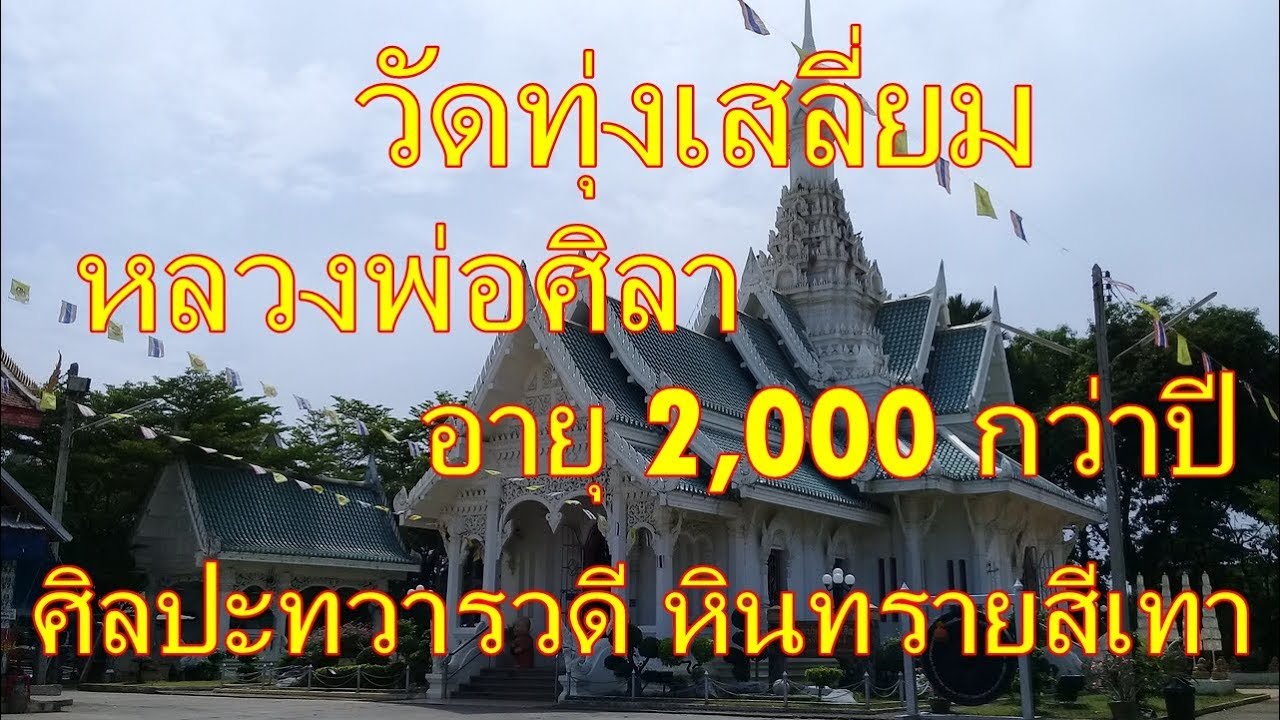
 Click to Access the Navigation Map GPS
Luang Pho Sila Map
Recommend

 Art, Culture and Heritage
 Historical Sites and Monuments(4)
 Landmarks and Memorials(5)
 Art, Craft Centres, Tradition(11)
 Museums(5)
 Temple(40)
Other Sacred Sites(10)
Temple(40)
Other Sacred Sites(10)
 Suburban Living
 Village, Community(3)
 Nature and Wildlife
 National Parks and Marine Reserves(3)
 Mountain (Doi)(2)
 Dam, Reservoir, Lake(4)
 Waterfalls(8)
 Caves(4)
 River, Canal(2)
 Entertainment and Agricultural
 Farms, Parks and Ecotourism(3)


