
lovethailand home >North Travel Attractions >Sukhothai Travel Attractions >Muang Sukhothai >Muang Kao > Sukhothai Historical Park
TL;DR: Sukhothai Historical Park is located at Mueang Kao Subdistrict, Mueang Sukhothai District, Sukhothai Province, open Daily, hours 06.30 – 19.30.
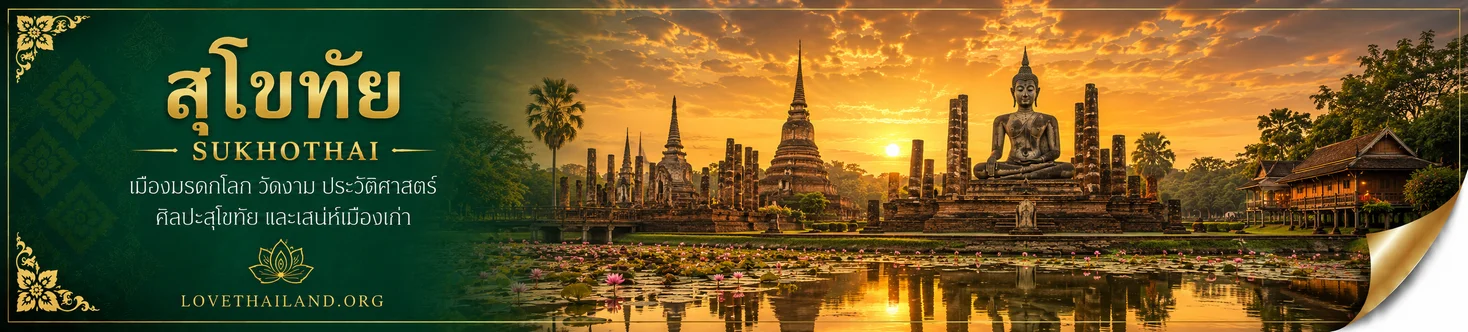
Sukhothai Historical Park
Open Days: Daily
Opening Hours: 06.30 – 19.30
Sukhothai Historical Park, widely known as the Old City of Sukhothai, is one of Thailand’s most important cultural heritage destinations. Located in Mueang Kao Subdistrict, Mueang Sukhothai District, Sukhothai Province, the park preserves the heart of the ancient Sukhothai Kingdom, a civilization that played a central role in shaping early Thai history, Buddhist art, urban planning, writing, governance, and cultural identity. For international travelers, this is one of the best places in Thailand to understand where many foundations of Thai civilization began.
The park is located about 12 kilometers west of modern Sukhothai town along Highway No. 12, the Sukhothai-Tak route. As visitors enter the old city area, the atmosphere changes from a modern provincial town to a landscape of ancient walls, moats, lotus ponds, brick ruins, Buddha images, and wide open spaces. The setting is calm, balanced, and visually powerful. Unlike many historical sites that feel detached from their surroundings, Sukhothai Historical Park remains deeply connected to water, trees, sky, and local community life.
Sukhothai Historical Park forms part of the UNESCO World Heritage property known as Historic Town of Sukhothai and Associated Historic Towns, inscribed in December 1991 together with Si Satchanalai Historical Park and Kamphaeng Phet Historical Park. The inscription recognizes the outstanding value of Sukhothai as a major cultural center of the 13th and 14th centuries, when the kingdom developed a distinctive artistic and architectural style. The monuments here illustrate the emergence of what is now known as the Sukhothai style, one of the most elegant expressions of Thai Buddhist art.
The name Sukhothai is often interpreted as the Dawn of Happiness, and the old city still reflects this poetic meaning. The historical park is not simply a collection of ruins. It is a complete cultural landscape where temples, reservoirs, moats, city walls, roads, and religious monuments were arranged in relation to one another. Walking through the park allows visitors to experience history not as an isolated object, but as a living spatial system. Every pond, wall, Buddha image, and stupa contributes to a larger understanding of the city.
The park covers more than 70 square kilometers and includes monuments both inside and outside the ancient city walls. The central zone within the city walls contains some of the most important sites, including Wat Mahathat, Wat Chana Songkhram, Wat Si Sawai, Wat Sa Si, Wat Traphang Ngoen, and the King Ramkhamhaeng the Great Monument. Outside the walls, visitors can explore major monuments such as Wat Si Chum, Wat Phra Phai Luang, Wat Chang Lom, Wat Saphan Hin, and Saritphong Dam, also known as Thamnop Phra Ruang.
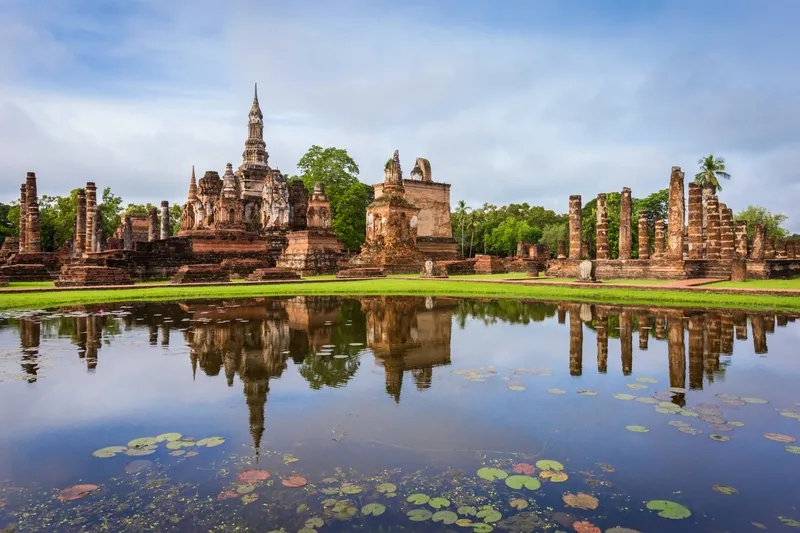
Wat Mahathat is the spiritual and architectural center of the old city. Located in the heart of Sukhothai, it was the most important Buddhist temple of the ancient capital. Its main stupa is built in the lotus-bud or phum khao bin form, a signature feature of classical Sukhothai architecture. Around it are subsidiary stupas, assembly halls, mandapas, Buddha images, and ponds. The combination of brick pillars, laterite bases, standing and seated Buddha images, and the central lotus-bud stupa creates one of the most iconic views in Thai historical architecture.
Wat Mahathat also reveals the central role of Buddhism in Sukhothai society. Religion in Sukhothai was not separate from urban planning, governance, education, or artistic production. The temple’s position at the center of the city reflects the idea that spiritual order and civic order were closely connected. For travelers, walking through Wat Mahathat is one of the most direct ways to feel the scale, grace, and intellectual structure of ancient Sukhothai.
North of Wat Mahathat stands the King Ramkhamhaeng the Great Monument, created in 1975. The statue depicts the king seated on the Manangkhasila Asana throne, holding a scripture in one hand and appearing to teach his people with the other. King Ramkhamhaeng is remembered as one of the most important rulers of Sukhothai, associated with governance, diplomacy, trade, law, and the development of Thai writing. The monument remains a key stop for visitors who want to understand the historical memory of the Sukhothai Kingdom.
The ancient city walls and moats are another important part of the park. The city plan is rectangular, about 1,300 meters wide and 1,800 meters long. The walls, moats, and earthen embankments were designed not only for defense but also for water control and urban management. This demonstrates that Sukhothai was a carefully planned city. Its rulers and builders understood the importance of water, security, agriculture, and spatial order in sustaining a capital city.
Wat Si Sawai is one of the most distinctive monuments inside the city walls. Its three prang towers show strong Lopburi and Khmer artistic influences, suggesting that the site may have had a Brahmanical or Hindu function before being adapted into a Buddhist context. This temple helps visitors understand that Sukhothai culture did not emerge in isolation. It absorbed, transformed, and refined older regional traditions into a new artistic identity.
Wat Sa Si, located on an island in the middle of Traphang Trakuan pond, is one of the most photogenic sites in the park. Its Sri Lankan-style stupa, Buddha image, and waterside setting create a quiet and contemplative atmosphere. In the early morning or late afternoon, reflections on the water make the temple especially beautiful. Wat Sa Si shows how Sukhothai architects used water, symmetry, and open space to create religious landscapes of great serenity.
Wat Traphang Ngoen is another elegant temple near a pond. Its lotus-bud stupa and Buddha image face east, making it particularly beautiful in morning light. The temple demonstrates the refined simplicity of Sukhothai art: the forms are not overly decorated, yet they express balance, calmness, and spiritual clarity. For visitors with limited time, Wat Traphang Ngoen is a rewarding stop because it combines architectural beauty with a peaceful setting.
Outside the northern wall, Wat Si Chum is one of the most famous monuments in Sukhothai. It houses Phra Achana, a massive seated Buddha image enclosed within a square mandapa. The Buddha’s serene face and large hand are among the most recognizable images of Sukhothai. The temple is also associated with the story of the talking Buddha, linked to a narrow passage within the thick walls of the mandapa. Whether understood as legend, acoustic design, or symbolic storytelling, the site reflects the creativity and spiritual imagination of the Sukhothai period.
Wat Phra Phai Luang is one of the oldest and most historically significant sites outside the city walls. Its remaining Khmer-style prang reflects the earlier cultural layers of the area before the full rise of the Sukhothai Kingdom. Visiting Wat Phra Phai Luang helps travelers see the long historical development of the region, from Khmer influence to the emergence of distinctive Sukhothai Buddhist art.
Wat Chang Lom, known for its elephant-surrounded stupa base, shows another important symbolic layer of Buddhist architecture. Elephants have long been associated with strength, royal authority, fertility, and Buddhist symbolism in Southeast Asia. The elephant sculptures around the stupa are not merely decorative. They communicate stability, sacred power, and cultural meaning.
Wat Saphan Hin is located on a hill west of the old city. Visitors reach it by walking along a stone pathway, which gives the temple its name. At the top stands Phra Attharot, a large standing Buddha image in the gesture of reassurance. From this elevated point, visitors can look back toward the old city and understand the relationship between religious monuments, hills, and urban space in the Sukhothai landscape.
Saritphong Dam, also known as Thamnop Phra Ruang, is an important example of ancient water management. It shows that Sukhothai’s prosperity depended not only on religion and art but also on practical engineering. Water systems supported agriculture, daily life, urban stability, and the overall sustainability of the city. This makes Sukhothai Historical Park valuable not only for art historians but also for those interested in environmental planning and ancient technology.
One of the best ways to explore Sukhothai Historical Park is by bicycle. The central zone is spacious, relatively flat, and shaded in many areas. Cycling allows travelers to move slowly from temple to temple while still covering more ground than walking. It also gives visitors time to pause, take photographs, sit by ponds, and absorb the atmosphere of the old city. For many travelers, cycling through Sukhothai is one of the most memorable experiences in northern Thailand.
For visitors who prefer a more comfortable option, tram services are available in the main area. The tram is suitable for elderly visitors, families with children, or travelers with limited time. It provides an overview of the key monuments and helps visitors understand the layout before choosing which sites to explore in detail. Those who want a deeper historical introduction should begin at the visitor center, where maps, models, and historical information help explain the old city’s structure.
The best time to visit is early morning or late afternoon. Morning offers cooler weather, soft light, and fewer visitors. Late afternoon is ideal for photography, especially around ponds and temples with reflective water surfaces. In some periods, selected monuments are illuminated in the evening, creating a dramatic and romantic atmosphere. The old city at sunset is one of the most beautiful scenes in Sukhothai.
Sukhothai Historical Park is also the main setting for the famous Loy Krathong and Candle Festival of Sukhothai. During the festival, the old city becomes a stage for cultural performances, candlelight, floating krathong, traditional music, and historical light-and-sound shows. The atmosphere of ancient temples under night lighting gives the festival a powerful sense of place. For travelers who can plan their visit during this period, it is one of Thailand’s most atmospheric cultural events.
Getting There is straightforward. From Sukhothai town, travelers can take a local songthaew, taxi, tuk-tuk, rental car, or private vehicle to Mueang Kao. The distance is about 12 kilometers. Travelers arriving by intercity bus can continue from Sukhothai Bus Terminal to the old city using local transport. Those driving from other provinces can follow Highway No. 12 toward the historical park. The area is well known and clearly signposted.
Travelers with half a day should focus on the central zone, including Wat Mahathat, Wat Sa Si, Wat Si Sawai, Wat Traphang Ngoen, and the King Ramkhamhaeng Monument. Those with a full day should add Wat Si Chum, Wat Phra Phai Luang, Wat Chang Lom, Wat Saphan Hin, and Saritphong Dam. This wider route gives a more complete understanding of the city, including its sacred center, outer temples, hill temples, and water-management system.
Visitors should bring a hat, drinking water, comfortable walking shoes, sunscreen, and enough time to explore without rushing. The site is large and many areas are exposed to sunlight. Visitors should not climb on ancient structures, touch fragile Buddha images, write on bricks or laterite stones, or enter restricted areas. These monuments are part of both Thailand’s national heritage and the world’s shared cultural heritage, so respectful behavior is essential.
For international travelers, Sukhothai Historical Park provides one of the clearest introductions to Thai cultural identity. The elegant Buddha images, lotus-bud stupas, city walls, moats, and water systems show how art, religion, governance, and environment were integrated in an early Thai capital. Visiting Sukhothai is therefore not only sightseeing; it is a direct encounter with the cultural roots of Thailand.
The park also supports the local economy of Mueang Kao and Sukhothai Province. Hotels, restaurants, bicycle-rental shops, souvenir stores, local guides, cultural events, and community businesses all benefit from heritage tourism. Responsible visitors help support local livelihoods while encouraging the preservation of the old city. This relationship between conservation and community life is one of the reasons Sukhothai remains a living heritage landscape rather than a silent ruin.
Sukhothai Historical Park is therefore far more than a group of ancient temples. It is a complete cultural landscape where history, Buddhist art, urban planning, water management, royal memory, and local life come together. For anyone traveling through Thailand, Sukhothai offers a deep and memorable understanding of the country’s early civilization. Its beauty is calm rather than overwhelming, but its historical meaning is immense. A visit here leaves travelers with a strong sense of connection to Thailand’s past and to the enduring value of cultural preservation.
| Name | Sukhothai Historical Park |
| Location | Mueang Kao Subdistrict, Mueang Sukhothai District, Sukhothai Province |
| Address | Mueang Kao Subdistrict, Mueang Sukhothai District, Sukhothai 64210 |
| Coordinates | 17.0194, 99.7036 |
| Highlights | UNESCO World Heritage old city with Wat Mahathat, Wat Si Chum, Wat Sa Si, Wat Si Sawai, ancient walls, moats, ponds, and Buddhist monuments |
| History | A major center of the Sukhothai Kingdom during the 13th–15th centuries CE and inscribed as a UNESCO World Heritage Site in December 1991 |
| Name Origin | Sukhothai is often interpreted as the Dawn of Happiness and refers to the ancient capital of the Sukhothai Kingdom |
| Distinctive Features | Lotus-bud stupas, Sukhothai-style Buddha images, ancient city planning, moats, reservoirs, temples, and a calm heritage landscape |
| Travel Information | About 12 km west of Sukhothai town via Highway No. 12; accessible by private car, rental car, songthaew, tuk-tuk, or local taxi |
| Current Status | Open as a historical park and UNESCO World Heritage cultural property under the Fine Arts Department of Thailand |
| Open Days | Daily |
| Opening Hours | 06.30 – 19.30 |
| Fees | Admission varies by zone and nationality, such as Inner Historic Zone: Thai nationals 20 THB, other nationalities 200 THB; flat-rate ticket: Thai nationals 40 THB, other nationalities 400 THB |
| Facilities | Visitor center, restrooms, parking, tram service, bicycle rental, walking routes, and interpretive signs |
| Main Areas / Zones | Central zone inside the city walls, northern outer zone, western outer zone, eastern outer zone, and southern outer zone |
| Caretaker | The Fine Arts Department, Ministry of Culture / Sukhothai Historical Park Office |
| Main Contact Number | 055-697-527 |
| Official Website / Official Page | finearts.go.th/sukhothaihistoricalpark |
| Nearby Tourist Attractions | 1. Ramkhamhaeng National Museum, about 0.7 km 2. Wat Traphang Thong, about 0.8 km 3. Wat Si Chum, about 2 km 4. Wat Phra Phai Luang, about 2.5 km 5. Wat Saphan Hin, about 4.5 km 6. Saritphong Dam / Thamnop Phra Ruang, about 5 km |
| Nearby Restaurants | 1. Say Hi Cafe, about 0.1 km 2. Tara Restaurant, about 0.1 km 3. Maeboonmee Cafe & Bistro, about 0.2 km 4. Chanda’s Historical Garden Restaurant, about 0.4 km 5. Phumphor Coffee Restaurant, about 0.9 km |
| Nearby Accommodations | 1. Sukhothai Garden, about 0.7 km, Tel. 091-843-1537 2. Tharaburi Resort Sukhothai, about 1 km, Tel. 055-697-132 3. Wake Up at Muang Kao Boutique Hotel, about 0.5 km, Tel. 062-419-6924 4. Smilingface Guesthouse, about 0.8 km, Tel. 086-584-4879 5. Old City Boutique House, about 0.3 km |
Frequently Asked Questions (FAQ)
Q: Where is Sukhothai Historical Park located?
A: Sukhothai Historical Park is located in Mueang Kao Subdistrict, Mueang Sukhothai District, Sukhothai Province, about 12 km west of modern Sukhothai town.
Q: What are the opening hours of Sukhothai Historical Park?
A: The park is open daily from 06.30 to 19.30. Early morning and late afternoon are the best times for walking, cycling, and photography.
Q: Is there an entrance fee for Sukhothai Historical Park?
A: Yes. Admission varies by zone and nationality, such as 20 THB for Thai nationals and 200 THB for other nationalities in the Inner Historic Zone, with flat-rate tickets also available.
Q: How much time should visitors spend at Sukhothai Historical Park?
A: A half-day is enough for the central zone, but a full day is recommended for travelers who want to visit both inner and outer monuments.
Q: Should visitors walk, cycle, or take the tram?
A: Cycling is ideal for travelers who want to experience the old city slowly, while the tram is convenient for families, elderly visitors, or travelers with limited time.
Q: Which temples should not be missed in Sukhothai Historical Park?
A: Key sites include Wat Mahathat, Wat Si Chum, Wat Sa Si, Wat Si Sawai, Wat Traphang Ngoen, Wat Phra Phai Luang, and Wat Saphan Hin.
Q: Why is Sukhothai Historical Park a UNESCO World Heritage Site?
A: It is part of the Historic Town of Sukhothai and Associated Historic Towns, recognized by UNESCO for its outstanding evidence of early Thai civilization, architecture, art, and urban planning.
Q: Is the Loy Krathong Festival in Sukhothai worth visiting?
A: Yes. The Loy Krathong and Candle Festival in the old city is one of Thailand’s most atmospheric cultural events, featuring candlelight, floating krathong, performances, and illuminated monuments.
Tel : 055697527
 Tel : 055697527
 Category: ●Art, Culture and Heritage
 Group: ●Historical Sites and Monuments
Last Update : 5 MonthAgo
 Last Update : 5 MonthAgo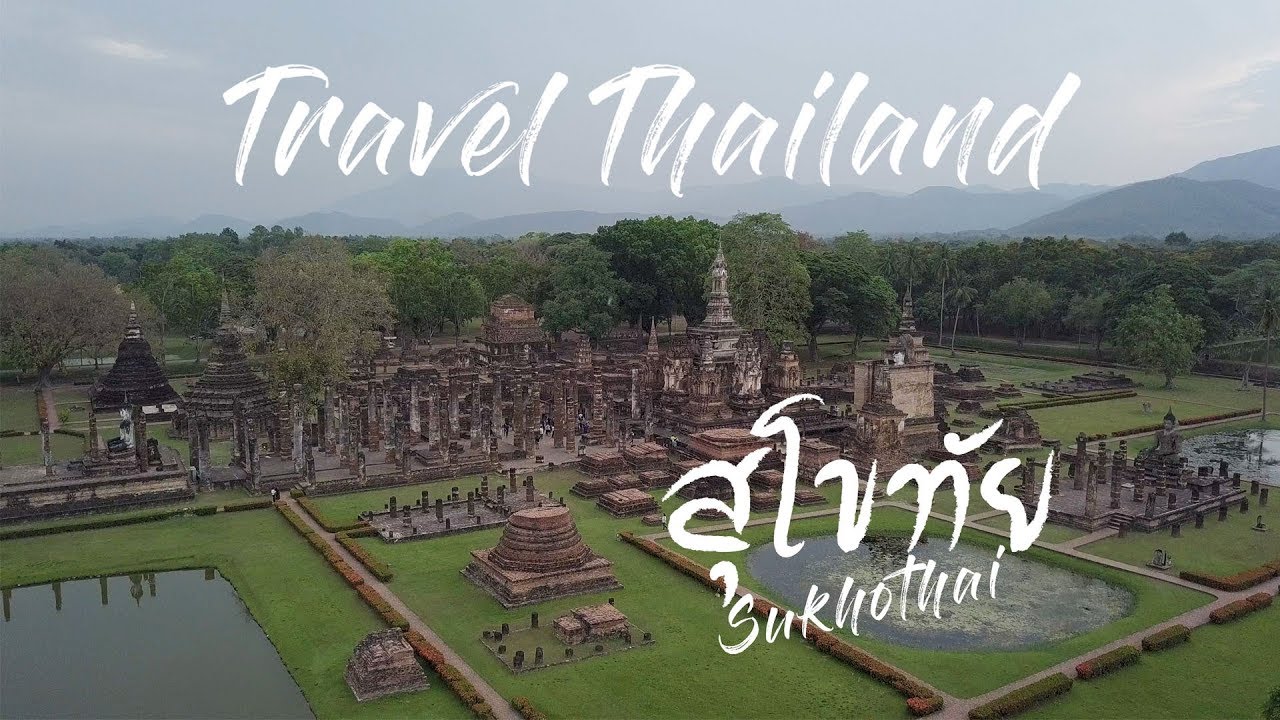
 Click to Access the Navigation Map GPS
Sukhothai Historical Park Map
Recommend
 Historical Sites and Monuments(4)
 Landmarks and Memorials(5)
 Art, Craft Centres, Tradition(11)
 Museums(5)
 Places of Worship
 Temple(40)
 Other Sacred Sites(10)
 Suburban Living
 Village, Community(3)
 Nature and Wildlife
 National Parks and Marine Reserves(3)
 Mountain (Doi)(2)
 Dam, Reservoir, Lake(4)
 Waterfalls(8)
 Caves(4)
 River, Canal(2)
 Entertainment and Agricultural
 Farms, Parks and Ecotourism(3)
 Travel Articles, Recipes
 Travel Review, Food Review(1)


