
lovethailand home >North Travel Attractions >Sukhothai Travel Attractions >Si Sat Chana Lai >Hat Sieow > Sathorn Gold Textile Museum
TL;DR: Sathorn Gold Textile Museum is located at Hat Siao Subdistrict, Si Satchanalai District, Sukhothai Province, open Daily, hours 08.30 – 17.30.
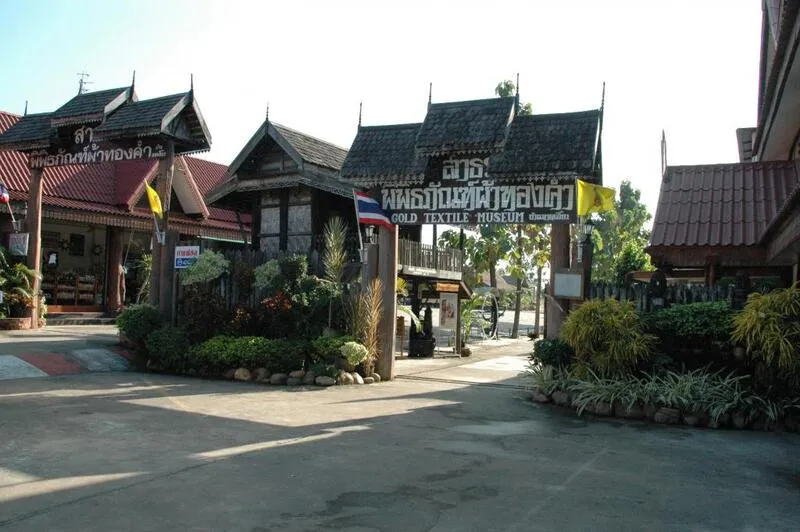
Sathorn Gold Textile Museum
Open Days: Daily
Opening Hours: 08.30 – 17.30
Sathorn Gold Textile Museum at Ban Hat Siao in Si Satchanalai District, Sukhothai Province, is one of the most meaningful cultural stops for travelers who want to understand Thai Phuan textile heritage in depth. The museum preserves and displays old handwoven textiles from the Thai Phuan community of Ban Hat Siao, including traditional patterned cloth, ceremonial textiles, gold-thread textiles, textiles used in ordination ceremonies, and wedding cloths. Each piece reveals the refinement, patience, ritual meaning, and community identity behind one of Sukhothai’s most distinctive living cultural traditions.
This museum is not only a place to view beautiful textiles. It is also a cultural learning space where visitors can understand how cloth connects with family life, Buddhist ceremonies, marriage, social values, women’s knowledge, and local identity. For the Thai Phuan people of Ban Hat Siao, handwoven textiles are not simply decorative objects or clothing. They are cultural records made from cotton, silk, color, pattern, memory, and inherited skill. By walking through the museum, visitors can see how a piece of cloth can carry stories of people, ceremonies, beliefs, and generations.
Sathorn Gold Textile Museum was founded by Mr. Sathorn Sorajprasobsanti, a Ban Hat Siao local who deeply valued the traditional textiles of his community. He began collecting old woven cloths with the intention of preserving their beauty, technique, and cultural meaning before they disappeared from everyday life. His work grew from personal appreciation into a wider act of cultural preservation. The museum allows these old textiles to be seen, studied, and appreciated by local people, Thai travelers, international visitors, researchers, students, designers, and anyone interested in traditional textile culture.
Ban Hat Siao is widely known for its Thai Phuan heritage and its important local traditions, especially the elephant-back ordination procession, a famous ceremony associated with the community. Textiles play an important role in this cultural world. They are used in ceremonial dress, family rituals, ordination processions, and weddings. The museum helps visitors understand that textiles are woven into the structure of social life. They are linked to respect, merit-making, family pride, religious devotion, and the continuity of community identity.
One of the museum’s important highlights is the traditional chok textile of Ban Hat Siao, especially the well-known nine-pattern style associated with the local weaving tradition. Chok weaving is a highly detailed technique that requires great concentration and skill. The weaver creates supplementary patterns by lifting and inserting threads by hand, forming complex motifs on the fabric. This process demands memory, patience, rhythm, and deep understanding of the pattern structure. A finished chok textile therefore represents not only beauty but also years of accumulated knowledge.
The motifs of Thai Phuan textiles from Ban Hat Siao often carry symbolic meanings. Some patterns relate to auspiciousness, fertility, protection, prosperity, social dignity, or ceremonial suitability. Colors and pattern placement are also important. A textile used in a wedding may communicate family readiness and social respect, while a textile used in an ordination ceremony may express religious devotion and community participation. Seeing these textiles in a museum setting helps foreign travelers understand that traditional Thai cloth is a language of culture, not merely an item of clothing.
The gold textiles displayed in the museum are among its most impressive objects. Gold-thread textiles and precious old silk pieces show the elegance and status associated with ceremonial cloth in the past. Their beauty lies not only in the shine of metallic thread but also in the balance of composition, the refinement of pattern, and the technical control required to make the fabric harmonious. These textiles reveal the high level of craftsmanship in local weaving and the cultural importance of special cloth in important life events.
The collection also includes old tin-chok textiles of the Thai Phuan people of Ban Hat Siao, valuable silk pieces, textiles from Nan, and examples of woven cloth from nearby cultural areas such as Uttaradit. This variety allows visitors to compare weaving traditions across northern and upper-central Thailand. Each textile region has its own identity in terms of pattern, color, structure, and use. At the same time, the similarities among them show how communities exchanged ideas through travel, marriage, trade, religious events, and shared cultural networks.
A major strength of Sathorn Gold Textile Museum is the way it connects textiles with real life. The cloths are not presented only as beautiful objects. They are shown as part of ceremonies, family memory, community practice, and social identity. Wedding textiles, for example, show the role of cloth in family relationships and rites of passage. Ordination textiles show the connection between Buddhism, kinship, and public ceremony. Through these examples, visitors can see how textiles functioned within society and why they were carefully preserved by families.
The elephant-back ordination procession of Ban Hat Siao is one of the most recognizable cultural traditions in the area. Textiles used in this ceremony contribute to the color, dignity, and sacred atmosphere of the procession. Before visitors see the public ceremony, there is a deeper layer of textile knowledge behind it: preparation, selection of cloth, ceremonial dress, and symbolic display. The museum helps explain this hidden dimension, making the famous procession easier to understand in cultural terms.
Wedding textiles are equally important. In Thai Phuan society, marriage is not only a union between two individuals but also a relationship between families and kinship networks. Cloth used in wedding ceremonies can represent readiness, respect, continuity, and refinement. Some textiles may be kept as family treasures and passed from one generation to the next. Through these pieces, visitors can see how cloth becomes a vessel of memory and emotional value.
The role of women in weaving is central to the story of Ban Hat Siao textiles. In many traditional communities, weaving knowledge was learned at home through observation, practice, and guidance from older women. Girls learned about fibers, looms, patterns, colors, and discipline as part of growing up. Weaving was therefore both practical work and cultural education. The museum preserves not only the finished textiles but also the memory of the women whose hands and knowledge shaped them.
For visitors interested in art and design, the textiles in this museum are deeply inspiring. Many patterns show sophisticated balance, rhythm, repetition, and color harmony. Although the original weavers may not have described their work in modern design language, the textiles demonstrate a refined understanding of visual structure. Some motifs are complex, yet they appear natural and balanced on the fabric. This makes the museum especially valuable for designers, textile artists, researchers, and anyone interested in traditional aesthetics.
Sathorn Gold Textile Museum is also useful for students and cultural researchers. It brings together textiles and stories related to Thai Phuan heritage in one accessible place. Those studying ethnic identity, local history, ritual life, textile techniques, or community-based cultural preservation can use the museum as an important starting point. Seeing the actual textiles creates a stronger understanding than reading about them alone, because the viewer can observe texture, scale, color, and the handmade structure of each piece.
As a travel destination, the museum can be combined easily with other attractions in Si Satchanalai, such as Si Satchanalai Historical Park, Wat Chang Lom, Wat Phra Si Rattana Mahathat Chaliang, Wat Chedi Chet Thaeo, Wat Nang Phaya, and Kaeng Luang. This makes Ban Hat Siao a strong cultural stop within a wider Sukhothai itinerary. Travelers can experience both archaeological heritage and living textile culture in the same district.
The atmosphere of the museum is intimate and community-based. Unlike large national museums, this place feels closely connected to the people of Ban Hat Siao. Visitors are not simply looking at old objects in display cases; they are entering a space of local memory. Many textiles were once used in real ceremonies or preserved by families because they carried emotional and cultural value. This gives the museum a warm and human character.
Visitors should take time to observe the textiles slowly. The details of woven cloth are best appreciated at close range: the structure of the pattern, the relationship between the body of the skirt and the decorative border, the color choices, the supplementary threads, and the rhythm of repeated motifs. A single textile can contain many layers of knowledge, including material selection, weaving technique, symbolic meaning, ceremonial function, and family memory.
Preserving old textiles is challenging because fabric is fragile. Fibers can weaken over time, colors can fade, and cloth can be damaged by light, humidity, insects, and improper storage. The existence of this museum therefore represents an important effort to preserve delicate cultural heritage. Unlike stone monuments or bronze objects, textiles require careful attention and a strong sense of responsibility from collectors and caretakers.
The museum is valuable because it presents the full story of Ban Hat Siao textiles: the founder, the Thai Phuan community, chok weaving, gold textiles, ordination cloth, wedding cloth, ceremonial dress, and the role of textiles in local identity. Together, these elements show that culture is not separate from everyday life. It is created through repeated practice, family teaching, ceremony, and shared meaning within the community.
For general travelers, a visit to Sathorn Gold Textile Museum will change the way they look at Thai textiles. What may first appear to be a beautiful souvenir becomes, after the visit, a cultural document. Visitors begin to understand that woven cloth can communicate origin, gender roles, age, ritual status, family pride, and local history. This deeper understanding makes the experience of traveling through Sukhothai and Si Satchanalai more meaningful.
The museum is located in Hat Siao Subdistrict, Si Satchanalai District, Sukhothai Province. Travelers coming from Sukhothai town can follow the route through Sawankhalok and Si Satchanalai, then continue along Highway 101 to Ban Hat Siao. Traveling by private car or hired local transport is the most convenient option, especially for visitors who plan to combine the museum with historical sites and natural attractions in the same day.
Getting There from Sukhothai town is straightforward by road. Travelers can take the Sukhothai–Sawankhalok–Si Satchanalai route and continue to Hat Siao on Highway 101. The museum is located within the community area and can be included in a half-day or full-day itinerary. Visitors without a private car should arrange local transport in advance through their accommodation or local transport providers.
The best time to visit is during the daytime, when the textile details can be seen clearly and travelers still have time to continue to other attractions in Si Satchanalai. Visiting during the elephant-back ordination festival period gives deeper cultural context, because the role of textiles in local ceremony becomes more visible. Travelers who prefer a quiet museum experience may choose an ordinary weekday or a date outside major festival periods.
Sathorn Gold Textile Museum also encourages younger generations to appreciate handwoven heritage. When old textiles are displayed together with stories, visitors understand that every pattern has a source, every color has intention, and every piece carries the life of the weaver. Preservation is therefore not simply about keeping old cloth. It is about keeping knowledge visible, meaningful, and available for future generations.
In summary, Sathorn Gold Textile Museum at Ban Hat Siao is a must-visit destination for travelers interested in Thai Phuan textiles, Sukhothai culture, and living community heritage. The museum brings handwoven cloth to life through gold textiles, nine-pattern chok weaving, ordination textiles, wedding textiles, and many other old pieces that reveal the refinement of local craftsmanship. For foreign travelers who want to understand Sukhothai beyond ancient ruins, this museum offers a rich and memorable cultural experience.
| Name | Sathorn Gold Textile Museum, Ban Hat Siao |
| Location | Hat Siao Subdistrict, Si Satchanalai District, Sukhothai Province |
| Address | 477/2 Hat Siao Subdistrict, Si Satchanalai District, Sukhothai 64310, Thailand |
| Highlights | A textile museum displaying old Thai Phuan woven cloth, gold textiles, nine-pattern chok textiles, ordination textiles, and wedding textiles from Ban Hat Siao |
| History | Founded in 1989 by Mr. Sathorn Sorajprasobsanti to preserve traditional Thai Phuan textiles and local weaving wisdom |
| Name Origin | Named after the founder and the museum’s important gold-thread textile collection |
| Distinctive Features | Displays old woven textiles, traditional tin-chok patterns, gold textiles, ceremonial ordination dress, and cloth connected to Thai Phuan rituals |
| Key Evidence | Gold silk textiles over 100 years old, old Thai Phuan tin-chok textiles from Ban Hat Siao, Nan textiles, and Uttaradit tin-chok textiles |
| Travel Information | From Sukhothai town, travel via Sawankhalok and Si Satchanalai, then continue on Highway 101 to Ban Hat Siao; private car or local hired transport is recommended |
| Current Status | Open to visitors |
| Open Days | Daily |
| Opening Hours | 08.30 – 17.30 |
| Fees | Free admission |
| Main Areas / Zones | Gold textile displays, nine-pattern chok textiles, ordination textiles, wedding textiles, old tin-chok cloth, ceremonial dress, and local textile sales area |
| Caretaker | Privately managed museum / Sathon Pha Thai |
| Main Contact Number | 055-671143 |
| Official Website / Official Page | sathorngoldtextilemuseum.com / Sathon Pha Thai |
| Nearby Tourist Attractions | 1. Si Satchanalai Historical Park, about 10 km 2. Wat Chang Lom, about 10 km 3. Wat Phra Si Rattana Mahathat Chaliang, about 8 km 4. Wat Chedi Chet Thaeo, about 10 km 5. Wat Nang Phaya, about 10 km 6. Kaeng Luang, about 16 km |
| Nearby Restaurants | 1. Sathorn Boulangerie, about 0 km 2. Kulap Restaurant, about 1 km 3. Mee Khao Phan Phak, about 1 km 4. Khao Perb Yai Khrueang, about 6 km 5. Ban Klang Na Restaurant, about 8 km, Tel. 081-441-6185 6. Pa Song Restaurant, about 2 km |
| Nearby Accommodations | 1. Smile Loft Resort, about 1 km, Tel. 055-672456, 086-4497500 2. Chanalai Resort Sukhothai, about 2 km, Tel. 055-672555 3. Mukda Resort, about 1 km, Tel. 091-5695446 4. Tonpalm Resort, about 2 km, Tel. 089-4618323 5. Sisatchanalai Heritage Resort, about 9 km, Tel. 081-6056985 6. Navy Sisatchanalai Resort, about 10 km, Tel. 091-0289516 |
Frequently Asked Questions (FAQ)
Q: Where is Sathorn Gold Textile Museum located?
A: The museum is located at 477/2 Hat Siao Subdistrict, Si Satchanalai District, Sukhothai Province.
Q: What are the opening hours of Sathorn Gold Textile Museum?
A: The museum is open daily from 08.30 to 17.30.
Q: Is there an admission fee?
A: No. Admission to Sathorn Gold Textile Museum is free.
Q: What can visitors see inside the museum?
A: Visitors can see gold textiles, old Thai Phuan woven cloth, nine-pattern chok textiles, ordination textiles, wedding textiles, and ceremonial dress connected to Ban Hat Siao culture.
Q: Who founded Sathorn Gold Textile Museum?
A: The museum was founded by Mr. Sathorn Sorajprasobsanti, a Ban Hat Siao local who collected and preserved traditional Thai Phuan textiles.
Q: Why are Ban Hat Siao chok textiles important?
A: They represent the high-level weaving skill of the Thai Phuan community and are closely connected to local identity, ceremony, and inherited craftsmanship.
Q: What nearby attractions can travelers visit?
A: Nearby attractions include Si Satchanalai Historical Park, Wat Chang Lom, Wat Phra Si Rattana Mahathat Chaliang, Wat Chedi Chet Thaeo, Wat Nang Phaya, and Kaeng Luang.
Q: Who should visit this museum?
A: It is ideal for cultural travelers, textile lovers, students, researchers, designers, and anyone interested in Thai Phuan heritage and Sukhothai’s living traditions.
Tel : 055671143
 Tel : 055671143
Mobile : 055630119
 Mobile : 055630119
 Category: ●Art, Culture and Heritage
 Group: ●Museums
Last Update : 4 MonthAgo
 Last Update : 4 MonthAgo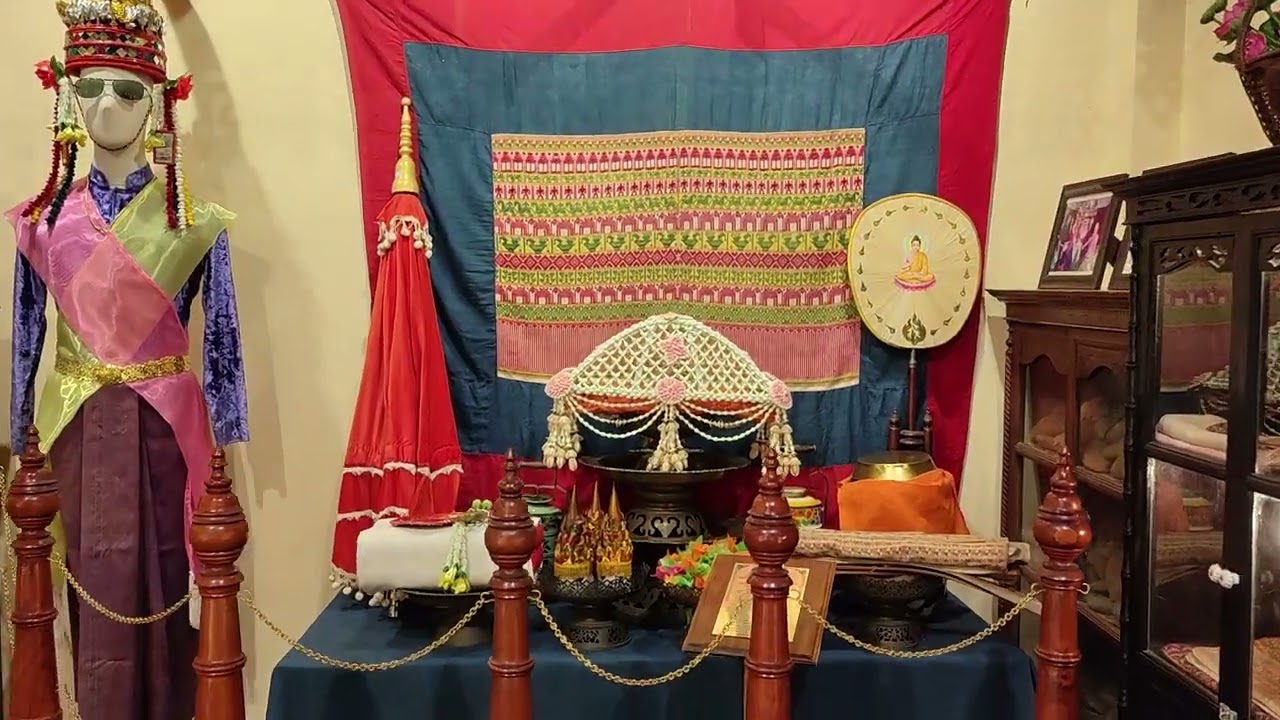
 Click to Access the Navigation Map GPS
Sathorn Gold Textile Museum Map
Recommend

 Historical Sites and Monuments(4)
 Landmarks and Memorials(5)
 Art, Craft Centres, Tradition(11)
Museums(5)
Art, Craft Centres, Tradition(11)
Museums(5)
 Places of Worship
 Temple(40)
 Other Sacred Sites(10)
 Suburban Living
 Village, Community(3)
 Nature and Wildlife
 National Parks and Marine Reserves(3)
 Mountain (Doi)(2)
 Dam, Reservoir, Lake(4)
 Waterfalls(8)
 Caves(4)
 River, Canal(2)
 Entertainment and Agricultural
 Farms, Parks and Ecotourism(3)


