
lovethailand home >North Travel Attractions >Sukhothai Travel Attractions >Thung Saliam >Thung Saliam > Ho Kham Luang
TL;DR: Ho Kham Luang is located at Wat Phiphat Mongkhon, Thung Saliam Subdistrict, Thung Saliam District, Sukhothai Province, open Daily, hours 08.00 – 17.00.
Ho Kham Luang
Open Days: Daily
Opening Hours: 08.00 – 17.00
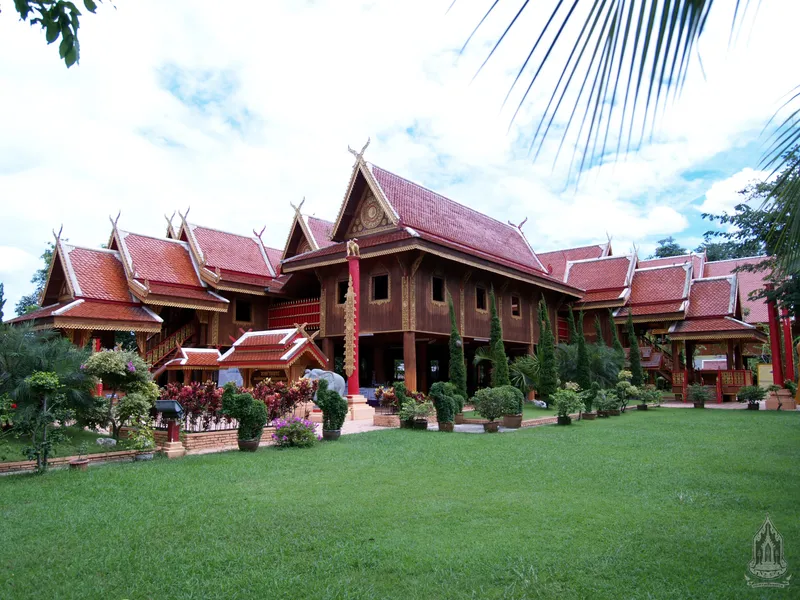
Ho Kham Luang at Wat Phiphat Mongkhon in Thung Saliam District, Sukhothai Province, is one of the most impressive golden teak architectural landmarks in the lower northern region of Thailand. Located inside Wat Phiphat Mongkhon, this large Lanna-style wooden hall reflects the elegance of northern Thai architecture, Buddhist devotion, and the cultural memory of the old princely residences of Lanna. For travelers interested in temples, teak architecture, Thai craftsmanship, and cultural heritage, Ho Kham Luang is one of the most meaningful places to visit in Thung Saliam.
In simple terms, Ho Kham Luang is a large golden teak hall built in the Thai Lanna architectural style. It covers an area of about 1 rai and 50 square wah, uses 99 pillars, has double-layered wall panels, and is roofed with bodhi-leaf-shaped tiles. Its form was inspired by the grouped palace residences of old Lanna princely houses in areas such as Chiang Mai, Chiang Rai, Phrae, Nan, Kengtung, and Lampang. The result is a grand yet graceful wooden building that preserves the beauty of Lanna culture within Sukhothai Province.
Wat Phiphat Mongkhon is located at 464 Moo 2, Thung Saliam Subdistrict, Thung Saliam District, Sukhothai 64150. The temple is about 3 km from the Thung Saliam District Office and is known as one of the important temples in the area. The surroundings are peaceful and spacious, making the temple suitable for merit-making, worship, quiet walking, photography, and cultural learning. Ho Kham Luang is one of the temple’s most outstanding features and has become an important attraction for visitors to Thung Saliam.
The construction of Ho Kham Luang began on February 1, 2006, with Phra Tham Panyaphon presiding over the ceremony of raising the first pillar. In Thai building tradition, raising the first pillar is a highly auspicious act. It marks the formal beginning of a building and carries spiritual meaning. For a large religious and cultural structure such as Ho Kham Luang, the first-pillar ceremony reflects the combination of craftsmanship, faith, and communal intention behind the project.
After the construction was completed, the building was graciously named “Suwan Ho Kham Luang Somdet Phra Maha Ratchamangalacharn.” The name is meaningful. “Suwan” suggests golden beauty, prosperity, and noble value, while “Ho Kham Luang” refers to a grand Lanna-style hall or residence associated with princely culture. The name also reflects the purpose of the building: to honor Somdet Phra Maha Ratchamangalacharn, a highly respected senior monk who gave support and kindness to Wat Phiphat Mongkhon and the Buddhist community.
Ho Kham Luang was built as an act of gratitude and devotion to Somdet Phra Maha Ratchamangalacharn, especially on the occasion of his 82nd birthday on August 26, 2007. This gives the building a meaning beyond architecture. It is not only a beautiful wooden structure but also an expression of respect for a senior monk, a Buddhist offering, and a cultural monument created through faith.
Architecturally, the most striking feature of Ho Kham Luang is its use of golden teak. Teak has long been valued in Thai architecture because it is strong, durable, naturally beautiful, and warm in appearance. A large golden teak hall of this scale requires careful selection of materials and skilled craftsmanship. The use of teak gives the building a sense of dignity and permanence, while its natural grain adds visual richness to the interior and exterior.
The 99 pillars of Ho Kham Luang are both structural and symbolic. Structurally, they support the large wooden hall and create a strong rhythm throughout the building. Symbolically, the number 99 is often associated with progress, auspiciousness, and prosperity in Thai cultural understanding. When visitors walk through the hall and see the orderly rows of wooden pillars, they can sense both the scale of the structure and the faith that made it possible.
The double-layered wall panels and bodhi-leaf-shaped roof tiles also add to the building’s identity. The wall construction gives depth and refinement to the structure, while the roof tiles connect the building with Buddhist symbolism. The bodhi leaf is closely associated with enlightenment, wisdom, and spiritual shelter. In this way, the architectural details of Ho Kham Luang are not merely decorative; they carry cultural and religious meaning.
The design of Ho Kham Luang was inspired by Lanna princely residences. Such residences were associated with northern ruling houses and reflected the refined lifestyle, social order, and artistic taste of old Lanna culture. By creating a building in this style at Wat Phiphat Mongkhon, the temple brings Lanna architectural memory into Sukhothai Province. The building therefore becomes a cultural bridge between the northern Thai world and the lower northern region.
Ho Kham Luang is also important because it combines religious function with cultural architecture. From the outside, visitors see a grand wooden Lanna building. Inside, the hall serves as a sacred space where images of revered Buddhist masters are enshrined. This means visitors do not come only to admire architecture. They also come to pay respect, make merit, and remember the teachings and virtues of respected monks.
Inside Ho Kham Luang, the image of Phra Mongkhon Thepmuni, widely known as Luang Por Sodh of Wat Pak Nam, is enshrined as the principal figure. Luang Por Sodh is one of Thailand’s most respected senior monks, and many Buddhists revere him deeply. His presence within the hall gives Ho Kham Luang a strong spiritual atmosphere and makes it a meaningful place for prayer and reflection.
The hall also enshrines images of several other revered masters, including Luang Pu Thuat, Luang Pho Ngoen, Luang Pu Suk, Somdet Phutthachan To Phrommarangsi, Luang Pu Waen, Khru Ba Siwichai, and Luang Pu Kaeo. These figures represent important streams of Thai Buddhist devotion from different regions and periods. For Thai visitors, paying respect to these revered monks in one hall is deeply meaningful. For foreign travelers, the hall offers insight into the way Thai Buddhism preserves memory through images of spiritual teachers.
As a cultural learning site, Ho Kham Luang helps visitors understand Lanna architectural principles. The building shows how teak, pillars, wall panels, roof forms, and interior arrangements work together to create harmony. Younger generations can learn about traditional Thai carpentry, the use of natural materials, and the relationship between architecture and religious meaning. This makes Ho Kham Luang more than a tourist attraction; it is a living classroom of Thai art and culture.
The location of Ho Kham Luang inside Wat Phiphat Mongkhon strengthens its religious value. The temple grounds are calm, spacious, and well suited for worship. Visitors can make merit, walk quietly around the temple, admire the golden teak structure, and spend time observing details without feeling rushed. The combination of architecture, faith, and peaceful atmosphere makes the experience especially memorable.
In social and economic terms, Ho Kham Luang and Wat Phiphat Mongkhon help attract visitors to Thung Saliam District. Travelers who come to the temple also support local restaurants, cafés, accommodations, and community services. Cultural tourism of this kind helps create local economic circulation while encouraging the community to preserve its religious and architectural heritage.
Ho Kham Luang has become an important visual identity of Thung Saliam. Many visitors come specifically to see the golden teak hall, take photographs, and experience the atmosphere of Lanna architecture in Sukhothai. The building appeals to many types of travelers: those seeking merit-making, those interested in Buddhist culture, those who enjoy architecture, and those who want a peaceful destination away from crowded tourist routes.
For those interested in wooden architecture, Ho Kham Luang deserves slow observation. A building of this size requires expertise in structure, joinery, proportion, and visual rhythm. The pillars, walls, roofline, and interior layout are all connected. A careful walk through the hall reveals that Thai architecture depends not only on decoration but also on an understanding of material, balance, and sacred atmosphere.
Ho Kham Luang also reflects the Buddhist idea of creating merit through architecture. Building a hall for the benefit of religion and the public is considered a lasting form of merit because many people can use and appreciate the building over time. This hall is therefore the result of devotion from monks, lay supporters, craftsmen, and the local community. It serves as a place of worship, learning, and cultural preservation.
Visitors should take enough time to appreciate Ho Kham Luang properly. It is best to first view the building from the outside to understand its form, roofline, scale, and wooden structure. Then visitors can enter the hall respectfully to observe the interior and pay respect to the images of the revered monks. A slow visit reveals the relationship between Lanna art, Buddhist devotion, and the role of Wat Phiphat Mongkhon as a cultural center.
Proper etiquette is important. Visitors should dress modestly, speak quietly, avoid touching interior objects unnecessarily, and respect people who are praying. Photography should be done politely and without disturbing others. Since the hall is a sacred religious space as well as an architectural attraction, respectful behavior helps preserve both the atmosphere and the meaning of the place.
Getting There is most convenient by private car, rental car, or hired local transport. From Sukhothai town, travelers can drive toward Thung Saliam District and continue to Thung Saliam Subdistrict. Wat Phiphat Mongkhon is located at 464 Moo 2, Thung Saliam Subdistrict, Thung Saliam District, Sukhothai 64150. Travelers without a private vehicle can first reach Thung Saliam District and then use local transport to the temple.
The best time to visit is in the morning or late afternoon, when the light is softer and the weather is more comfortable. Morning light is especially suitable for appreciating the warm tone of the teak structure, while late afternoon offers a calm atmosphere for walking and photography. Visitors who prefer a quiet experience should come on weekdays or outside major temple events.
For foreign travelers, Ho Kham Luang is a valuable place to understand Lanna culture in a clear and visual way. The hall shows how wooden architecture, Buddhist devotion, gratitude to spiritual teachers, and cultural preservation can exist together in one space. It also demonstrates that Thai art is not found only in museums or ancient ruins, but also in living temples used by communities today.
In summary, Ho Kham Luang at Wat Phiphat Mongkhon is a major golden teak Lanna-style hall in Sukhothai Province. With 99 pillars, a large scale, bodhi-leaf-shaped roof tiles, and sacred images of revered Buddhist masters, it offers a complete experience of architecture, faith, culture, and community identity. A visit to Ho Kham Luang is one of the best ways to appreciate the cultural richness of Thung Saliam District and the living heritage of northern Thai craftsmanship.
| Name | Ho Kham Luang, Wat Phiphat Mongkhon |
| Location | Wat Phiphat Mongkhon, Thung Saliam Subdistrict, Thung Saliam District, Sukhothai Province |
| Address | 464 Moo 2, Thung Saliam Subdistrict, Thung Saliam District, Sukhothai 64150, Thailand |
| Highlights | A large golden teak Lanna-style hall with 99 pillars, double-layered wall panels, bodhi-leaf-shaped roof tiles, and a strong identity as one of the outstanding teak architectural landmarks of the lower northern region |
| History | Construction began on February 1, 2006, with Phra Tham Panyaphon presiding over the first-pillar ceremony. The building was later named “Suwan Ho Kham Luang Somdet Phra Maha Ratchamangalacharn” |
| Name Origin | The name honors Somdet Phra Maha Ratchamangalacharn and refers to a grand golden Lanna-style hall built as an offering of gratitude and devotion |
| Distinctive Features | Designed in Thai Lanna style, inspired by grouped princely residences of old Lanna houses in Chiang Mai, Chiang Rai, Phrae, Nan, Kengtung, and Lampang |
| Area Size | About 1 rai and 50 square wah |
| Important Objects Inside | Images of revered Buddhist masters, including Luang Por Sodh of Wat Pak Nam, Luang Pu Thuat, Luang Pho Ngoen, Luang Pu Suk, Somdet Phutthachan To Phrommarangsi, Luang Pu Waen, Khru Ba Siwichai, and Luang Pu Kaeo |
| Travel Information | Travel from Sukhothai town to Thung Saliam District and continue to Wat Phiphat Mongkhon at 464 Moo 2. Private car, rental car, or hired local transport is recommended |
| Current Status | Open for visitors to admire the architecture, pay respect, and learn about Lanna-style cultural heritage inside Wat Phiphat Mongkhon |
| Open Days | Daily |
| Opening Hours | 08.00 – 17.00 |
| Facilities | Worship area, walking space inside the hall, temple grounds, parking area, restrooms, and community religious space |
| Abbot / Caretaker | Phra Mongkhon Phatthanaphithan (Phiphat Khunayutto), Tel. 055-659-164 |
| Official Website / Official Page | Wat Phiphat Mongkhon Sukhothai Facebook Page |
| Nearby Tourist Attractions | 1. Wat Thung Saliam / Luang Pho Sila, about 6 km 2. Thung Saliam Water Park, about 5 km 3. Hom Do Farm, about 8 km 4. Do Mae Than, about 10 km 5. Ban Choeng Pha Weir, about 12 km 6. Si Satchanalai Historical Park, about 35 km |
| Nearby Restaurants | 1. SAPALUM, about 1 km 2. Rangsit Old-Style Noodle, Thung Saliam, about 1 km 3. Phannarai Restaurant, about 1 km 4. 3 Bo Im Aroi Restaurant, about 1 km 5. Jing Jai Cafe’, about 2 km 6. Local Popular Restaurant in Thung Saliam, about 3 km, Tel. 063-165-6395 |
| Nearby Accommodations | 1. ONING Resort, about 3 km, Tel. 086-589-0677 2. Chuan Chom Resort, about 5 km, Tel. 099-756-6836, 062-565-8169 3. Accommodations in Thung Saliam District, about 3 km 4. Accommodations near Wat Thung Saliam, about 6 km 5. Accommodations in Si Satchanalai District, about 35 km |
Frequently Asked Questions (FAQ)
Q: Where is Ho Kham Luang located?
A: Ho Kham Luang is located inside Wat Phiphat Mongkhon at 464 Moo 2, Thung Saliam Subdistrict, Thung Saliam District, Sukhothai Province.
Q: Why is Ho Kham Luang important?
A: It is a large golden teak Lanna-style hall with 99 pillars and serves as a sacred place where images of revered Buddhist masters are enshrined.
Q: When did construction of Ho Kham Luang begin?
A: Construction began on February 1, 2006, with Phra Tham Panyaphon presiding over the first-pillar ceremony.
Q: What can visitors see inside Ho Kham Luang?
A: Visitors can see images of respected Buddhist masters such as Luang Por Sodh of Wat Pak Nam, Luang Pu Thuat, Luang Pho Ngoen, Somdet Phutthachan To Phrommarangsi, Luang Pu Waen, and Khru Ba Siwichai.
Q: Is Ho Kham Luang open every day?
A: Yes. It is open daily, and the recommended visiting hours are 08.00 to 17.00.
Q: How should visitors behave inside Ho Kham Luang?
A: Visitors should dress modestly, speak quietly, avoid touching objects unnecessarily, and respect worshippers inside the hall.
Q: What nearby attractions can travelers visit after Ho Kham Luang?
A: Nearby places include Wat Thung Saliam, Luang Pho Sila, Thung Saliam Water Park, Hom Do Farm, Do Mae Than, Ban Choeng Pha Weir, and Si Satchanalai Historical Park.
 Category: ●Places of Worship
 Group: ●Other Sacred Sites
Last Update : 3 MonthAgo
 Last Update : 3 MonthAgo
 Click to Access the Navigation Map GPS
Ho Kham Luang Map
Recommend

 Art, Culture and Heritage
 Historical Sites and Monuments(4)
 Landmarks and Memorials(5)
 Art, Craft Centres, Tradition(11)
 Museums(5)
 Temple(40)
Other Sacred Sites(10)
Temple(40)
Other Sacred Sites(10)
 Suburban Living
 Village, Community(3)
 Nature and Wildlife
 National Parks and Marine Reserves(3)
 Mountain (Doi)(2)
 Dam, Reservoir, Lake(4)
 Waterfalls(8)
 Caves(4)
 River, Canal(2)
 Entertainment and Agricultural
 Farms, Parks and Ecotourism(3)


