
lovethailand home >North Travel Attractions >Sukhothai Travel Attractions >Muang Sukhothai >Muang Kao > Phra Ruang Palace Mound
TL;DR: Phra Ruang Palace Mound is located at East of Wat Mahathat, inside Sukhothai Historical Park, Mueang Kao Subdistrict, Mueang Sukhothai District, Sukhothai Province, open Daily, hours 06.30 – 19.30.
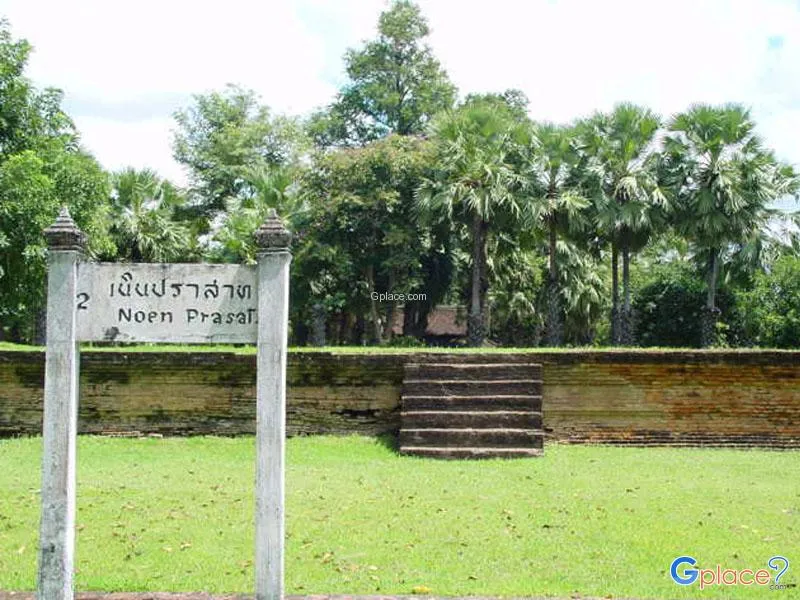
Phra Ruang Palace Mound
Open Days: Daily
Opening Hours: 06.30 – 19.30
Noen Prasat Phra Ruang is an important archaeological site inside Sukhothai Historical Park, located to the east of Wat Mahathat in the central zone of the old city. Although its name has long suggested a royal palace or the legendary palace of Phra Ruang, archaeological evidence and more recent interpretation present a more complex picture. The site is now better understood as a large brick building base associated with religious activity, ceremonial use, a public hall, or a communal space connected to the spiritual and social life of ancient Sukhothai.
For international travelers, Noen Prasat Phra Ruang is a valuable stop because it reveals a quieter but intellectually rich side of Sukhothai. Many visitors focus on the iconic temples, Buddha images, and lotus-bud stupas, but this archaeological mound helps explain how the old city functioned beyond its most famous monuments. It shows how religious space, social activity, political memory, and urban planning were interwoven in the ancient capital.
The site stands very close to Wat Mahathat, the spiritual center of the Sukhothai Kingdom. This location is highly significant. Wat Mahathat was the most important Buddhist temple in the old city, and placing a large building base nearby indicates that this part of the city was not merely a temple area, but a central zone of civic, religious, and ceremonial life. A visit to Noen Prasat Phra Ruang therefore adds depth to the experience of Wat Mahathat and helps visitors understand the broader layout of the old capital.
The historical interpretation of Noen Prasat Phra Ruang has changed over time. In 1907, King Vajiravudh, Rama VI, surveyed the old city of Sukhothai and interpreted the oval-shaped earthen mound to the east of Wat Mahathat as the site of a palace or royal structure. This early interpretation became influential and contributed to the name by which the site is still known today. It also reflects an important stage in the development of historical study and heritage awareness in Thailand.
In 1983, the Fine Arts Department carried out archaeological excavation and conservation work at the site. The investigation revealed a high rectangular building base with a molded base profile known in Thai architectural terminology as bua khwam and bua ngai. The structure measures approximately 27.50 x 51.50 meters and has one staircase at the front and another at the back. This architectural form is more consistent with a religious or ceremonial structure than with a royal residence, especially because royal palaces in Sukhothai were generally expected to have included timber buildings on lower platforms.
The remaining brick base is the most important visible feature of Noen Prasat Phra Ruang. At first glance, it may appear simple compared with the monumental beauty of Wat Mahathat or Wat Si Chum. However, the base itself preserves important information. Its height, rectangular plan, stairways, and architectural molding all indicate that the building once had a formal and elevated status. The raised platform separated the space above from the surrounding ground, giving it symbolic and functional importance.
The discovery of ceramics and pottery at the site adds another important layer of meaning. Archaeological finds included local Sukhothai wares, Khmer ceramics, Chinese ceramics, Qingbai ware, and wares associated with several Chinese dynastic periods. These objects suggest actual use of the area and reveal Sukhothai’s connections with regional and international trade networks. They also indicate that the old city was not isolated, but actively connected to wider cultural and commercial exchange.
Ceramics are especially valuable to the study of Sukhothai because they provide evidence of everyday life, trade, taste, technology, and economic relationships. Imported Chinese wares demonstrate contact with distant markets, while Khmer ceramics reflect older regional connections. Sukhothai ceramics, on the other hand, show local production and craftsmanship. At Noen Prasat Phra Ruang, these small objects help transform the site from a silent brick foundation into a place connected to the lived experience of people in the ancient city.
Scholarly interpretation has increasingly emphasized the possibility that Noen Prasat Phra Ruang functioned as a large religious hall or ceremonial structure. Its position near Wat Mahathat supports this interpretation. A large hall in such a central location could have accommodated religious ceremonies, community gatherings, merit-making, teaching, or social activities linked to the temple and the city. This makes the site important not because it was necessarily royal, but because it may have served as a bridge between religion and public life.
Understanding Noen Prasat Phra Ruang also helps visitors see that ancient Sukhothai was not simply a collection of temples. It was a planned city with zones of worship, movement, water management, community activity, and political symbolism. The presence of a large building base near the central temple suggests that civic and religious functions were closely connected. This connection is one of the defining features of Sukhothai as an early Thai capital.
The name Phra Ruang carries cultural memory. In Thai historical and legendary imagination, Phra Ruang is associated with royal charisma, sacred power, and the early rulers of Sukhothai. Even though archaeological interpretation has refined the understanding of the site, the name still preserves the way later generations remembered and honored the grandeur of the old city. The site therefore has both material and symbolic value.
Noen Prasat Phra Ruang is also a good example of how historical knowledge develops. Early explorers and historians interpreted the site through visible features, location, local names, and historical imagination. Later archaeology introduced new evidence through excavation, structural analysis, and artifact study. This process shows that history is not fixed in a single statement. It is a disciplined reading of evidence that becomes clearer when new information is carefully examined.
Architecturally, the site reflects the restrained strength of Sukhothai construction. The upper wooden structure no longer survives, but the brick base allows visitors to imagine the scale and function of the former building. The raised platform, stairways, and central location suggest a building that had public importance. Standing at the site, visitors can look toward nearby monuments and imagine how people once moved between Wat Mahathat and surrounding civic spaces.
Socially, Noen Prasat Phra Ruang points to the importance of shared spaces in ancient Sukhothai. Religious life was not confined to temple interiors. Ceremonies, teachings, merit-making, meetings, and public events required spaces that could accommodate groups of people. A large hall or ceremonial structure near the religious center would have supported the collective life of the city and strengthened the relationship between rulers, monks, and residents.
For travelers, the site is easy to include in a central-zone itinerary. It lies close to Wat Mahathat, the King Ramkhamhaeng Monument, Wat Si Sawai, Wat Sa Si, and Wat Traphang Ngoen. Visitors with limited time can see it during a half-day tour of the central zone, while those interested in archaeology should spend more time studying the building base, stairways, and spatial relationship with Wat Mahathat.
The best time to visit is early morning or late afternoon. The light is softer, the weather is more comfortable, and the brick base appears more textured under angled sunlight. Morning visits are ideal for a quiet and focused walk, while late afternoon visits allow travelers to combine the site with photography around Wat Mahathat and nearby ponds. The site is simple in appearance, so patient observation makes the experience much more rewarding.
Visitors can explore Noen Prasat Phra Ruang on foot, by bicycle, or as part of a tram-assisted visit through Sukhothai Historical Park. Walking allows close observation of the base and its relationship to nearby monuments. Cycling is practical for moving through the central zone at a relaxed pace. The tram is useful for families, elderly visitors, or travelers with limited time, although a short walk is still the best way to appreciate the site itself.
Getting There is straightforward. Travelers should first go to Sukhothai Historical Park in Mueang Kao Subdistrict, Mueang Sukhothai District. From modern Sukhothai town, take Highway No. 12 west for about 12 kilometers. After entering the central zone of the historical park, walk or cycle toward the area east of Wat Mahathat. Noen Prasat Phra Ruang can be included easily with Wat Mahathat, Wat Si Sawai, Wat Sa Si, and the King Ramkhamhaeng Monument.
Travelers should bring drinking water, sun protection, and comfortable walking shoes. Sukhothai Historical Park is large, and many paths are exposed to sunlight. Although Noen Prasat Phra Ruang does not have a towering stupa or large Buddha image, it rewards careful observation. Visitors who take time to study its base, stairways, and position in the old city will gain a deeper understanding of Sukhothai’s urban and ceremonial landscape.
Respectful behavior is essential. Visitors should not climb on the archaeological structure, walk on fragile sections, move bricks or stones, write on the monument, or disturb the site in any way. These remains are irreplaceable historical evidence. Preserving them allows future generations to study and appreciate the old city with the same sense of connection and discovery.
For international visitors, Noen Prasat Phra Ruang is especially useful because it demonstrates how archaeology can revise and enrich historical understanding. It does not simply present a beautiful monument; it presents a historical question. Was it a palace, a religious hall, a ceremonial building, or a civic space? The current evidence points strongly toward religious and communal functions, and this makes the site a meaningful place for learning rather than just viewing.
The site is also suitable for historical photography. The brick platform, stairways, open ground, and surrounding trees create a quiet visual atmosphere. In morning or evening light, the remaining structure can be photographed in a way that communicates time, memory, and the endurance of the ancient city. It is a modest-looking monument, but visually powerful when understood in context.
In the broader experience of Sukhothai Historical Park, Noen Prasat Phra Ruang adds intellectual depth. Visitors may come to Sukhothai for Wat Mahathat, Wat Si Chum, and the famous Buddha images, but this site helps explain the social and ceremonial life of the old capital. It reminds us that even a brick foundation can hold evidence of trade, ritual, architecture, and community life.
Noen Prasat Phra Ruang is therefore more than an ancient mound. It is a key archaeological site that connects early interpretation, modern excavation, Buddhist ceremonial space, urban planning, trade evidence, and cultural memory. For travelers who want to understand Sukhothai beyond its most photographed monuments, this is a site worth stopping for, reading carefully, and viewing with patience.
| Name | Noen Prasat Phra Ruang |
| Location | East of Wat Mahathat, inside Sukhothai Historical Park, Mueang Kao Subdistrict, Mueang Sukhothai District, Sukhothai Province |
| Address | Sukhothai Historical Park, Mueang Kao Subdistrict, Mueang Sukhothai District, Sukhothai 64210 |
| Highlights | Large ancient building base near Wat Mahathat, showing evidence of central-zone activity, religious or ceremonial use, and urban life in ancient Sukhothai |
| History | Associated with Sukhothai during the 13th–15th centuries CE; surveyed by King Vajiravudh in 1907 and excavated by the Fine Arts Department in 1983 |
| Name Origin | The name reflects an earlier interpretation linking the mound to a royal palace or Phra Ruang tradition, while later archaeological study emphasizes religious and communal functions |
| Distinctive Features | High rectangular brick base with molded architectural profiles, measuring about 27.50 x 51.50 meters, with stairways at the front and back |
| Key Evidence | Ceramics, glazed wares, Chinese wares, Khmer wares, and Sukhothai ceramics discovered in the area, reflecting use of space and trade networks |
| Travel Information | Travel to Sukhothai Historical Park, about 12 km west of Sukhothai town via Highway No. 12; within the park, walk or cycle to the area east of Wat Mahathat |
| Current Status | Archaeological site within Sukhothai Historical Park, part of the UNESCO World Heritage property Historic Town of Sukhothai and Associated Historic Towns |
| Open Days | Daily |
| Opening Hours | 06.30 – 19.30; Saturdays until 21.00 during illuminated monument viewing periods |
| Fees | Covered by the Inner Historic Zone ticket of Sukhothai Historical Park: Thai nationals 20 THB, other nationalities 200 THB, or flat-rate tickets according to the Fine Arts Department’s rate |
| Facilities | Visitor center, restrooms, parking, tram service, bicycle rental, interpretive signs, and walking routes within the historical park |
| Main Areas / Zones | Building base, front staircase, rear staircase, archaeological area near Wat Mahathat, and central-zone walking route |
| Caretaker | The Fine Arts Department, Ministry of Culture / Sukhothai Historical Park Office |
| Main Contact Number | Sukhothai Historical Park Tel. 055-697-527 |
| Official Website / Official Page | finearts.go.th/sukhothaihistoricalpark |
| Nearby Tourist Attractions | 1. Wat Mahathat, about 0.1 km 2. King Ramkhamhaeng the Great Monument, about 0.4 km 3. Wat Si Sawai, about 0.5 km 4. Wat Sa Si, about 0.7 km 5. Ramkhamhaeng National Museum, about 0.9 km 6. Wat Si Chum, about 2.2 km |
| Nearby Restaurants | 1. Say Hi Cafe, about 0.8 km 2. Tara Restaurant, about 0.9 km 3. Maeboonmee Cafe & Bistro, about 1 km 4. Chanda’s Historical Garden Restaurant, about 1.2 km 5. Phumphor Coffee Restaurant, about 1.5 km |
| Nearby Accommodations | 1. Old City Boutique House, about 0.8 km 2. Wake Up at Muang Kao Boutique Hotel, about 1 km, Tel. 062-419-6924 3. Sukhothai Garden, about 1.1 km, Tel. 091-843-1537 4. Smilingface Guesthouse, about 1.2 km, Tel. 086-584-4879 5. Tharaburi Resort Sukhothai, about 1.5 km, Tel. 055-697-132 |
Frequently Asked Questions (FAQ)
Q: Where is Noen Prasat Phra Ruang located?
A: Noen Prasat Phra Ruang is located east of Wat Mahathat inside Sukhothai Historical Park, Mueang Kao Subdistrict, Mueang Sukhothai District, Sukhothai Province.
Q: Was Noen Prasat Phra Ruang a royal palace?
A: Its name reflects an older interpretation linking it to a palace, but archaeological evidence now points more strongly toward a religious hall, ceremonial building, or communal structure.
Q: What is the main feature of Noen Prasat Phra Ruang?
A: The main feature is a large rectangular brick building base with molded architectural profiles and stairways at the front and back.
Q: How is Noen Prasat Phra Ruang related to Wat Mahathat?
A: It stands close to Wat Mahathat, suggesting a relationship between the old city’s religious center and civic or ceremonial activity areas.
Q: Is there an entrance fee to visit Noen Prasat Phra Ruang?
A: Yes. It is covered by the Inner Historic Zone ticket of Sukhothai Historical Park: Thai nationals 20 THB and other nationalities 200 THB, with flat-rate tickets also available.
Q: What is the best time to visit Noen Prasat Phra Ruang?
A: Early morning and late afternoon are best because the weather is cooler, the light is softer, and the site can be combined easily with Wat Mahathat, Wat Si Sawai, and Wat Sa Si.
Q: How long should visitors spend at Noen Prasat Phra Ruang?
A: A focused visit takes about 15–30 minutes, but it is best included in a broader central-zone route through Sukhothai Historical Park.
Q: Who manages Noen Prasat Phra Ruang?
A: The site is managed by the Fine Arts Department, Ministry of Culture, through the Sukhothai Historical Park Office. The contact number is 055-697-527.
 Category: ●Art, Culture and Heritage
 Group: ●Historical Sites and Monuments
Last Update : 5 MonthAgo
 Last Update : 5 MonthAgo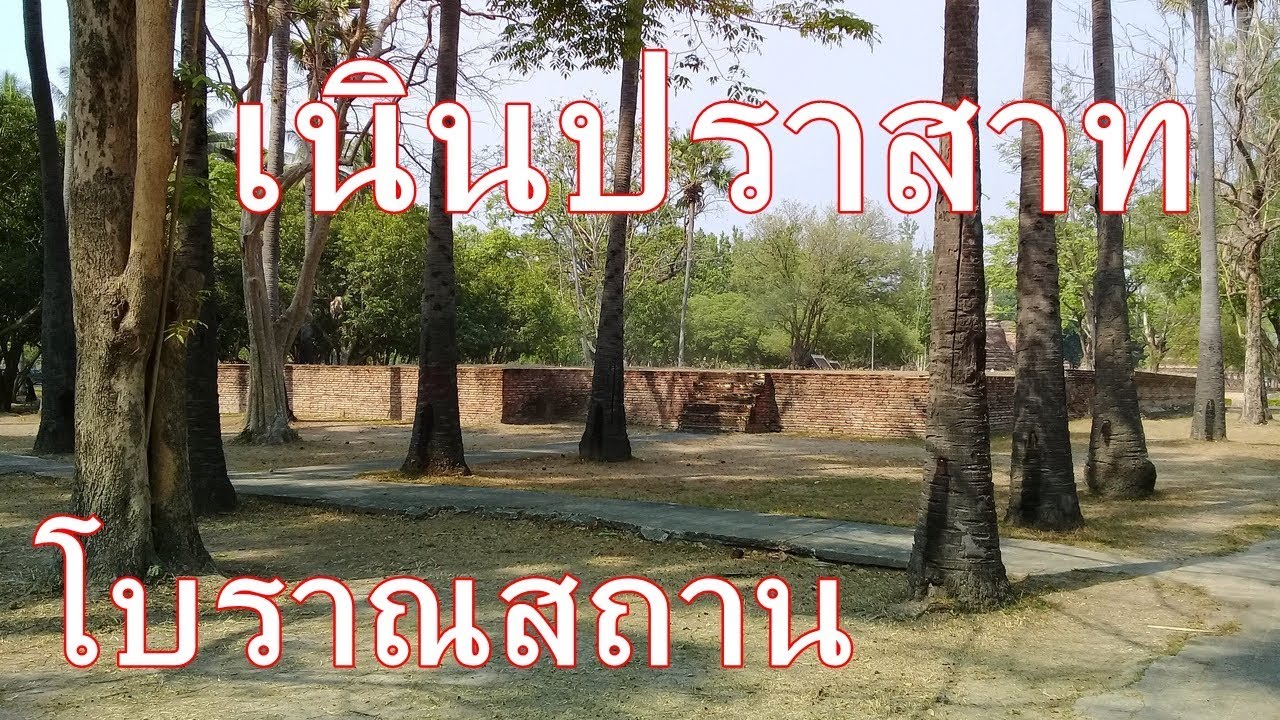
 Click to Access the Navigation Map GPS
Phra Ruang Palace Mound Map
Recommend
 Historical Sites and Monuments(4)
 Landmarks and Memorials(5)
 Art, Craft Centres, Tradition(11)
 Museums(5)
 Places of Worship
 Temple(40)
 Other Sacred Sites(10)
 Suburban Living
 Village, Community(3)
 Nature and Wildlife
 National Parks and Marine Reserves(3)
 Mountain (Doi)(2)
 Dam, Reservoir, Lake(4)
 Waterfalls(8)
 Caves(4)
 River, Canal(2)
 Entertainment and Agricultural
 Farms, Parks and Ecotourism(3)
 Travel Articles, Recipes
 Travel Review, Food Review(1)


