
lovethailand home >North Travel Attractions >Sukhothai Travel Attractions >Muang Sukhothai >Muang Kao > Wat Traphang Thong Lang
TL;DR: Wat Traphang Thong Lang is located at Mueang Kao Subdistrict, Mueang Sukhothai District, Sukhothai Province, near Ramkhamhaeng National Museum, open Daily, hours Daytime.
Wat Traphang Thong Lang
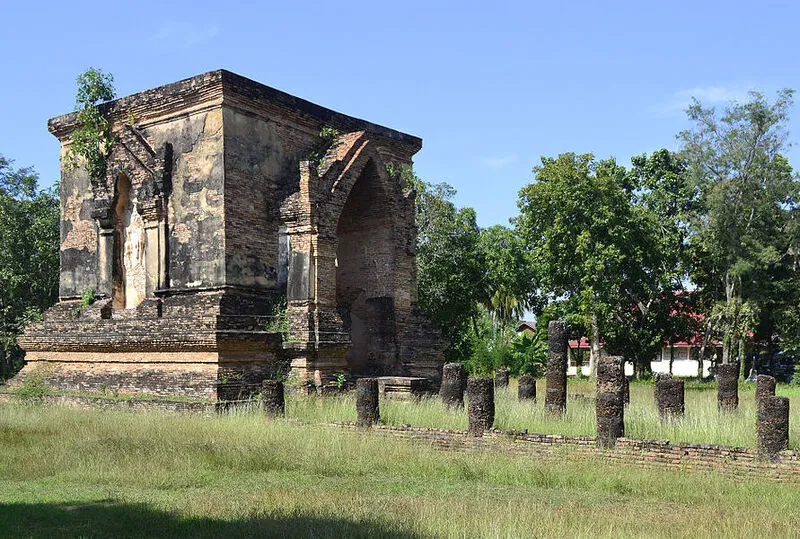
Open Days: Daily
Opening Hours: Daytime
Wat Traphang Thong Lang in Sukhothai Province is one of the most meaningful living temples in the old city area of Sukhothai. Located on an island in the middle of a pond known as Traphang Thong, the temple stands near Ramkhamhaeng National Museum and close to the entrance of Sukhothai Historical Park. It is an important place where visitors can experience Buddhist faith, Sukhothai history, sacred architecture, water-based landscape design, and the living religious life of the local community in one setting.
Wat Traphang Thong is different from many ancient monuments in Sukhothai because it is not only an archaeological site. It is still an active Buddhist temple with resident monks and regular religious activities. This gives the temple a living atmosphere. Visitors can walk across the wooden bridge, make merit, pay respect to the Buddha footprint, observe local Buddhist practice, and enjoy the peaceful scenery of the pond and island.
The word “traphang” in the Sukhothai context refers to a pond or reservoir. Water was an important part of ancient Sukhothai urban planning, both practically and symbolically. The word “thong” means gold, suggesting beauty, value, and auspiciousness. The name Wat Traphang Thong therefore reflects both the temple’s island setting and its sacred value to the local community. The pond surrounding the temple creates a natural boundary between the ordinary world and the sacred space of the temple.
The approach to the temple is one of its most memorable experiences. A long wooden bridge connects the shore to the island in the middle of the pond. As visitors walk across the bridge, the atmosphere gradually changes from the roadside and old town area into a quieter religious space. The water, reflections, trees, and temple structures together create a calm environment that makes the temple especially beautiful in the morning and late afternoon.
The main structure on the island is a bell-shaped chedi influenced by Sri Lankan Buddhist architecture. This type of chedi reflects the strong connection between Sukhothai and Theravada Buddhism from Sri Lanka. The base is made of laterite, while parts of the upper structure have been damaged over time. Even so, the remaining form clearly shows the elegance of Sukhothai religious architecture and the importance of Sri Lankan influence in the development of Buddhism in the kingdom.
Around the main chedi are 8 smaller surrounding chedis. This arrangement reflects the symbolic planning of Buddhist sacred space in the Sukhothai period. The central chedi acts as the main spiritual focus, while the surrounding chedis complete the religious layout and create visual balance on the island. Together, they show the careful design of a temple intended for devotion, contemplation, and beauty.
One of the most important sacred objects at Wat Traphang Thong is the Buddha footprint from the Sukhothai period. It is housed in a mondop on the island and is closely connected with the Khao Sumanakut inscription and King Maha Thammaracha Lithai. The footprint was created in B.E. 1902 according to a Sri Lankan Buddhist model and was originally enshrined on a mountain west of the old city, now known as Khao Phra Bat Yai. It was later moved to Wat Traphang Thong so that the public could worship it more conveniently.
The Buddha footprint is important both artistically and spiritually. It is carved with 108 auspicious symbols, representing the virtues and greatness of the Buddha. In Buddhist belief, a Buddha footprint serves as a sacred reminder of the Buddha’s presence and teachings. It allows devotees to express reverence and reflect on the Dhamma in a visible and tangible form.
The relocation of the Buddha footprint to Wat Traphang Thong made the temple a major center of devotion in Sukhothai. Because the site is easier to reach than the mountain where the footprint was once enshrined, local people and pilgrims can come to pay respect more conveniently. This led to the continuation of the annual tradition of worshipping the Buddha footprint, an important religious event for the people of Sukhothai.
The annual Buddha footprint worship tradition at Wat Traphang Thong is deeply meaningful. It brings together merit-making, ritual bathing of the footprint, Dhamma listening, and community participation. The event connects present-day worshippers with the Buddhist legacy of King Maha Thammaracha Lithai and the religious flourishing of Sukhothai. It is not only a ceremony, but also a living expression of local faith and cultural memory.
The ordination hall of Wat Traphang Thong is another important feature. Its walls and roof form remain relatively complete compared with many old structures in the area. The building was restored in the past using the foundation of an older Sukhothai-period hall. This allows the temple to continue functioning as a place for religious practice while preserving the historical character of the site.
The importance of Wat Traphang Thong lies in the way it connects the past and the present. The past is visible through the bell-shaped chedi, the Buddha footprint, the island temple layout, and the historic sacred landscape. The present is visible through the resident monks, merit-making activities, annual ceremonies, and the daily use of the temple by the local community. This combination gives Wat Traphang Thong a living quality that many purely archaeological sites do not have.
In terms of art and religion, the temple clearly reflects Sri Lankan influence. The bell-shaped chedi and the Buddha footprint tradition both show how Sukhothai adopted Theravada Buddhist ideas from Sri Lanka and adapted them to local needs. The result is a temple landscape that is both historically important and spiritually meaningful.
Wat Traphang Thong also helps visitors understand the water landscape of ancient Sukhothai. The city had many ponds, moats, and water systems. These were not only practical features for water management, but also symbolic and religious elements. A temple on an island in a pond appears visually distinct and spiritually separated from ordinary surroundings, making the act of entering the temple feel more intentional and meaningful.
For travelers, Wat Traphang Thong is one of the easiest and most rewarding sites to visit in the old city. Its location near Ramkhamhaeng National Museum and the historical park entrance makes it a convenient starting point for exploring Sukhothai. Visitors can make merit in the morning, pay respect to the Buddha footprint, enjoy the island temple scenery, and continue to nearby monuments such as Wat Mahathat, Wat Sa Si, Wat Si Sawai, and Wat Traphang Ngoen.
The temple is also a good place for photography. The wooden bridge, the pond, the chedi reflected on the water, and the calm island setting create several beautiful viewpoints. Morning is a good time to observe local temple life and soft light, while late afternoon is ideal for peaceful walking and scenic photography.
Wat Traphang Thong is valuable for students, researchers, and cultural travelers because it explains several aspects of Sukhothai in one place. These include Sri Lankan Buddhist influence, the Buddha footprint tradition, water-based temple planning, the relationship between temple and community, and the continuation of religious ceremonies in a historical landscape.
Because Wat Traphang Thong is still an active temple, visitors should dress respectfully, keep their voices low, avoid disturbing monks, and behave appropriately around the mondop, ordination hall, and merit-making areas. Photography should be done with care, especially when local people are praying or participating in ceremonies.
Getting There is convenient from Sukhothai town to Mueang Kao Subdistrict, about 12 kilometers away. The temple is located near Ramkhamhaeng National Museum and the entrance area of Sukhothai Historical Park. Travelers can reach it by private car, rental car, local transport, bicycle, or on foot from nearby accommodation in the old city. A wooden bridge leads from the shore to the island temple.
A practical route is to visit Wat Traphang Thong together with Ramkhamhaeng National Museum, Wat Mahathat, Wat Sa Si, Wat Si Sawai, Wat Traphang Ngoen, and Wat Si Chum. Starting at Wat Traphang Thong helps visitors understand the connection between a living community temple and the ancient monuments of Sukhothai Historical Park.
Wat Traphang Thong is therefore more than a beautiful pond temple. It brings together Sri Lankan-influenced Buddhism, a Sukhothai-period Buddha footprint, an annual worship tradition, a living monastic community, and a peaceful island landscape. It is an ideal place for visitors who want to make merit, learn history, appreciate Sukhothai art, and experience the spiritual heart of the old city.
| Name | Wat Traphang Thong |
| Location | Mueang Kao Subdistrict, Mueang Sukhothai District, Sukhothai Province, near Ramkhamhaeng National Museum |
| Address | 164/2 Moo 3, Mueang Kao Subdistrict, Mueang Sukhothai District, Sukhothai 64210, Thailand |
| Highlights | An active temple on an island in Traphang Thong pond, with a wooden bridge, Sri Lankan-style bell-shaped chedi, and Sukhothai-period Buddha footprint |
| History | An important temple in the old city of Sukhothai. The Buddha footprint is associated with King Maha Thammaracha Lithai and the Khao Sumanakut inscription in B.E. 1902 |
| Name Origin | “Traphang” means pond or reservoir, while “Thong” means gold, reflecting the temple’s sacred island setting in a pond |
| Distinctive Features | Island temple, wooden bridge, bell-shaped chedi, 8 surrounding chedis, restored ordination hall, and mondop housing the Buddha footprint |
| Travel Information | About 12 km from modern Sukhothai town to Mueang Kao. The temple is near Ramkhamhaeng National Museum and Sukhothai Historical Park entrance, accessible by car, local transport, bicycle, or on foot from the old city area |
| Current Status | An active Buddhist temple with resident monks and an important religious and cultural center for the old city community |
| Open Days | Daily |
| Opening Hours | Daytime |
| Facilities | Wooden bridge, merit-making area, Buddha footprint mondop, ordination hall, monks’ area, and walking area around the pond |
| Main Areas / Zones | Wooden bridge, island temple area, bell-shaped chedi, surrounding chedis, Buddha footprint mondop, ordination hall, and community religious area |
| Abbot / Caretaker | Phra Maha Damrong Santajitto |
| Main Contact Number | 085-052-3797 |
| Official Website / Official Page | Wat Traphang Thong, Mueang Kao, Sukhothai |
| Nearby Tourist Attractions | 1. Ramkhamhaeng National Museum, about 0.3 km 2. King Ramkhamhaeng Monument, about 0.7 km 3. Wat Mahathat, about 1 km 4. Wat Sa Si, about 1 km 5. Wat Si Sawai, about 1.5 km 6. Wat Traphang Ngoen, about 2 km 7. Wat Si Chum, about 3 km |
| Nearby Restaurants | 1. Chanda’s Historical Garden Restaurant, about 0.5 km, Tel. 092-993-3408 2. Chorphaka Sukhothai, about 1 km, Tel. 088-885-5188 3. Phum Phor Coffee Restaurant, about 1 km, Tel. 064-626-3639, 055-010-356 4. Sinvana Restaurant, about 1 km, Tel. 091-840-4546 5. Krua Krung Kao Sukhothai, about 2 km, Tel. 087-732-1669 |
| Nearby Accommodations | 1. Sukhothai Garden, about 0.4 km, Tel. 084-751-1533 2. Thai Thai Sukhothai Resort, about 1 km, Tel. 084-932-1006 3. Scent of Sukhothai Resort, about 1 km, Tel. 083-211-8898 4. Legendha Sukhothai Resort, about 1 km, Tel. 055-697-214, 082-450-0177 5. Sawasdee Sukhothai Resort, about 2 km, Tel. 088-559-9089 |
Frequently Asked Questions (FAQ)
Q: Where is Wat Traphang Thong located?
A: Wat Traphang Thong is located in Mueang Kao Subdistrict, Mueang Sukhothai District, Sukhothai Province, near Ramkhamhaeng National Museum and the entrance of Sukhothai Historical Park.
Q: What is Wat Traphang Thong famous for?
A: It is famous for its island setting in Traphang Thong pond, wooden bridge, Sri Lankan-style bell-shaped chedi, and Sukhothai-period Buddha footprint.
Q: Why is the Buddha footprint at Wat Traphang Thong important?
A: The Buddha footprint is associated with King Maha Thammaracha Lithai and the Khao Sumanakut inscription. It was created in B.E. 1902 according to a Sri Lankan Buddhist model and remains a major object of devotion in Sukhothai.
Q: Is Wat Traphang Thong still an active temple?
A: Yes. Wat Traphang Thong is still an active Buddhist temple with resident monks and religious activities for the old city community.
Q: Who is the abbot of Wat Traphang Thong?
A: The abbot of Wat Traphang Thong is Phra Maha Damrong Santajitto.
Q: What type of travel is Wat Traphang Thong suitable for?
A: It is suitable for merit-making, paying respect to the Buddha footprint, walking across the island temple, photography, and learning about Sukhothai Buddhist culture.
Q: What nearby attractions can be visited with Wat Traphang Thong?
A: Nearby attractions include Ramkhamhaeng National Museum, Wat Mahathat, Wat Sa Si, Wat Si Sawai, Wat Traphang Ngoen, and Wat Si Chum.
Q: Are Wat Traphang Thong and Wat Traphang Thong Lang the same place?
A: No. Wat Traphang Thong is an active island temple in a pond, while Wat Traphang Thong Lang is a separate abandoned ancient monument east of the old city.
 Category: ●Places of Worship
 Group: ●Temple
Last Update : 4 MonthAgo
 Last Update : 4 MonthAgo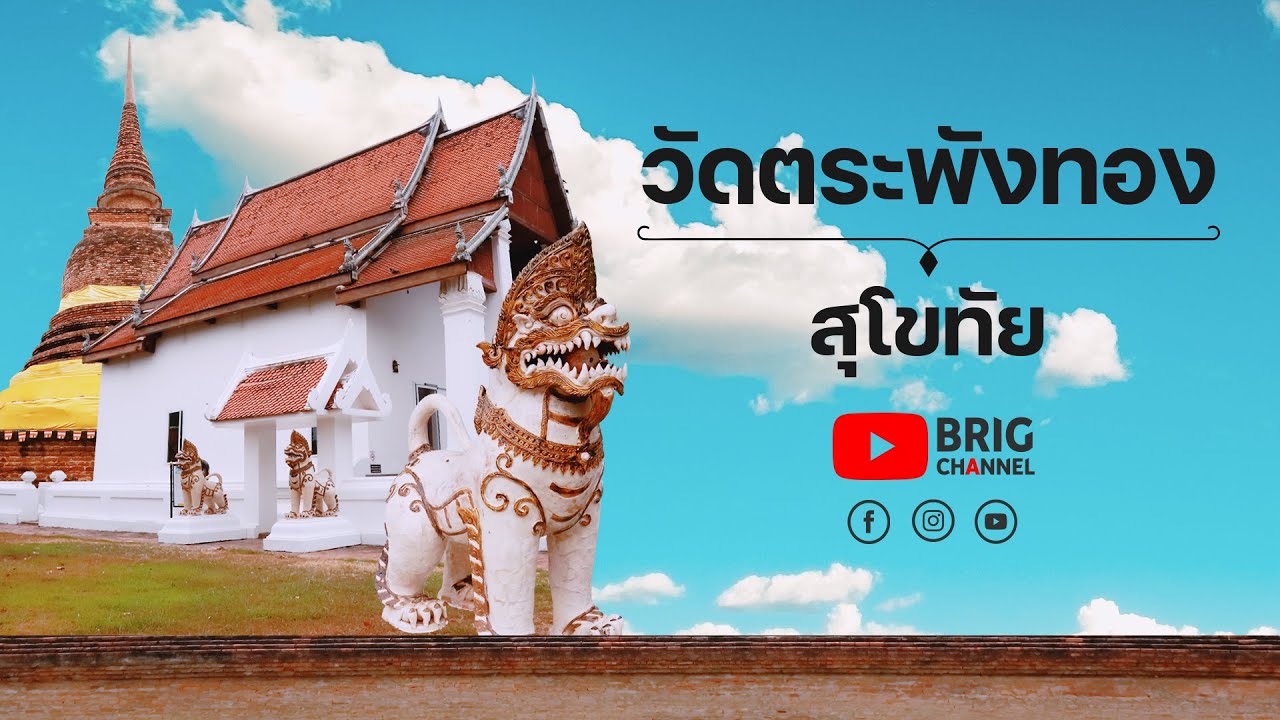
 Click to Access the Navigation Map GPS
Wat Traphang Thong Lang Map
Recommend

 Art, Culture and Heritage
 Historical Sites and Monuments(4)
 Landmarks and Memorials(5)
 Art, Craft Centres, Tradition(11)
 Museums(5)
Temple(40)
Museums(5)
Temple(40)
 Other Sacred Sites(10)
 Suburban Living
 Village, Community(3)
 Nature and Wildlife
 National Parks and Marine Reserves(3)
 Mountain (Doi)(2)
 Dam, Reservoir, Lake(4)
 Waterfalls(8)
 Caves(4)
 River, Canal(2)
 Entertainment and Agricultural
 Farms, Parks and Ecotourism(3)


