
lovethailand home >North Travel Attractions >Sukhothai Travel Attractions >Si Samrong >Ban San > Wat Ban San
TL;DR: Wat Ban San is located at Moo 2, Ban San Subdistrict, Si Samrong District, Sukhothai Province, Thailand, open Daily, hours Morning – Evening For General Worship Visits.
Wat Ban San
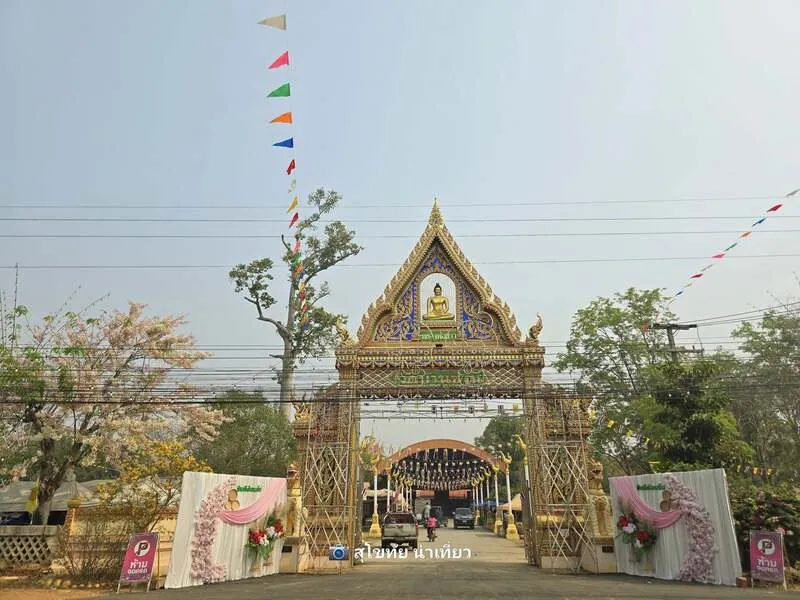
Open Days: Daily
Opening Hours: Morning – Evening For General Worship Visits
Wat Ban San is located in Moo 2, Ban San Subdistrict, Si Samrong District, Sukhothai Province. It is a community Buddhist temple under the Mahanikaya monastic order and an important religious, social, and cultural center for the local people. The temple is not only a place for Buddhist ceremonies, but also a spiritual center where villagers gather for merit-making, sermons, meditation, annual festivals, and community activities. For foreign travelers, Wat Ban San offers a meaningful opportunity to experience a living rural temple in Sukhothai, beyond the province’s more famous historical park and ancient monuments.
The history of Wat Ban San is closely connected with the development of the local community. The temple was formerly known as “Wat Pa Lelai,” a name that reflects an older setting associated with nature, forested surroundings, or a quiet spiritual area where villagers gathered for religious practice. Later, the temple was renamed “Wat Benchamat,” a name suggesting beauty, prosperity, and auspiciousness. Eventually, it became known as Wat Ban San, following the name of the village and subdistrict. Each name reflects a different stage in the relationship between the temple and the community around it.
One of the most important sacred features of Wat Ban San is Luang Pho Sam Phi Nong, a group of 3 bronze Buddha images in the Maravijaya posture dating to the early Sukhothai artistic period. These Buddha images are deeply respected by local devotees and visitors. Their story is connected with the ancient town of Bang Khlang and the relocation of the Buddha images to Wat Ban San around 1904 by Phra Athikan Ploi, the abbot of Wat Ban San at that time, together with local villagers. This event helped establish the temple as a major center of faith in the community.
Luang Pho Sam Phi Nong is important in both artistic and spiritual terms. Early Sukhothai Buddhist art is admired for its graceful proportions, peaceful expression, and refined religious symbolism. The Maravijaya posture represents the moment when the Buddha overcame Mara before enlightenment, symbolizing spiritual strength, perseverance, and victory over obstacles. For worshippers, paying respect to these Buddha images is an act of devotion and a way to seek peace, confidence, good fortune, and inner stability.
Wat Ban San is also known for its annual tradition of bathing and gilding the sacred Buddha images, especially Luang Pho Sam Phi Nong and Luang Pho Khao. This annual temple fair is an important religious and cultural event for the Ban San community. Local people and devotees gather to make merit, pour water over the Buddha images, apply gold leaf, listen to sermons, and participate in traditional activities. The event reflects the strength of local faith and the continuity of Buddhist traditions in rural Sukhothai.
The annual festival at Wat Ban San is more than a religious ceremony. It is also a community gathering that connects generations. Older residents pass down stories about the temple, the sacred Buddha images, and local traditions, while younger people learn how to take part in temple work, merit-making, and cultural customs. In this way, Wat Ban San functions as a living cultural classroom where religious practice, local history, and community identity are transmitted through participation rather than through written records alone.
Wat Ban San continues to play an important role in everyday community life. Villagers visit the temple on Buddhist holy days to make merit, offer food to monks, listen to Dharma teachings, and take part in ceremonies. During major Buddhist occasions such as Makha Bucha Day, Visakha Bucha Day, Asalha Bucha Day, Buddhist Lent, the end of Buddhist Lent, Songkran, and Kathin season, the temple becomes a gathering place for people from the surrounding area. These activities show how closely Buddhism remains connected with local social life.
The temple buildings and structures at Wat Ban San reflect the simple but dignified character of a Thai rural temple. The ordination hall is the central sacred space for important monastic ceremonies. The sermon hall is used for Dharma talks, merit-making, and community activities. Monks’ residences and other temple areas support daily religious life. The peaceful grounds, shaded areas, and modest architecture create a calm atmosphere suitable for prayer, meditation, and quiet reflection.
For travelers, the charm of Wat Ban San lies in its authenticity. It is not a heavily commercialized tourist site, but a working community temple where faith and daily life continue naturally. Visitors can experience the quiet rhythm of a rural Buddhist temple, observe local merit-making practices, and understand how temples remain central to Thai village life. This makes Wat Ban San especially suitable for cultural travelers, spiritual travelers, and those who want to see Sukhothai from a local perspective.
Wat Ban San also helps broaden the way travelers understand Sukhothai. Many visitors associate Sukhothai with Sukhothai Historical Park, Wat Mahathat, Wat Si Chum, and the ancient capital. Those sites are essential for understanding the historical greatness of the province. However, temples like Wat Ban San show that Sukhothai is also a living cultural landscape, where Buddhist rituals, local festivals, and community life continue in the present. A visit here adds depth to a Sukhothai itinerary.
Getting There is most convenient by private car or rental car. Travelers can start from Sukhothai town or Si Samrong District and continue to Ban San Subdistrict. The temple is located in Moo 2, Ban San Subdistrict, Si Samrong District, Sukhothai Province. Visitors can search for “Wat Ban San Si Samrong Sukhothai” as the navigation destination. Those using public transport can first travel to Si Samrong District, then continue by local transport or hired vehicle to Ban San Subdistrict.
Wat Ban San can be combined with several nearby attractions and temples. Travelers interested in local faith routes can visit Wat Pak Khlong Dan, Wat Ko, and Wat Sopharam in the Si Samrong area. Those who want to continue into Sukhothai’s historical route can visit Sukhothai Historical Park, Wat Mahathat, Wat Si Chum, and Ramkhamhaeng National Museum. This makes the temple suitable for a one-day cultural route that combines merit-making, community temples, and major historical sites.
Visitors should dress modestly and behave respectfully because Wat Ban San is an active Buddhist temple. Shoulders and knees should be covered, shoes should be removed before entering designated sacred areas, and visitors should avoid loud behavior. During festivals or ceremonies, travelers should follow the guidance of the temple and local community. Photography should be done respectfully and without disturbing monks, worshippers, or rituals.
Wat Ban San is a strong example of a rural Thai temple that preserves its identity through faith, community participation, and tradition. Its value does not come from grand architecture alone, but from the meaning it holds for the people who gather there. The temple’s sacred Buddha images, annual ceremonies, and long relationship with the village make it a place of memory, devotion, and cultural continuity.
Paying respect to Luang Pho Sam Phi Nong at Wat Ban San allows visitors to connect with both Sukhothai Buddhist art and local faith. These bronze Buddha images are not only religious objects; they are symbols of protection, devotion, and the bond between the community and Buddhism. Their story of relocation from the ancient town of Bang Khlang adds a historical dimension to the visit and helps travelers understand the deeper cultural value of the temple.
For those interested in local traditions, the annual bathing and gilding ceremony of Luang Pho Sam Phi Nong is an important event to know. It shows how faith is expressed through collective action, ritual practice, and community participation. The event brings together local people, devotees, and visitors in a shared atmosphere of merit-making and respect. It is one of the clearest examples of how Wat Ban San continues to function as a living cultural center.
Wat Ban San is therefore suitable for travelers who want to make merit, study local Buddhist culture, see early Sukhothai-style Buddha images, or find a peaceful place for reflection. The temple does not require a long visit, but it rewards travelers who come with patience and respect. Spending time here helps reveal the quieter, more intimate side of Sukhothai, where Buddhist faith and community life remain closely connected.
In summary, Wat Ban San is an important community temple in Si Samrong District, Sukhothai Province. It is historically connected with the former names Wat Pa Lelai and Wat Benchamat, spiritually centered on Luang Pho Sam Phi Nong, and culturally significant through its annual merit-making traditions. For foreign travelers, the temple offers a calm and meaningful experience of living Buddhist culture in Sukhothai.
| Name | Wat Ban San |
| Location | Moo 2, Ban San Subdistrict, Si Samrong District, Sukhothai Province, Thailand |
| Address | Moo 2, Ban San Subdistrict, Si Samrong District, Sukhothai Province |
| Highlights | Luang Pho Sam Phi Nong, 3 bronze Buddha images in the Maravijaya posture from the early Sukhothai artistic period, and the annual bathing and gilding ceremony |
| History | Formerly known as Wat Pa Lelai and later Wat Benchamat before becoming Wat Ban San. The temple is connected with the relocation of Luang Pho Sam Phi Nong to the temple around 1904. |
| Name Origin | The current name Wat Ban San follows the name of Ban San village and subdistrict, reflecting the close relationship between the temple and the local community. |
| Distinctive Features | A peaceful community temple with an ordination hall, sermon hall, monks’ residences, worship areas, and spaces for local Buddhist activities |
| Traditions / Important Rituals | Annual bathing and gilding ceremony for Luang Pho Sam Phi Nong and Luang Pho Khao, annual temple merit-making, Kathin ceremony, Songkran, and major Buddhist holy day activities |
| Travel Information | Best reached by private car or rental car. Travel from Sukhothai town or Si Samrong District to Ban San Subdistrict and search for “Wat Ban San Si Samrong Sukhothai” as the destination. |
| Current Status | An active community Buddhist temple used for merit-making, sermons, meditation, and local religious traditions |
| Open Days | Daily |
| Opening Hours | Morning – Evening For General Worship Visits |
| Main Areas / Zones | Ordination hall, sermon hall, monks’ residences, worship area for Luang Pho Sam Phi Nong, and annual festival areas |
| Abbot / Caretaker | Phra Khru Mongkhon Sathukit (Charoen) |
| Nearby Tourist Attractions | 1. Wat Pak Khlong Dan, about 5 km 2. Wat Ko, Si Samrong District, about 8 km 3. Wat Sopharam, Sam Ruean Subdistrict, about 13 km 4. Tha Le Luang, Sukhothai, about 24 km 5. Phra Mae Ya Shrine, about 29 km 6. Ramkhamhaeng National Museum, about 32 km 7. Sukhothai Historical Park, about 33 km 8. Wat Mahathat, Sukhothai, about 34 km 9. Wat Si Chum, about 36 km |
| Nearby Restaurants | 1. Long Cafe by A Long Ban San, about 1 km, Tel. 093-945-9896 2. Merge Coffee Slowbar, about 7 km 3. Kor Kai Si Samrong, Rim Yom Branch, about 9 km, Tel. 081-589-9849, 096-687-5874 4. Ta Phut Noodle Restaurant, about 9 km 5. Ban Khao Tom Si Samrong, about 9 km 6. Hom Muen Li, about 10 km 7. ORDINA, about 11 km 8. Amornbergfah Cafe' Sukhothai, about 14 km, Tel. 082-664-6446 |
| Nearby Accommodations | 1. San Rak Resort Sukhothai, about 5 km, Tel. 081-971-9709 2. Sukruthai Resort, about 10 km, Tel. 081-020-3111 3. Chai Villa Sukhothai, about 12 km 4. OYO 75596 The Sirisuk House, about 12 km 5. Suksamer Relaxation Homestay, about 17 km 6. Sukhothai Resort, about 22 km |
Frequently Asked Questions (FAQ)
Q: Where is Wat Ban San located?
A: Wat Ban San is located in Moo 2, Ban San Subdistrict, Si Samrong District, Sukhothai Province, Thailand.
Q: What were the former names of Wat Ban San?
A: Wat Ban San was formerly known as Wat Pa Lelai and later Wat Benchamat before taking its current name from Ban San village.
Q: What is the main sacred highlight of Wat Ban San?
A: The main sacred highlight is Luang Pho Sam Phi Nong, 3 bronze Buddha images in the Maravijaya posture from the early Sukhothai artistic period.
Q: What important tradition is held at Wat Ban San?
A: The temple is known for the annual bathing and gilding ceremony for Luang Pho Sam Phi Nong and Luang Pho Khao, along with other Buddhist merit-making activities.
Q: How can travelers get to Wat Ban San?
A: The easiest way is by private car or rental car. Travelers can head to Si Samrong District, continue to Ban San Subdistrict, and use “Wat Ban San Si Samrong Sukhothai” as the navigation destination.
Q: Is Wat Ban San suitable for foreign travelers?
A: Yes. It is suitable for travelers interested in Buddhist temples, local culture, Sukhothai-style Buddha images, and peaceful rural temple experiences.
Q: What nearby attractions can be visited with Wat Ban San?
A: Nearby and connecting attractions include Wat Pak Khlong Dan, Wat Ko, Wat Sopharam, Tha Le Luang, Sukhothai Historical Park, Wat Mahathat, and Wat Si Chum.
 Category: ●Places of Worship
 Group: ●Temple
Last Update : 1 MonthAgo
 Last Update : 1 MonthAgo
 Click to Access the Navigation Map GPS
Wat Ban San Map
Recommend

 Art, Culture and Heritage
 Historical Sites and Monuments(4)
 Landmarks and Memorials(5)
 Art, Craft Centres, Tradition(11)
 Museums(5)
Temple(40)
Museums(5)
Temple(40)
 Other Sacred Sites(10)
 Suburban Living
 Village, Community(3)
 Nature and Wildlife
 National Parks and Marine Reserves(3)
 Mountain (Doi)(2)
 Dam, Reservoir, Lake(4)
 Waterfalls(8)
 Caves(4)
 River, Canal(2)
 Entertainment and Agricultural
 Farms, Parks and Ecotourism(3)


