
lovethailand home >North Travel Attractions >Sukhothai Travel Attractions >Si Samrong >Khlong Tan > Sukhothai Loi Krathong Festival
TL;DR: Sukhothai Loi Krathong Festival, Sukhothai attractions : Art, Culture and Heritage, Art, Craft Centres, Tradition.
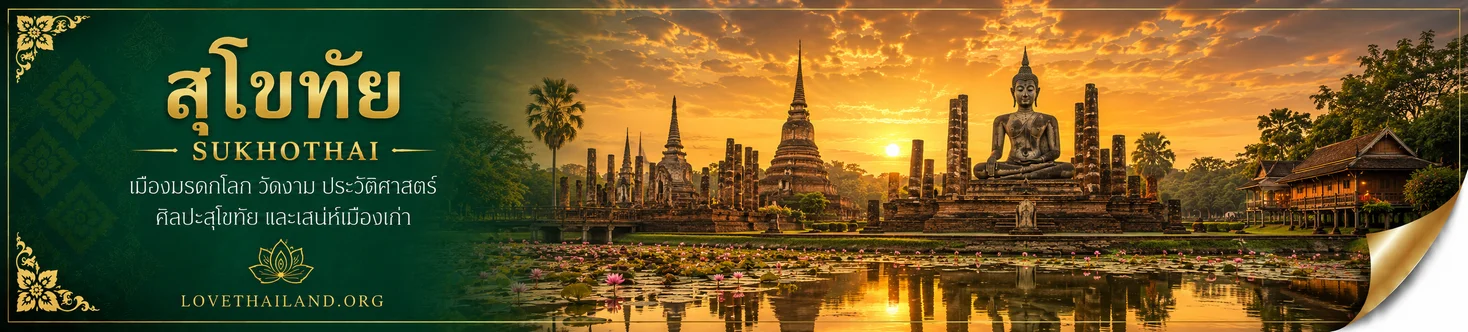
Sukhothai Loi Krathong Festival
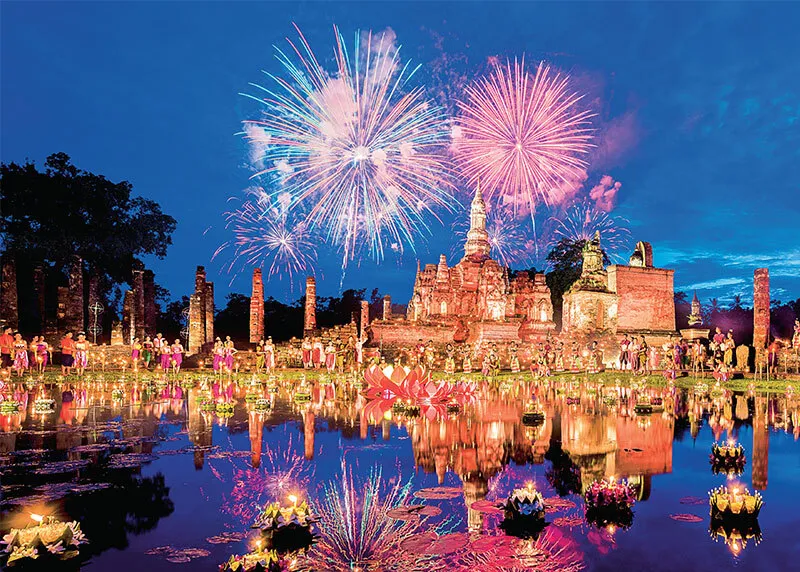
Open Days: Held annually around the full moon of the 12th lunar month; the official event dates should be checked from Sukhothai Province and Sukhothai Historical Park announcements each year
Opening Hours: Festival activities take place during both daytime and evening hours. The main area of Sukhothai Historical Park is generally open Monday-Friday and Sunday from 06.30 to 19.30, and Saturday from 06.30 to 21.00
The Sukhothai Loi Krathong Festival, widely known as the “Sukhothai Loi Krathong and Candle Festival,” is one of Thailand’s most iconic cultural celebrations. Held around the full moon of the 12th lunar month, the festival takes place mainly at Sukhothai Historical Park in Mueang Kao Subdistrict, Mueang Sukhothai District, Sukhothai Province. This setting gives the event a depth that few other Loi Krathong festivals can match. Visitors do not simply float a krathong on water; they experience a ritual of gratitude, light, history, Buddhism, local craftsmanship, and living Thai culture within the landscape of an ancient capital.
The Sukhothai Loi Krathong Festival is Thailand’s most historically atmospheric Loi Krathong celebration. It is held at Sukhothai Historical Park during the full moon of the 12th lunar month. The festival is associated with the legend of Nang Noppamas, the memory of candle lighting and fire displays in ancient Sukhothai, and the Thai custom of giving thanks to water. Major highlights include floating krathongs, candlelit ancient monuments, the Nang Noppamas procession, krathong contests, light and sound performances, fireworks, traditional games, retro markets, local food, and cultural activities that bring the old city of Sukhothai back to life at night.
For many Thai people, Sukhothai is the place most strongly associated with the origin and cultural memory of Loi Krathong. The story of Nang Noppamas, a legendary woman of beauty and intelligence in the Sukhothai period, is often connected with the making of the first decorated krathong from natural materials. According to popular tradition, she created a beautiful floating offering to honor the Buddha and pay respect to the water spirit. Whether read as history, legend, or cultural memory, Nang Noppamas has become a powerful symbol of Thai elegance, craftsmanship, and the refined art of making krathongs.
The festival is also closely linked with the phrase “Phao Thian Len Fai,” meaning candle lighting and fire play. This expression evokes the image of ancient Sukhothai filled with lights, lamps, candles, and festive gatherings. In the modern festival, the illumination of ancient temples, ponds, pathways, and monuments is not merely decoration. It is a way of reviving the atmosphere of the old city and allowing visitors to imagine how Sukhothai may have looked during an auspicious night of celebration in the past.
Sukhothai Historical Park is the heart of the festival. The park contains important monuments such as Wat Mahathat, Wat Sa Si, Wat Si Sawai, Wat Traphang Ngoen, Wat Traphang Thong, and the King Ramkhamhaeng Monument. These places are not just a backdrop for the event. They are part of the meaning of the festival itself. When thousands of candles and lamps glow beside ancient stupas, Buddha images, temple platforms, and ponds, the old capital becomes a luminous cultural landscape where past and present meet.
Loi Krathong has several layers of meaning. At the most familiar level, it is an act of gratitude to water. Water sustains agriculture, daily life, travel, food, and settlement in Thailand. By floating a krathong, people symbolically thank rivers, ponds, canals, and other water sources. They also ask forgiveness for any pollution or careless use of water during the year. This makes the ritual both beautiful and morally meaningful.
On a personal level, floating a krathong is also an act of release. Many people place their wishes, worries, mistakes, or sadness into the symbolic vessel and let it drift away. Some pray for good fortune, some ask for peace, and others use the moment to mark a new beginning. A krathong may be small, but emotionally it can carry hope, apology, gratitude, and renewal.
One of the festival’s most recognizable highlights is the Nang Noppamas procession and beauty contest. This activity is rooted in the legend of the woman who made the first decorated krathong. In Sukhothai, the procession is not only about beauty. It is a cultural performance that presents Thai dress, graceful movement, local artistry, and historical imagination. Decorated floats, traditional music, dance, and period-style costumes help create the atmosphere of an ancient royal city.
The krathong contest is another important activity. Contest krathongs are often made from natural materials such as banana leaves, banana trunk, flowers, incense, candles, and biodegradable components. These krathongs reveal local creativity, patience, and fine craftsmanship. They also remind visitors that a meaningful Loi Krathong celebration should respect the environment. A krathong is not just an ornament. It is a ritual object, a work of art, and a sign of responsibility toward water.
At night, Sukhothai Historical Park changes dramatically. The quiet archaeological landscape of the daytime becomes a city of candlelight. Terracotta lamps, candles, lanterns, and carefully placed illumination turn ancient brick monuments and ponds into a glowing scene. Reflections of firelight on the water create one of the most memorable images of the festival. Many travelers come to Sukhothai specifically to experience this combination of ancient ruins, moonlight, water, and candlelight.
The light and sound performance is a major part of the festival experience. Using the real historical park as a stage, the performance usually tells stories related to ancient Sukhothai, its kings, its people, Buddhism, trade, and the meaning of Loi Krathong. For international visitors, this performance can make Thai history easier to understand because it combines visual storytelling, music, narration, lighting, and movement in one setting.
Fireworks and traditional fire displays add energy to the festival. When fireworks rise above the old city while candles float on the water below, the festival becomes both spectacular and symbolic. However, the program may vary from year to year depending on official announcements and local conditions. Visitors should check the annual schedule in advance, especially for light and sound shows, fireworks, and ticketed performances.
The retro market and local food stalls complete the visitor experience. Travelers can taste Sukhothai noodles, khao perp, Thai desserts, local snacks, and traditional dishes. Walking through the market while listening to Thai music, seeing people in period dress, and holding a krathong before the floating ceremony turns the visit into a full cultural experience. The festival is not only seen with the eyes; it is heard, tasted, smelled, and felt.
What makes the Sukhothai Loi Krathong Festival different from many other celebrations is its World Heritage atmosphere. Floating a krathong among real ancient monuments gives the ritual historical weight. Visitors are not in a modern festival ground built only for the event. They are inside a historic city that shaped Thai art, Buddhism, language, urban life, and cultural identity. This is why the Sukhothai festival feels both festive and deeply rooted.
The festival also plays an important role in cultural transmission. Local children, students, youth groups, artisans, performers, and residents often take part in making krathongs, performing dances, joining processions, wearing traditional dress, and helping with cultural activities. This involvement keeps the tradition alive. The festival is not only an attraction for visitors; it is also a living classroom for the people of Sukhothai.
For international travelers, the Sukhothai Loi Krathong Festival is one of the clearest introductions to Thai culture. It brings together Buddhism, gratitude to water, ancient history, local crafts, food, traditional performance, music, and public participation. Floating a krathong here is not only a beautiful moment for photographs. It is a way to understand how Thai people connect nature, merit, memory, apology, hope, and renewal.
Getting There is straightforward from Sukhothai town. Sukhothai Historical Park is in Mueang Kao, about 12 km from the modern town center. Visitors can travel by private car, rental car, local songthaew, hired vehicle, or taxi. Travelers arriving by long-distance bus can get off at Sukhothai Bus Terminal and continue to the old city. Those flying to Sukhothai Airport can continue by road to the historical park. During the festival period, accommodation should be booked early and travel time should be allowed because the old city area can become crowded.
A visit of 1-2 days is recommended. During the day, visitors can explore Wat Mahathat, Wat Sa Si, Wat Si Sawai, Wat Traphang Ngoen, and Ramkhamhaeng National Museum. In the evening, they can enjoy the lights, processions, markets, and floating ceremony. A second day allows time for nearby attractions such as Wat Si Chum, Wat Phra Phai Luang, local cafés, restaurants, and communities around the old city.
Visitors should dress respectfully and wear comfortable shoes because the festival area is large. They should avoid climbing on ancient monuments, touching fragile structures, or throwing rubbish into ponds and canals. Biodegradable krathongs made from natural materials are strongly recommended. Photography should be done with consideration for other visitors and ritual spaces, especially during the floating ceremony and crowded performances.
In conclusion, the Sukhothai Loi Krathong Festival is much more than an annual celebration. It is a meeting point of history, faith, art, water, light, and community life. Floating krathongs, candlelit ruins, Nang Noppamas processions, local food, traditional music, and ancient ponds together make Sukhothai one of the most meaningful places in Thailand to experience Loi Krathong. Visitors who attend the festival do not simply watch a beautiful event; they step into a living cultural memory of the old capital.
| Name | Sukhothai Loi Krathong Festival / Sukhothai Loi Krathong and Candle Festival |
| Location | Sukhothai Historical Park, Mueang Kao Subdistrict, Mueang Sukhothai District, Sukhothai Province |
| Address | Mueang Kao Subdistrict, Mueang Sukhothai District, Sukhothai 64210, Thailand |
| Coordinates | 17.01930, 99.70325 |
| Festival Period | Around the full moon of the 12th lunar month every year; the official event period may extend across several days depending on the annual announcement |
| 2026 Event Dates | 15-24 November 2026 |
| Highlights | Floating krathongs in the old city, candlelit ancient monuments, Nang Noppamas procession, krathong contests, light and sound performances, fireworks, retro markets, local food, and cultural activities |
| History | Connected with the cultural memory of ancient Sukhothai, the legend of Nang Noppamas, candle lighting and fire displays, and the Thai custom of floating krathongs on the full moon night of the 12th lunar month |
| Name Origin | “Loi Krathong” means floating decorated vessels on water to honor and ask forgiveness from water sources, while “Phao Thian Len Fai” refers to candle lighting and fire displays associated with Sukhothai |
| Distinctive Features | A Loi Krathong celebration held among real ancient monuments in Sukhothai Historical Park, giving the festival strong historical and cultural atmosphere |
| Main Activities | Floating krathongs, Nang Noppamas procession and contest, krathong contest, candle and lantern decoration, light and sound show, fireworks, folk performances, retro market, and local food stalls |
| Travel Information | The historical park is about 12 km from Sukhothai town and can be reached by private car, rental car, local songthaew, hired vehicle, or taxi from Sukhothai Bus Terminal |
| Current Status | An annual provincial festival and one of Thailand’s most important Loi Krathong celebrations |
| Open Days Of Venue | Sukhothai Historical Park is open daily |
| Main Area Opening Hours | Monday-Friday and Sunday 06.30-19.30; Saturday 06.30-21.00. The park office opens 08.30-16.30 |
| Caretaker / Related Authorities | Sukhothai Province, Sukhothai Historical Park, Fine Arts Department, local administrative organizations, and tourism-related agencies |
| Main Contact Number | Sukhothai Historical Park, Tel. 055-697527 |
| Nearby Tourist Attractions | 1. Wat Mahathat, about 0.2 km 2. King Ramkhamhaeng Monument, about 0.4 km 3. Ramkhamhaeng National Museum, about 0.6 km 4. Wat Traphang Thong, about 0.8 km 5. Wat Si Sawai, about 1 km 6. Wat Sa Si, about 1 km 7. Wat Si Chum, about 2 km |
| Nearby Restaurants | 1. Chanda's Historical Garden Restaurant, about 0.3 km 2. Sureerat Restaurant, about 0.5 km, Tel. 055-633-323 3. Cafe Thammada, about 0.6 km, Tel. 084-931-9299 4. Say Hi Cafe, about 0.4 km 5. Som Tam Pa Long, about 0.4 km 6. Som Tam Mai Ngam, about 0.4 km |
| Nearby Accommodations | 1. Wake Up at Muang Kao Boutique Hotel, about 0.6 km, Tel. 062-419-6924 2. Sukhothai Garden, about 1 km, Tel. 084-751-1533 3. Thai Thai Sukhothai Resort, about 1.5 km, Tel. 084-932-1006 4. Sriwilai Sukhothai Resort & Spa, about 2 km 5. Le Charme Sukhothai Historical Park Resort, about 2 km, Tel. 055-633-333 |
Frequently Asked Questions (FAQ)
Q: Where is the Sukhothai Loi Krathong Festival held?
A: It is held at Sukhothai Historical Park in Mueang Kao Subdistrict, Mueang Sukhothai District, Sukhothai Province, one of Thailand’s most important ancient city sites.
Q: When is the Sukhothai Loi Krathong Festival held?
A: It is held around the full moon of the 12th lunar month every year. For 2026, the event is scheduled for 15-24 November 2026.
Q: Why is Sukhothai famous for Loi Krathong?
A: Sukhothai is associated with the legend of Nang Noppamas, the memory of candle lighting and fire displays, and the historical atmosphere of Sukhothai Historical Park.
Q: What are the main activities at the festival?
A: Main activities include floating krathongs, the Nang Noppamas procession, krathong contests, candlelit monuments, light and sound shows, fireworks, folk performances, retro markets, and local food stalls.
Q: How many days should visitors spend at the festival?
A: One to two days is recommended, allowing time to explore the historical park during the day and enjoy the festival lights, markets, performances, and floating ceremony in the evening.
Q: Is the festival suitable for international travelers?
A: Yes. It is one of the best Thai festivals for international visitors because it combines history, Buddhism, water rituals, local crafts, food, performances, and ancient monuments in one setting.
Q: How can visitors get to Sukhothai Historical Park?
A: The park is about 12 km from Sukhothai town. Visitors can travel by private car, rental car, local songthaew, taxi, or hired vehicle from Sukhothai Bus Terminal.
Q: What should visitors prepare before attending the festival?
A: Visitors should book accommodation early, dress respectfully, wear comfortable shoes, use biodegradable krathongs, check the annual schedule, and allow extra travel time because the festival attracts many visitors.
 Category: ●Art, Culture and Heritage
 Group: ●Art, Craft Centres, Tradition
Last Update : 4 MonthAgo
 Last Update : 4 MonthAgo
Recommend

 Historical Sites and Monuments(4)
 Landmarks and Memorials(5)
Art, Craft Centres, Tradition(11)
Landmarks and Memorials(5)
Art, Craft Centres, Tradition(11)
 Museums(5)
 Places of Worship
 Temple(40)
 Other Sacred Sites(10)
 Suburban Living
 Village, Community(3)
 Nature and Wildlife
 National Parks and Marine Reserves(3)
 Mountain (Doi)(2)
 Dam, Reservoir, Lake(4)
 Waterfalls(8)
 Caves(4)
 River, Canal(2)
 Entertainment and Agricultural
 Farms, Parks and Ecotourism(3)


