
lovethailand home >North Travel Attractions >Sukhothai Travel Attractions >Kong Krali Lat >Kong > Luang Pho To Wihan Loi
TL;DR: Luang Pho To Wihan Loi is located at Wat Kong Krailat, Kong Subdistrict, Kong Krailat District, Sukhothai Province, open Daily, hours 08.00 – 17.00.
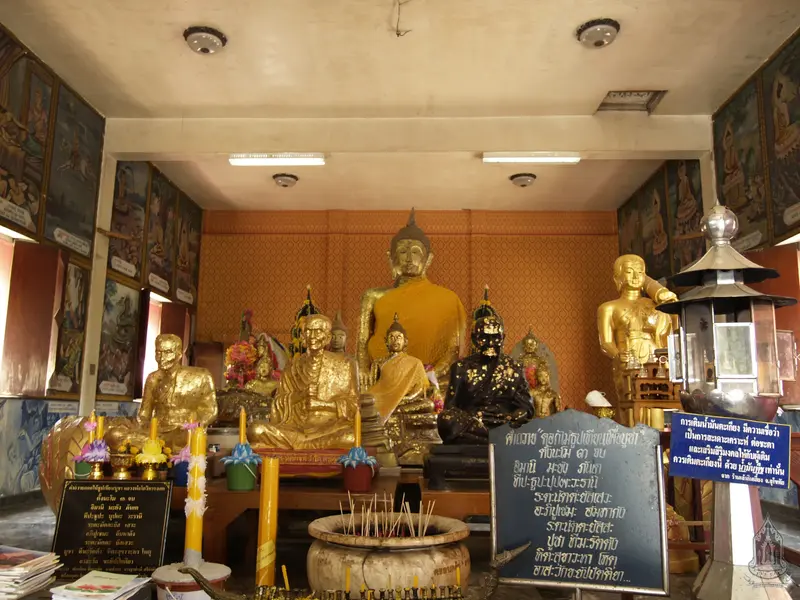
Luang Pho To Wihan Loi
Open Days: Daily
Opening Hours: 08.00 – 17.00
Luang Pho To Wihan Loi at Wat Kong Krailat in Sukhothai Province is one of the most meaningful sacred Buddha images in Kong Krailat District. Revered by local residents for generations, this old stucco Buddha image in the Subduing Mara posture is not only an object of worship but also the spiritual heart of Ban Kong community along the Yom River. For travelers who want to understand Sukhothai beyond its famous historical park, this temple offers a quieter and deeply local perspective on faith, legend, river culture, and community memory.
In simple terms, Luang Pho To Wihan Loi is a sacred Buddha image enshrined at Wat Kong Krailat in Kong Subdistrict, Kong Krailat District, Sukhothai Province. The image is associated with a long-standing legend: during a period of war, Burmese soldiers passing through the area reportedly fired a cannon at the viharn where the Buddha image was enshrined. The building was damaged, but the Buddha image survived. Another important legend tells of the image miraculously moving from its original position to rest beneath a golden shower tree. These stories gave rise to the name “Wihan Loi,” which can be understood as the “floating viharn” or the viharn that seemed to rise above harm and floodwater.
Wat Kong Krailat, often called Wat Kong by local people, is located in Kong Subdistrict in the heart of Kong Krailat District. The temple stands in Ban Kong, a riverside community connected to the Yom River. This location is important because the river has shaped local life for centuries. It provided food, transport routes, farming opportunities, and seasonal rhythms. As a result, the legends of Luang Pho To are closely tied to the landscape itself. The Buddha image is not an isolated religious object; it belongs to a living community whose memory has been shaped by water, war, agriculture, and Buddhist devotion.
The Buddha image is made of stucco and seated in the Subduing Mara posture. In Buddhist symbolism, this posture represents the moment of the Buddha’s victory over temptation, fear, and spiritual obstacles. For local worshippers, the posture communicates firmness, courage, patience, and wisdom. When people bow before Luang Pho To, they are not only asking for blessings. They are also reminded of the Buddhist ideal of facing difficulty with a steady mind and a commitment to goodness.
The exact period of construction is not firmly established, but the image has long been regarded as an old and highly respected Buddha image of Kong Krailat. Its value does not come only from age or artistic form. Much of its importance comes from the continuity of local faith. Parents and grandparents have told the legends to younger generations, and the annual merit-making traditions have kept the story alive. In this way, Luang Pho To Wihan Loi functions as a bridge between the past and the present.
The most dramatic legend begins in a time when Burmese forces marched toward Phitsanulok and passed through the Ban Kong area. According to local storytelling, soldiers behaved recklessly and fired a cannon at the viharn of Luang Pho To. The viharn was damaged, but the Buddha image remained unharmed except for a small visible mark. For the local community, this story became a powerful sign of sacred protection. It also preserved the memory of war, violence, and uncertainty while transforming that memory into a story of resilience and spiritual strength.
The cannon legend has a meaning beyond miracle. It reflects how communities remember historical suffering. A building could be destroyed, but the Buddha image remained. This contrast turned the damaged viharn into a symbol of survival. For local people, Luang Pho To became a reminder that faith, morality, and communal identity can endure even when the physical world is shaken by conflict.
After the viharn was damaged, the Buddha image was exposed to sun and rain for many years. This image of an old Buddha seated calmly in the open air became part of the emotional memory of Ban Kong. Local residents continued to revere the image even when its surroundings were not perfect. This devotion strengthened the belief that Luang Pho To was a guardian of the community, a sacred presence that stayed with the people through hardship.
The story that gave the name Wihan Loi its strongest identity occurred on the full moon night of the third lunar month. People living near the temple reportedly heard a deep trembling sound from the temple area, as if the earth itself had shaken. The next morning, they found that Luang Pho To had moved from the original place to a spot beneath a golden shower tree, about three wa away. This miraculous movement became one of the most widely remembered legends of the temple and one of the reasons the Buddha image is known as Luang Pho To Wihan Loi.
Another belief connected with the name Wihan Loi comes from annual flooding along the Yom River. In the past, water often overflowed into the temple area, and many buildings had to be raised high to avoid flood damage. Yet local people told stories that the viharn of Luang Pho To was not flooded like the surrounding areas. This gave rise to a belief that beneath the base of the viharn were silver and golden boats supporting it, with chains tied to a bodhi tree so that the viharn would not drift away.
For foreign travelers, these stories should be understood as part of local cultural imagination rather than as ordinary historical records. They reveal how a riverside community explains its relationship with water, sacred space, and protection. In a flood-prone landscape, the idea of a viharn floating above the water carries deep symbolic meaning. It suggests safety, continuity, and divine guardianship in a place where seasonal water has always influenced daily life.
Luang Pho To Wihan Loi is therefore more than an old Buddha image. It is a center of shared memory. Older villagers tell the stories of the cannon, the shaking earth, the golden shower tree, and the floating viharn. Younger generations hear these stories during temple visits and annual festivals. Visitors from outside the area encounter them through worship, conversation, and local cultural events. This living transmission is what makes the site especially valuable.
Many worshippers come to Luang Pho To to ask for protection, peace in the family, safety in travel, success in work, and general well-being. Others come simply to pay respect to an old sacred image that has been cherished by the community for generations. The act of worship is usually simple: flowers, incense, candles, gold leaf, quiet prayer, and respectful bowing. The atmosphere is calm and sincere, making the temple suitable for visitors who appreciate meaningful local religious sites rather than crowded tourist landmarks.
Every year around the full moon period of the fourth lunar month, or after the rice harvest season, the community holds the annual gilding and celebration ceremony for Luang Pho To Wihan Loi. This event usually includes Buddhist merit-making, worship, gilding of the Buddha image, and community activities. For local people, the festival is not merely a temple fair. It is a time to return home, meet relatives, make merit, honor ancestors, and renew the shared bond between the temple and the community.
The annual ceremony also reflects the rhythm of an agricultural society. After the hard work of harvesting, villagers traditionally had time to gather, make offerings, and celebrate together. The temple became a social and spiritual center where gratitude, faith, and community identity were expressed. This is one of the reasons Luang Pho To Wihan Loi remains deeply respected: the Buddha image is not separate from local life, but woven into its seasonal and emotional structure.
Visitors should approach the site with respect. Wat Kong Krailat is an active temple, not only a tourist attraction. Modest clothing is recommended. Visitors should keep their voices low inside the viharn, avoid touching sacred objects without permission, and behave respectfully during ceremonies. Photography is usually acceptable in temple areas, but visitors should avoid disturbing worshippers or monks. A respectful visit allows travelers to experience the spiritual atmosphere of the place without disrupting local practice.
One of the best ways to understand the cultural context of Luang Pho To is to combine the temple visit with Rim Yom 2437 Market, a community market held along the Yom River in front of Wat Kong Krailat. This market was created to revive the atmosphere of an old riverside market. Visitors can find local food, sweets, agricultural products, community goods, and a nostalgic setting that reflects the history of Ban Kong. When the market is operating, travelers can worship Luang Pho To, walk along the riverside, sample local dishes, and experience the local way of life in one trip.
Rim Yom 2437 Market is not only a place to shop. It is also a cultural storytelling space. The name evokes the historical identity of the community, while the activities recreate the charm of a traditional riverside town. Because the market takes place near the temple, Luang Pho To Wihan Loi naturally becomes the spiritual anchor of the visit. This makes the trip richer than a simple temple stop. Travelers can see how sacred space, local economy, food culture, and community pride are connected.
In terms of cultural tourism, Luang Pho To Wihan Loi is valuable because it helps visitors understand a quieter side of Sukhothai. Many travelers associate Sukhothai mainly with the ancient capital, large historical monuments, and archaeological parks. Kong Krailat offers another dimension: living temples, local legends, riverside markets, and community-based faith. This is the kind of destination that rewards slow travel and cultural curiosity.
The artistic value of Luang Pho To lies not only in its physical form but also in its relationship with the people. Some Buddha images are famous because of inscriptions, royal patronage, or refined craftsmanship. Luang Pho To Wihan Loi is meaningful because faith, storytelling, annual rituals, and community identity have gathered around it over time. The image has become a living cultural entity: respected in worship, remembered in legend, and renewed through annual festivals.
Getting There is most convenient by private car or hired vehicle from Sukhothai town. Travelers can drive toward Kong Krailat District and continue to Kong Subdistrict, where Wat Kong Krailat is located near the Yom River in Ban Kong community. The temple can be visited as a half-day trip or combined with Rim Yom 2437 Market, the King Rama IX Commemoration Park in Sukhothai, the Phra Mae Ya Shrine, and Sukhothai Historical Park. Travelers without a private vehicle can use local transport to reach Kong Krailat District and then hire local transport to the temple area.
The best time to visit is in the morning or late afternoon, when the weather is more comfortable and the atmosphere is calmer for worship. Travelers who want a stronger community experience should plan their visit to coincide with Rim Yom 2437 Market or the annual Luang Pho To celebration. Since the annual festival follows the Thai lunar calendar, it is wise to check the local schedule before traveling.
For foreign visitors, the most important way to appreciate Luang Pho To Wihan Loi is to see the site as a living cultural landscape. The Buddha image, the viharn, the Yom River, the flood legends, the golden shower tree, the annual gilding ceremony, and the market in front of the temple all belong to one story. Together, they show how a community protects memory, expresses faith, and keeps local identity alive through religious practice.
A visit to Luang Pho To Wihan Loi is not about grandeur. It is about depth. The temple is modest, but the stories are rich. The Buddha image is old, but the faith surrounding it remains active. The legends may sound mysterious, but they reveal how local people understand protection, morality, and belonging. For travelers who want to experience Sukhothai through living culture rather than only ancient ruins, Wat Kong Krailat is a meaningful place to include in the journey.
| Name | Luang Pho To Wihan Loi, Wat Kong Krailat |
| Location | Wat Kong Krailat, Kong Subdistrict, Kong Krailat District, Sukhothai Province |
| Address | Rural Road 4022, Kong Subdistrict, Kong Krailat District, Sukhothai 64170, Thailand |
| Highlights | An old sacred stucco Buddha image in the Subduing Mara posture, associated with cannon, miracle, flood, and floating viharn legends |
| History | A long-revered Buddha image of Ban Kong community. The exact construction period is not firmly established, but the image has been worshipped for generations and is closely connected with local legends and the Yom River landscape |
| Name Origin | The name Wihan Loi comes from legends about the Buddha image moving to a spot beneath a golden shower tree and beliefs that the viharn floated above floodwater |
| Distinctive Features | A sacred Buddha image deeply respected by Kong Krailat residents, with strong links to community identity, annual rituals, and riverside culture |
| Important Tradition / Ritual | Annual gilding and worship ceremony for Luang Pho To Wihan Loi, held from the 12th to the 15th waxing moon of the 4th lunar month, with merit-making, offerings, gilding, and community religious activities |
| Travel Information | Accessible from Sukhothai town by private car, rental car, or hired local transport via Kong Krailat District to Kong Subdistrict near the Yom River |
| Current Status | Open for worship and visits; the temple remains an active Buddhist temple and a spiritual center of Kong Krailat community |
| Open Days | Daily |
| Opening Hours | 08.00 – 17.00 |
| Facilities | Worship area, temple grounds, parking areas around the temple and community, restrooms, and riverside walking area nearby |
| Main Areas / Zones | Luang Pho To Wihan Loi viharn, temple religious area, Yom River frontage, and the area in front of the temple connected with Rim Yom 2437 Market |
| Abbot / Caretaker | Phra Khru Suchit Thammasunthon |
| Official Website / Official Page | Kong Krailat Subdistrict Municipality Website |
| Nearby Tourist Attractions | 1. Rim Yom 2437 Market, about 0 km 2. Ko Kong Riverside Area, about 1 km 3. Wat Bueng Khrop Sattha Ram, about 5 km 4. King Rama IX Commemoration Park, Sukhothai, about 14 km 5. Phra Mae Ya Shrine, about 17 km 6. Sukhothai Historical Park, about 30 km |
| Nearby Restaurants | 1. Madame Porn Restaurant, Kong Krailat, about 2 km, Tel. 098-318-6039 2. Kuea Khanom Ban Kong Souvenir Shop, about 1 km, Tel. 093-963-9624 3. Krua Than Khun, about 2 km 4. Ko Chian Je Chio / Je Noi Fresh Fish Area at Rim Yom 2437 Market, about 0 km 5. Local Food Stalls at Rim Yom 2437 Market, about 0 km |
| Nearby Accommodations | 1. Kamonporn Resort & Minimart, about 8 km, Tel. 085-384-4327 2. Penchan Souvenir & Resort, about 4 km 3. Ban Khung Yang Accommodation, Kong Krailat, about 8 km 4. Accommodation in Sukhothai Town, about 18 km 5. Accommodation near Sukhothai Old Town, about 30 km |
Frequently Asked Questions (FAQ)
Q: Where is Luang Pho To Wihan Loi located?
A: Luang Pho To Wihan Loi is enshrined at Wat Kong Krailat in Kong Subdistrict, Kong Krailat District, Sukhothai Province, near the Yom River.
Q: Why is it called Wihan Loi?
A: The name comes from local legends about the Buddha image moving to a spot beneath a golden shower tree and beliefs that the viharn floated above floodwater.
Q: Why is Luang Pho To Wihan Loi important?
A: It is a sacred Buddha image and spiritual center of Kong Krailat community, closely connected with local faith, legends, annual rituals, and riverside culture.
Q: When is the annual Luang Pho To Wihan Loi ceremony held?
A: The annual gilding and worship ceremony is held from the 12th to the 15th waxing moon of the 4th lunar month.
Q: What should visitors prepare for worship?
A: Visitors commonly bring flowers, incense, candles, and gold leaf. Modest dress and respectful behavior inside the temple are recommended.
Q: What can travelers visit nearby?
A: Nearby places include Rim Yom 2437 Market, the Ko Kong riverside area, King Rama IX Commemoration Park in Sukhothai, Phra Mae Ya Shrine, and Sukhothai Historical Park.
Q: What is the best time to visit?
A: Morning and late afternoon are comfortable for worship. Travelers who want a local cultural experience should visit when Rim Yom 2437 Market or the annual temple ceremony is taking place.
 Category: ●Places of Worship
 Group: ●Other Sacred Sites
Last Update : 3 MonthAgo
 Last Update : 3 MonthAgo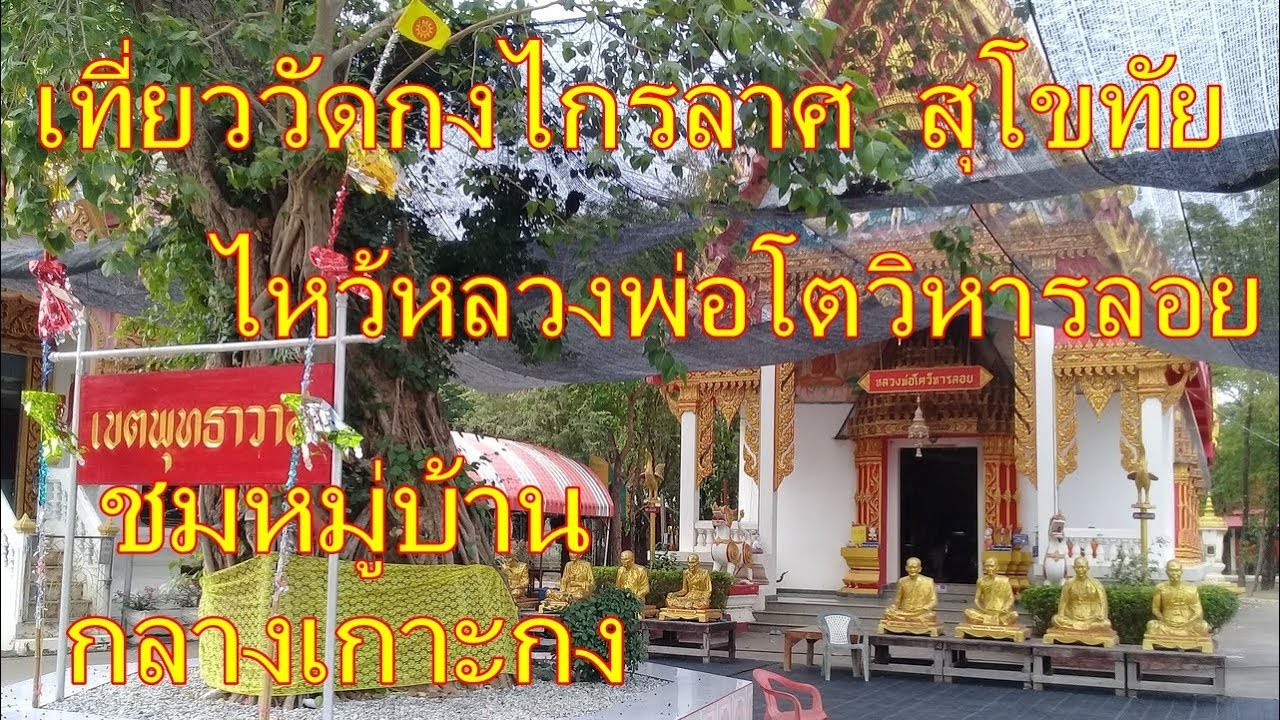
 Click to Access the Navigation Map GPS
Luang Pho To Wihan Loi Map
Recommend

 Art, Culture and Heritage
 Historical Sites and Monuments(4)
 Landmarks and Memorials(5)
 Art, Craft Centres, Tradition(11)
 Museums(5)
 Temple(40)
Other Sacred Sites(10)
Temple(40)
Other Sacred Sites(10)
 Suburban Living
 Village, Community(3)
 Nature and Wildlife
 National Parks and Marine Reserves(3)
 Mountain (Doi)(2)
 Dam, Reservoir, Lake(4)
 Waterfalls(8)
 Caves(4)
 River, Canal(2)
 Entertainment and Agricultural
 Farms, Parks and Ecotourism(3)


