
lovethailand home >North Travel Attractions >Sukhothai Travel Attractions >Khiri Mat >Ban Nam Phu > Bo Nam Thip
TL;DR: Bo Nam Thip is located at Near Wat Nam Tok Sai Rung, Ban Nam Phu, Khiri Mat District, Sukhothai Province, open Daily, hours 08.00 - 17.00.
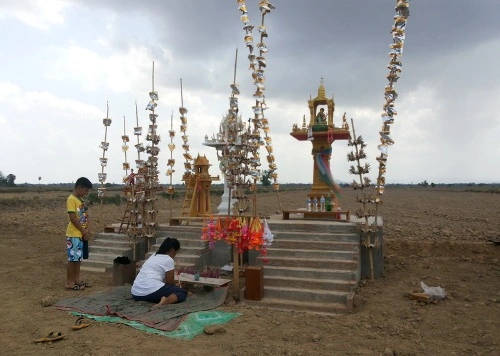
Bo Nam Thip
Open Days: Daily
Opening Hours: 08.00 - 17.00
Bo Nam Thip in Sukhothai is a sacred spring hidden amid the lush natural surroundings of Khao Luang, near Wat Nam Tok Sai Rung and Sai Rung Waterfall in Ban Nam Phu, Khiri Mat District, Sukhothai Province. This small but meaningful site combines local faith, natural beauty, and community memory. The spring is believed to flow from beneath Khao Luang throughout the year, making it important both as a natural water source and as a sacred place associated with blessings, protection, and the symbolic power of water.
The charm of Bo Nam Thip lies in its quiet and modest character. It is not a large commercial tourist attraction, but a place with deep meaning for local people. The route begins near Wat Nam Tok Sai Rung or the Sai Rung Waterfall monastic area, then continues a short distance into an area locally known as the Buddhist forest park. The atmosphere is peaceful, shaded, and closely connected with the surrounding mountain landscape. Visitors come here to pay respect, experience the calmness of nature, and learn about a local belief that has grown around a natural spring.
The most important feature of Bo Nam Thip is its water, which rises naturally from beneath Khao Luang throughout the year. In the past, before the area was developed, the spring was only a small muddy pool. Local villagers used to scoop water with bowls for household use, drinking, and feeding animals during the dry season. This made the spring extremely important to everyday life. Its value was not only spiritual; it was also practical, because it provided water when other sources became scarce.
The fact that the water never dried up made Bo Nam Thip special in the eyes of local people. In rural communities, especially near mountains and forests, a reliable water source can become a center of memory and gratitude. People remember not only the water itself but also the times when it helped sustain life. For this reason, the spring gradually became associated with sacredness, protection, and the generosity of nature.
A major turning point came in 1986, when Phra Ajarn Ram stayed at the Nam Tok Sai Rung monastic site. Recognizing the importance of the spring, he restored the area and built a large Naga figure surrounding the spring. The Naga was designed with a red tail, red crest, and white body. This image became the most recognizable feature of Bo Nam Thip. It gave the place a strong sacred presence and helped visitors understand that the spring should be treated with respect.
In Thai culture, the Naga is closely connected with water, fertility, protection, and sacred power. Building a Naga around the spring therefore carries deep meaning. It is not simply decoration. It expresses the belief that the water source is protected and should be cared for. When visitors arrive and see the Naga encircling the spring, they immediately sense that this is not an ordinary pool of water, but a place of faith and reverence.
Over the years, Bo Nam Thip has become a place where villagers, devotees, and travelers stop to pay respect. Many people worship the Naga and take sacred water back with them for blessings. Some use the water in personal rituals or keep it as a symbol of protection and peace. This practice reflects the Thai cultural belief that sacred water can bring calmness, auspiciousness, and spiritual confidence.
For devotees, water from Bo Nam Thip has symbolic meaning. It represents purity, coolness, blessing, and protection. Taking water from the spring is therefore not only a physical act but also an expression of faith. Visitors should do so respectfully, taking only a suitable amount and helping keep the spring clean. Because the site is both sacred and natural, preserving the purity of the water is part of respecting the place.
The surrounding Buddhist forest park gives Bo Nam Thip a peaceful atmosphere. Trees, shade, wind, and the mountain environment create a natural setting suitable for quiet reflection. Visitors may sit quietly, pray, meditate, or simply observe the calmness of the area. The site shows how faith and nature can exist together without needing grand architecture. Its simplicity is part of its beauty.
Sai Rung Waterfall, located nearby, adds another dimension to a visit. The waterfall is part of Ramkhamhaeng National Park and flows down from Khao Luang. It is especially beautiful during the rainy season when there is more water. Travelers who visit Bo Nam Thip can combine the sacred spring with Sai Rung Waterfall to experience both spiritual culture and natural scenery in the same trip.
Visitors should be mindful of safety and environmental care. The area is close to forest, mountain slopes, and natural water sources. During the rainy season, paths may become slippery, and some sections may be wet or muddy. Suitable footwear is recommended. Visitors should bring drinking water, avoid littering, and follow local guidance. Respectful travel helps preserve Bo Nam Thip for future visitors and local communities.
From a local history perspective, Bo Nam Thip is an example of how a practical water source can become a sacred cultural place. In the past, it helped villagers survive during the dry season. Later, after restoration and the construction of the Naga figure, it became a place of worship and cultural tourism. This transformation shows how communities give deeper meaning to natural places while preserving older memories of daily life.
Bo Nam Thip also reveals the relationship between monks and local communities. Phra Ajarn Ram’s restoration of the site helped turn the spring into a shared place of faith. This was not merely physical construction. It created a spiritual space where people could worship, reflect, and become more aware of the value of nature. The spring therefore represents both community memory and Buddhist influence.
For general travelers, Bo Nam Thip is best visited together with Sai Rung Waterfall, Ramkhamhaeng National Park, Khao Luang, and nearby attractions in Khiri Mat District. This route offers a different side of Sukhothai from the historical park. It focuses on forest, mountain, water, local belief, and rural spiritual life. Travelers who enjoy quiet cultural and nature-based destinations will find Bo Nam Thip especially meaningful.
Getting There is most convenient by private car or rental car. Travelers can start from Sukhothai town or Khiri Mat District and head toward Ban Nam Phu and Sai Rung Waterfall. From the area near Wat Nam Tok Sai Rung, visitors continue a short distance on foot into the Buddhist forest park area. A map application is recommended, and visitors who are unfamiliar with the route may ask local people for guidance.
The best time to visit is from morning to early afternoon, allowing enough time to walk, pay respect, and return before dark. If visitors also want to see Sai Rung Waterfall, the rainy season or the period after rainfall is usually the most scenic time, though safety conditions should always be checked. Bo Nam Thip itself remains meaningful throughout the year because it is associated with a spring that flows continuously.
Visitors should behave respectfully at Bo Nam Thip. Modest clothing, quiet behavior, and care for the natural environment are recommended. Visitors should not climb on the Naga figure, should not throw rubbish, and should not contaminate the spring. If taking water, it should be done calmly and in a suitable amount. These simple actions help preserve both the sacred atmosphere and the natural condition of the site.
Bo Nam Thip brings together many layers of meaning: a natural spring, belief in sacred water, Naga worship, monastic restoration, and the peaceful forest landscape near Khao Luang. Visitors who come here can experience not only a natural site but also the way Thai communities connect water, nature, faith, and everyday life.
Overall, Bo Nam Thip in Sukhothai is a worthwhile destination for travelers interested in spiritual tourism, nature, and local culture. A small spring that once sustained villagers in the dry season has become a sacred place of blessing and remembrance. It shows how sacredness in Thai culture often grows from the close relationship between people, nature, belief, and lived experience.
| Name | Bo Nam Thip, Sukhothai |
| Location | Near Wat Nam Tok Sai Rung, Ban Nam Phu, Khiri Mat District, Sukhothai Province |
| Address | Ban Nam Phu area, Khiri Mat District, Sukhothai Province 64160 |
| Highlights | A sacred spring flowing from beneath Khao Luang throughout the year, surrounded by a large Naga figure near Sai Rung Waterfall |
| History | Originally a small water pool used by villagers for daily needs and animals during the dry season; restored in 1986 by Phra Ajarn Ram, who built the Naga figure around the spring |
| Name Origin | The name Bo Nam Thip comes from local belief that the spring water is sacred, pure, and auspicious |
| Distinctive Features | The spring flows year-round from beneath Khao Luang and is encircled by a white-bodied Naga with red tail and red crest |
| Important Objects | Sacred spring, Naga figure, worship area, and Buddhist forest park atmosphere near Wat Nam Tok Sai Rung |
| Tradition / Ritual | Worshipping the Naga, taking sacred water for blessings, and using the area for quiet Buddhist reflection |
| Travel Information | Travel by private car or rental car to Ban Nam Phu and Sai Rung Waterfall, then continue on foot from the Wat Nam Tok Sai Rung area into the nearby Buddhist forest park |
| Current Status | Open as a sacred natural site and faith-based attraction near Sai Rung Waterfall in the Khao Luang area of Sukhothai |
| Open Days | Daily |
| Opening Hours | 08.00 - 17.00 |
| Facilities | Worship area, natural walking area near the monastic site, Buddhist forest park surroundings, and parking near Wat Nam Tok Sai Rung / Sai Rung Waterfall area |
| Caretaker | Wat Nam Tok Sai Rung / Nam Tok Sai Rung Monastic Site and Ramkhamhaeng National Park authorities in the Sai Rung Waterfall area |
| Sai Rung Waterfall Area Contact Number | 087-5253385 |
| Nearby Tourist Attractions | 1. Sai Rung Waterfall, about 1 km 2. Wat Nam Tok Sai Rung, about 1 km 3. Ramkhamhaeng National Park, about 25 km 4. Khao Luang Sukhothai, about 30 km 5. Huai Sai Waterfall, about 30 km 6. Sukhothai Historical Park, about 40 km |
| Nearby Restaurants | 1. Miang Pla Phao Phran Kratai, about 18 km 2. Kuai Tiao Thai Boran Yai Chalo, about 18 km 3. Krua Ban Mae, about 20 km 4. Moutain Camp Sukhothai, about 20 km 5. Suan Ahan Ban Rao Sukhothai Khiri Mat, about 25 km, Tel. 085-0474488 6. Kodang Steak, about 25 km, Tel. 087-6852607 7. Khiri Mat Cafe Sukhothai, about 25 km, Tel. 096-2646011 |
| Nearby Accommodations | 1. Boonma Resort, about 20 km, Tel. 095-4672373 2. Ban Piam Suk Resort Khiri Mat, about 22 km, Tel. 081-5330389 3. Whan Whan Resort Khiri Mat, about 22 km, Tel. 081-5339255 4. Khiang Na Resort, about 25 km, Tel. 089-6417065 5. Ramkhamhaeng National Park Accommodation, about 25 km, Tel. 055-910000 |
Frequently Asked Questions (FAQ)
Q: Where is Bo Nam Thip in Sukhothai located?
A: Bo Nam Thip is located near Wat Nam Tok Sai Rung in Ban Nam Phu, Khiri Mat District, Sukhothai Province, close to Khao Luang and Sai Rung Waterfall.
Q: What makes Bo Nam Thip special?
A: It is a natural spring that flows from beneath Khao Luang throughout the year, surrounded by a Naga figure and respected as a sacred water source by local people.
Q: Who restored Bo Nam Thip?
A: In 1986, Phra Ajarn Ram restored the spring area and built the Naga figure around it, making the site more distinctive and spiritually significant.
Q: What is the sacred water from Bo Nam Thip used for?
A: Devotees often take the water for blessings, worship, or personal rituals, while doing so respectfully and keeping the spring clean.
Q: What type of travel is Bo Nam Thip suitable for?
A: It is suitable for spiritual, nature-based, and local cultural travel, especially when combined with Sai Rung Waterfall and Ramkhamhaeng National Park.
Q: What is the best time to visit Bo Nam Thip?
A: Morning to early afternoon is recommended, as visitors have enough time to walk, worship, enjoy the natural surroundings, and return before dark.
Q: What should visitors keep in mind when visiting Bo Nam Thip?
A: Visitors should dress modestly, behave quietly, avoid climbing on the Naga figure, avoid littering, and keep the spring clean.
 Category: ●Places of Worship
 Group: ●Other Sacred Sites
Last Update : 3 MonthAgo
 Last Update : 3 MonthAgo
 Click to Access the Navigation Map GPS
 Art, Culture and Heritage
 Historical Sites and Monuments(4)
 Landmarks and Memorials(5)
 Art, Craft Centres, Tradition(11)
 Museums(5)
 Temple(40)
Other Sacred Sites(10)
Temple(40)
Other Sacred Sites(10)
 Suburban Living
 Village, Community(3)
 Nature and Wildlife
 National Parks and Marine Reserves(3)
 Mountain (Doi)(2)
 Dam, Reservoir, Lake(4)
 Waterfalls(8)
 Caves(4)
 River, Canal(2)
 Entertainment and Agricultural
 Farms, Parks and Ecotourism(3)


