
lovethailand home >North Travel Attractions >Sukhothai Travel Attractions >Khiri Mat >Si Khirimat > Khao Phra Bat
TL;DR: Khao Phra Bat is located at Southwest of Sukhothai Old City, connected with Si Khiri Mat Subdistrict, Khiri Mat District, Sukhothai Province, open Daily, hours Daytime Visit Recommended.
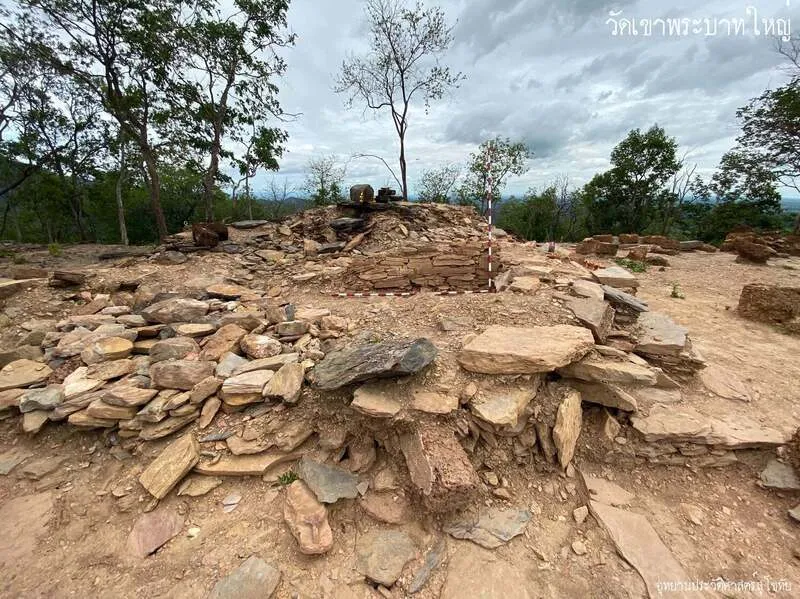
Khao Phra Bat
Open Days: Daily
Opening Hours: Daytime Visit Recommended
Khao Phra Bat in Sukhothai Province, also associated with the archaeological site of Wat Khao Phra Bat Yai, is a small but meaningful sacred hill that reflects the deep relationship between Buddhism, local belief, landscape, and community memory in Sukhothai. Located southwest of the old city area and connected with the Si Khiri Mat landscape, the hill rises about 40 meters above the surrounding ground. It is not a difficult mountain trek, but a quiet historical hill where visitors can walk up to experience a peaceful natural setting, observe the remains of an old sacred site, and understand how local people once connected Buddhist devotion with the physical landscape.
The importance of Khao Phra Bat comes from its former role as the site of a Buddha footprint carved on granite. The footprint was once enshrined near a rock shelter on the western side of the hilltop. In Thai Buddhist culture, a Buddha footprint is not simply an image of a foot. It is a sacred symbol of the Buddha’s presence, a reminder of his teachings, and an object of devotion for pilgrims. When such a footprint is placed on a hill or mountain, the act of climbing to worship it becomes both a physical and spiritual journey. This is what made Khao Phra Bat meaningful to local communities for generations.
The hill itself has a calm and open character. The area is covered with light woodland and scattered trees, creating a peaceful atmosphere suitable for short walking, reflection, and cultural exploration. Because the hill is only about 40 meters high, the climb is not long, but it still gives visitors a sense of leaving the ordinary ground and entering a sacred space. From the upper area, travelers can appreciate the surrounding landscape and imagine how this hill once served as a religious destination for villagers during important Buddhist occasions.
The Buddha footprint from Wat Khao Phra Bat Yai is important as a historical and artistic object. Its stone surface was carved with symbolic details, including a decorative border of floral motifs. The total number of motifs around the footprint is 108, a number associated with auspicious Buddhist symbolism. These details show that the footprint was not a simple stone carving, but a carefully created sacred object shaped by religious ideas, craftsmanship, and the devotional culture of the Sukhothai region.
Archaeological information shows that the footprint was once enshrined on a base to the west of the vihara at Wat Khao Phra Bat Yai. In 1927, concerned that the footprint might be damaged if it remained on the hill, Chao Khun Boran Watthachan arranged for villagers, monks, and novices from Ban Thani and Ban Mueang Kao to carefully move the stone footprint down from the hill. The process required great effort and caution. Wooden rollers, supporting planks, and animal-hide ropes were used to control the movement of the heavy stone. The footprint was then transported by cart and enshrined in the pavilion in the middle of the pond at Wat Traphang Thong, where it remains today.
This story is one of the most meaningful aspects of Khao Phra Bat. Although the original Buddha footprint is no longer on the hill, the hill remains important as the original sacred landscape of the footprint. A visit today is therefore not only about seeing what remains physically on the hill, but also about understanding the relationship between the original site, the preserved footprint at Wat Traphang Thong, and the local communities that once protected and worshipped it. The movement of the footprint in 1927 also reflects an early form of heritage preservation, when people recognized the need to protect a valuable religious object from damage.
In the past, Khao Phra Bat was closely connected with an annual worship tradition held on the full moon day of the third lunar month, which coincides with Makha Bucha Day. Villagers from Si Khiri Mat Subdistrict and nearby communities would gather and climb the hill to pay respect to the Buddha footprint. The area at the foot of the hill became lively with religious activities, local performances, entertainment, and community gatherings. This tradition shows how Buddhist devotion and social life were closely connected in local Thai communities. A pilgrimage to the hill was both a religious act and a communal event.
Makha Bucha Day is one of the major Buddhist days in Thailand. By choosing this day to climb Khao Phra Bat and worship the footprint, local people linked a national Buddhist observance with a specific sacred site in their own landscape. The tradition gave younger generations a way to learn about faith, respect, community identity, and the meaning of the hill. Even as lifestyles have changed, the memory of climbing Khao Phra Bat on Makha Bucha remains part of the cultural heritage of the area.
Today, the living form of the tradition may no longer appear exactly as it did in the past, but the memory remains important. Local people still remember the hill, the Buddha footprint, and the old practice of gathering for worship. This is why Khao Phra Bat should be understood not only as an archaeological place, but also as a site of intangible cultural heritage. It preserves stories, devotion, local identity, and the relationship between people and landscape. For travelers, this makes the hill a quiet but deeply meaningful destination.
From an archaeological perspective, Khao Phra Bat is valuable because it helps explain how sacred spaces were arranged around Sukhothai. The old city was not the only center of religious activity. Sacred hills, rock shelters, forest edges, and community temples around the city also played important roles. Excavation and study of the Wat Khao Phra Bat Yai archaeological group have identified structural remains, bases, and the former location connected with the Buddha footprint. These remains help visitors understand that Sukhothai’s religious landscape extended beyond the central monuments of the old city.
The site is maintained as an archaeological area under the care of Sukhothai Historical Park and the Fine Arts Department. Visitors can enter daily without an admission fee. However, because the site is an open-air historical area on a hill, daytime visits are recommended. Travelers should walk carefully, avoid climbing on archaeological structures, avoid moving stones, avoid writing on surfaces, and take all waste away. Respectful behavior is important because even small actions can damage fragile historical remains or disturb the quiet character of the site.
Khao Phra Bat is best suited for travelers who enjoy slow cultural travel. It does not have the scale of Wat Mahathat, Wat Si Chum, or the major monuments inside Sukhothai Historical Park. Its value lies in a quieter layer of history: the way a small hill became a sacred place through the presence of a Buddha footprint and the devotion of local people. Visitors who come with this understanding will find the site more rewarding. The hill offers a chance to see Sukhothai beyond the famous ruins and to understand how faith was rooted in ordinary landscapes.
The open woodland on Khao Phra Bat contributes greatly to the atmosphere. Sunlight filters through trees, the ground is quiet, and the hilltop area feels calm rather than crowded. Morning and late afternoon are especially pleasant for walking and photography. Visitors should wear shoes suitable for uneven ground and bring drinking water. During the rainy season, the area becomes greener, but the ground may be slippery. During the cool season, the air is more comfortable for walking. Although the hill is not high, basic preparation makes the visit safer and more enjoyable.
The site can be combined with several nearby places to create a meaningful cultural route. Travelers interested in the Buddha footprint should visit Wat Traphang Thong, where the original footprint from Khao Phra Bat is now enshrined. They may also visit Wat Si Khiri Suwannaram in the Si Khiri Mat community, Sukhothai Historical Park, Ramkhamhaeng National Museum, Wat Si Chum, and Ramkhamhaeng National Park. This route helps explain how sacred objects, temple communities, historical monuments, and natural landscapes are connected across Sukhothai.
Wat Si Khiri Suwannaram, also known locally as Wat Tha Din Daeng, is connected with the Si Khiri Mat community and the wider religious landscape around Khao Phra Bat. Local information identifies the abbot as Phra Khru Phaisan Kitjathorn, Phanomphrai Siritharo Pintanot. Travelers interested in Buddhist culture and local community history may include this temple in the same itinerary. Visiting both the hill and nearby community temples helps clarify how a sacred hill, a temple community, and annual Buddhist traditions formed one cultural landscape.
Khao Phra Bat can be understood through several layers of meaning. The first layer is natural: a small hill with light forest and views of the surrounding area. The second layer is religious: the former site of a sacred Buddha footprint. The third layer is historical: an archaeological site where the footprint was once enshrined before being moved for preservation in 1927. The fourth layer is social: a place where villagers gathered during Makha Bucha for worship, performance, celebration, and community bonding. These layers make the hill more significant than its small size suggests.
For Thai visitors, Khao Phra Bat helps reveal the deeper roots of local faith in Sukhothai. The province is famous for large monuments such as Wat Mahathat and Wat Si Chum, but smaller sacred landscapes like Khao Phra Bat complete the picture. They show that religious life was not limited to major temples inside the city. Hills, rock shelters, local temples, and community routes also shaped the spiritual geography of Sukhothai. To understand Sukhothai fully, travelers should look at both the grand monuments and the quieter sacred places around them.
For foreign travelers, Khao Phra Bat is a useful place to understand the concept of Buddha footprints in Thai culture. A Buddha footprint symbolizes the presence and teaching of the Buddha. It can become a pilgrimage site even when there is no large temple building. In Thailand, such footprints are often associated with mountains, rocks, caves, or elevated landscapes. This shows how Buddhism in local communities is closely tied to actual geography. A visit to Khao Phra Bat helps foreign visitors understand this connection in a simple and accessible way.
Visitors should dress respectfully and behave calmly because the site is both historical and sacred. Do not climb on ancient bases, do not move stones, do not leave waste, do not make loud noise, and do not damage the landscape. Photography is acceptable when done respectfully. The best approach is to walk slowly, observe the remaining structures, imagine the former footprint shrine, and connect the place with the footprint now preserved at Wat Traphang Thong. This kind of visit turns a small hill into a meaningful cultural experience.
Getting There is easiest by private car. Travelers can start from Sukhothai town or Sukhothai Historical Park and head toward Khiri Mat District and Si Khiri Mat Subdistrict. The site can be included in a half-day or full-day itinerary with Wat Traphang Thong, Wat Si Khiri Suwannaram, Ramkhamhaeng National Park, and other nearby attractions. A recommended route is to first visit Wat Traphang Thong to see the preserved Buddha footprint, then continue to Khao Phra Bat to understand its original location, and finally visit local temples or natural attractions in Khiri Mat.
The recommended visiting time is morning or late afternoon. The weather is cooler, the light is better for photography, and walking conditions are more comfortable. Midday visits are still possible, but visitors should bring sun protection. During the rainy season, the hill becomes greener but the ground may be slippery. During the cool season, the site is especially pleasant for walking. Travelers interested in local tradition should pay attention to Makha Bucha Day, as it is the most meaningful time connected with the old pilgrimage practice of Khao Phra Bat.
Khao Phra Bat is therefore a quiet but important destination for travelers who want to experience Sukhothai beyond the main tourist circuit. It shows how a small hill can carry centuries of faith, community memory, archaeological value, and natural beauty. Even though the original Buddha footprint has been moved to a safer location, the hill continues to tell the story of devotion, preservation, and the relationship between people and landscape. For visitors seeking a deeper understanding of Sukhothai’s Buddhist heritage, Khao Phra Bat is a meaningful stop.
Preserving Khao Phra Bat requires attention to archaeology, nature, and community memory together. If only the physical remains are protected, the stories may fade. If only the stories are remembered without protecting the site, the historical evidence may disappear. The best way to care for this place is to respect academic knowledge, local memory, and responsible travel at the same time. When these elements are kept together, Khao Phra Bat can remain a valuable learning site and a living sacred landscape for future generations.
| Name | Khao Phra Bat / Wat Khao Phra Bat Yai Archaeological Group |
| Location | Southwest of Sukhothai Old City, connected with Si Khiri Mat Subdistrict, Khiri Mat District, Sukhothai Province |
| Highlights | A sacred hill about 40 meters high, former site of a Buddha footprint carved on granite, archaeological bases, light woodland, and the old Makha Bucha pilgrimage tradition |
| History | A sacred site connected with a Buddha footprint and local Buddhist devotion; the original footprint was moved from the hill in 1927 for preservation |
| Name Origin | The name Khao Phra Bat comes from the Buddha footprint that was once enshrined on the hill and worshipped by local communities |
| Distinctive Features | A small hill with open woodland, a peaceful atmosphere, archaeological remains, and a strong connection with Buddha-footprint worship |
| Travel Information | Best reached by private car from Sukhothai town or Sukhothai Historical Park toward Khiri Mat District and Si Khiri Mat Subdistrict. It can be combined with Wat Traphang Thong, Wat Si Khiri Suwannaram, and Ramkhamhaeng National Park. |
| Current Status | Open-air archaeological and historical site. The original Buddha footprint is now enshrined at the pond pavilion of Wat Traphang Thong in Sukhothai Historical Park. |
| Open Days | Daily |
| Opening Hours | Daytime Visit Recommended |
| Fees | No Admission Fee |
| Facilities | Open-air archaeological area; visitors should bring drinking water, a hat, and shoes suitable for walking up a small hill |
| Main Areas / Zones | 1. Hill Path And Open Woodland Zone 2. Hilltop And Viewpoint Zone 3. Wat Khao Phra Bat Yai Archaeological Base Zone 4. Former Buddha Footprint Enshrinement Zone 5. Former Community Worship And Festival Area |
| Caretaker | Archaeological Site: Sukhothai Historical Park, Fine Arts Department Wat Si Khiri Suwannaram Community Connection: Phra Khru Phaisan Kitjathorn, Phanomphrai Siritharo Pintanot |
| Nearby Tourist Attractions | 1. Wat Si Khiri Suwannaram, about 4 km 2. Tha Din Daeng Reservoir, about 7 km 3. Ramkhamhaeng National Park, about 16 km 4. Wat Traphang Thong, about 20 km 5. Sukhothai Historical Park, about 21 km |
| Nearby Restaurants | 1. Krua Baan Mae, about 8 km 2. Kuay Tiew Thai Boran Yai Chalo, about 9 km 3. PROM’S CAFE & EATERY, about 10 km 4. Na Khothai, about 16 km, Tel. 062-949-1715 5. Mountain Camp Sukhothai, about 16 km |
| Nearby Accommodations | 1. Baan Piamsuk Resort Khiri Mat, about 7 km, Tel. 081-533-0389 2. Boonma Resort, about 10 km, Tel. 095-467-2373 3. Thai Thai Sukhothai Resort, about 18 km, Tel. 084-932-1006 4. Manon Mueang Kao Sukhothai, about 20 km, Tel. 083-606-5286 5. Sukhothai Garden, about 21 km, Tel. 091-843-1537 |
Frequently Asked Questions (FAQ)
Q: Where is Khao Phra Bat in Sukhothai located?
A: Khao Phra Bat, or the Wat Khao Phra Bat Yai archaeological group, is located southwest of Sukhothai Old City and is connected with Si Khiri Mat Subdistrict, Khiri Mat District, Sukhothai Province.
Q: Why is Khao Phra Bat important?
A: It is important because it was once the sacred site of a Buddha footprint carved on granite and was a place where local villagers climbed to worship during Makha Bucha Day.
Q: Is the original Buddha footprint still on Khao Phra Bat?
A: No. The original Buddha footprint was moved from the hill in 1927 and is now enshrined at the pond pavilion of Wat Traphang Thong in Sukhothai Historical Park.
Q: Is there an admission fee for Khao Phra Bat?
A: No. Visitors can enter the archaeological site free of charge. Daytime visits are recommended.
Q: What is the best time to visit Khao Phra Bat?
A: Morning and late afternoon are the best times because the weather is more comfortable, the light is good for photography, and walking conditions are easier.
Q: Which tradition is connected with Khao Phra Bat?
A: Khao Phra Bat is connected with the tradition of climbing the hill to worship the Buddha footprint on the full moon day of the third lunar month, or Makha Bucha Day.
Q: What kind of travelers is Khao Phra Bat suitable for?
A: It is suitable for travelers interested in Sukhothai history, Buddhism, local beliefs, short nature walks, and quiet cultural travel.
Q: What nearby places can be visited with Khao Phra Bat?
A: Nearby places include Wat Si Khiri Suwannaram, Tha Din Daeng Reservoir, Ramkhamhaeng National Park, Wat Traphang Thong, and Sukhothai Historical Park.
 Category: ●Nature and Wildlife
 Group: ●Mountain (Doi)
Last Update : 4 MonthAgo
 Last Update : 4 MonthAgo
 Click to Access the Navigation Map GPS
 Art, Culture and Heritage
 Historical Sites and Monuments(4)
 Landmarks and Memorials(5)
 Art, Craft Centres, Tradition(11)
 Museums(5)
 Places of Worship
 Temple(40)
 Other Sacred Sites(10)
 Suburban Living
 Village, Community(3)
 National Parks and Marine Reserves(3)
Mountain (Doi)(2)
National Parks and Marine Reserves(3)
Mountain (Doi)(2)
 Dam, Reservoir, Lake(4)
 Waterfalls(8)
 Caves(4)
 River, Canal(2)
 Entertainment and Agricultural
 Farms, Parks and Ecotourism(3)


