
lovethailand home >North Travel Attractions >Sukhothai Travel Attractions >Ban Dan Lan Hoi >Nong Ya Plong > Wat Wang Takhro
TL;DR: Wat Wang Takhro is located at Ban Wang Takhro, Moo 4, Nong Ya Plong Subdistrict, Ban Dan Lan Hoi District, Sukhothai Province, open Daily, hours Daytime.
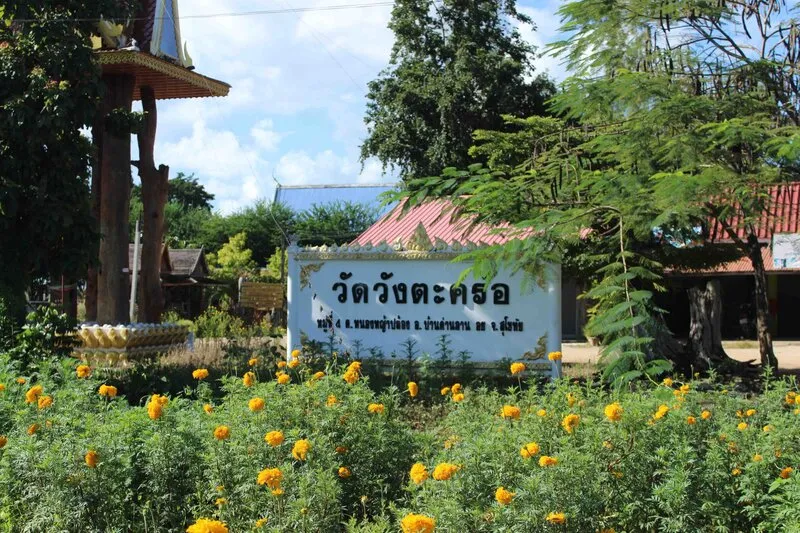
Wat Wang Takhro
Open Days: Daily
Opening Hours: Daytime
Wat Wang Takhro in Sukhothai Province is a local Buddhist temple in Ban Wang Takhro, Moo 4, Nong Ya Plong Subdistrict, Ban Dan Lan Hoi District, Sukhothai Province. It is a private temple under the Mahanikaya order and has served the local community since its establishment in B.E. 2498, or 1955. Although it is not a large historical monument like those in Sukhothai Historical Park, Wat Wang Takhro is highly meaningful as a living community temple, a center of Buddhist practice, and an important learning site for traditional Thai herbal knowledge.
The temple is named after Ban Wang Takhro, the village where it is located. This reflects the close relationship between the temple and the local community. Like many rural Thai temples, Wat Wang Takhro was created through local faith and cooperation. It became a place for merit-making, Dhamma listening, Buddhist ceremonies, community gatherings, and moral education. For local residents, the temple is not simply a religious site; it is part of the social and cultural foundation of village life.
The temple covers an area of 14 rai, 3 ngan, and 16 square wa. Its land is documented under Nor Sor 3 Kor certificate No. 1352. The temple is easy to access because public roads border the north, south, and east sides, while the west side connects with Ban Wang Takhro village. This location makes the temple convenient for villagers to attend religious activities, meetings, merit-making events, funeral rites, and community learning programs.
Wat Wang Takhro contains several important monastic and community buildings. The sermon hall is a one-storey wooden building measuring 12 meters wide and 27 meters long. It was built in B.E. 2499, or 1956, shortly after the temple was established. The building has long been used for religious activities, community meetings, Buddhist gatherings, and village events. Its wooden structure reflects the practical and modest character of a rural community temple.
The temple also has 3 monks’ residences, which provide accommodation for resident monks. These residences allow the temple to maintain regular Buddhist practice, including chanting, monastic study, religious duties, and the support of local laypeople. In addition, the temple has a merit-making pavilion used for funeral rites and ceremonies dedicated to departed relatives. This shows that the temple supports villagers through many important stages of life.
Inside the temple is a vihara enshrining a Buddha image in the meditation posture, built in B.E. 2546, or 2003. The meditation posture represents calmness, concentration, and inner stability. For villagers and visitors, this Buddha image is a focus of devotion and a reminder of mindfulness, serenity, and Buddhist practice. It helps make the vihara a quiet spiritual space within the temple grounds.
Another important structure is the chanting hall, a concrete building constructed in B.E. 2539, or 1996. It is used for chanting, Buddhist rituals, and group religious activities. The presence of a dedicated chanting hall helps organize temple activities more clearly and provides a suitable place for monks and laypeople to gather during Buddhist holy days, ceremonies, and moral training activities.
The current abbot of Wat Wang Takhro is Phra Sangkharak Son Piyasīro. He plays an important role in temple administration, monastic leadership, Buddhist education, and community activities. The temple has offered Dhamma studies since B.E. 2525, or 1982, making it an important local center for religious learning. Through Dhamma education, monks, novices, young people, and local residents have opportunities to study Buddhist principles and moral values.
The teaching of Dhamma at Wat Wang Takhro shows that the temple is more than a place for rituals. It also functions as a place of learning. Buddhist education helps people understand morality, concentration, wisdom, gratitude, responsibility, and mindful living. In rural communities, this role is especially important because the temple is close to everyday life and easily accessible to local people.
The most distinctive feature of Wat Wang Takhro is its traditional herbal garden. The garden gathers more than 500 types of medicinal plants, including common local herbs and rare species. This makes the temple an important learning center for Thai traditional medicine, local plant knowledge, and community-based health wisdom. The herbal garden gives Wat Wang Takhro a special identity that goes beyond the normal role of a village temple.
Thai herbal knowledge has been part of local life for generations. Before modern medical services became widely available in rural areas, many communities relied on herbs for basic health care, remedies, and household treatment. The herbal garden at Wat Wang Takhro preserves this practical wisdom in a living form. Visitors can learn from real plants, not only from names in books or classroom materials.
Collecting and maintaining more than 500 herbal species requires knowledge, care, and continuity. Each plant has its own characteristics, uses, preparation methods, and cautions. A well-maintained herbal garden is therefore not just a collection of plants. It is a structured learning space where villagers, students, government officers, Thai traditional medicine groups, and interested visitors can study local botanical knowledge directly.
Wat Wang Takhro has attracted visitors from groups and organizations interested in herbs, Thai traditional medicine, and community development. These include Thai traditional medicine networks and individuals who come to study the garden. Such visits help create learning connections between the temple, local residents, government agencies, and the wider public. In this way, knowledge of local herbs is preserved, shared, and made useful for future generations.
The herbal garden is also connected with the concept of sufficiency economy and community self-reliance. Medicinal plants are resources that local people can grow, maintain, and use in daily life. Learning about herbs helps communities appreciate local plants, protect rare species, and apply traditional knowledge to health, household care, and local education. The garden therefore supports both cultural preservation and practical community development.
Wat Wang Takhro is also recognized as part of a moral community model with a herbal learning center and sufficiency economy activities. This reflects the idea of using the temple as a base for community development. The success of such a model depends on cooperation among monks, villagers, local leaders, schools, government agencies, and outside supporters. The temple becomes a living example of how religion, education, culture, and local wisdom can work together.
For travelers, Wat Wang Takhro is suitable for cultural and ecological learning. Visitors can make merit, pay respect to the Buddha image, learn about a living rural temple, and explore traditional herbal knowledge. The experience is different from visiting ancient ruins. Here, travelers encounter a functioning village temple that continues to serve people today while preserving local plant wisdom.
The temple atmosphere is simple, quiet, and community-oriented. It is best visited slowly and respectfully. Those interested in the herbal garden should take time to observe the plants, ask questions when local guides or caretakers are available, and understand the value of traditional knowledge. For group study visits, it is best to coordinate with the temple or local community in advance so that the visit can be properly arranged.
Wat Wang Takhro remains active during important Buddhist observances such as Makha Bucha Day, Visakha Bucha Day, Asalha Bucha Day, Buddhist Lent, and the end of Buddhist Lent. On these days, villagers come to make merit, listen to sermons, observe precepts, and join religious activities. Such gatherings strengthen community unity and help younger generations learn Buddhist culture through direct participation.
The temple also plays a role in life-cycle ceremonies, including ordination, merit-making for ancestors, chanting, Dhamma listening, and funeral-related rites. This means the temple accompanies villagers through many stages of life. It supports spiritual learning, emotional comfort, social cooperation, and the continuation of Buddhist values in the community.
Getting There is most convenient by private car, rental car, or local transport. From Sukhothai town, travel toward Ban Dan Lan Hoi District, then continue to Nong Ya Plong Subdistrict and Ban Wang Takhro. The temple is located in Moo 4 and is bordered by public roads on several sides. Travelers can combine a visit with nearby attractions in Ban Dan Lan Hoi District, such as Chao Ram Cave, Ban Wang Hat Ancient Community, Ramkhamhaeng National Park, or Sukhothai Historical Park depending on their available travel time.
Visitors should dress respectfully, behave quietly in religious areas, avoid disturbing monks, and never pick or remove herbs without permission. When visiting the herbal garden, stay on appropriate paths, avoid damaging plant beds, and ask caretakers before entering restricted areas or taking detailed photographs. Respectful conduct helps preserve both the temple environment and the herbal learning center for future visitors.
Wat Wang Takhro is therefore worth visiting and studying as a living community temple. It brings together Buddhist practice, Dhamma education, local ceremonies, herbal knowledge, sufficiency economy learning, and cultural tourism. Its value lies not in monumental scale, but in the continuity of faith, local wisdom, and community cooperation that keeps the temple meaningful today.
| Name | Wat Wang Takhro |
| Location | Ban Wang Takhro, Moo 4, Nong Ya Plong Subdistrict, Ban Dan Lan Hoi District, Sukhothai Province |
| Address | Moo 4, Ban Wang Takhro, Nong Ya Plong Subdistrict, Ban Dan Lan Hoi District, Sukhothai 64140, Thailand |
| Highlights | A local community temple with a traditional herbal garden containing more than 500 medicinal plant species, serving as a learning center for Buddhism, Thai herbs, and local wisdom |
| History | Established in B.E. 2498 as a private Buddhist temple under the Mahanikaya order. The temple has offered Dhamma studies since B.E. 2525 |
| Name Origin | The temple is named after Ban Wang Takhro, reflecting the close relationship between the temple and the local village |
| Distinctive Features | One-storey wooden sermon hall, monks’ residences, merit-making pavilion, vihara with a meditation Buddha image, chanting hall, and a large traditional herbal garden |
| Travel Information | Accessible by private car, rental car, or local transport from Sukhothai town toward Ban Dan Lan Hoi District, then to Nong Ya Plong Subdistrict and Ban Wang Takhro |
| Current Status | An active community temple with resident monks and an important herbal learning center for the local community |
| Open Days | Daily |
| Opening Hours | Daytime |
| Temple Area | 14 rai, 3 ngan, 16 square wa |
| Facilities | Sermon hall, monks’ residences, merit-making pavilion, vihara, chanting hall, religious activity areas, and herbal learning garden |
| Main Areas / Zones | Sermon hall, monks’ residence area, vihara with meditation Buddha image, chanting hall, merit-making pavilion, and traditional herbal garden |
| Abbot / Caretaker | Phra Sangkharak Son Piyasīro |
| Official Website / Official Page | Wat Wang Takhro and local information pages of Nong Ya Plong / Ban Dan Lan Hoi District |
| Nearby Tourist Attractions | 1. Wat Wang Takhro Herbal Garden, inside the temple 2. Wat Wang Takhro Herbal and Sufficiency Economy Learning Center, within the community 3. Chao Ram Cave, about 20 km 4. Ban Wang Hat Ancient Community, about 25 km 5. Ramkhamhaeng National Park, about 40 km 6. Sukhothai Historical Park, about 45 km |
| Nearby Restaurants | 1. Inter Restaurant Ban Dan Lan Hoi, about 15 km, Tel. 089-858-0861 2. Hunsa Cafe Ban Lum, about 35 km, Tel. 095-639-2607 3. Krua Krung Kao Sukhothai, about 45 km, Tel. 087-732-1669 4. Chanda’s Historical Garden Restaurant, about 45 km, Tel. 092-993-3408 5. Phum Phor Coffee Restaurant, about 45 km, Tel. 064-626-3639, 055-010-356 |
| Nearby Accommodations | 1. Aromdee Resort Ban Dan Lan Hoi, about 15 km, Tel. 093-283-0494 2. Leelawadee Resort Sukhothai, about 15 km, Tel. 081-360-8837 3. Ban Dan Resort, about 15 km 4. Sukhothai Garden, about 45 km, Tel. 084-751-1533 5. Thai Thai Sukhothai Resort, about 45 km, Tel. 084-932-1006 |
Frequently Asked Questions (FAQ)
Q: Where is Wat Wang Takhro located?
A: Wat Wang Takhro is located in Ban Wang Takhro, Moo 4, Nong Ya Plong Subdistrict, Ban Dan Lan Hoi District, Sukhothai Province.
Q: When was Wat Wang Takhro established?
A: Wat Wang Takhro was established in B.E. 2498, or 1955, as a private Buddhist temple under the Mahanikaya order.
Q: Who is the abbot of Wat Wang Takhro?
A: The abbot of Wat Wang Takhro is Phra Sangkharak Son Piyasīro.
Q: What is Wat Wang Takhro known for?
A: The temple is known for its traditional herbal garden with more than 500 medicinal plant species, as well as its role as a community center for Buddhist practice, Dhamma education, Thai herbs, and local wisdom.
Q: What important structures are found inside Wat Wang Takhro?
A: The temple includes a wooden sermon hall, monks’ residences, a merit-making pavilion, a vihara with a meditation Buddha image, a chanting hall, and a traditional herbal garden.
Q: What type of travel is Wat Wang Takhro suitable for?
A: It is suitable for merit-making, learning about a living rural temple, studying Thai medicinal herbs, exploring local wisdom, and cultural travel in Ban Dan Lan Hoi District.
Q: Can visitors study the herbal garden at Wat Wang Takhro?
A: Visitors can study the herbal garden during appropriate visiting hours. Groups should coordinate with the temple or local community in advance for a properly arranged learning visit.
Q: What nearby attractions can be visited with Wat Wang Takhro?
A: Nearby attractions include Chao Ram Cave, Ban Wang Hat Ancient Community, Ramkhamhaeng National Park, and Sukhothai Historical Park, depending on travel time and route planning.
 Category: ●Places of Worship
 Group: ●Temple
Last Update : 4 MonthAgo
 Last Update : 4 MonthAgo
 Click to Access the Navigation Map GPS
 Art, Culture and Heritage
 Historical Sites and Monuments(4)
 Landmarks and Memorials(5)
 Art, Craft Centres, Tradition(11)
 Museums(5)
Temple(40)
Museums(5)
Temple(40)
 Other Sacred Sites(10)
 Suburban Living
 Village, Community(3)
 Nature and Wildlife
 National Parks and Marine Reserves(3)
 Mountain (Doi)(2)
 Dam, Reservoir, Lake(4)
 Waterfalls(8)
 Caves(4)
 River, Canal(2)
 Entertainment and Agricultural
 Farms, Parks and Ecotourism(3)


