
lovethailand home >North Travel Attractions >Sukhothai Travel Attractions >Muang Sukhothai >Ban Lum > Wat Ratchaphruek
TL;DR: Wat Ratchaphruek is located at Moo 2, Ban Lum Subdistrict, Mueang Sukhothai District, Sukhothai Province, open Daily, hours Daytime.
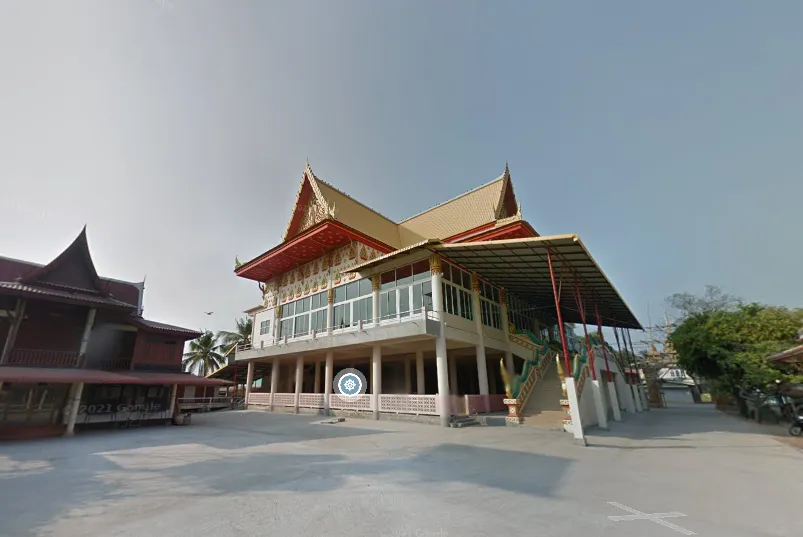
Wat Ratchaphruek
Open Days: Daily
Opening Hours: Daytime
Wat Ratchaphruek in Sukhothai Province is an old community temple in Ban Lum Subdistrict, Mueang Sukhothai District, Sukhothai Province. With a history stretching back several centuries, the temple reflects the faith, cooperation, and spiritual life of the local people. It is not only a place for Buddhist ceremonies, but also a community center, a place of moral learning, and a living example of how temples continue to support Thai village culture.
Wat Ratchaphruek is located in Moo 2, Ban Lum Subdistrict, Mueang Sukhothai District, Sukhothai Province. It is a private Buddhist temple under the Mahanikaya order. The temple was originally known as “Wat Nuea,” meaning the northern temple, before its name was changed to “Wat Ratchaphruek” around 1927. The original name reflected its position within the local community, while the current name carries a more auspicious meaning associated with growth, shade, prosperity, and the flourishing of Buddhism.
The history of Wat Ratchaphruek dates back to around 1377 A.D. or B.E. 1920. This makes it one of the long-established religious sites in the Ban Lum area. Its importance is not only found in its age, but also in the way it has remained part of everyday community life across generations. From the older agricultural lifestyle of the village to the present day, the temple has continued to connect people, families, monks, and Buddhist traditions.
The temple occupies an area of about 8 rai. Within the grounds are several important structures, including the ordination hall, sermon hall, crematorium, paired funeral pavilions, and monks’ residences. Each structure serves a specific religious or community purpose. Together, they allow the temple to support ordination ceremonies, merit-making events, Buddhist sermons, funerals, community gatherings, and the daily life of monks residing at the temple.
The ordination hall of Wat Ratchaphruek was built in 1981. It is one of the most important buildings in the temple because it is used for formal monastic acts such as ordination and Sangha ceremonies. The construction of the ordination hall shows the determination of local monks and villagers to strengthen the temple as a complete Buddhist center for the community. It also represents the continuing faith of Ban Lum residents in preserving Buddhism through practical participation.
Wat Ratchaphruek plays an active role in the daily religious life of the local people. Villagers come to the temple for almsgiving, merit-making, listening to sermons, observing Buddhist precepts, and attending ceremonies on important Buddhist days such as Makha Bucha Day, Visakha Bucha Day, Asalha Bucha Day, the beginning of Buddhist Lent, and the end of Buddhist Lent. On these occasions, the temple becomes a gathering place for families, elders, young people, and community members who return home to make merit together.
During Buddhist Lent, Wat Ratchaphruek becomes especially important. Monks remain in residence, while villagers take part in merit-making, candle offerings, robe offerings, and other religious activities. Ordination ceremonies for monks and novices also help younger generations learn Buddhist discipline, gratitude, and responsibility. These traditions show how the temple supports both religious practice and moral education within the community.
The end of Buddhist Lent and the Kathin season are also meaningful periods at Wat Ratchaphruek. Villagers gather to offer robes and support the temple’s maintenance and development. Such events are not only religious ceremonies; they are also social activities that strengthen community unity. Local people help prepare the venue, food, hospitality, donations, and ceremonial arrangements according to their faith and ability.
Wat Ratchaphruek is also connected with Songkran traditions in Ban Lum. During Songkran, family members return home, make merit, dedicate blessings to ancestors, bathe Buddha images, and pay respect to elders. The temple serves as a central place where generations meet and participate in meaningful cultural practices. These activities show that the temple remains closely connected to the yearly rhythm of village life.
In terms of Buddhist propagation, Wat Ratchaphruek helps cultivate morality and ethical values among local people. The monks act as spiritual leaders, teaching the principles of the Buddha and guiding people toward a life based on morality, concentration, and wisdom. In rural Thai society, this role is especially important because the temple is often a place where people seek advice, comfort, and inner peace.
The recorded abbot of Wat Ratchaphruek is Phra Khru Suphatthirakhun (Samran Suthiro), who has served as abbot since 1986. He is an important figure in the care and development of the temple, as well as in the promotion of Buddhist activities in Ban Lum. Under his guidance, Wat Ratchaphruek continues to serve as a respected spiritual center where local people gather for merit-making, traditions, and community events.
A respected abbot gives strength to a community temple because the role of a monk extends beyond ritual duties. The abbot helps coordinate cooperation between the temple and local people, supports the maintenance of temple buildings, encourages religious activities, and preserves the peaceful order of the temple grounds. This relationship between monks, temple committees, and lay supporters is one of the foundations of Thai Buddhist community life.
The buildings inside Wat Ratchaphruek are important both functionally and culturally. The ordination hall is the heart of formal monastic ceremonies. The sermon hall is used for gatherings, sermons, and merit-making activities. The crematorium and funeral pavilions reflect the temple’s role in life-cycle rituals, especially those related to death and remembrance. The monks’ residences support the daily life of the Sangha. These elements make Wat Ratchaphruek a complete working temple for the community.
The atmosphere of Wat Ratchaphruek is simple, peaceful, and closely connected to local life. Visitors will not find a commercial tourist setting here. Instead, they will encounter a living village temple where people come to make merit, attend ceremonies, and maintain Buddhist traditions. This quiet quality makes the temple suitable for travelers who want to understand a more authentic side of Sukhothai beyond the famous historical ruins.
Culturally, Wat Ratchaphruek represents the continuity of Buddhism in Ban Lum Subdistrict. Although it is not a large archaeological monument like those in Sukhothai Historical Park, it has value as a living temple. It still has resident monks, lay supporters, annual religious activities, and a continuing role in community life. The value of this kind of temple lies in the relationship between people and place, which is one of the core elements of Thai culture.
Visitors should understand Wat Ratchaphruek as a community temple rather than a fast-paced tourist attraction. It is suitable for paying respect to Buddha images, making merit, learning about local religious life, and observing the connection between Buddhism and the Ban Lum community. If visitors come during major merit-making events such as Kathin, Songkran, or the end of Buddhist Lent, they can clearly see the energy and cooperation of the local people.
Getting There is convenient by private car or local transport from Sukhothai town to Ban Lum Subdistrict. The temple is located in Moo 2 of Ban Lum. It can be included in a cultural route connecting Sukhothai town, local communities, and the historical attractions of Mueang Sukhothai District. Travelers with a private vehicle can combine a visit to Wat Ratchaphruek with Sukhothai Historical Park, Ramkhamhaeng National Museum, Wat Mahathat, and other old city attractions within the same day.
For travelers interested in history and culture, Wat Ratchaphruek adds another dimension to Sukhothai. The province is famous for its World Heritage monuments, but it also has local temples that continue to function as active religious centers. Wat Ratchaphruek is a good example of a temple that connects the past and present through its long history, name change, ordination hall, and continuing community traditions.
Visitors should dress respectfully, behave quietly inside the temple grounds, avoid disturbing monks during prayers or rest periods, and ask for permission before joining specific ceremonies. Photography should be done respectfully, especially around the ordination hall, sermon hall, and ritual areas. Because Wat Ratchaphruek is a living temple, respectful conduct is essential.
Wat Ratchaphruek is therefore worth studying and preserving. It has local history, religious importance, social value, and a close relationship with the people of Ban Lum. The temple shows that a Thai community temple is not only a place for merit-making. It is also a place where faith, unity, gratitude, moral education, and cultural memory are passed from one generation to the next.
| Name | Wat Ratchaphruek |
| Location | Moo 2, Ban Lum Subdistrict, Mueang Sukhothai District, Sukhothai Province |
| Address | Rural Road 7008, Ban Lum Subdistrict, Mueang Sukhothai District, Sukhothai 64000, Thailand |
| Highlights | An old community temple in Ban Lum, originally known as Wat Nuea, with a history dating back to around B.E. 1920 |
| History | Established as a temple around B.E. 1920, renamed Wat Ratchaphruek around B.E. 2470, and its ordination hall was built in B.E. 2524 |
| Name Origin | The temple was originally called Wat Nuea before being renamed Wat Ratchaphruek, an auspicious name associated with growth, shade, and prosperity |
| Distinctive Features | Ordination hall, sermon hall, crematorium, paired funeral pavilions, monks’ residences, and year-round Buddhist community activities |
| Travel Information | Accessible from Sukhothai town by private car or local transport to Ban Lum Subdistrict; suitable for a cultural route linked with Sukhothai town and the old city area |
| Current Status | A private Buddhist temple under the Mahanikaya order and an active religious center for the Ban Lum community |
| Open Days | Daily |
| Opening Hours | Daytime |
| Facilities | Ordination hall, sermon hall, crematorium, paired funeral pavilions, monks’ residences, and religious activity areas |
| Main Areas / Zones | Ordination hall, sermon hall, monks’ residence area, crematorium area, and community activity space |
| Abbot / Caretaker | Phra Khru Suphatthirakhun (Samran Suthiro) |
| Official Website / Official Page | Wat Ratchaphruek Facebook page and Ban Lum Subdistrict Administrative Organization local information page |
| Nearby Tourist Attractions | 1. Sukhothai Historical Park, about 18 km 2. Ramkhamhaeng National Museum, about 18 km 3. Wat Mahathat Sukhothai, about 18 km 4. Wat Si Chum, about 20 km 5. Wat Traphang Thong, about 18 km 6. Wat Phra Phai Luang, about 20 km |
| Nearby Restaurants | 1. Hunsa Cafe Ban Lum, about 3 km, Tel. 095-639-2607 2. Thot Man Yai Pui and Made-to-Order Food, about 4 km, Tel. 097-063-0924 3. Phum Phor Coffee Restaurant, about 18 km, Tel. 064-626-3639, 055-010-356 4. Chorphaka Sukhothai, about 19 km, Tel. 088-885-5188 5. Chanda’s Historical Garden Restaurant, about 19 km, Tel. 092-993-3408 |
| Nearby Accommodations | 1. Sukhothai Treasure Resort & Spa, about 10 km, Tel. 055-611-555, 082-771-8973 2. Ruean Thai Hotel, about 12 km, Tel. 055-612-444, 088-290-0717 3. Legendha Sukhothai Resort, about 18 km, Tel. 055-697-214, 082-450-0177 4. Sawasdee Sukhothai Resort, about 19 km, Tel. 088-559-9089 5. Baanmo Resort Sukhothai, about 20 km, Tel. 097-954-1459 |
Frequently Asked Questions (FAQ)
Q: Where is Wat Ratchaphruek located?
A: Wat Ratchaphruek is located in Moo 2, Ban Lum Subdistrict, Mueang Sukhothai District, Sukhothai Province.
Q: What was the original name of Wat Ratchaphruek?
A: The temple was originally known as Wat Nuea before it was renamed Wat Ratchaphruek around 1927.
Q: When was Wat Ratchaphruek established?
A: Wat Ratchaphruek was established as a temple around B.E. 1920, making it an old community temple in Ban Lum.
Q: Who is the abbot of Wat Ratchaphruek?
A: The abbot of Wat Ratchaphruek is Phra Khru Suphatthirakhun (Samran Suthiro).
Q: What important structures are found inside Wat Ratchaphruek?
A: The temple includes an ordination hall, sermon hall, crematorium, paired funeral pavilions, and monks’ residences.
Q: What type of travel is Wat Ratchaphruek suitable for?
A: It is suitable for merit-making, learning about a local Buddhist community temple, and combining with cultural attractions in Mueang Sukhothai District.
Q: What Buddhist activities are held at Wat Ratchaphruek?
A: The temple supports merit-making on Buddhist holy days, major Buddhist festivals, Buddhist Lent, the end of Lent, Songkran, and Kathin ceremonies.
Q: What nearby attractions can be visited with Wat Ratchaphruek?
A: Nearby attractions include Sukhothai Historical Park, Ramkhamhaeng National Museum, Wat Mahathat, Wat Si Chum, and Wat Traphang Thong.
 Category: ●Places of Worship
 Group: ●Temple
Last Update : 4 MonthAgo
 Last Update : 4 MonthAgo
 Click to Access the Navigation Map GPS
 Art, Culture and Heritage
 Historical Sites and Monuments(4)
 Landmarks and Memorials(5)
 Art, Craft Centres, Tradition(11)
 Museums(5)
Temple(40)
Museums(5)
Temple(40)
 Other Sacred Sites(10)
 Suburban Living
 Village, Community(3)
 Nature and Wildlife
 National Parks and Marine Reserves(3)
 Mountain (Doi)(2)
 Dam, Reservoir, Lake(4)
 Waterfalls(8)
 Caves(4)
 River, Canal(2)
 Entertainment and Agricultural
 Farms, Parks and Ecotourism(3)


